Angiosperms pt 2
 Call Kai
 Learn
Learn Practice Test
 Spaced Repetition
 Match
Match Flashcards
 Knowt Play
1/19

There's no tags or description
Looks like no tags are added yet.
Name | Mastery | Learn | Test | Matching | Spaced | Call with Kai | Chat |
|---|
No analytics yet
Send a link to your students to track their progress
20 Terms
Sexual reproduction
takes male and female genetic material and combines them (often sperm and egg)
meiosis and fertilization
Asexual reproduction
involves clones (genetic copies); in plants, this is also referred to as propagation
mitosis
What are some ways that plants are propagated asexually?
grafting
tree “suckers”
Vegetative structures
(roots, stems, buds, leaves)
Grafting
asexual reproduction

stolons
above ground

rhizomes
largely underground

tubers
swollen roots

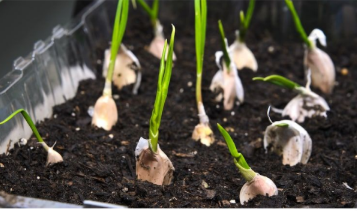
bulbs
swollen leaf bases
Why is sex beneficial for a species?
diversity and more likely for survivial with variation in the population
Sexual reproduction → Recombination:
making new genetic combos (not the same as mutation)
Recombination shuffles allele combinations
During meiosis (gametes), homologous chromosome pairs can swap alleles
Allelic combinations get shuffled

“Selfing” vs. “Outcrossing”
Which is sexual reproduction?
-both
Which promotes/increases genetic diversity in a population/species?
outcrossing
self crossing
self pollination
10-15%
leads to genome-wide homozygosity, which can cause inbreeding depression (reduced fitness)
outcrossing
cross pollination
pros:
genetic diversity
resilient to disease
likely to adapt
cons:
relying on other organisms to reproduce
no guarentee of improvement
monoecy vs dioecy, which promotes outcrossing?
dioecious
forces pollen to travel to a diff plant
strictly
t-value
Quantifies the rate of outcrossing for a species
0 = 100% of offspring result from selfing
1 = 100% of offspring result from outcrossing
0.2 = 20% of offspring from selfing, 80% from outcrossing
0.5 = 50% of offspring from selfing, 50% from outcrossing
Wind pollination
(could result in selfing OR outcrossing)
pros
spend energy on attracting pigments
if specialized with 1 pollinator that goes extinct(species dies off)
pollinators are seasonal
cons
less energy wasted on pollen
pollen likely to hit target
disperse further
when no pollinators, might be able to self
Animal pollination
(could result in selfing OR outcrossing)
pros
less energy wasted on pollen
pollen likely to hit target
disperse further
when no pollinators, might be able to self
cons
spend energy on attracting pigments
if specialized with 1 pollinator that goes extinct(species dies off)
pollinators are seasonal