Chapter 13 - Plant Systems
 Call Kai
 Learn
Learn Practice Test
 Spaced Repetition
 Match
Match Flashcards
 Knowt Play
1/25

There's no tags or description
Looks like no tags are added yet.
Name | Mastery | Learn | Test | Matching | Spaced | Call with Kai | Chat |
|---|
No analytics yet
Send a link to your students to track their progress
26 Terms
Vascular tissue
transports water and nutrients around the plant body. Vascular tissue, which connect the roots and stem in a plant, include the xylem (which transports water) and the phloem (which transports sugar, the product of photosynthesis). The structure of a vascular plant ensures that each organ – the leaves, stem, roots, flowers and seeds – receives what it needs.
the shoot system and the root system

Non-vascular plants are small, live in moist environments, and have simple leaves but no roots

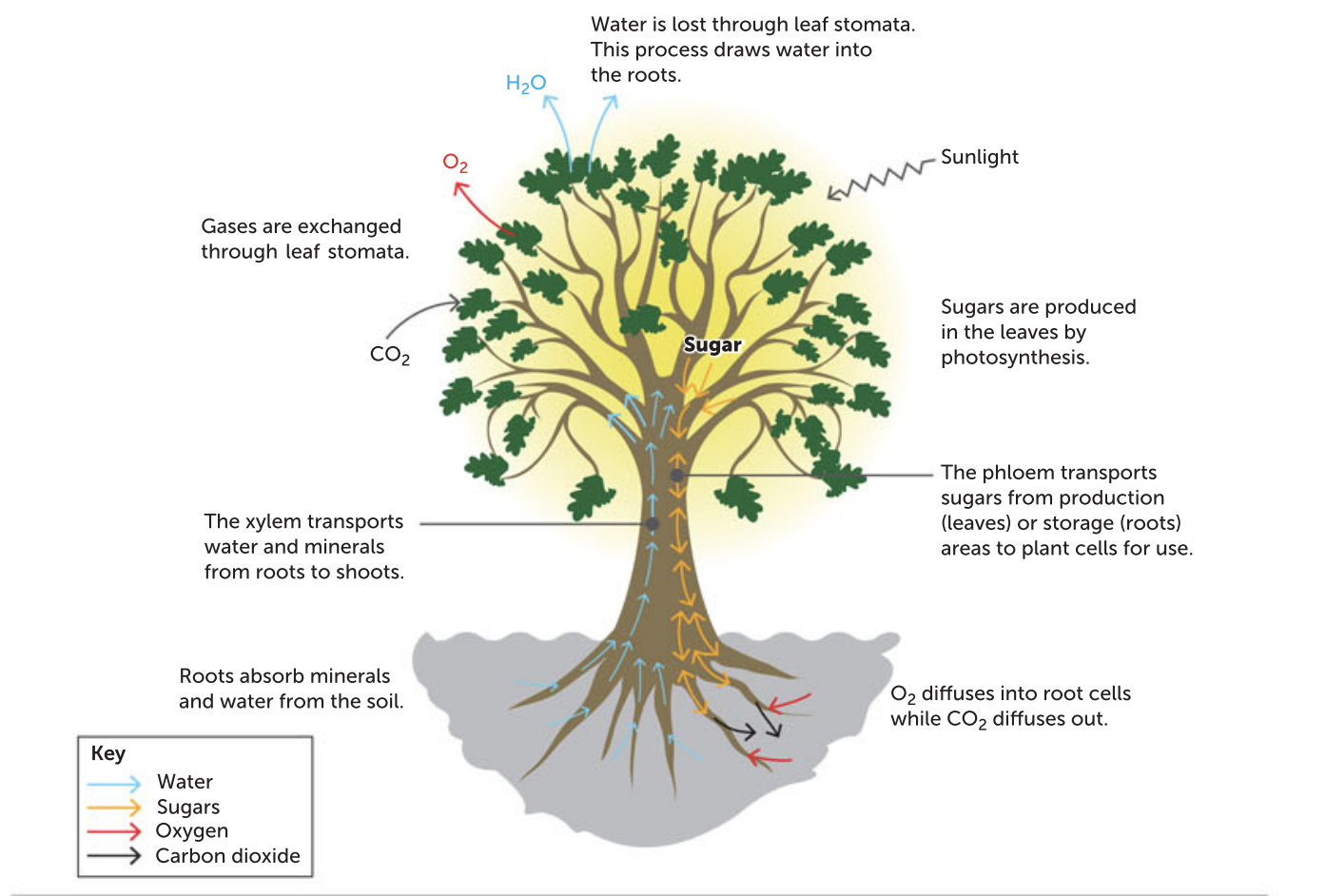


xylem consists of…
tubular, elongated cells that allow water to pass freely
Two types of phloem cells
sieve cells and companion cells
Sieve cells
no nuclei, mitochondria or vacuoles and have large pores
Companion cells
are phloem cells that are found alongside the sieve tubes they have cell nucleus and other organelles that are lacking in the sieve cells organelles
stomata
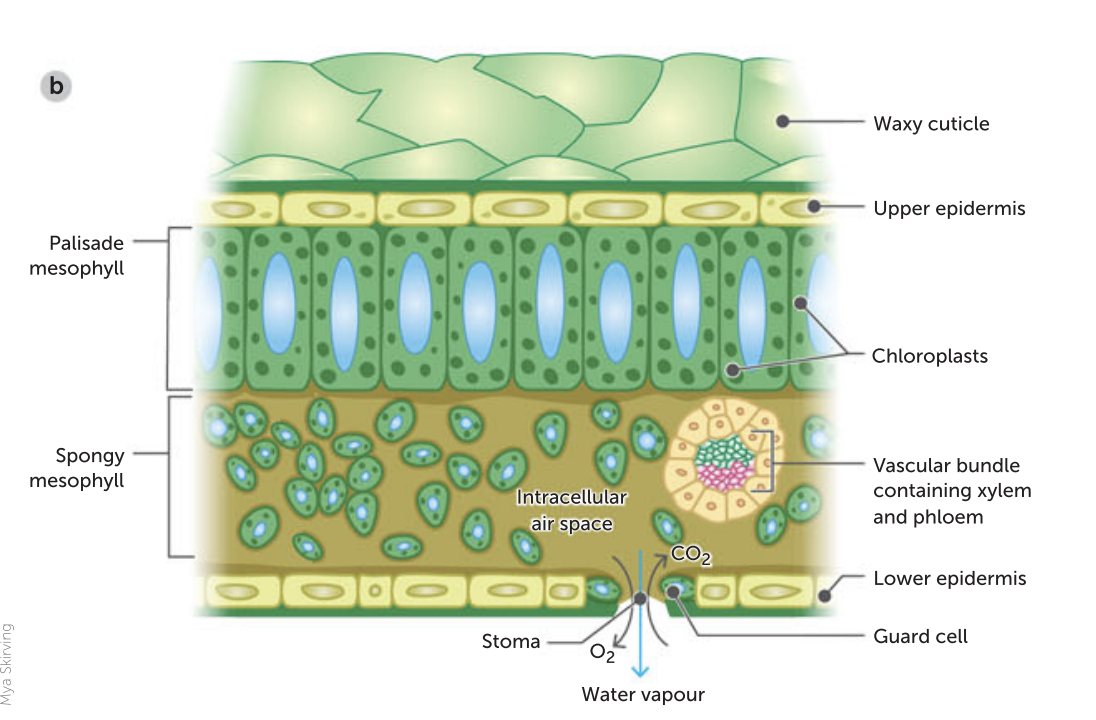
Plants obtain carbon dioxide gas, through their leaves. The gases diffuse into the
intercellular spaces of the leaf through pores called stomata.
Stomata (singular stoma) are tiny openings in the surface epidermis of a
plant leaf through which gases can enter or exit. They are normally found on the
underside of the leaf.
From the intercellular spaces,
gases diffuse into the cells that
require them.
Each stoma consists of a central
'pore' or opening, surrounded by
two..guardcel
how guard cells open and close

Humidity affect on the stomata

root pressure

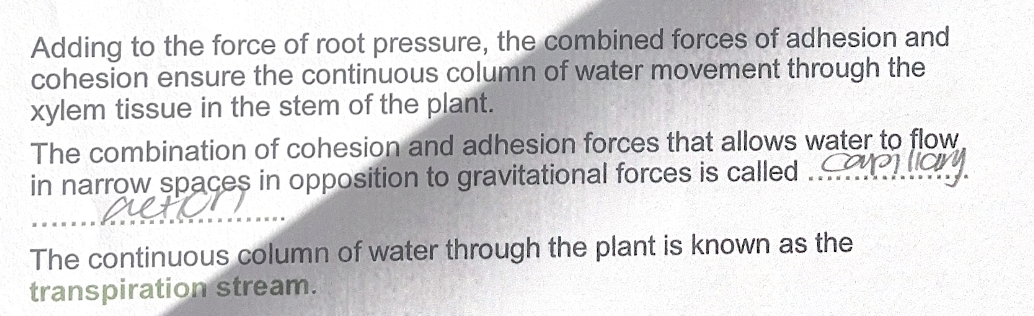
Capillary action

transcription stream
Transcription

Translocation

At times when more sugars are produced than can be used by the plant, many plants form tubers, bulbs or corms. Excess products of photosynthesis are transported to these for storage as starch until they are needed. When the next growing season arrives, the stored starch is converted into soluble form and transported to the growing points of the new plant.
Translocation

Source to a sink

