Order Rodentia: Families Geomyidae and Heteromyidae
 Call Kai
 Learn
 Practice Test
 Spaced Repetition
 Match
 Flashcards
 Knowt Play
1/17

Earn XP
Description and Tags
Vocabulary practice flashcards covering species identification, diagnostic morphological traits, cranial features, and geographical distributions of Texas Geomyidae (pocket gophers) and Heteromyidae (pocket mice and kangaroo rats).
18 Terms

Yellow-faced Pocket Gopher
Order: Rodentia
Family: Geomyidae
Genus: Cratogeomys
Species: Cratogeomys castanops
Key Identification Trait
Upper incisors feature a single distinct longitudinal groove down the face of each tooth.
A large pocket gopher with dull yellowish-brown pelage,
blackish feet, and relatively large eyes

Plains Pocket Gopher
Order: Rodentia
Family: Geomyidae
Genus: Geomys
Species: Geomys bursarius
Key Identification Trait
Upper incisors possess two distinct parallel longitudinal grooves.
Description
disproportionately massive head
front end with curved digging claws
tiny eyes, rudimentary ears, and a sparsely haired tail roughly 31 of its body length

Order: Rodentia
Family: Geomyidae
Genus: Geomys
Species: Geomys bursarius
Plains Pocket Gopher

Texas Pocket Gopher
Order: Rodentia
Family: Geomyidae
Genus: Geomys
Species: Geomys personatus
Key Identification Trait
Sparsely haired tail with a hairless distal half
paired with a distinct marbled dusky-and-white underbelly.
pale or grayish drab pelage and two incisor grooves

Llano Pocket Gopher
Order: Rodentia
Family: Geomyidae
Genus: Geomys
Species: Geomys texensis
Key Identification Trait
A prominent dark dorsal stripe extending along the midline of the back from head to rump on russet brown fur,
contrasting with white feet and underparts.
small size

Chihuahuan Desert Pocket Mouse
Order: Rodentia
Family: Heteromyidae
Genus: Chaetodipus
Species: Chaetodipus eremicus
Key Identification Trait
Long, bicolored, crested, and tufted tail paired with coarse, oily pelage that lacks rump spines.
featuring grooved incisors,
upper grayish fur toned with black
hind foot soles naked to the heel

Order: Rodentia
Family: Heteromyidae
Genus: Chaetodipus
Species: Chaetodipus eremicus
Chihuahuan Desert Pocket Mouse

Hispid Pocket Mouse
Order: Rodentia
Family: Heteromyidae
Genus: Chaetodipus
Species: Chaetodipus hispidus
Key Identification Trait
Coarse, hispid (non-spiny) pelage with an orange midline/lateral line and a relatively short tail
grooved upper incisors
hind foot soles naked to the heel

Order: Rodentia
Family: Heteromyidae
Genus: Chaetodipus
Species: Chaetodipus hispidus
Hispid Pocket Mouse
Nelson’s Pocket Mouse
Order: Rodentia
Family: Heteromyidae
Genus: Chaetodipus
Species: Chaetodipus nelsoni
Key Identification Trait
Prominent stiff bristles or spines on the rump and solid black soles on the hind feet.
harsh grayish pelage
tufted tail longer than the head and body

Gulf Coast Kangaroo Rat
Order: Rodentia
Family: Heteromyidae
Genus: Dipodomys
Species: Dipodomys compactus
Key Identification Trait
Five toes on each hind foot,
white cheeks
relatively short tail.
Retains primitive cranial and dental morphology compared to other kangaroo rats

Merriam’s Kangaroo Rat
Order: Rodentia
Family: Heteromyidae
Genus: Dipodomys
Species: Dipodomys merriami
Key Identification Trait
Four toes on each hind foot
exceptionally long tail terminating in a dusky tip.
buffy orange fur, dorsal and ventral dusky tail stripes, and white underparts

Order: Rodentia
Family: Heteromyidae
Genus: Dipodomys
Species: Dipodomys merriami
Merriam’s Kangaroo Rat

Ord’s Kangaroo Rat
Order: Rodentia
Family: Heteromyidae
Genus: Dipodomys
Species: Dipodomys ordii
Key Identification Trait
Five toes on each hind foot
paired with conspicuous white spots at the base of the ears and above the eyes.
reddish-brown upperparts and a relatively shorter, dark-tipped tail

Banner-tailed Kangaroo Rat
Order: Rodentia
Family: Heteromyidae
Genus: Dipodomys
Species: Dipodomys spectabilis
Key Identification Trait
Four toes on each hind foot
massive tail approximately terminating in a stark white "banner" tip.
largest kangaroo rat
yellowish-brown pelage with dark dorsal and ventral tail stripes

Mexican Spiny Pocket Mouse
Order: Rodentia
Family: Heteromyidae
Genus: Heteromys
Species: Heteromys irroratus
Key Identification Trait
Extremely harsh, oily pelage with flattened, grooved, sharp-pointed spiny hairs across the upper body,
ungrooved incisors, and a specialized spoon-shaped claw on each hind foot.
grayish-brown pelage, a buff lateral stripe, and white underpart
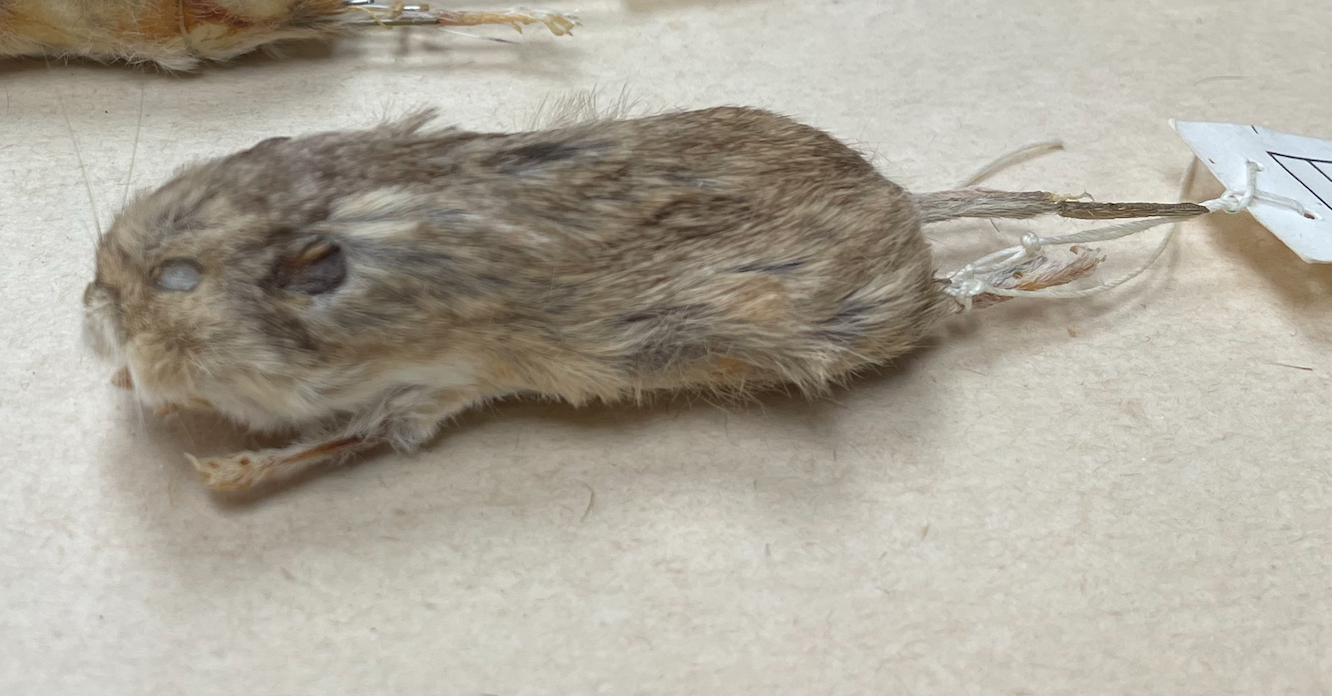
Silky Pocket Mouse (Perognathus flavus)
Order: Rodentia
Family: Heteromyidae
Genus: Perognathus
Species: Perognathus flavus
Key Identification Trait
Tiny body size with soft silky orange fur and a clear
distinct buff spot directly behind each ear.
The smallest member of the genus
short ears
sparsely haired tail

Merriam’s Pocket Mouse
Order: Rodentia
Family: Heteromyidae
Genus: Perognathus
Species: Perognathus merriami
Key Identification Trait
Silky yellowish-orange pelage
distinct dark horizontal stripe behind the nose
a pale ring encircling each eye.