5B.3: Breathing + gas exchange
0.0(0)
Studied by 0 people Call Kai
 Learn
Learn Practice Test
 Spaced Repetition
 Match
Match Flashcards
 Knowt Play
Card Sorting
1/16

Earn XP
Description and Tags
Last updated 12:10 PM on 10/11/26
Name | Mastery | Learn | Test | Matching | Spaced | Call with Kai | Chat |
|---|
No analytics yet
Send a link to your students to track their progress
17 Terms
1
New cards
Bony anatomy of the thoracic cage
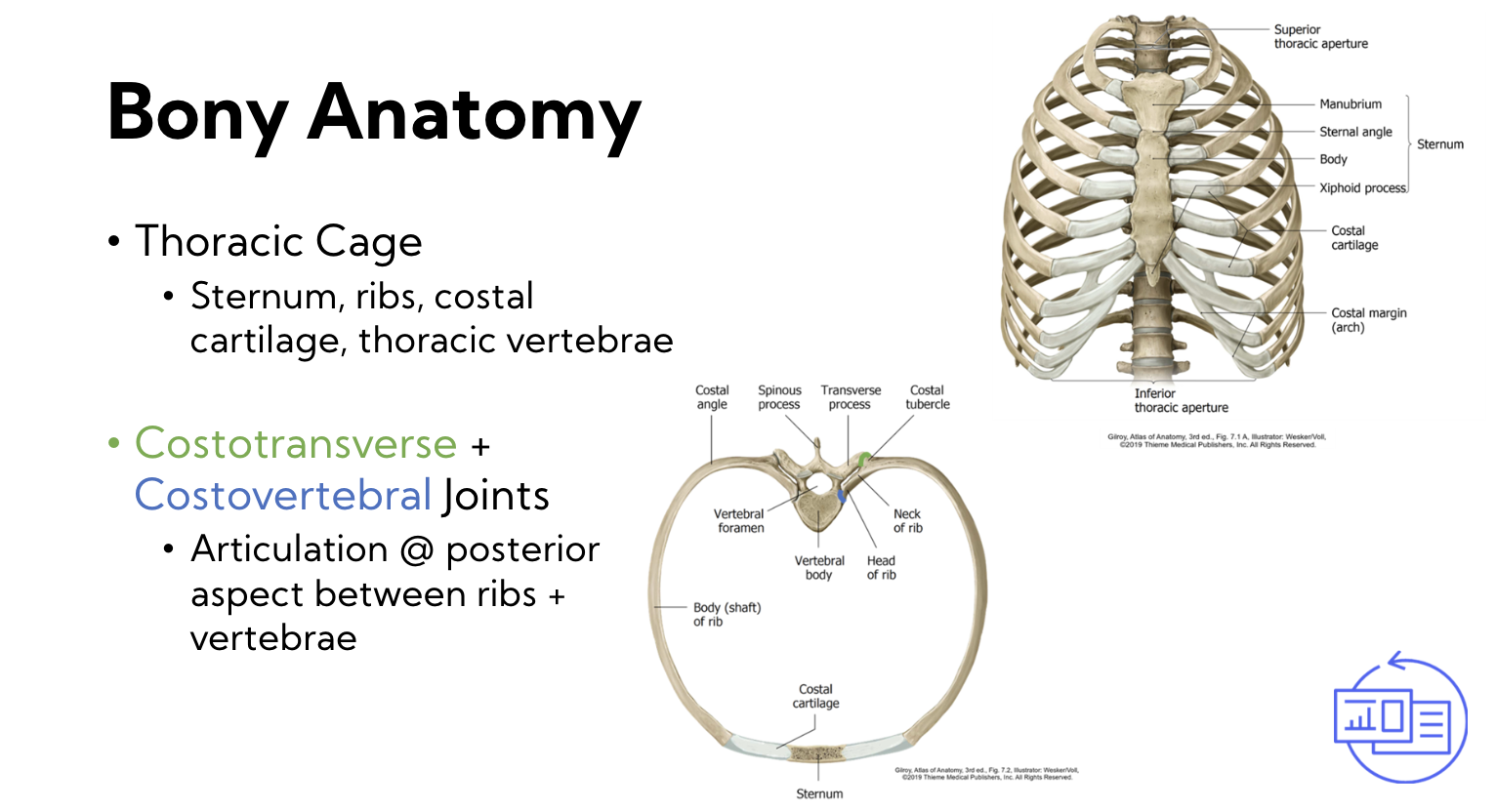
2
New cards
Thoracic muscles
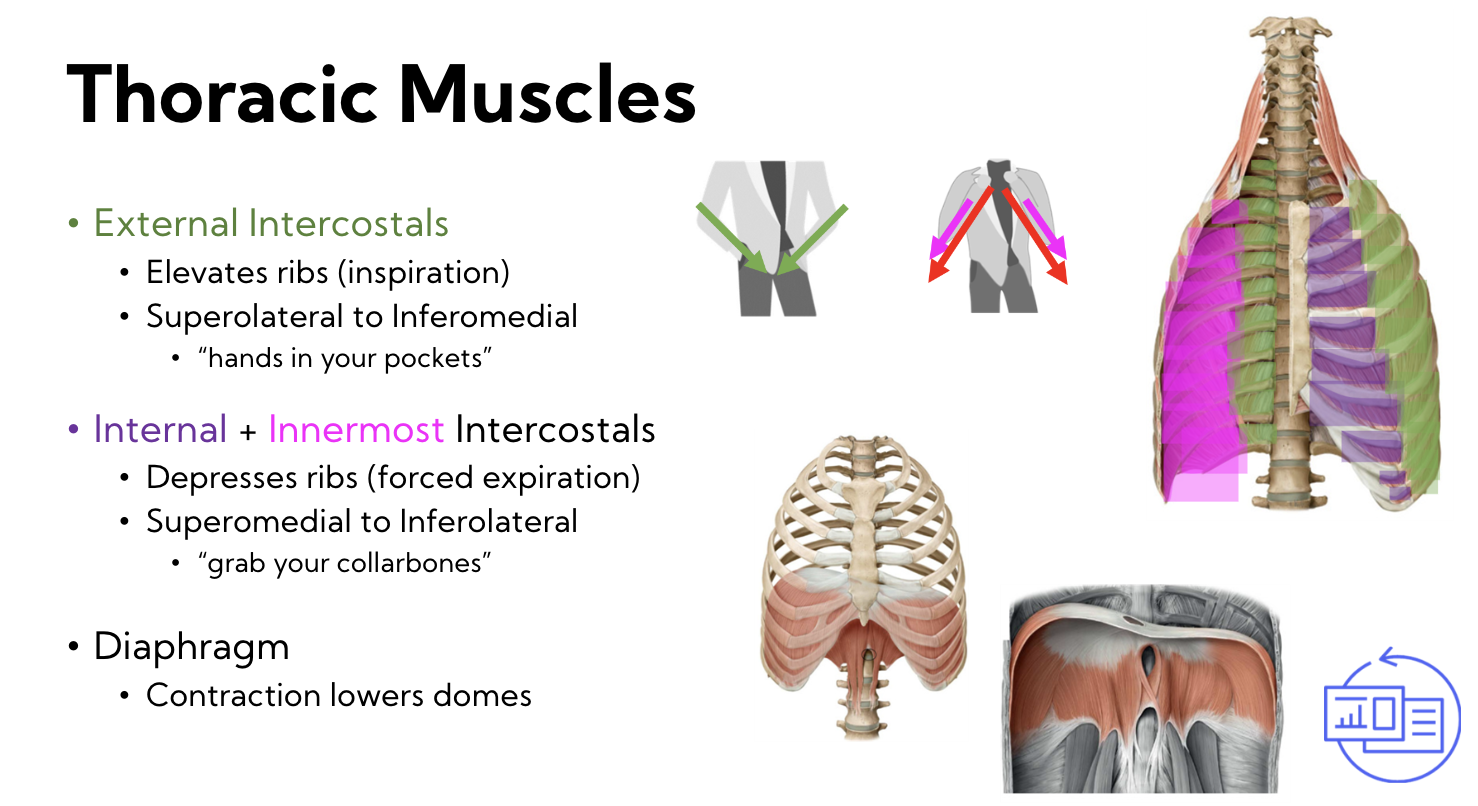
3
New cards
Contraction of the diaphragm _____ thoracic volume
increases
4
New cards
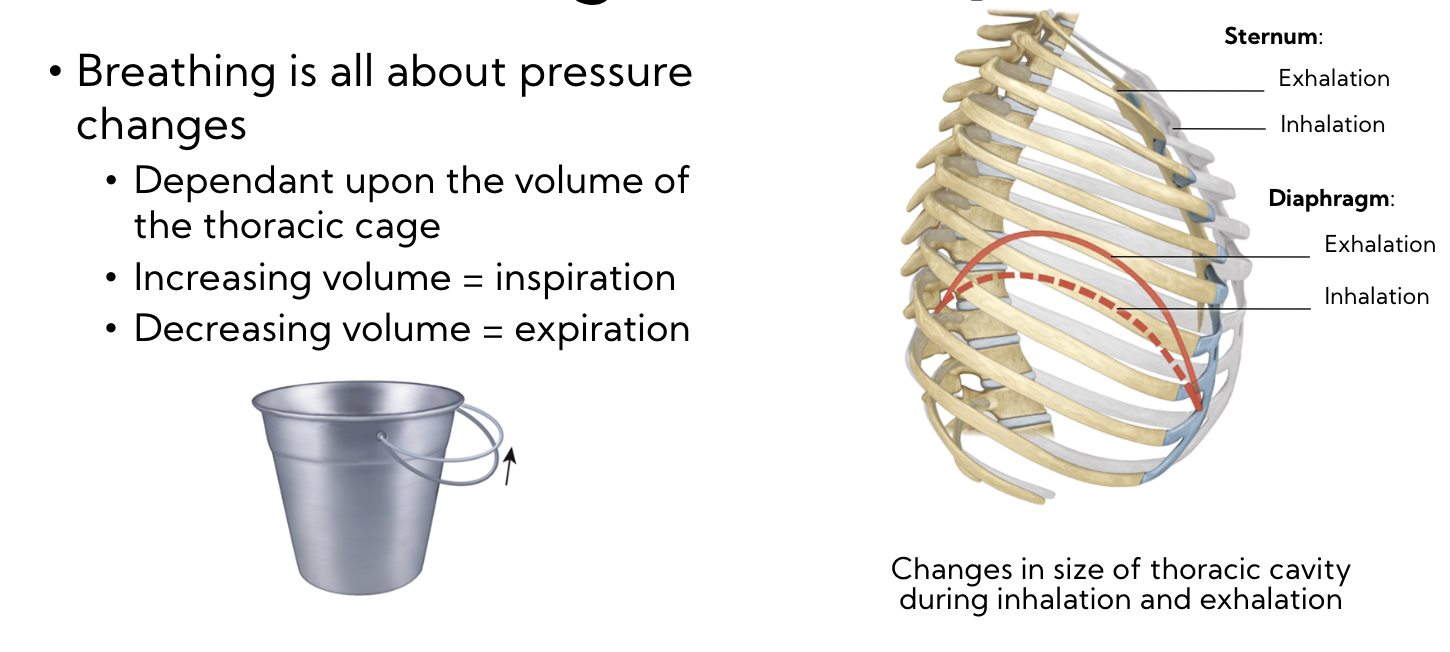
pressure changes
Pressure changes → respiration
* breathing is literally all about pressure change
\
Dependant upon the volume of the thoracic cage
increasing volume = inspiration
Decreasing volume = expiration
* breathing is literally all about pressure change
\
Dependant upon the volume of the thoracic cage
increasing volume = inspiration
Decreasing volume = expiration
5
New cards
Fundamental mechanics
Lungs are under tension (interstitium is primary elastic)
* naturally want to collapse
* stuck to visceral pleura
* Alveolar pressure = atmospheric pressure
\
Pleura has parietal & visceral layers creating a sac
* intrapleural pressure = 4 mmHg below atmosphere
\
When the thoracic cage expands (muscles contraction), so does the intrapleural pressure)
\
The lungs follow suit, decreasing the alveolar pressure
\
Air flows in
* naturally want to collapse
* stuck to visceral pleura
* Alveolar pressure = atmospheric pressure
\
Pleura has parietal & visceral layers creating a sac
* intrapleural pressure = 4 mmHg below atmosphere
\
When the thoracic cage expands (muscles contraction), so does the intrapleural pressure)
\
The lungs follow suit, decreasing the alveolar pressure
\
Air flows in
6
New cards
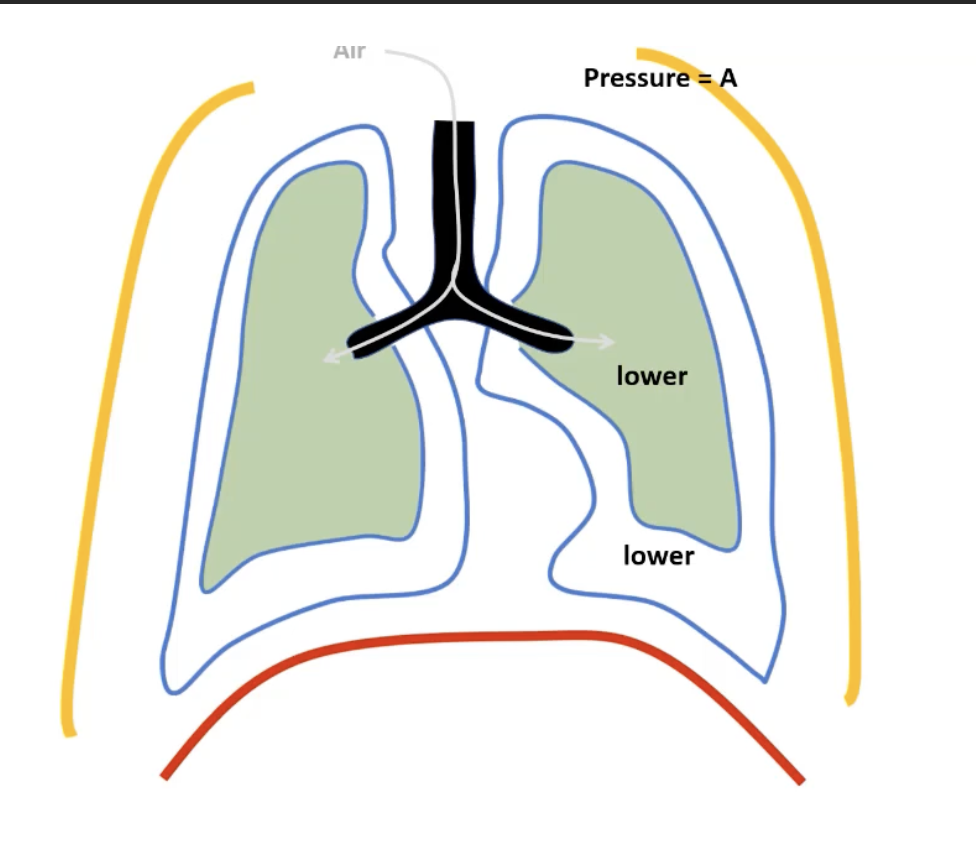
Breathing diagram
pressure = A
Pressure in the intrapleural space = A - 4
\
__**Breath in:**__
* ribcage expands
* pulls on parietal layer of pleura
* diaphragm drops
* pressure in intrapleural space decreases
* lungs expand
* drops pressure in lungs
* air flows in from periphery
\
__**Breath out:**__
* everything happens in reverse
Pressure in the intrapleural space = A - 4
\
__**Breath in:**__
* ribcage expands
* pulls on parietal layer of pleura
* diaphragm drops
* pressure in intrapleural space decreases
* lungs expand
* drops pressure in lungs
* air flows in from periphery
\
__**Breath out:**__
* everything happens in reverse
7
New cards
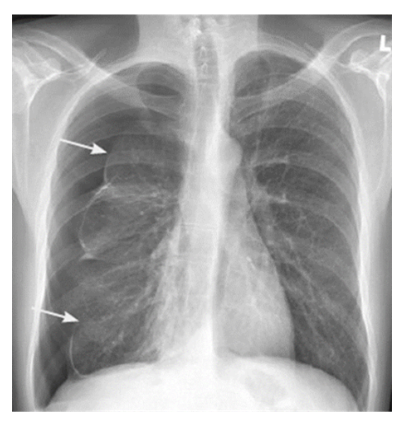
Pneumothorax
* puncture to pleural membrane causes air (pneumo) in pleural space
\
Intrapleural pressure = atmospheric pressure
* doesn’t change with thoracic cage expansion
* lung is no longer under tension + collapses
\
==Blood== in this space is called a ==hemothorax==
treatment:
* reseal the hole + get lung to expand
BUT
* this can be dangerous because if the pressure in the intrapleural space returns to normal, this can shift the positions of the organs in the thorax = very bad😔
\
Intrapleural pressure = atmospheric pressure
* doesn’t change with thoracic cage expansion
* lung is no longer under tension + collapses
\
==Blood== in this space is called a ==hemothorax==
treatment:
* reseal the hole + get lung to expand
BUT
* this can be dangerous because if the pressure in the intrapleural space returns to normal, this can shift the positions of the organs in the thorax = very bad😔
8
New cards
What happens during pneumothorax
disrupt the pleural membrane = disrupt the pressure
* air flows in
* now the pressure in both the lung and intrapleural space is the same
* now we now longer have oppositional force → **lung collapse**
* air flows in
* now the pressure in both the lung and intrapleural space is the same
* now we now longer have oppositional force → **lung collapse**
9
New cards
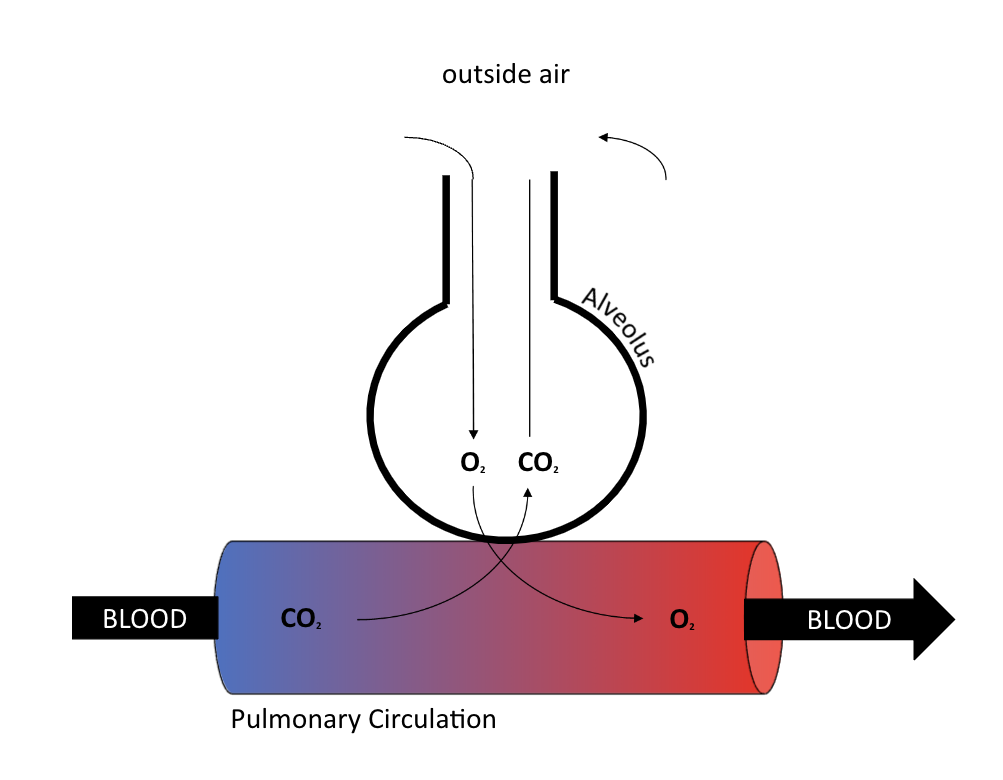
Gas exchange
Oxygen in
CO2 out
CO2 out
10
New cards
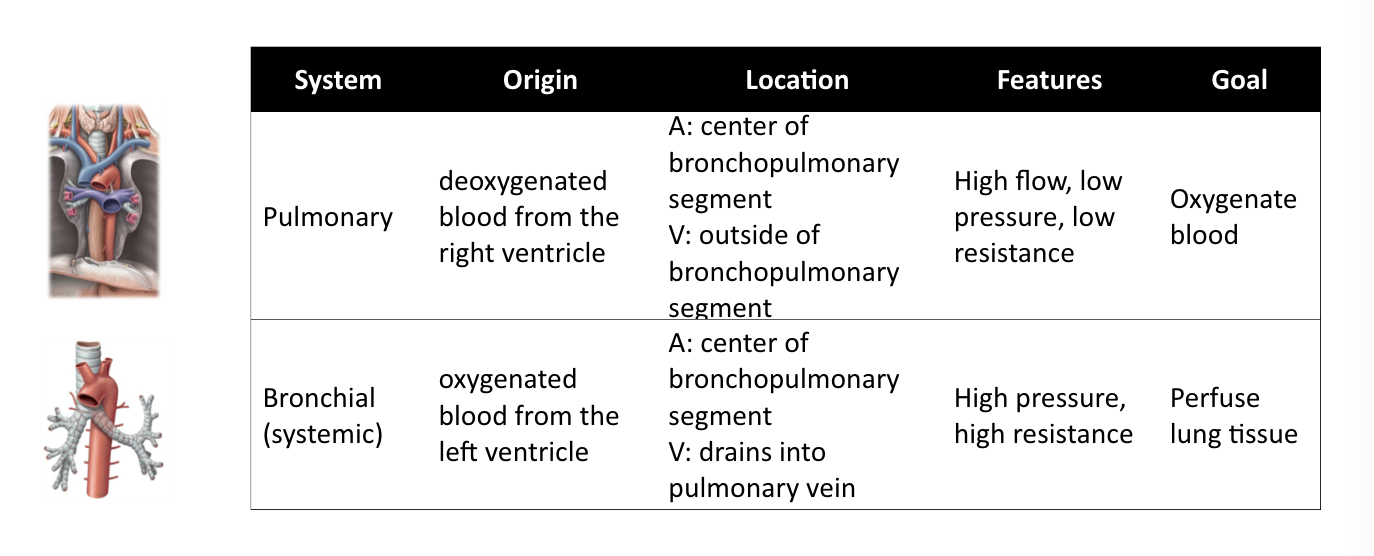
Pulmonary vs Bronchial circulation
__**Pulmonary**__
* lungs oxygenate blood
\
__**Bronchial**__
* systemic
* supplies lung tissue
* lungs oxygenate blood
\
__**Bronchial**__
* systemic
* supplies lung tissue
11
New cards
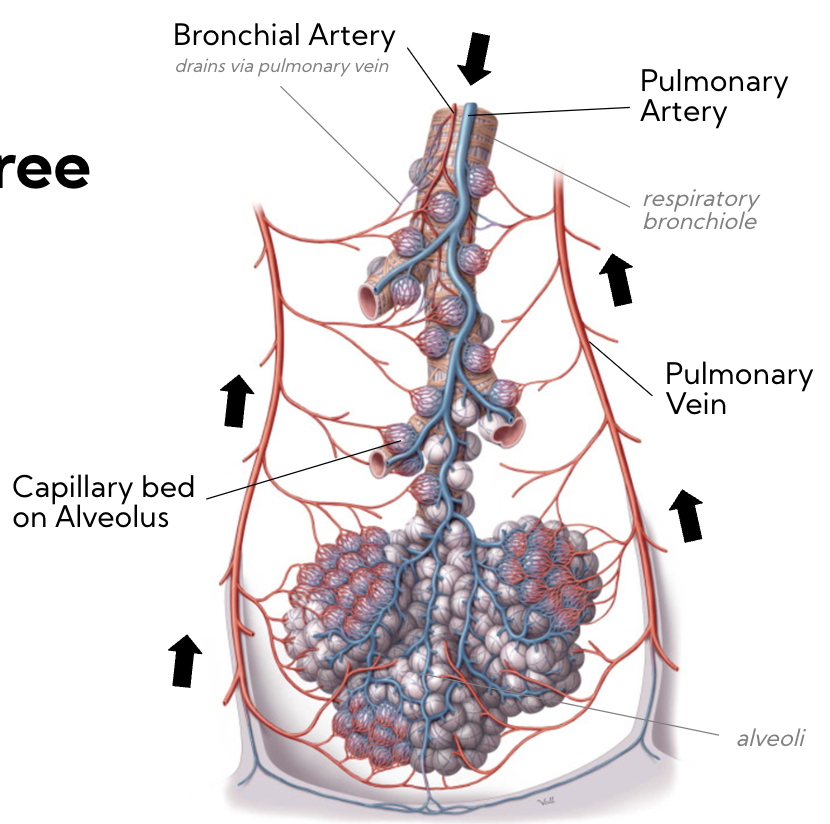
Vasculature of the tracheobronchial tree
* arteries in centre of bronchopulmonary segment
12
New cards
What is gas exchange?
Goal:
* oxygenate blood + remove carbon dioxide
\
Diffusion of oxygen + carbon dioxide between alveoli + pulmonary capillaries
* oxygenate blood + remove carbon dioxide
\
Diffusion of oxygen + carbon dioxide between alveoli + pulmonary capillaries
13
New cards
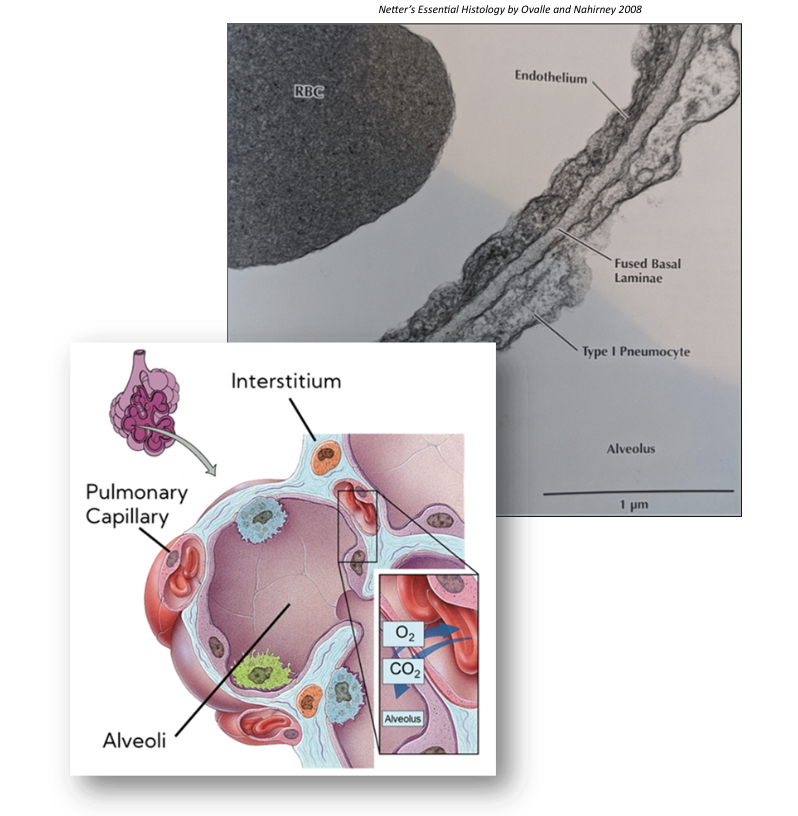
Gas has to pass through 3 zones:
* pulmonary capillary
* fused basement membrane
* alveoli
\
==Oxygen== moves:
alveoli → fused membrane → pulmonary capillary
\
^^CO2^^ moves:
Pulmonary capillary → fused membrane → alveoli
* fused basement membrane
* alveoli
\
==Oxygen== moves:
alveoli → fused membrane → pulmonary capillary
\
^^CO2^^ moves:
Pulmonary capillary → fused membrane → alveoli
14
New cards
Ventilation vs perfusion
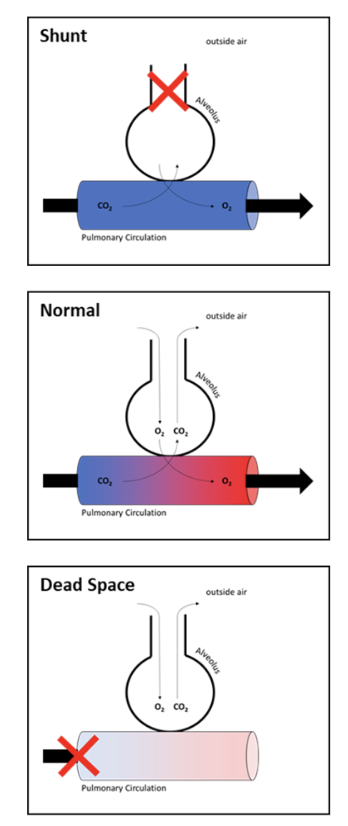
* gas exchange depends upon the relationship between ventilation (air in alveoli) + perfusion (blood flow through capillaries)
\
Va/Q = alveolar ventilation/ cardiac output
\
Va/Q = alveolar ventilation/ cardiac output
15
New cards
Shunt
__**= adequate perfusion, but no ventilation**__
causes:
* pulmonary edema
* asthma
* COPD
* pneumothorax
* gas trapping
causes:
* pulmonary edema
* asthma
* COPD
* pneumothorax
* gas trapping
16
New cards
Dead space
__**= Adequate ventilation, but no perfusion**__
\*opposite to shunt
causes:
* hemorrhage
* dehydration
* pulmonary embolism
* (basically anything that prevents blood from getting to the capillaries)
\*opposite to shunt
causes:
* hemorrhage
* dehydration
* pulmonary embolism
* (basically anything that prevents blood from getting to the capillaries)
17
New cards
Pulmonary edema
Usually secondary to heart failure
* blood not effectively pumped from L ventricle leads to back up in pulmonary veins + lungs
Swelling and eventual leaking of pulmonary capillaries = **fluid accumulation + increased pressure in interstitium**
* increases pressure around alveoli + respiratory bronchioles, which may lead to collapse + shunting because air becomes trapped
* Diffusion (and thus oxygenation) becomes difficult
\
Fluid may leak into the pleural cavity (pulmonary effusion) or mediastinum
\
Alveolar flooding is possible (very problematic)
* blood not effectively pumped from L ventricle leads to back up in pulmonary veins + lungs
Swelling and eventual leaking of pulmonary capillaries = **fluid accumulation + increased pressure in interstitium**
* increases pressure around alveoli + respiratory bronchioles, which may lead to collapse + shunting because air becomes trapped
* Diffusion (and thus oxygenation) becomes difficult
\
Fluid may leak into the pleural cavity (pulmonary effusion) or mediastinum
\
Alveolar flooding is possible (very problematic)