Surgical Instrument Definitions
 Call Kai
 Learn
 Practice Test
 Spaced Repetition
 Match
 Flashcards
 Knowt Play
1/59

There's no tags or description
Looks like no tags are added yet.
60 Terms
Scissors
Cutting and/or dissecting
Metzenbaum Dissecting Scissors
Cutting fine thin tissue, tips come curved or straight, long and thin

Mayo Dissecting Scissors
Cutting heavy/connective tissue, fascia, and suture, tips come curved or straight, thicker/shorter shanks, cutting surface is 1/3 of the body, thick like mayo,

Standard Operating Scissors
Cutting and dissecting soft, surface-level tissue, dressing, drapes, and suture, thick but cutting surface is ½ of the body, tips can be blunt or sharp, curved or straight

Iris Scissors
Precise dissection and cutting of fine thin tissue, smaller with fine, sharp tips, can be used for ophthalmic surgeries and small animal surgeries

Wire Cutting Scissors
Cutting wire, jaws can be angled or straight, come with serrations to saw through wire
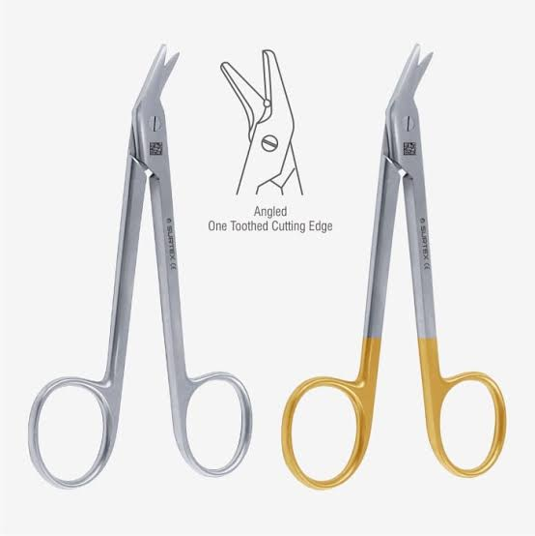
Suture Scissors
Cutting and removing skin sutures, have a groove at the end of one of the jaws

Lister Bandage Scissors
Cutting bandage material, many varieties, has a blunt tip and a loop tip

Hemostatic Forceps “Hemostats”
Temporarily clamp blood vessels and control bleeding, ratcheting lock, serrated jaws, straight or curved tips, usually packed in pairs
Hartman Mosquito Hemostats
Clamping delicate tissues or compress small blood vessels, smallest hemostat, fits into the palm of your hand, 3.5 inches, exceptionally fine, shorter tips for restricted spaces, tiny like the Grinch’s heart

Halstead Mosquito Hemostats
Clamping delicate tissues or compress small blood vessels, about the size of your hand to the 1st knuckle, 5 inches

Crile Hemostats
Same size as Kelly, serrations go all the way

Kelly Hemostats
Clamping blood vessels and holding heavy/dense tissue in place, roughly the size of your hand, only hemostat that has serrations that only go ½ way, “_____ only goes halfway”

Rochester-Carmalt Hemostats
Crushing large tissue bundles, heavy tissue masses, or ligating pedicles, serrations are vertical, shank is 1/3 of the body, much larger than your hand, serrations look like street lane, park your “car” in the garage

Rochester-Pean Hemostats
Clamping large blood vessels and heavy tissues, shank is 1/3 of the body, much larger than your hand

Needle Holders
Gripping and maneuvering surgical needles
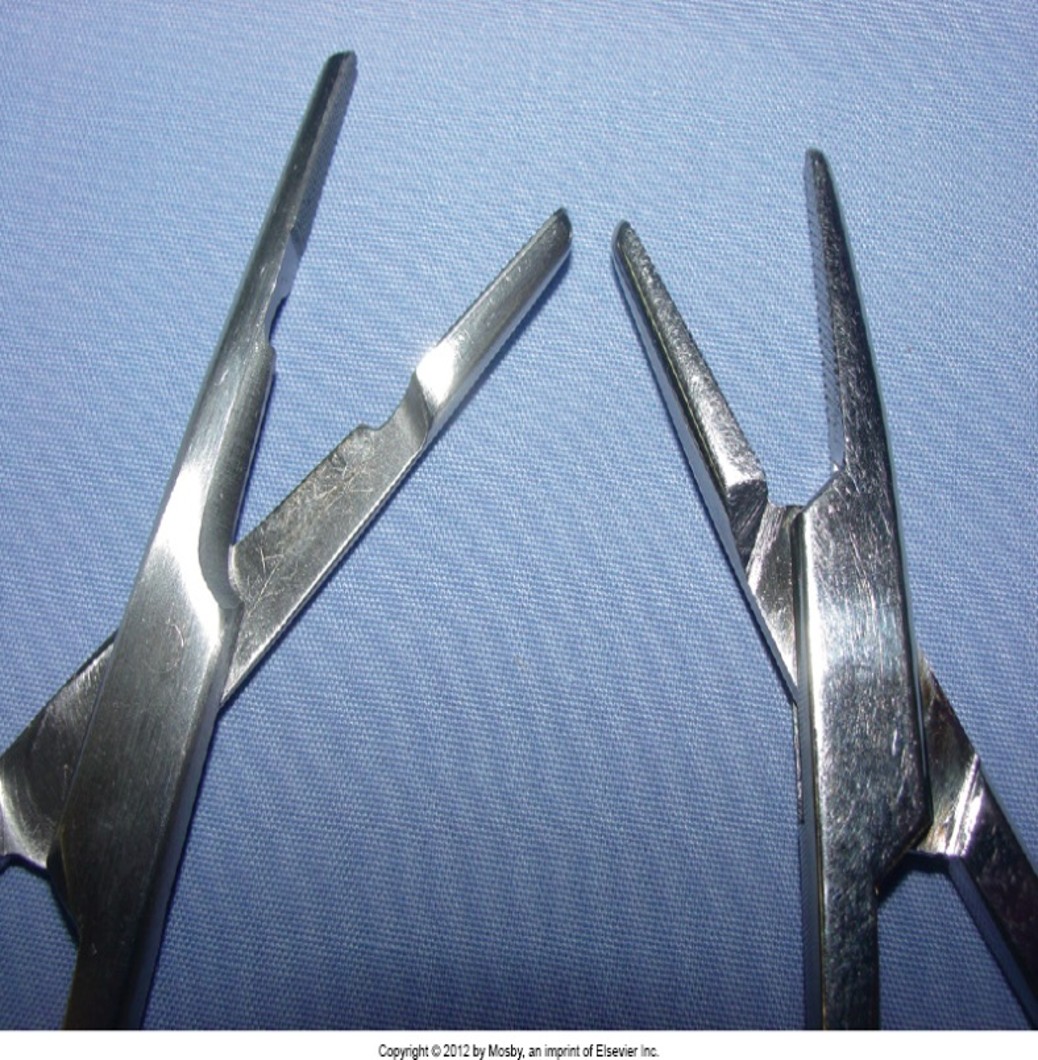
Mayo-Hegar Needle Holders
Small jaws, serrated teeth for gripping, does not cut
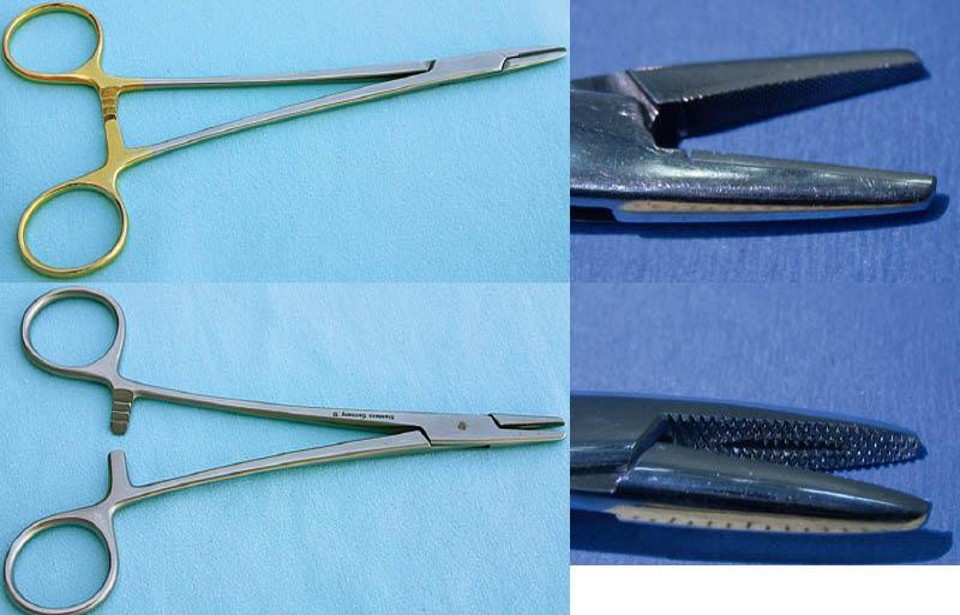
Olsen-Hegar Needle Holders
small jaws, is able to cut

#3 Scalpel Handle
10, 11, 12, 15 blades
#4 Scalpel Handle
20 and 23 blades
Thumb and Tissue Forceps
Securely grasp, hold , and manipulate tissues
Thumb Non-Ratcheted Forceps
Resemble tweezers with spring-like hinge, no locking mechanism, preferred for handling small tissue and frequent instrument exchange

Rat Tooth Thumb Forceps
Traumatic instrument used to hold/grip skin and dense tissue

Debakey Thumb Forceps
Atraumatic instrument used for gripping soft tissues

Adson-Brown Thumb Forceps
Traumatic instrument, short and wide, rows of teeth of on both sides of the jaws

Dressing Thumb Forceps
Atraumatic instrument, long skinny body, flat serrations instead of teeth

Ratcheted Clamping Forceps
Contain finger rings and locking mechanism, preferred for sustained pressure, and locking onto dense structures

Allis Tissue Forceps
Traumatic instrument, teeth at the top, used during spays and to retract abdominal wall, securing anchor onto heavy fascia

Babcock Intestinal Forceps
Atraumatic instrument that is rounded to allow clamping of tubular structures

Sponge Forceps
Atraumatic instruments, flat, with a hole in the center

Doyen Intestinal Forceps
Atraumatic instrument with long jaws used for grasping large organs

Alligator Forceps
Used for grasping small object and removing things from small cavities

Retractors
Hold back skin, tissue, muscles, or organs to expose the surgical site and give better visualization
Hand Held Retractors
Single piece instruments, requires a scrub nurse to hold them, allow dynamic and easy adjustments throughout procedure, come in a variety of sizes

Senn Retractor
One end is a rake with teeth, other end is flat, end face opposite directions, retracts surface tissue and shallow skin incisions, shaped like an “S”

Army-Navy Retractor
Both ends are flattened, retract shallow or superficial tissue, end face same directions

Malleable Retractor
Rounded on both ends, helps prevent surgical site from obstructed, just a bendable piece of metal, comes in various sizes

Deaver Retractor
Very large rounded or tongued ends, holds deep abdominal, thoracic, or pelvic organs

Volkman Retractor
Has a claw on one end and a loop at the other, retracts skin, fat, muscle, and tissue to expose bones and joints

Hohman Retractor
Exposes fractures and bone, holes in one end and spade at the other

Self Retaining Retractors
Lock into place with a built in ratchet, springs, or screws, need to come apart for cleaning and sterilizing, comes in a variety of sizes
Balfour Retractor
Used to visualize abdominal cavities

Frazier Rib Spreader
Used for thoracic surgery to spread ribs

Weitlaner Retractor
Holds soft tissue, tips look like a rake, has finger-rings

Gelpi Retractor
Hold back tissue, tips are sharp and face opposite directions, has finger-rings

Towel Clamps
Secure and hold towels and drapes, usually come in a pack of 2 or 4

Backhaus Towel Clamp
Ratchet lock, curved, pointy jaws

Backhaus Roeder Towel Clamp
Ratchet lock, curved, pointy jaws, balls along the jaws

Jones Towel Clamp
Thumb towel clamp

Bladder Spoon
Long, skinny, shallow spoon used to remove bladder stones

Skin Stapler
Close skin incisions under high tension
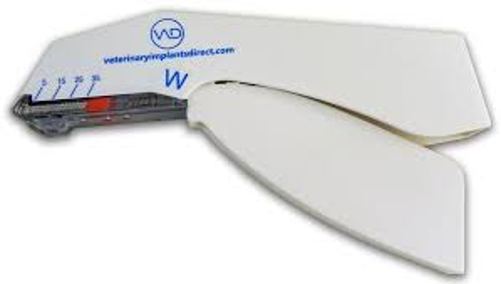
Staple Remover
Small jawed clippers specifically meant to cut skin staples

Suction Bulb
Removes fluid or air from surgical site or body cavity, manual activation, comes in a variety of sizes

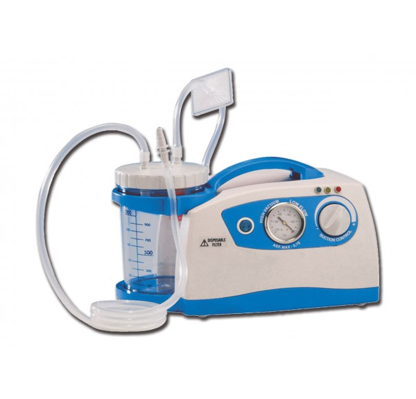
Mechanical Suction
Removes fluid or air from surgical site or body cavity comes with suction hose, suction tip, and cannister
Poole Suction Tip
Looks like a fenestrated straw
Yankauer Suction Tip
Long and funky like its name
Frazier or Adson Suction Tip
Long skinny metal stylet, “_____ is angled”
Electrosurgery
Hand piece used to cut and/or coagulate vessels, can coagulate vessels by direct contact or with a hemostat, increases healing time, can be monopolar or bipolar, monopolar must have a grounding plate under the patient wrapped in a wet towel, never use alcohol

Atraumatic
Smooth or finely serrated jaws to prevent damage to delicate structures
Traumatic
Toothed, interlocking or heavy-ratcheted jaws for tough, dense structures