AT105 Test #1
 Call Kai
 Learn
 Practice Test
 Spaced Repetition
 Match
 Flashcards
 Knowt Play
1/16

There's no tags or description
Looks like no tags are added yet.
17 Terms

Lion-Human, c. 30,000 BCE
Prehistoric art
-one of the largest prehistoric works left
-shows abstract thought in creating a mythic creature
-shows skill(looks like a lion)

Woman from Willendorf, c. 24,000 BCE
Prehistoric art
-prehistoric artwork is portable
-(prob) a fertility figure
-lack of facial features(she's a type)
-shows creative thought(naval is a natural hole in the stone)

Hall of Bulls, c. 15,000 BCE
Prehistoric art
-done by many diff artists at many diff times
-marks in stone indicate possibly used for target practice
-composite view for more info(profile w/ 2 horns)

Bird-Headed Man with Bison, c. 15,000 BCE
Prehistoric art
-1st time a man is shown in art
-unusual(great) deal of action
-composite view for more info(profile w/ 2 horns)

Stonehenge, c. 2,000 BCE
Prehistoric art
-used for ritualistic purposes
-calendar
-4-5 major building periods(big changes)

Head of a Woman, c. 3,000 BCE
Ancient Near East Art
-possibly goddess of fertility
-(prob) Inanna
-shows a great deal of skill
-expensive material showing she was important

The Great Lyre with Bull's Head, c. 2,500 BCE
Ancient Near East Art
-precious materials used represent splendor of Sumerian court
-bull represents power
-heraldic image(center front-facing image and a side profile image on each side) represents power/strength
-man w/ scorpion tail(often depicts death or is in tombs) likely a god representing death/after-world

Head of a Man aka “Akkadian Ruler”, c. 2,250 BCE
Ancient Near East Art
-largest lost wax cast sculpture of its time
-first time art is used to glorify a ruler(not a god(dess))
-high degree of & beautiful mix of abstraction/stylization & realism
-purposeful damage due to problems w/ ruler(subject)
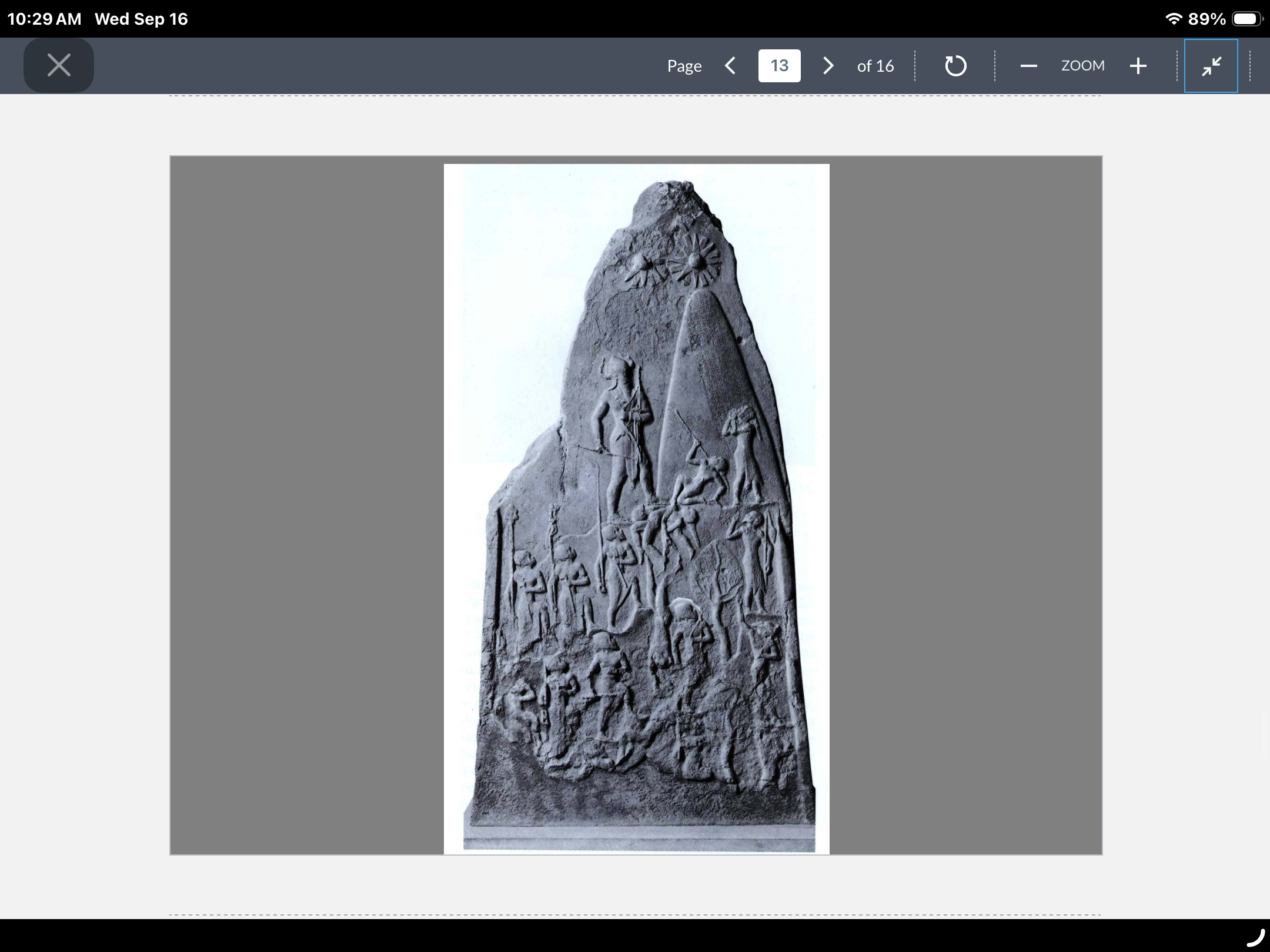
Stele of Naram-Sin, c. 2,250 BCE
Ancient Near East Art
-first time belief in rulers as demigods shown in art
-composite view(most "beautiful" parts shown)
-one of the first historical works of art(shows battle)
-hierarchical scale
-unusual(high) amount of drama
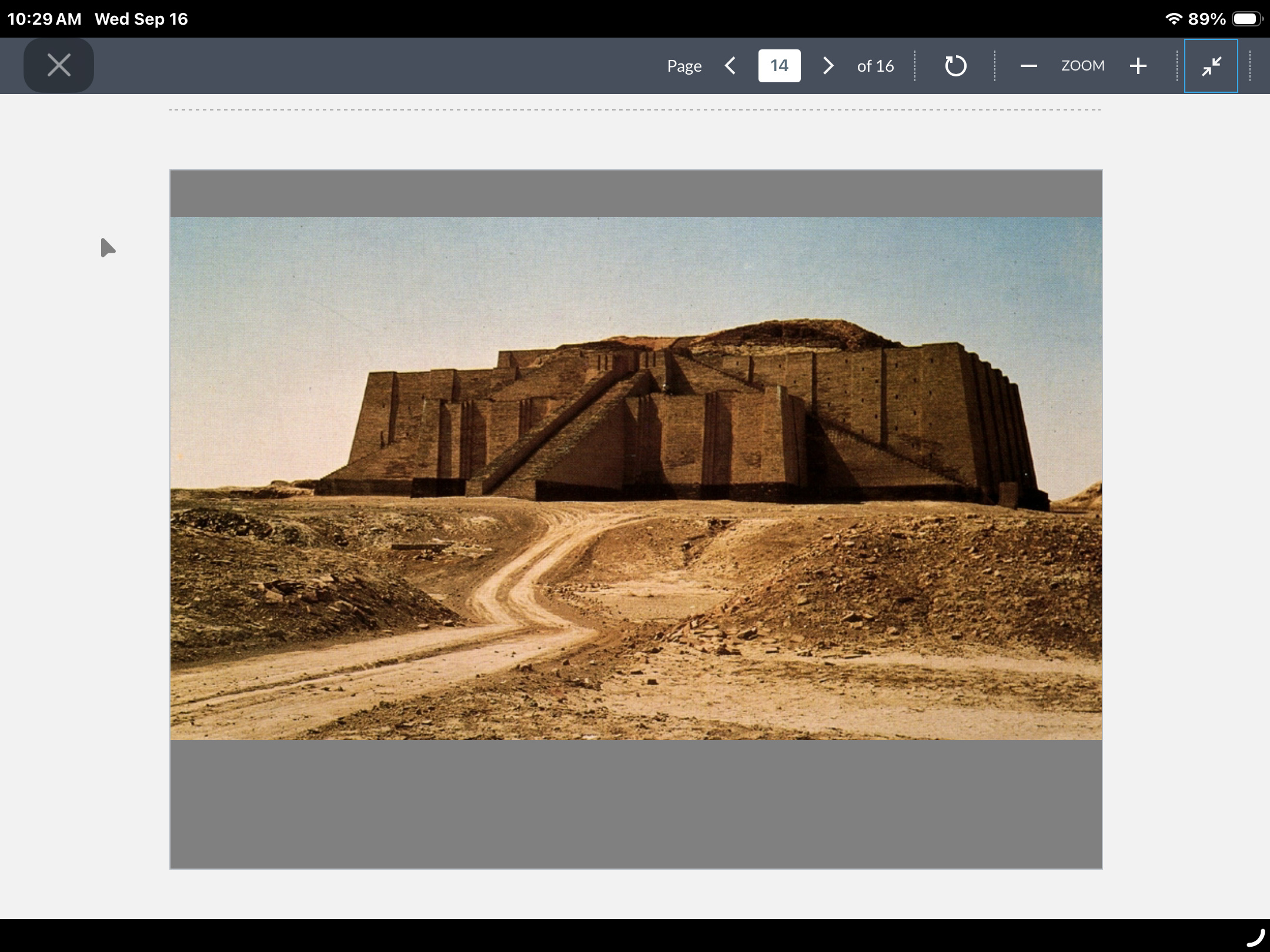
Ziggurat at Ur, c. 2,100 BCE
Ancient Near East Art
-made of mud
-spiritual & civic center
-defensive structure
-symbolizes stairs to heaven
-bent-axis structure of city spiritual(lose sense of direction less focused on mortal being/closer to god) & defensive(more time to prepare for enemy arrival)

Stele of Hammurabi, c. 1750 BCE
Ancient Near East Art
-unified laws for all areas Hammurabi ruled over
-one of the largest indications of cuneiform(language)
-hierarchical scale

Assurnasirpal II Killing Lions, c. 875 BCE
Ancient Near East Art
-work of propaganda for Assurnasirpal
-lion hunt symbolizes power and masculinity
-composite view
-unusual degree of action(many diagonals)
-great deal of skill in proportions and details(unusual for time)

Palette of Narmer, c. 2,950 BCE
Ancient Egypt
-1st historical work of art(tells a story)
-hierarchical scale
-represents union of upper and lower Egypt by way of war
-prob eye makeup palette for ceremonial makeup

Great Pyramids, Gizeh, Egypt, c. 2,500
Ancient Egypt
-slope shape recalls the shape of the benben
-feat of engineering and design
-sides align with the cardinal directions
-king’s chamber built to prevent collapse
-decrease in size from generation to generation due to decline in economy

Khafre, c. 2,500 BCE
Ancient Egypt
-diorite reserved for kings/queens
-portrayed as the ideal(lean, athletic, masculine)
-imagery represents Union of lower and upper Egypt
-Ka statue to inhabit soul if body destroyed(19 backups)

Menkaure and a Queen (aka Khamerernebty II), c. 2,475 BCE
Ancient Egypt
-gender roles(wife behind Menkaure)
-wed to the stone to prevent breakage
-step not believable(torso straight over back leg)

Senmut, Funerary Temple of Hatshepsut, c. 1,475 BCE
Ancient Egypt
-1st female monarch recorded in history
-Rock cut tomb(carved into cliffside, not built)
-she fabricated a myth that her father was Ra to legitimate her rule
-most sophisticated structure until the ancient greeks