CALCULUS exam 3 -SECTIONS 18-25
 Call Kai
 Learn
 Practice Test
 Spaced Repetition
 Match
 Flashcards
 Knowt Play
1/25

There's no tags or description
Looks like no tags are added yet.
26 Terms
f’(x) of sinx
cosx
f’(x) of cosx
-sinx
f’(x) of tanx
sec²x
f’(x) of cotx
-csc²x
f’(x) of secx
secxtanx
f’(x) of cscx
-cscxcotx
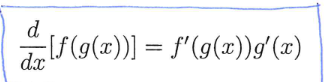
CHAIN RULE
f’(x) of sin-1x

f’(x) of cos-1x

f’(x) of tan-1x

f’(x) of cot-1x
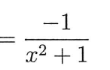
f’(x) of sec-1x

f’(x) of csc-1x

ln x f’(x)
1/x
bx f’(x)
bxlnb
logbx f’(x)
1/(xlnb)
Linearization Approximation
It’s just the tangent line
**make sure you know how to graph this

Linear approximation/Tangent Line Approximation Function

How can this be used to estimate?
Values that would belong in the original function can be thrown into the linearization approximation to obtain approximately the value the function would show as output
How do I do notation for linearization
[value you are approximating] = original function letter (#) = new function letter (#) = new fxn with value input = answer
E.G. is in photo

when deciding your own A
choose something a little less or more than your fxn, just make it even
max/min refer to the…
y values, not the x
Local extrema are known as
relative extrema
Absolute extrema are also known as
global extrema
How to find absolute max/minimum over a function