MIDTERM Business Management
 Call Kai
 Learn
Learn Practice Test
 Spaced Repetition
 Match
Match Flashcards
 Knowt Play
1/123

There's no tags or description
Looks like no tags are added yet.
Name | Mastery | Learn | Test | Matching | Spaced | Call with Kai | Chat |
|---|
No analytics yet
Send a link to your students to track their progress
124 Terms
equality
everyone gets a box to see over the fence
equity
everyone gets a box of right height to actually see over the fence
DEI policy drawbacks
saying you have this policy might actually lead to more discrimination
diversity lens vs diversity culture
diversity lens:
ask yourself are we negatively impacting certain groups
what can we do to make all groups better?
diversity culture:
if its “make it look pretty and show diversity”, are we just checking off a box in expense of productivity?
equitable culture
everyone has the opportunity, which makes it fair
→equity is about fairness and organizational justice
→ not fair if you only promote the ppl you like
inclusive management culture
ppl transparent
empower you with information
wanna get to know you ]
ask for your opinions
young ppl learn from old ppl
exclusive management culture
manager has favorites
in cliques
power distance (senior management doesnt talk to lower employees, creates power)
culture that keeps info tight, hard to get ahold of ppl, hard to learn, less social opportunities
when/when is it not okay to discriminate in hiring? +important piece of evidence
can discriminate on performance, promotions, clothing (someone not qualified vs qualified)
anything except for protected groups
**what im doing might need mathematical evidence that doing this discrimination will make my team better
protected groups of negative discrimination
disabled, height, weight (but if working on farm, disabled person might not be able to, if job requires you to see over a certain height, etc)
race and color
national origin and religion
sex (pregnant/orientation/gender identity)
genetic info (family history)
stereotyping
age (gen Z vs millennial)
can get you in trouble if asking ceratin ppl certain questions you dont ask everyone (Ex: asking indian coworker how many sibs do you have)
gender wage gap why?
different behaviors
women have to stop to have kids then come back
men ask for more money, less fear of rejection, versus women will wait for someone to notice their worth THEN get a raise
diversity of location and status
learning is easier when youre right in front of someone
remote, hybrid, office, freelancer, unemployed workers
remote worker
might not have the same connections with coworkers/managers, isolating
can work from anywhere
more friction in communication (body language and tone not there)
hybrid worker
in office sometimes, advantage over full remote
freelancer worker
create more diversity, part time employee
unemployed worker
lowest status
when looking for a job, you still wanna be in another job
segregation in leadership groups
why do you want to break out into a smaller group or clique? goal should be to change whole main organizations, ppl assume due to race or sex but usually due to other factors
not true prejudice
Hofstede Global Study points

power distance
hofstede global study
the extent to which a society expects equality among its members (=distrib of power or where power is concentrated among the few at the top)
US low
China high
individualism vs collectivism
hofstede global study
the degree to which ppl focus on their groups
individualistic: strongly value personal achievement and focus on individual needs (US)
collectivist: achievements and decisions are made with the group in mind
gender differences
hofstede global study
preference for masculine vs feminine traits in society
masculine: assertiveness, competitiveness, power, material success (Japan)
feminine: nurturing relationships, good quality of life, caring for others (Sweden)
uncertainty avoidance
hofstede global study
how much a society can cope with uncertainty of the future
high uncertainty avoidance: rely on set rules and structures about the way things are done to deal with it (Greece)
low uncertainty avoidance: more relaxed (Singapore)
long term vs short term business thinking
hofstede global study
the extent to which ppl are willing to forego short-term gains for future rewards, in particular, by emphasizing the virtues of persistence, saving, and thrift (US, Japan)
foregoing future rewards for short term gains in the past or the present, with an emphasis on immediate gratification and quick result (Ghana).
reflexive decision making
(DI/ID: DiSC)
shoot from the hip
dominate until they realize they should shut up
making decision with 90% of the data
put pressure on themselves, want to move on and quickly, tons of things on list
as soon as theres a problem you want to fix it
reflective decision making
CS/SC DiSC
careful, worker bees, concientious
Consistent style decision making
followers of predictability
more ppl will follow you if they can predict what youll do/say
DiSC what components are

Bonos six thinking hats
Only valuable if you need it, if ppl r thinking abt how they feel/unwilling to let go of the microphone
data
gut and emotion
negative
positive
creative
decide which hat
data hat
what do we have, what do we need, flaw is for data
positive hat
everything sound great
gets ppl excited and motivated
brings ppl together
get vision of future
gut and emotion hat
what does your gut feel, some ppl think emotions are unreliable
good if we dont have enough data available
for ppl who feel negatively abt the project, ask them why you dont think it will work (these ppl will make mistakes and sabotage)
creative hat
generating ideas that help us move forwardd
use your imagination to solve a problem
negative hat
everyone has to be negative'
give space for worries/disagreements
yellow and green hats
brainstorming
employee handbook
helps establish what rules, processes, protocols the organization has
could be great, could be out of date or vague
the more clarity and confidence in handbook, you will get ppl reading it or leveraging it to get organizational justice in an HR issues, protects employees and company (hard without organizational justice)
-what is missing
-what is out of date
-what is written between the lines
-what is standard across handbooks
-what is unique to the company
organizational justice
procedural justice (fairness of the processes and rules used to make decisions, focuses on how the decision is made, ex when the manager decides who gets a promotion)
informational justice (who was told first and was it kind, fairness of the explanations and information people receive about decisions), ex When a manager explains why an employee did not receive a raise.
distributive justice, am I getting paid fairly
intrapersonal justice (fairness of how people are treated during interactions with others, especially when decisions are communicated or carried out. ex When a manager delivers criticism to an employee)
minimum viable product
the least (most basic) you can do to get a product on the market, then you can iterate it with customers and make it better
distinguishing between needs and wants
find priorities and whats urgent
if they “need” something but you say no, then see what happens next
find the minimum that you actually need
scope creep
you have a list of things to do, and someone adds more and more to the list
you THOUGHT this was the job but ppl are adding more
enemy of the internal engineer (add another window etc)
tug of war between preparation, design, skill, knowledge level, the builder/engineer saying something wont work so they can create the real MVP
overpromise and underdeliver
what we know vs what well figure out
know things from experience
find out things through more experience
deadlines and accountability
putting a time limit
short term deadlines and small goals to see how much you can trust an employee
proactive team enviro brings more accountabilityt
project management tools
gantt chart
Xmind
(accountability tools)
gantt chart
plan of what ppl will do and when
needs start and end date
can use diff colors for what happens in reality to see if ppl are poorly managing time or lying
Xmind
mind map
think big on a project
unlimited amount of space
skeleton of a project
the creative process (3 stages)
what is the problem/opportunity? (my car is overheating)
when do you have your “aha” moments? (where did i solve this problem in the past? enviro where i have good ideas)
have you played the “what if” game? (what if X goes wrong? see how prepared you are, reduces the likelihood OF what if events)
nominal grouping
nominal grouping: large groups of ppl, give them a name for voting
focus groups/survey data
how do we collect unbiased data?
beware of data sensitivity and speaker confidentiality (careful talking abt names and scandalous info, protect data and paraphrase, promise to keep them safe, cant ask them not to speak of things)
focus group
small ish group, representative of whole group
focus group with structured voting (using stickers, put stickers on whatever topics are most important)
hard if ppl dont trust each other
beware of popularity vs criticality of issues (person who is very influential, ppl may put stickers w their topic)
survey data
good if requirements and if ppl care, bad if ppl dont care or if they dont do it at all
quantitative techniques for decisions
break even and cost benefit analysis
start up runway
budgeting: metaverse and boards
start up runway
quantitative technique for decisions
create new branch within company
how long is the runway (money/time/employees) before run out of money)
break even analysis
quantitative technique for decisions
how much money do we need to make to not lose money
what are my fixed and variable costs
covering costs
cost-benefit analysis
quantitative technique for decisions
what are the pros and cons, try to decide if its worth doing
are costs lower than benefits
budgeting types (2)
metaverse
boards
metaverse
quantitative technique for decisions (budgeting)
investing money
useful for practicing surgeries
mark zuckerberg main investor, asking board members to invest with him, they go w the person w the most shares
budgeting
quantitative technique for decisions
you know how much money you have in the bank, how much you make or lose
what we expect to spend, how we have to spend, how long itll last
boards
quantitative technique for decisions (budgeting)
groups of ppl voted in
above business
making decisions or getting budget approval
big data
comes from the internet, how things are being used
→collecting from customers, public, employees
→using data to change decision making
businesses pulling data from websites and tracking customer experience
more physical, how is business gonna track you eating an apple
trouble with accuracy of data
*organizations look to collect as much data as possible as long as they have the tools to analyze that data and collect it and ppl are interested in making changes
the five P’s
perfect
planning
prevents
poor
performance
dont leave things for the last minute
good to say to someone with poor time management skills
perfectionists waste…
too much time planning and not doing
nonperfectionists…
wing it, focus on high result
strategic planning
power dynamic→hard to say no when head is excited abt something, easy to say no when ppl lower than you suggest something
think ahead to future
metaverse, google glass, apple VR headset, all waste of money
operational planning
day-to-day how to make product (ex:making sure website is working properly)
-increase the production of widgets for a big order (make sure we dont make to many but we dont run out)→whe do we say no? time constraints, supply constraints
—decide who should be given what task and what shift (do I need to allocate certain shifts to certain ppl)
-map out which prospects need to be called out and when (decide which ppl should be called first, go to richest client first)
Situational analysis
what is the situation? should we reassess the business bc the situation just changed?
think mcdonalds $5 meal return wendys $1 frosty (if something significantly changes and the customers cant pay the bills, do situational analysis and drop prices)
*customer focused businesses adapt faster→ppl give feedback immediately, if they dont want it they wont buy it (biz to biz gets slower feedback)
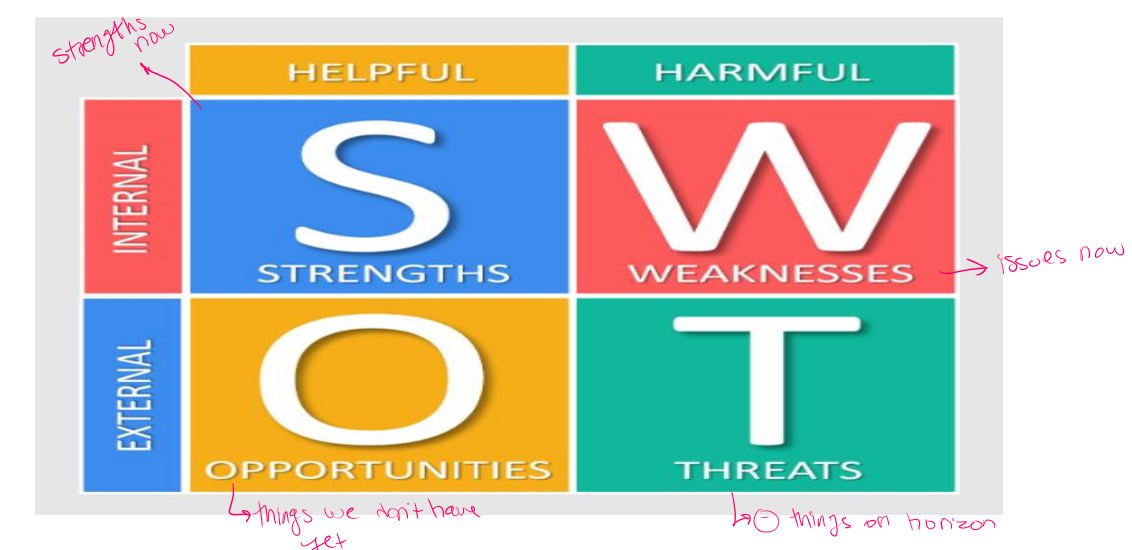
SWOT analysis
pros and cons but more comprehensive
unique selling point (USP)
plan how to sell yourself, product, service
think references, if ppl are talking good things about you, thats not just u bragging
*understand what youre selling
how are we actually different, then how do we sell it? if i know my comp, ill be able to separate myself
benefit and pain selling
benefit selling
what most ppl do to encourage someone to buy something
fast car, nice phone, etc
say some things that most ppl would like
dont rlly know what will apply to them, so throw them all out there (you dont know if the person your speaking to will like it or think its unique)
pain selling
asking ppl whats their pain and go from there
“sounds like your problem is…” so heres this thatll solve it!
didnt say a lot, asks questions then chooses which USP you think theyll like
find the discomfort or reason theyre here, higher likelihood of getting the sale
benchmarking
doing research into a dollar amt, what youre earning/selling
checking out competition, compare results
checking expectations
competiton price benchmarking
you wanna buy something from a vendor, do research to make sure u arent overpaying
for the tavern, dont compare to mcdonalds, compare to allen st
pricing out product/service→you have to compare the enviro, service, taste, other food $
wage benchmarking
deciding how much to pay someone, ask, what does the industry pay these ppl?
SMART goals

realities of setting SMART goals
difference between hope and confidence is experience and information
sometimes youre just running on caffience and hopeium (driving their goals, how much of it is real)
hope bad bc you dont rlly think it through
sometimes what youre doing is hard to measure (ex: goal of happy customers)
founders and leaders struggle to predict timelines (unpack if theyve done it before, ask what could slow them down)
“show me the incentive and ill show you the behavior”
charlie munger
give reward for performance
management by objectives (MBO) (4 things)
more thorough and comprehensive managers
everything by the book
good if you dont see employees often (manages expectations)
everything you do must have an objective (things you do to achieve a goal in a timeline)
holds them accountable
every objective must be linked to a department goal (why doing it if now)
more admin work for managers but helps micromanagers (some ppl feel micromanaged if manager is too in control)
growth strategies
concentration strategy
failed e
concentration strategy
growth strategy in which a business focuses on its existing core business, products, or services and tries to expand within that area rather than entering completely unrelated industries.
ex: Open new branches or stores in different locations.
Growth comes from doing more of what the business already does, rather than diversifying into unrelated activities
Why did Foxtons' geographical expansion into the US fail?
Foxtons assumed that a successful model in one geographical market could be transferred to another without fully overcoming the differences in competition and market conditions.
Geographical expansion can increase revenue, but it also increases risk. A business should evaluate local demand, competitive conditions, and costs before expanding internationally.
What are mergers and acquisitions?
Mergers and acquisitions (M&A) are methods of external growth, in which businesses combine or one business takes control of another.
Organic growth develops the business internally; M&A allows growth by combining with or purchasing another business.
merger
Two businesses combine their operations into a combined business. In practice, mergers can differ in how control and ownership are shared.
aquisition
One business purchases and takes control of another business.
How does the Cadbury–Wrigley example demonstrate the importance of M&A?
M&A can allow a business to grow quickly, acquire complementary products, and strengthen its competitive position. However, success depends on whether the benefits justify the purchase price and integration costs.
mechanistic organization
there a system, larger you are, the more rules you need to keep everything fair, lots of structure and bureaucracy, hard for someone to come in and make a ton of changes
government, hierarchical (CFO, CEO, ppl respect the ppl above them)
hierarchy keeps things stable for a long time
organic organization
startups (random, could be going out of business) and growth businesses
hope that everyone has good values, are team players, are accountable
rules and standard operating procedure done on the fly
macro view organizational stages
courtship (flirting w idea of starting biz, planning, no prototype)
infancy (young but up and running, making/selling, all abt production)
gogo (chaos and production, making mistakes but pl want their products)
adolescence (have ambitions but comfy here)
prime (increase production, pushing boundaries of norms)
mature (focusing on merging/partnering)
high performance
aristocracy (been around forever, oil/utility, not producing a ton, lots of administration)
early bureaucracy (beginning of the end, some survive (govt))
bureaucracy
death

formal vs informal authority
Formal authority: Power that comes from a person's official position or role within an organisation.
(A store manager has the authority to assign shifts, supervise employees, and approve certain expenses because of their job title.)
boss/employee
Informal authority: Influence a person gains through personal qualities, experience, knowledge, relationships, or the respect of others, rather than through an official position.
(An experienced employee has no managerial title, but colleagues regularly ask for their advice and follow their recommendations.)
leader/subordinate
Centralized authority vs. decentralized authority
Centralized authority: Decision-making power is concentrated at the top levels of management.
Example: A retail company's head office decides the prices, advertising campaigns, and staffing policies for all its branches.
Decentralized authority: Decision-making power is delegated to lower-level managers or individual departments.
Example: A supermarket allows its local branch managers to adjust staffing schedules and select certain products based on local demand.
reasons we delegate
we cant do everything ourselves
hard for others to grow without new challenges
develops ownership, responsibility, and accountability
ppl need time to learn new skills
delegation feeds what three drivers of motivation
autonomy (give more responsibilities to someone, they feel more freedom)
mastery (some ppl motivated by being the best at something)
purpose (motivated by purpose of company/to help ppl)
reasons why we dont delegate 3 things
fear (it wont be done/not done right, controlling ppl feel this)
trust level (uncertainty on task ability, on willingness, capacity)
“carrying up” the task (you like doing the task, task gives you status or power)
not delegating… how could it get misread
some ppl frustrated that you dont trust them enough, think theyre not good enough, ppl that are ambitious and want to learn more
some ppl content w this bc job is tediouus and they could already have a lot on their plate
some ppl dont want to be in charge/be a leader
delegation questions to ask
-urgency of task (reward/punish deadline)
-which goals does this task help achieve? (make sure they know relevance)
-why does it matter/whats the cost of not doing it? (if it doesnt get done well lose money/time, cost them a promotion, lose trust)
why is this task being delegated to them?(unique skills, experience, timing)
strong measurement
good for delegation
strong measurements to see if they work well
good bandwidth (capacity to do something)]
growth mindset
always believe theres a possibility to get better, emphasize the word “yet”
fixed mindset comes from ppl doing whats worked well in the past (original recipe)
*cant have a growth mindset forever, ppl will take advantage of u, cost u money and time
trust levels 1-4
understanding (starts here, help them get better by letting them into the meeting, provide psychological safety)
recommending (not delegating yet, just experimenting, expect guesstimates, adds value/feel belonging, more confidence, give them some wins)
empowered (im ready to do what you tell me to do, recommendations usually correct, allow minor failures, requires patience)
leading/teaching (great way to perfect something, strategizing on future, delegating to others)
delegation training equation
time it takes to teach them how to do something (vs time it takes you to do something) X amt of times it has to be done
skill will matrix
tool for deciding delegation conversation

sandbox delegation rules
everything inside sandbox is theirs to decide (safe protective place to play w idea/task)
everything outside the sandbox requires approval (boundary so they dont go too far)
redraw sandbox boundaries when appropriate (give them more responsibility etc)
micromanaging vs coaching
coach-help them figure it out (just let them be, supportive)
micromanager-make sure it gets done on time and correctly (suspicious, always coming over)
monitoring 3 best practices

high vs low performing team
high-strong communication, close friendships, enthusiasm
low-dont like ppl, no comm, bad chemistry