AH L #2 (Egypt+Greece) ⭐
 Call Kai
 Learn
 Practice Test
 Spaced Repetition
 Match
 Flashcards
 Knowt Play
1/53

There's no tags or description
Looks like no tags are added yet.
54 Terms
Old Kingdom
Was a golden age of peace, centralized government, and monumental architecture that lasted from around 2686 to 2181 BCE.

Old Kingdom (Key Facts and Timeline)
Dates - c. 2686 – 2181 BCE (spanning Dynasties 3 through 6).
Capital - Memphis, located just south of modern-day Cairo.
Major Rulers: King Djoser (who built the first Step Pyramid), Sneferu (who perfected true pyramid building), Khufu, Khafre, and Menkaure (builders of the Giza pyramids).
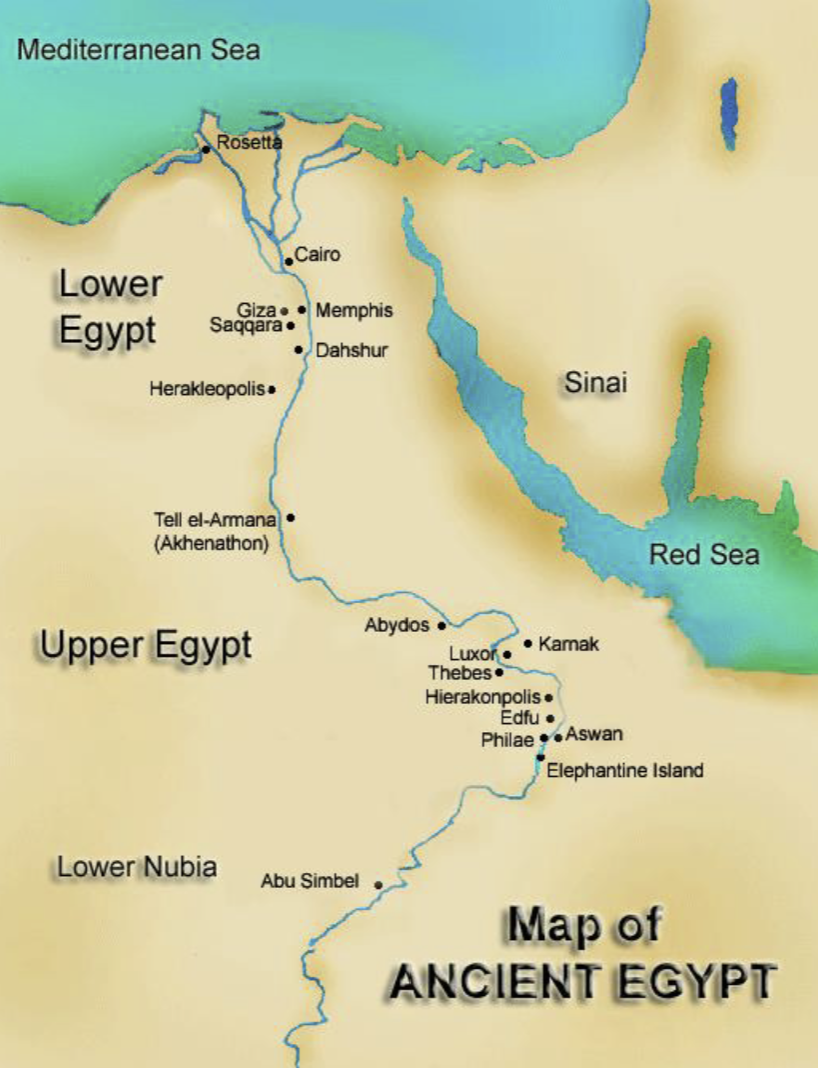
Giza pyramids and Sphinx c. 2500 BCE
Ancient Egyptian monuments built during the Old Kingdom (c. 2500 BCE) for the Pharaohs of the Fourth Dynasty.
. Located on the Giza Plateau near Cairo, Egypt,
. Great Pyramid of Giza (built for Pharaoh Khufu),
. Pyramid of Khafre
. Pyramid of Menkaure
. Great Sphinx, measuring 241 feet (73 meters) long and 66 feet (20 meters) high, features the body of a lion and the head of a human, widely believed to represent Pharaoh Khafre.

Great pyramid of Cheops
The Great Pyramid of Giza also called the Pyramid of Cheops or Khufu is the largest Egyptian pyramid and the only surviving wonder of the Seven Wonders of the Ancient World.

Great pyramid of Cheops (Key Dimensions)
Original Height - 146.6 meters (481 feet)
Current Height - 137.5 meters (451 feet) due to missing outer stones
Base Length - About 230 meters (755 feet) on each side
Total Weight - Estimated at nearly 6 million tons
Duration - Construction took an estimated 20 years with tens of thousands of workers.
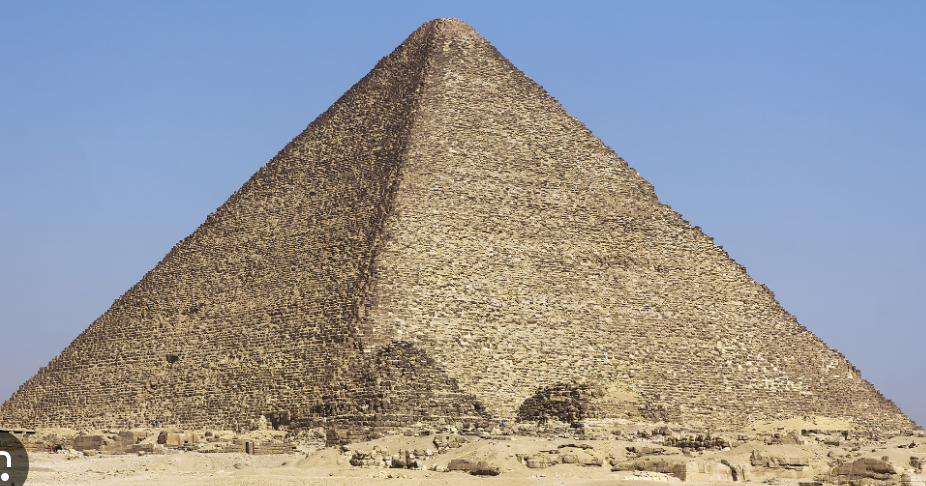
New Kingdom (c. 1570–1069 BCE)
Was ancient Egypt’s most prosperous era and the peak of its imperial power.
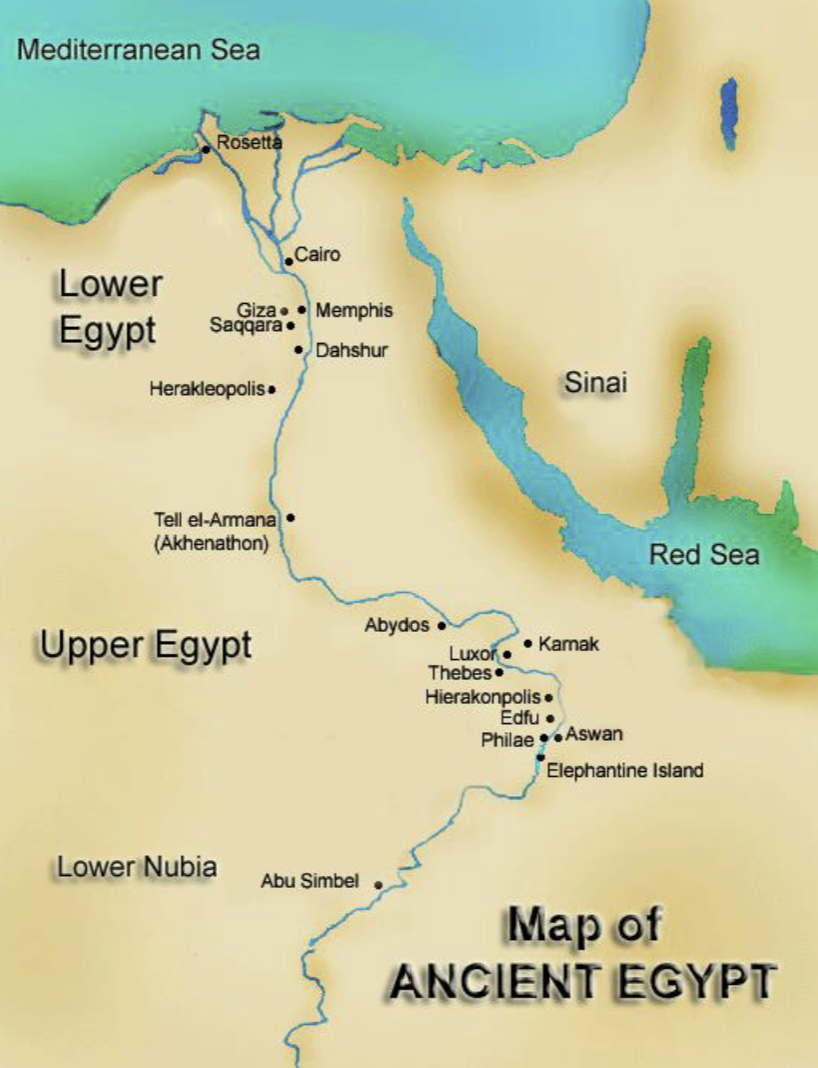
New Kingdom (Key Facts)
Timeline - Roughly 1570 BCE to 1069 BCE.
Founding - Began when Pharaoh Ahmose I drove out the foreign Hyksos rulers and reunited Egypt.
Famous Rulers - Hatshepsut, Thutmose III, Akhenaten, Tutankhamun, and Ramesses II (the Great).
Major Sites - The Valley of the Kings, Karnak, Luxor, and Abu Simbel.
Shift in power center from Memphis to Thebes Temple of Amon-Re
The political and religious power in ancient Egypt shifted from Memphis to Thebes during the rise of the Middle Kingdom around 2055 BCE, as southern warlords who reunified the country established their base in Thebes.
The Temple of Amon-Re at Karnak
Religious Supremacy - Located in Thebes (modern Luxor), the Precinct of Amun-Re inside the Karnak complex became the supreme religious and economic heartbeat of the New Kingdom (c. 1550–1070 BCE).
Priesthood Influence - The cult of Amun-Re accumulated massive wealth, land, and political authority, rivaling the pharaohs themselves.
Monumental Architecture - Successive rulers expanded the site for over a thousand years, adding colossal stone pylons, obelisks, and the famous Great Hypostyle Hall with its 134 massive sandstone columns.

The Temple of Amon-Re at Karnak (Key Features)
The Great Hypostyle Hall - A huge room covering 54,000 square feet with 134 giant stone columns.
Pylons - Massive monumental gateway towers marking the entrances.
Sacred Lake - A large rectangular pool used for ritual purification.
Ipet-isu - The ancient Egyptian name for the site, meaning "Most Select of Places".

Pylon
A monumental gateway to a temple, made of two tall, tapering towers joined by a lower central section that houses the doorway.
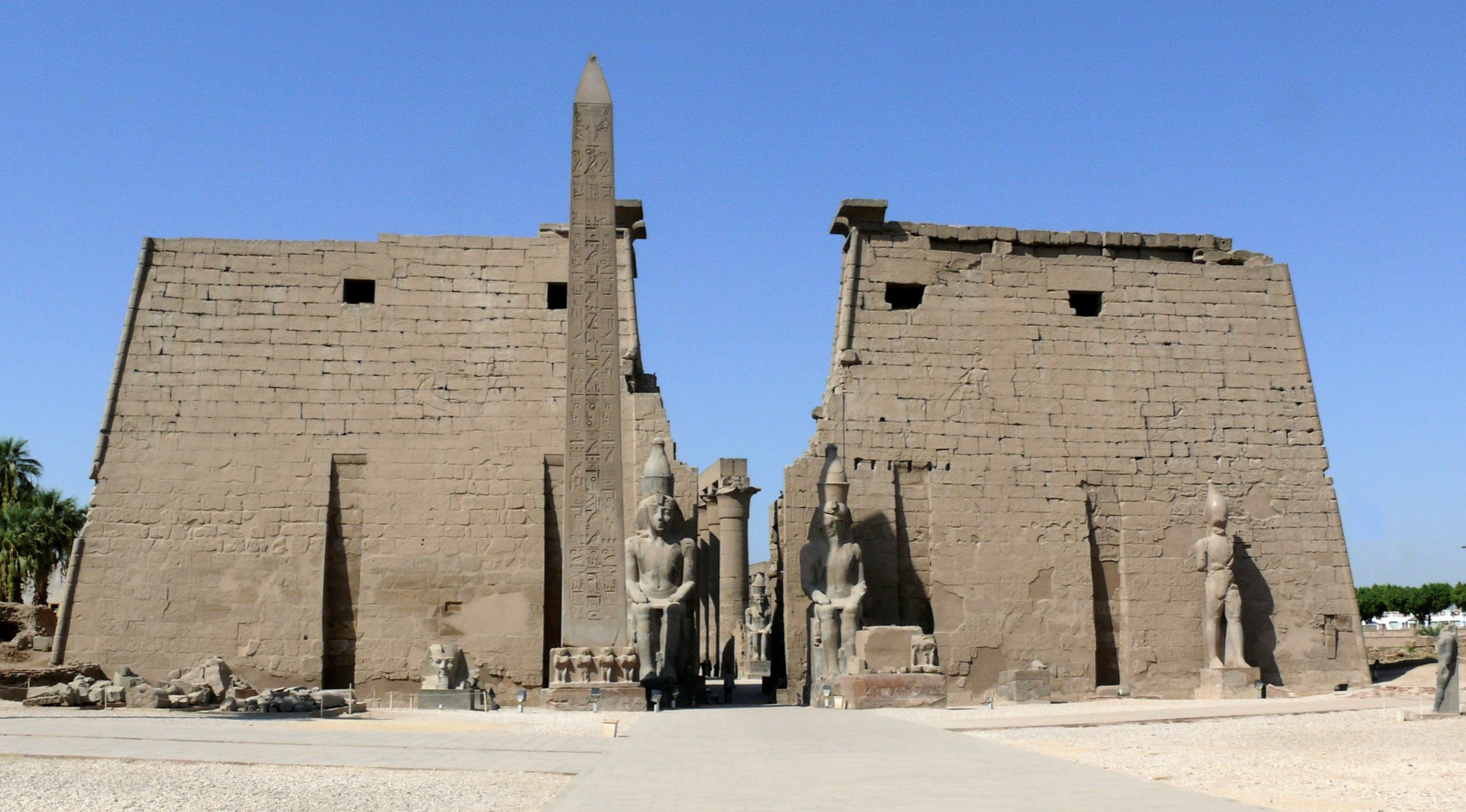
Pylon (Famous Examples)
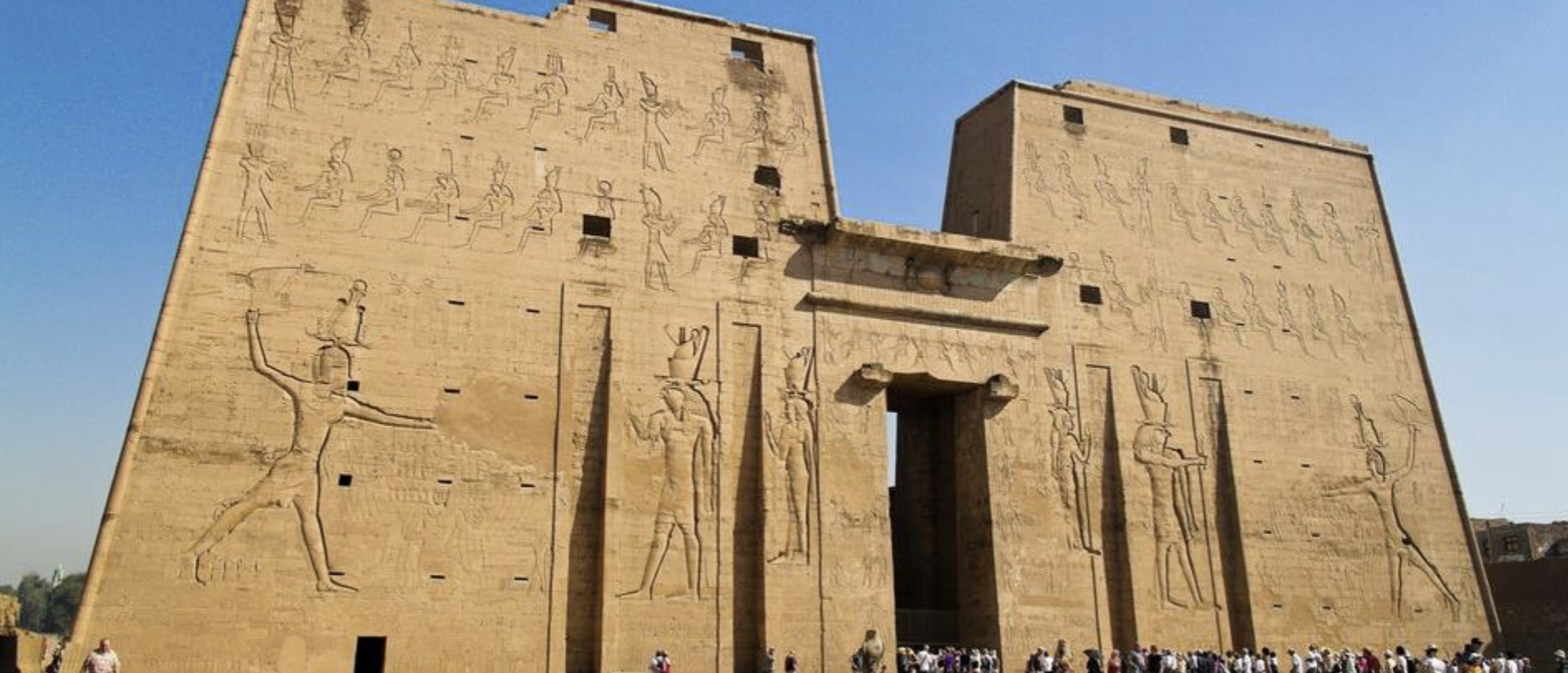
Edfu Temple - Features the largest and best-preserved pylon in Egypt, built during the Ptolemaic dynasty.
Luxor Temple - The Luxor Temple Pylon of Ramses II is famous for its battle scenes of Ramses at Kadesh and giant seated pharaoh statues.
Karnak Temple - Contains a massive series of sequential pylons built by multiple pharaohs.
Linked and lined with sphinxes to Temple of Amonhothep III
A 2.7-kilometer (1.7-mile) ancient ceremonial road in Luxor, Egypt, that connects the Karnak Temple and Luxor temples.
Luxor (pylon c. 1250 BCE)
A monumental gateway built by Pharaoh Ramesses || during the New Kingdom period. Standing as the grand entrance to the complex, this massive structure serves as a masterclass in ancient Egyptian political propaganda, religious architecture, and optical engineering.

Abu Simbel
A historic site in southern Egypt featuring two massive rock-cut temples built by Pharaoh Ramesses || in the 13th century BCE.

Abu Simbel (Key Features)
The Great Temple - Built to honor Ramesses II and major sun gods, it features four giant 66-foot (20-meter) seated statues of the pharaoh at the entrance.
The Small Temple - Located nearby, it was built to honor Ramesses II's chief wife, Queen Nefertari, and the goddess Hathor.
Solar Alignment - The Great Temple was precisely engineered so that sunlight illuminates the inner sanctuary statues twice a year, on February 22 and October 22.
Ptolemaic Temples
The most famous Ptolemaic temples include:
.Temple of Horus at Edfu
.Dendera Temple complex dedicated to Hathor
.Temple of Kom Ombo.
Temple of Horus (History and Construction)
Built during the Ptolemaic Kingdom between 237 BC and 57 BC.
Took about 180 years to finish.
Started under Ptolemy III and finished under Ptolemy XII.
Survived buried under desert sand for centuries.
Temple of Horus (Purpose and Significance)
Dedicated to Horus, the falcon god of the sky, protection, and war.
Marked the mythical battle site where Horus defeated his uncle Set.
Hosted annual festivals celebrating the marriage of Horus and Hathor.
Preserves rare inscriptions detailing ancient Egyptian language, myths, and temple building.
Temple of Horus (Architecture)
Features massive 36-meter-tall entrance pylons.
Contains large open courtyards lined with tall columns.
Includes two hypostyle halls and an inner sanctuary.
Houses a polished black granite shrine of Nectanebo II.
Mycenae-bellicose
The Bronze Age civilization of Mycenae is widely characterized by historians as highly bellicose, meaning exceptionally aggressive, warlike, and military-focused. Unlike the relatively peaceful, nature-oriented Minoans who preceded them, the Mycenaeans built their entire society around warfare, conquest, and defense.

Immortalized in Homeric epics
The phrase "immortalized in Homeric epics" refers to the people, places, gods, and events that achieved eternal fame (kleos) by being recorded in Homer’s lliad and Odyssey.
Immortalized in Homeric epics (Famous Heroes and Figures)
Achilles: The greatest Greek warrior, whose tragic rage drives the plot of the Iliad.
Odysseus: The cunning king of Ithaca whose 10-year journey home is the focus of the Odyssey.
Hector: The noble Trojan prince and defender of Troy.
Helen of Troy: The "face that launched a thousand ships," whose abduction sparked the Trojan War.
Agamemnon: The proud leader of the Greek forces.
Immortalized in Homeric epics (Legendary Places)
Troy (Ilium): The ancient, walled city besieged by the Greeks (located in modern-day Turkey).
Ithaca: The rugged island kingdom of Odysseus.
Mount Olympus: The home of the Greek gods who constantly intervene in human affairs.
Trojan War
Was a legendary conflict between Mycenaean Greek speakers and the Anatolian inhabitants of Troy in western Asia Minor around the 12th or 13th century BC.

Mycenae-Citadel
Was the military and administrative heart of the powerful Mycenaean civilization, dominating southern Greece from approximately 1600 to 1100 BCE.
Perched on a rocky hilltop 278 meters above sea level in the Argolid Plain, the stronghold was immortalized in Greek legend as the capital of King Agamemnon.

Mycenae-Citadel (Key Features)
Cyclopean Walls: Massive defensive ramparts built from giant limestone boulders. Legend says giants (the Cyclopes) moved the stones because they were too heavy for humans.
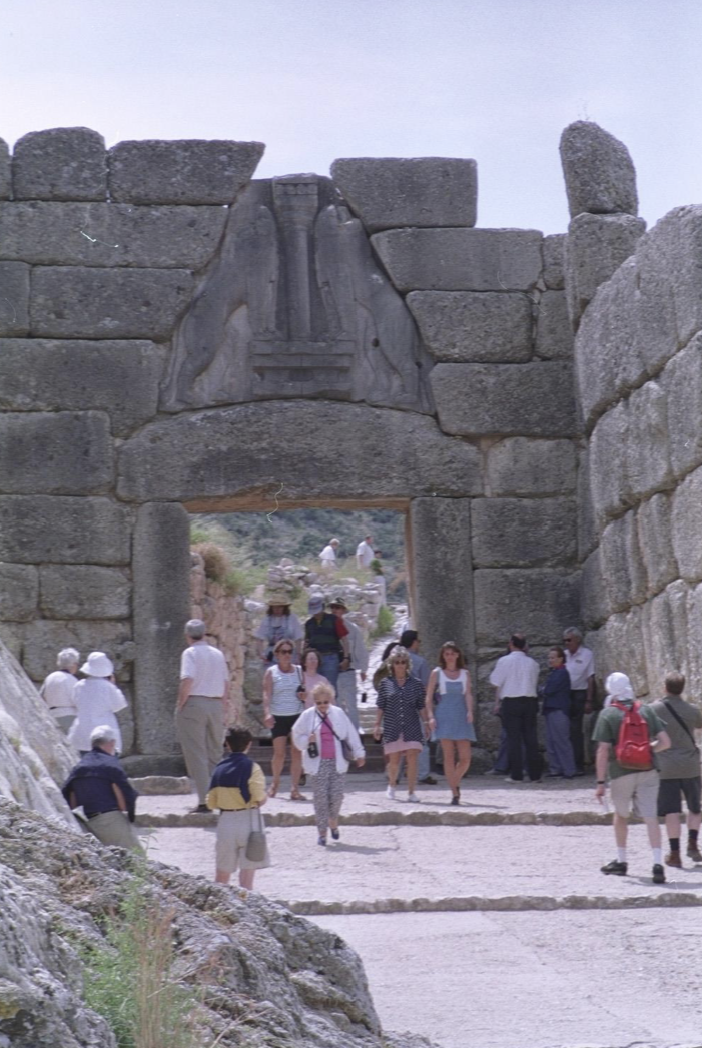
The Lion Gate: The monumental, combat-ready main entrance featuring two headless stone lions carved in relief above the lintel.
Grave Circles: Enclosed royal burial sites, including Grave Circle A, where Heinrich Schliemann discovered famous golden masks and bronze weapons.
The Royal Palace: The central governing hall situated at the highest point of the citadel.
Underground Cistern: A hidden rock-cut staircase and subterranean tunnel leading to a fresh water spring to survive long sieges.

Lion Gate (c. 1250 BCE)
The monumental main entrance to the Bronze Age citadel of Mycenae in southern Greece, built around 1250 BCE.
Lion Gate (Key Features)
Relief Sculpture: A limestone slab above the lintel shows two headless lionesses standing on their hind legs and flanking a central Minoan-style column, symbolizing royal power and divine protection.
Relieving Triangle: An engineering design forming a triangular opening above the massive 20-ton lintel stone to redirect the heavy wall weight safely to the sides.
Cyclopean Masonry

Treasury of Atreus or Tomb of Agamemnon c. 1300 BCE
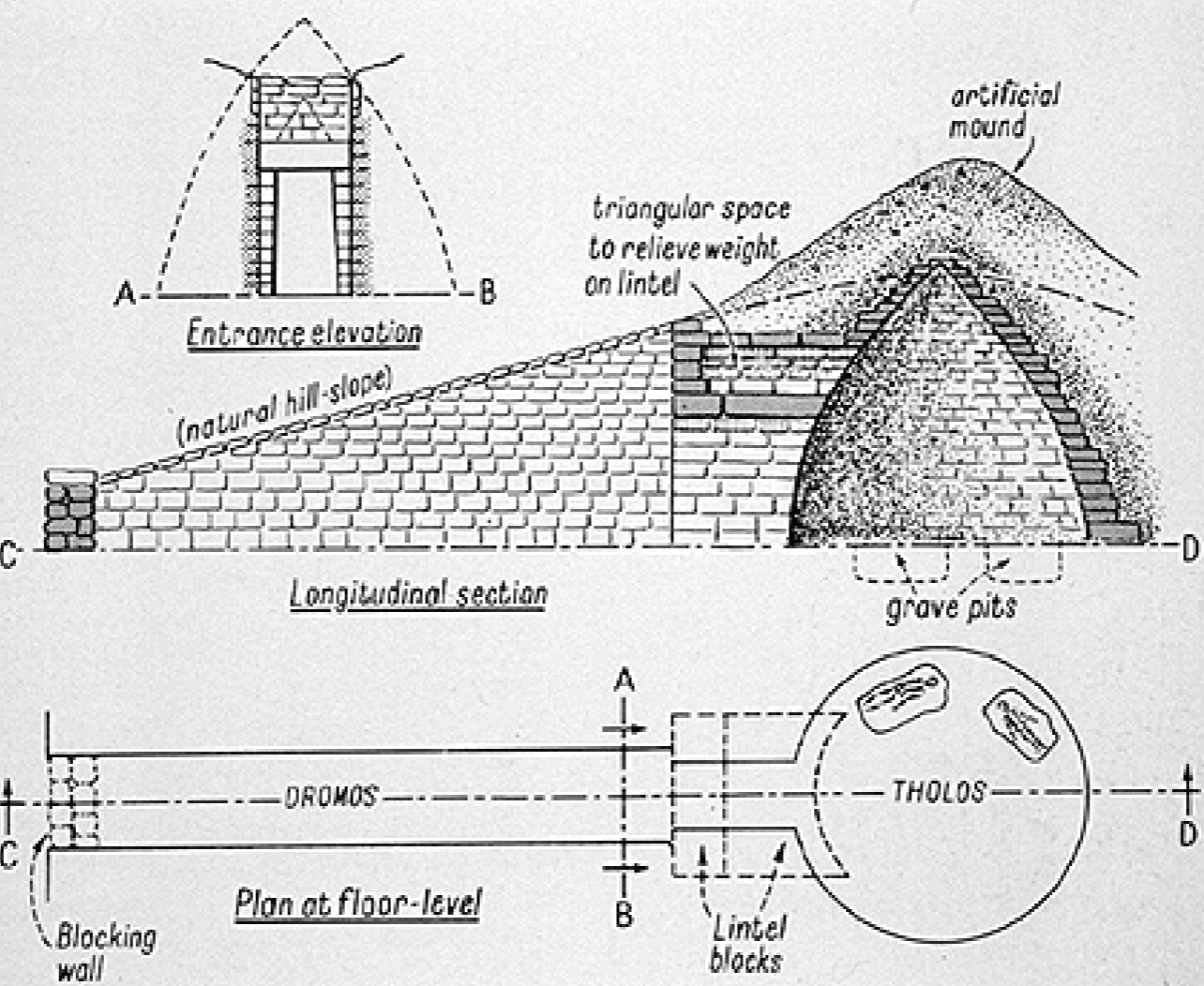
Also known as the Tomb of Agamemnon, is a monumental Bronze Age tholos (beehive) tomb built in Mycenae, Greece, [circa 1300–1250 BCE]

Treasury of Atreus or Tomb of Agamemnon c. 1300 BCE (Key Features)
Design: It features a long stone-lined entryway (dromos) leading to a soaring, 13.5-meter-high corbelled dome.
Engineering: The massive lintel block above the doorway weighs over 120 tons.
Corbel Vault
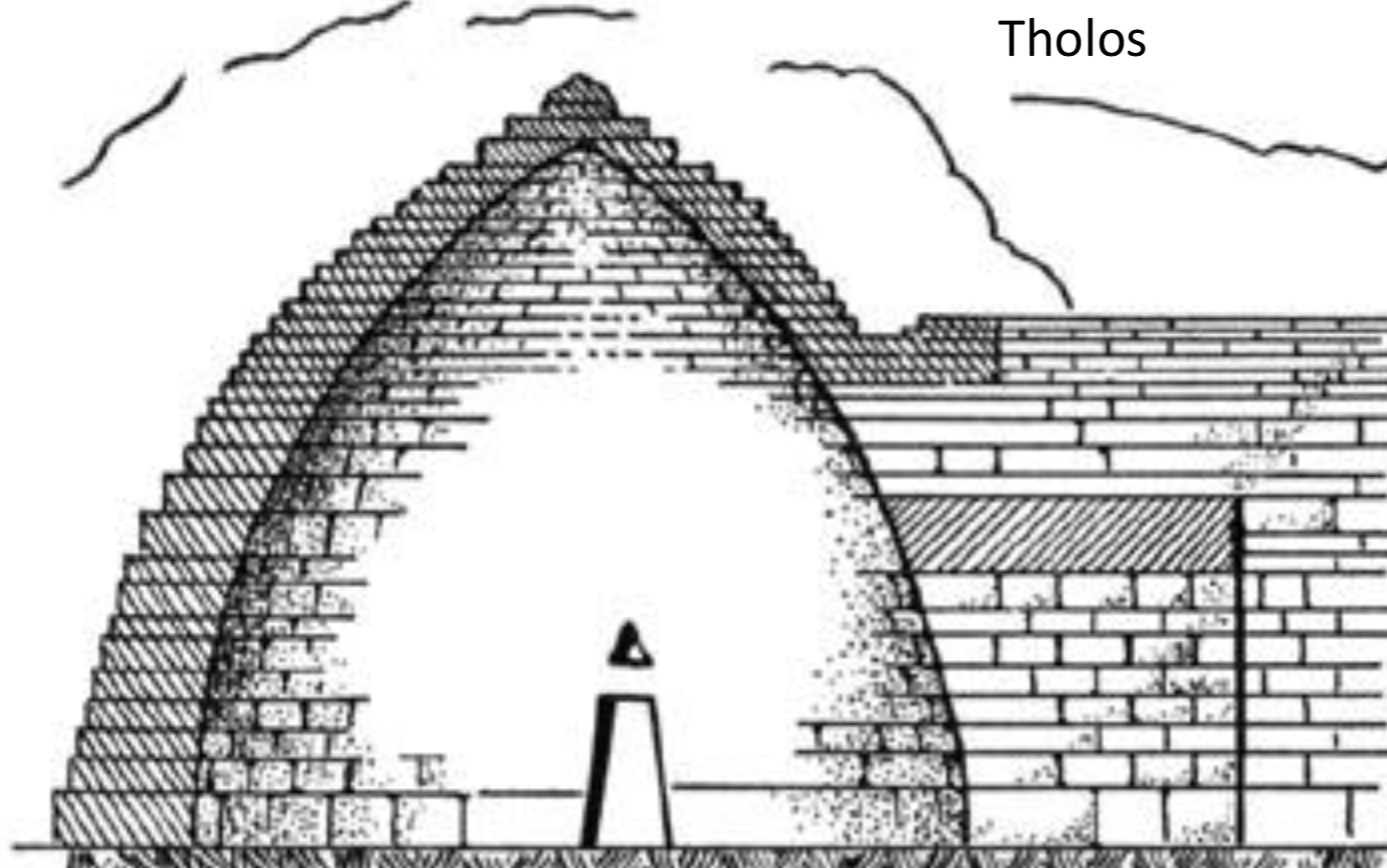
Is an ancient architectural ceiling and roof construction made by stacking horizontal rows of stone or brick where each upper row projects slightly inward past the one below it.

Tholos
Is a round building or structure with a circular wall and a conical or domed roof, widely used in ancient Greek and Roman architecture.
Polis
Polis is an ancient Greek city-state that served as both a urban center and a political community.
Anthropocentrism
Is the philosophical viewpoint that places human beings at the center of moral significance, value, and importance in the universe.
Entasis
Is a slight, convex curve or swelling built into the shaft of a column to make it look straight and solid.

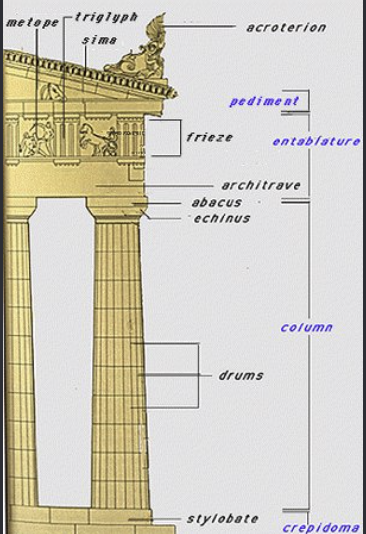
Stylobate
A stylobate is the top step or floor level of a classical temple’s stepped platform where the columns rest.

Cella (naos)
Is the inner main chamber of an ancient Greek or Roman temple.

Peripteral colonnade
Is a single row of columns that surrounds all four exterior sides of an ancient Greek or Roman temple.

Dipteral (double) colonnade
Is an architectural design where a building where a building or central chamber (naos) is completely surrounded by a double row of columns.

Doric Order
Is the oldest and simplest of the three classical architecture styles of ancient Greece.
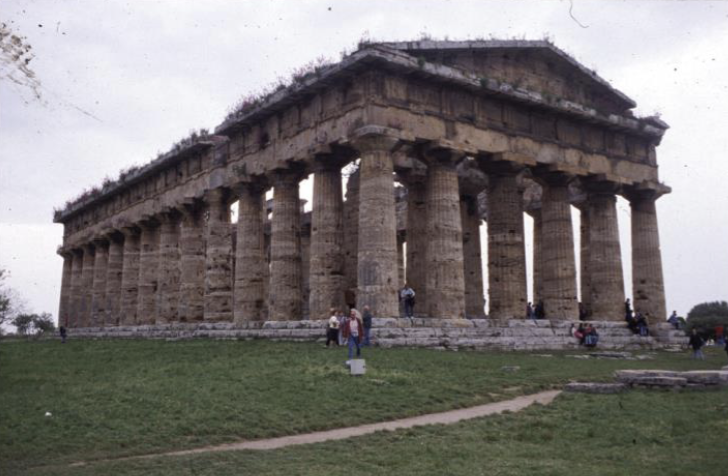
Doric Order (Column Characteristics)
No Base - Traditional Greek Doric columns sit directly on the floor platform, called the stylobate, without any decorative base.
The Shaft - The tall middle part has 20 shallow vertical grooves, called flutes.
The Capital - The simple top piece has two parts: a cushion-like round stone (the echinus) and a flat square slab (the abacus).
Proportions - These columns are shorter and thicker than later Ionic or Corinthian styles.

Doric Order (The Entablature)
Architrave - A plain, smooth beam running right across the column tops.
Frieze - A decorative middle band featuring alternating triglyphs (blocks with three vertical grooves) and metopes (panels that often have sculptures).
Cornice - The projecting shelf-like top molding that supports the roof structure.
Ionic Order
Is a classic style of ancient architecture known for its slender columns and scroll-like capitals called volutes.

Ionic Order (Key Characteristics)
Volutes - The top of the column features spiral scroll ornaments.
Slender Proportions - The columns are thinner and taller than the sturdy Doric order, usually measuring eight to nine and a half diameters high.
Fluted Shafts - The column body has 24 rounded flutes (grooves) running down its length.
Column Base - Unlike Doric columns, Ionic columns rest on a distinct stacked base rather than directly on the floor.

Corinthian Order
Corinthian order is the most ornate and latest developed of the three main classical styles of ancient Greek and Roman architecture.
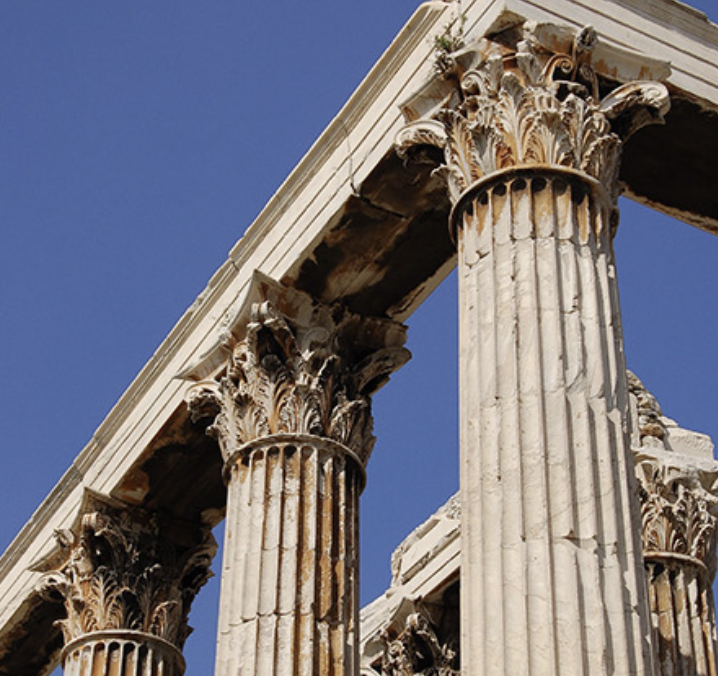
Corinthian Order (Key Features)
Acantus Capitals - The top part of the column features carved, curly leaves from the acanthus plant and small corner scrolls.
Slender Columns - The column is very thin and tall. Its height is usually ten times its width.
Fluted Shafts - The main body of the column has 24 vertical grooves cut into the stone.
Simple Base - The bottom of the column uses a basic base that looks like the one from the Ionic style.
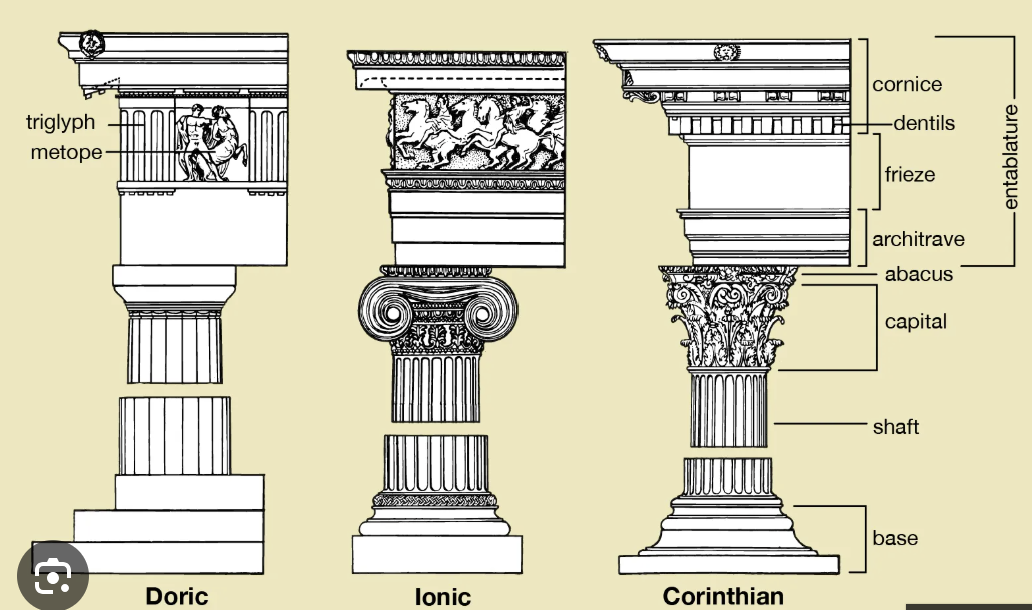
Entablature
Is the upper horizontal structure in classical architecture that rests directly on the tops of columns.

Entablature (Three Main Parts)
Architrave - The lowest band. It sits directly on the column capitals and acts as the main supporting lintel.
Frieze - The middle band. It is a flat strip that is often carved with sculptures, patterns, or inscriptions.
Cornice - The top projecting molding. It crowns the structure and throws rainwater away from the building.
Pediment
Is a triangular or curved architectural decoration placed above an entrance, door, window, or colonnade.

Triglyph
Is a rectangular, grooved architectural block used in the Doric frieze of classical buildings.

Metope
Is a rectangular architectural panel in a Doric frieze that fills the space between two triglyphs.

Temple of Hera II at Paestum, mid 5th Cent. BCE
Is an exceptionally well-preserved Greek Doric temple built around 460-450 BCE in Campania, Italy.

Temple of Hera II at Paestum (Key Architectural Features)
Style - Built in the classical Doric order, featuring a peripteral design with 6 columns on the short ends and 14 columns on the long sides.
Interior - Features a unique double tier of smaller Doric columns inside the cella to support the ancient roof.
Material - Constructed from golden-colored local travertine stone.
Preservation - Widely considered by historians like A.W. Lawrence to be the best-preserved ancient Greek temple in existence.