thirst project: the water crisis
 Call Kai
 Learn
Learn Practice Test
 Spaced Repetition
 Match
Match Flashcards
 Knowt Play
1/22

There's no tags or description
Looks like no tags are added yet.
23 Terms
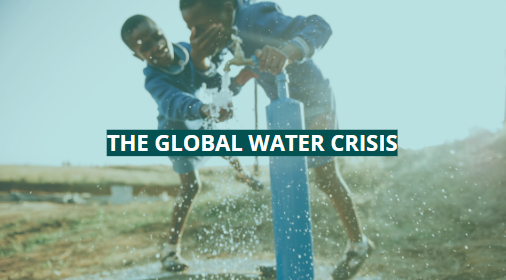
Let’s take a step back. What is the global water crisis? Well… In case anybody plans on falling asleep in the next two minutes — I've only got two minutes to say something that sticks with y'all for the rest of your lives, so here it is:
how many of you have had a glass of water today? Didn't even think about it, right? It was just... there. Now imagine waking up and it's not. Not from the tap, not from a bottle, nowhere close by that won't make you sick.
Right now, 695 million people live that every single day. Let's talk about what that actually looks like.
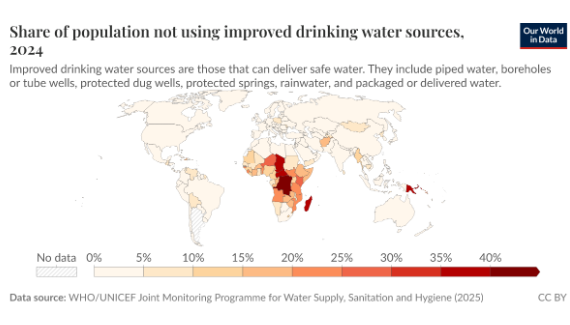
I’m not going to spend a ton of time on this, but just to give you some context, over 70% of our planet is water, but less than 1% is actually available to you and I as human beings in the form of FRESH water for consumption.
This map shows the availability of safe, clean water around the world. You’ll notice that in the developed world, almost everyone has safe, clean water in their homes, their schools, and so on.
But what we’re going to be talking about today are the parts of the world where many people don’t have access to a safe, clean water source, like sub-Saharan Africa, for example. Now, let’s take a second and try to guess how many gallons of water the average american used every single day. Does anybody have any guesses?
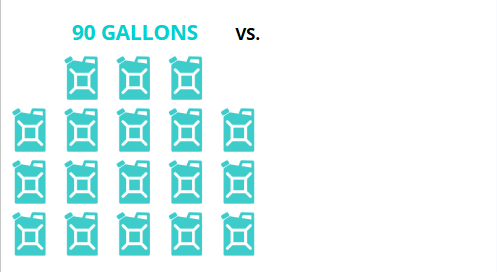
The answer is 90 gallons. That’s a lot of water! Now, how does that compare to the global water crisis?
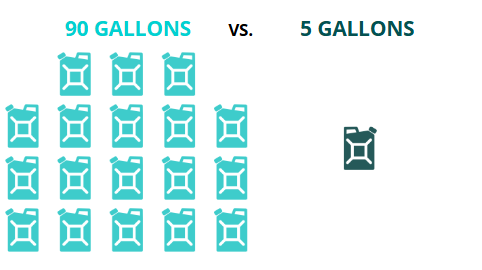
Well, if you suffer from the global water crisis, you have access to 5 gallons of water per day or less. That's crazy — think about that for a second. We use water for everything. We cook with it, we clean with it, we shower, we flush the toilet, we wash our hands, we drink it.
Now imagine your entire day — every single one of those things — squeezed into five gallons. Not just squeezed in, but rationed. You'd have to choose. Do I drink today, or do I wash my hands? Do my kids bathe, or do we cook dinner?
And on top of that — imagine the water you're rationing isn't even clean. It's the same water that could make you sick, or kill your kid, or kill you. That's not a hypothetical. That's someone's actual day, happening right now, while we sit here. So how many people live under this reality?
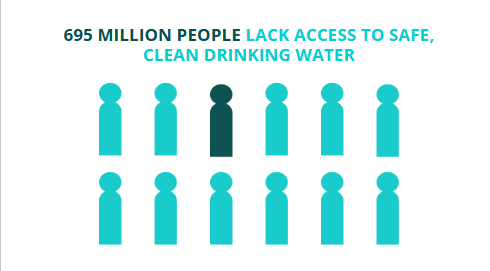
it’s about 1 in 12 of us, and it’s maybe the most important thing that you can walk away from here knowing. There are 695 million people that we share planet Earth with that do not have access to safe, clean drinking water.
And out of all the statistics that we’re going to look at today, this one is the one that always sticks with me the most, because this feels like something that you would see in history class, right?
Your teacher would tell you to turn to page 200-something and you would read that 500 years ago or a thousand years ago, 695 million people didn’t have safe, clean water to drink, and you would think “wow, I’m glad we don’t live like that anymore, because what if I was one of those 695 million?”
But guys, this isn’t something from history class. This is the world we live in right now.
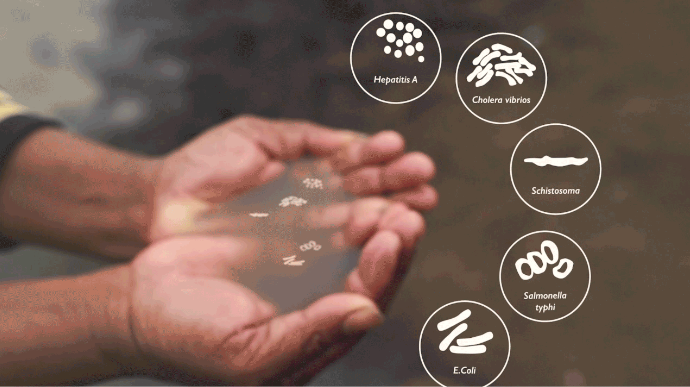
Every year, the global water crisis kills more people than hunger, HIV/AIDS, and malaria. Some years, it even kills more people than all of world violence combined — every war, every murder, every car crash, all of it
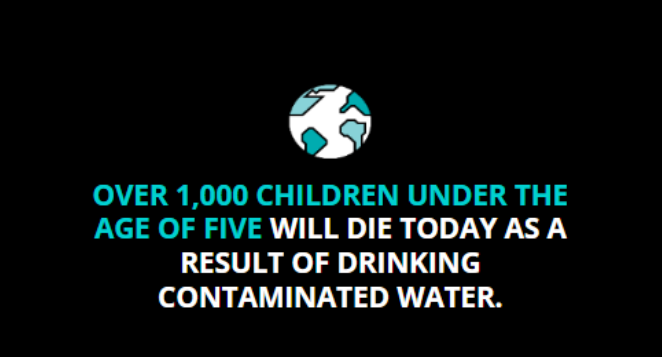
and not only that, waterborne and diarrheal illnesses are the second leading cause of death for children under the age of five. So we can go about our days today knowing that another 1,000 children died today due to these easily preventable illnesses. It's basically a child every 90 seconds.
Here's the way I think about it: imagine three fully-loaded airplanes — like the big ones, 300-400 seats — crashing every single day, non-stop, every seat filled with a kid.
If that were actually happening, you would never stop hearing about it on the news, as it should be. But turn on the news or check social media right now — how often are you actually hearing about the water crisis?
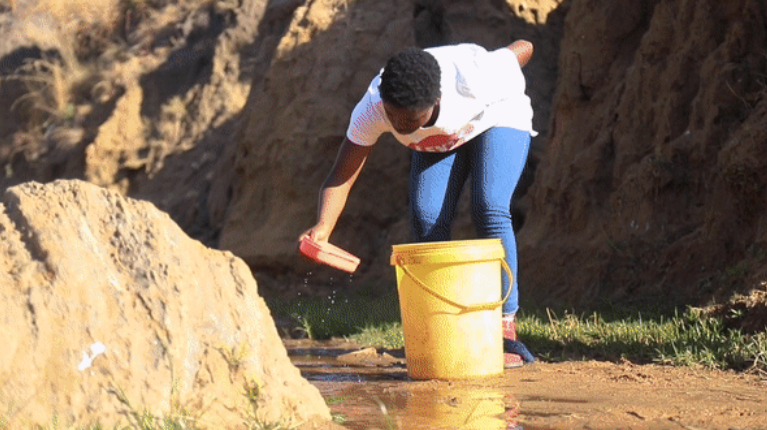
So that's what we do at Thirst Project. We tell the story that isn't being told. Because right now, all around the world, people are walking to ponds. To puddles.
To rivers where animals are drinking — and defecating — in the exact same water they're about to carry home and give to their kids.
Not because they don't know it's dirty. They know. They just don't have another option. This is where the story really starts
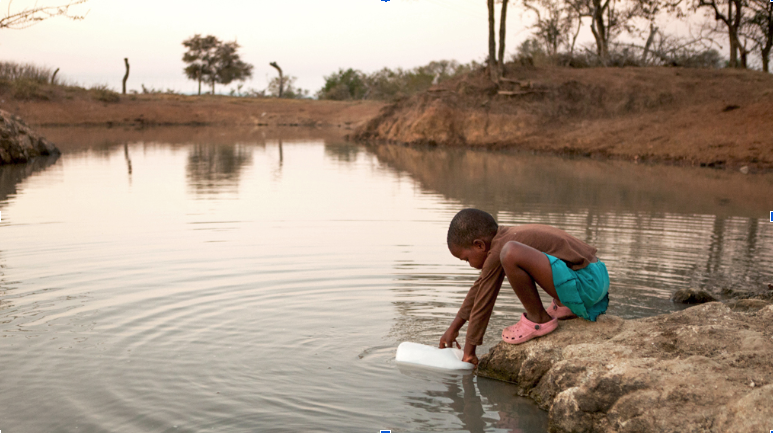
This first photo was taken in the Kingdom of eSwatini — a place I'll also be coming back to talk about later.
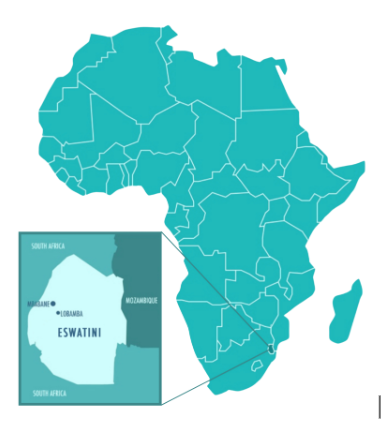
If eSwatini doesn't sound too familiar, the former name for eSwatini was Swaziland, but their King changed it to eSwatini in 2018. It's a tiny little country in southern Africa, and it has the highest density of HIV/AIDS cases in the world — over 27% of the adult population is living with HIV.
Now here's the thing — that's not the kind of work we do at Thirst Project, we don't run AIDS treatments or clinics. But water plays a critical role in managing AIDS.
AIDS, Acquired Immune Deficiency Syndrome, weakens your immune system so severely that even if you have access to the best hospital, the best doctors, the best medication in the world — if you're still drinking dirty water, the bacteria and parasites in it will kill you faster than AIDS ever could.
Let that sink in. The best medicine on Earth can't save you if the water you drink every day is working against it. And in eSwatini, about a quarter of the population — 26% — still doesn't have access to clean water.
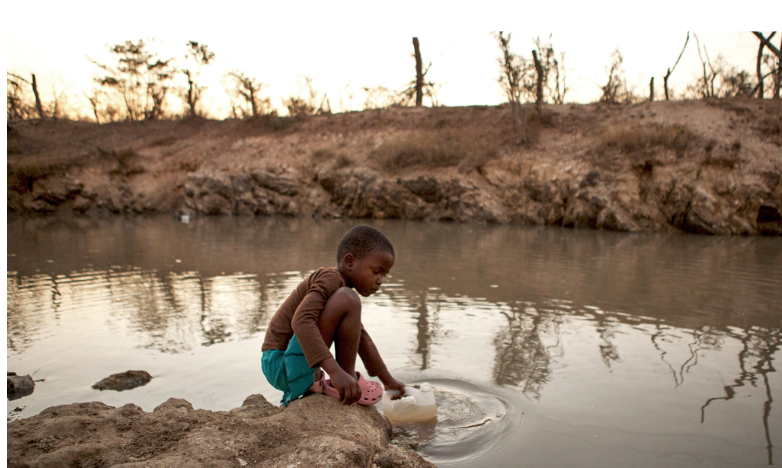
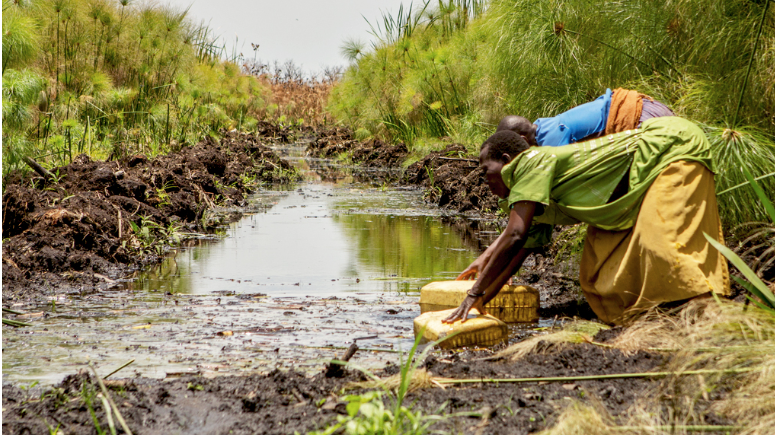
This photo is from a village called Njonjane (en-jo-JOHN-ee), with a population of about 400. What we're looking at is what's called an earth dam. The community dug this pit — about four feet deep, roughly the size of an average high school gymnasium — and pushed up mud walls along the sides to collect rainwater.
This became the water source for this entire community of 400 people. It's open. It's unprotected. It's visibly contaminated. Cattle drink from it. Cattle defecate in it.
Every single day, this little girl would walk five kilometers from her homestead to this water source to collect it. As a result of using this water, this community had a 26% rate of a disease called Schistosomiasis (shis-toe-so-MI-asis).
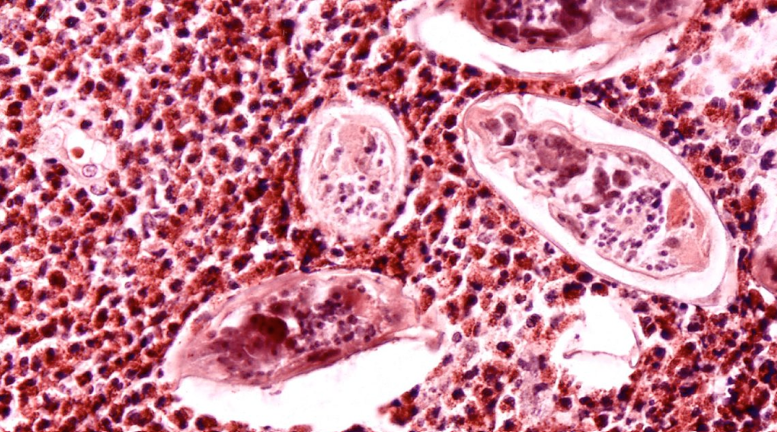
This is Schistosomiasis (shis-toe-so-MI-asis). . Most of you have probably never even heard this word before today — and that's the point. This disease has quietly affected millions of people, and it's barely made a dent in our collective awareness.
Schistosomiasis is a parasite that can be contracted from drinking or washing with contaminated water, and it's incredibly painful — it can cause you to urinate blood, cause severe abdominal pain, fever, rashes, and in the long term, organ damage like liver scarring and kidney failure, and it severely increases the risk of contracting STDs.
This is what that little girl, and 26% of her village, are dealing with. So there are HUGE health problems that come from drinking water like this.
So we know that drinking dirty water is a huge issue. But that's just the first big part of the global water crisis, and there are two other big parts that I want to tell you about.
As important as the act of drinking dirty water is, the act of collecting it is just as big an issue. Now, this is something that's genuinely hard for us to wrap our heads around.
Because while fetching a glass of water in our homes is a matter of a few steps, for those suffering from the global water crisis, it's a matter of hours. It's a matter of life and death.
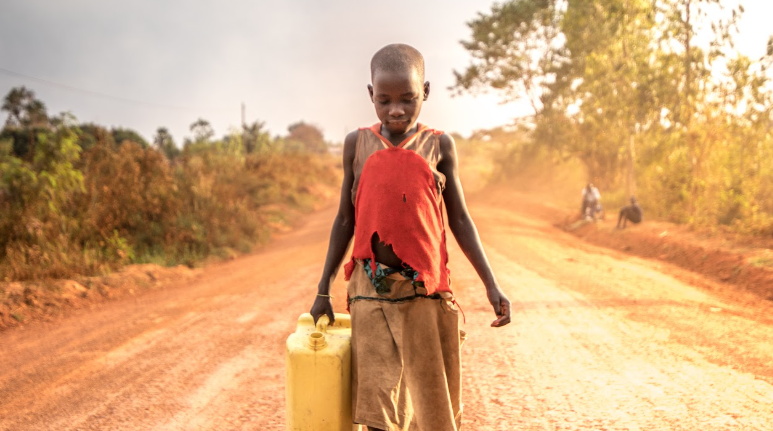
Most people in developing countries use what are called jerry cans to fetch their water. Jerry cans are basically the yellow, water-carrying version of those red gas cans you've probably seen at a gas station.
[Hold up jerry can, struggle visibly while lifting it]
Based on my very... easy... effort picking this up — how much do you think this weighs?
[Take guesses]
44 pounds. I want you to keep that in mind, because…
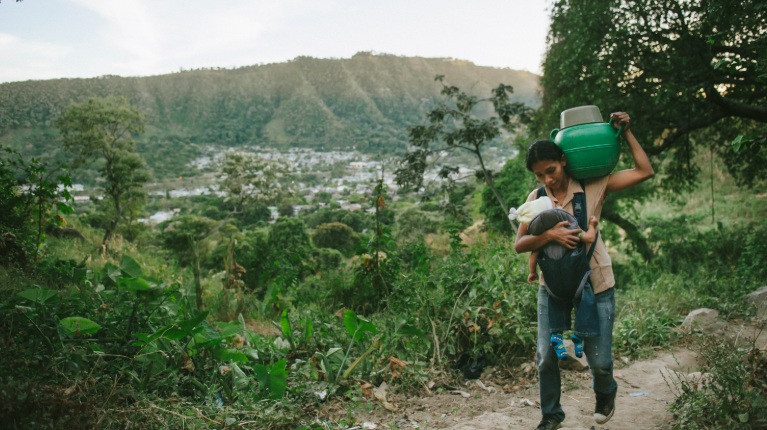
Remember how heavy that felt when I could barely pick it up for five seconds? Someone will walk to their water source with a five-gallon jerry can, fill it up with that same 44-pound concoction of water, dirt, bacteria, and parasites — except they're not just holding it for five seconds, they're carrying it 3.75 miles.
The average distance someone in a developing community walks daily to fetch water is 3.75 miles. And the task of collecting water tends to fall on women..
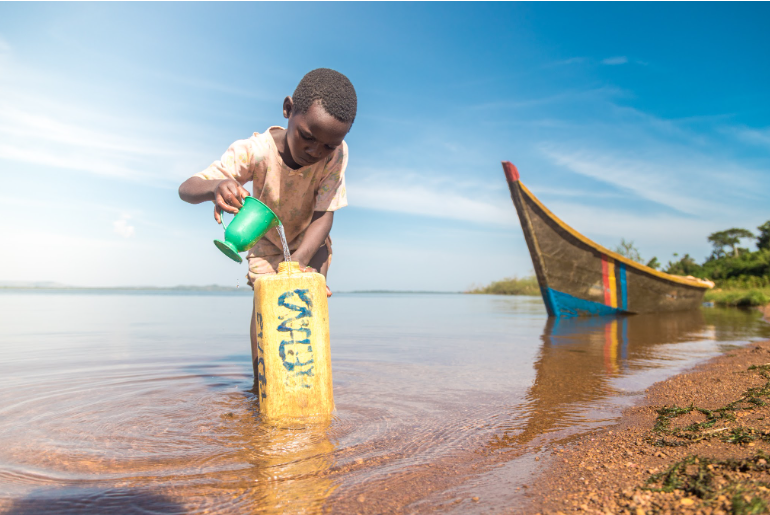
or more often, children between the ages of eight and 13
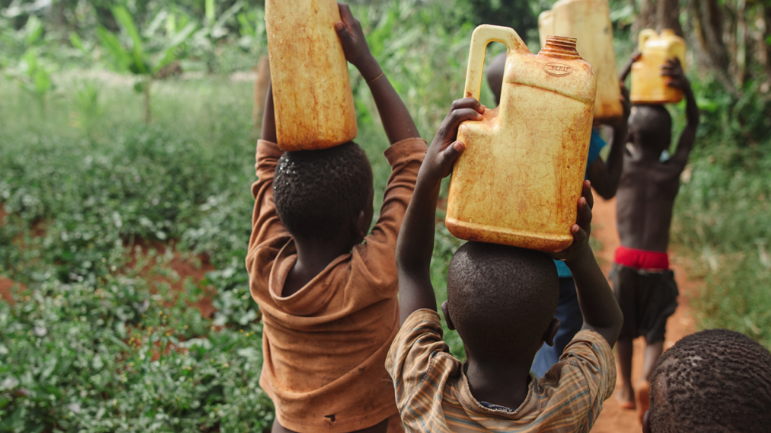
Does anybody have an 8, 9, 10 year old sibling? Imagine being an eight-year-old and walking with your jerry can to the nearest pond, stream, or river to collect water, filling your jerry can up, and then walking back home
. That's 44 POUNDS of water hauled by you, an eight-year-old, every single day. I think a lot about how long it would take for me to fetch water for my family if I happened to be born in a developing nation like eSwatini.
I think about how much worse the trip back home from the dirty water would be than the trip to the dirty water, thanks to all the weight I'm lugging back with me.
It takes some children 6-8 hours to fetch their water for the day, meaning they don't get to go to school and receive an education, which is the second most important factor in escaping extreme poverty, second only to clean water itself.
That's the pain and perpetual suffering that some children, like these children right here, endure on a daily basis.

We've documented all sorts of health issues with the women who have to endure this journey daily.
That 44 pounds, especially in hot weather, takes a real toll on our bodies over time — spinal and pelvic deformities that never fully heal, spontaneous miscarriages..
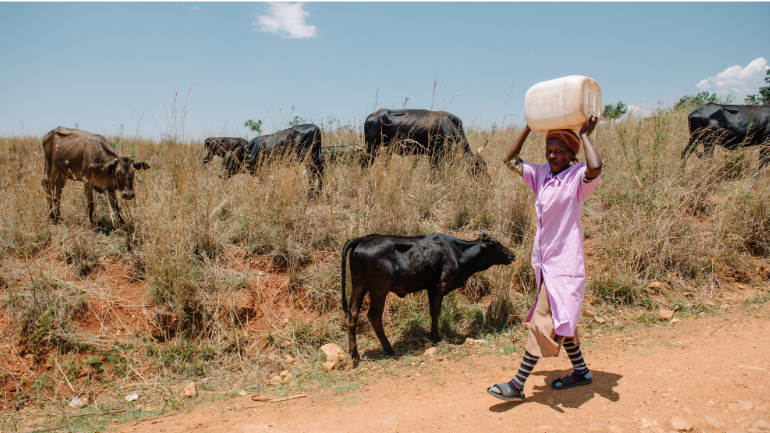
… and even .chronic fatigue that doesn't go away with a good night's sleep, because there is no good night's sleep when you know you're doing this same walk again tomorrow, and the day after that, and the day after that .
So again, the act of drinking dirty water is not the only problem; the process of collecting dirty water is also a HUGE issue.
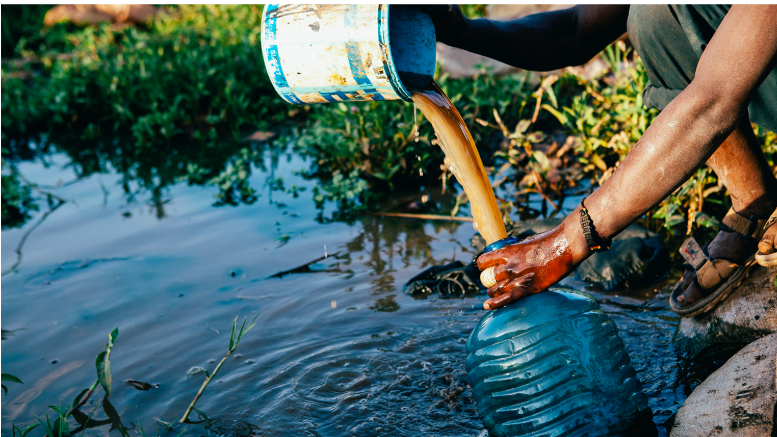
It keeps going. Now comes the third big part of the global water crisis, which is simply touching contaminated water.
Sanitation & hygiene are incredibly critical for disease-reduction. Even something as simple as bare-skin contact with contaminated water — like you see here — can expose people to bacteria, fungal infections, and parasites like ringworm.
Not only do women and children walk these long distances to collect water, they'll use that contaminated water for cleaning and washing. And without access to close, safe water, communities become far more vulnerable to infections and illnesses — and it's completely unnecessary.
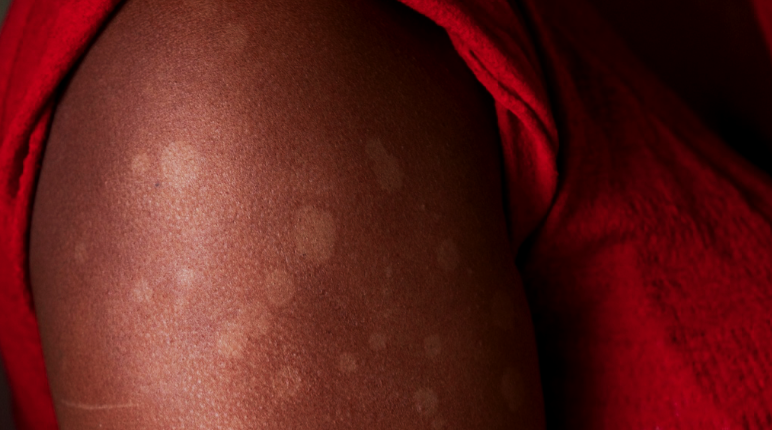
This woman in Colombia contracted ringworm as a result of washing with dirty water—here it’s easy to see the skin irritation on her arm caused by the parasite. And this is another part of the global water crisis that is hard for us to have empathy with, because things like ringworm, staph, meningitis - we’ve all heard of these things, right?
Some us have probably had siblings or friends that we stay away from for a few days or weeks because they have one of these things. These bacteria and parasites are just nuisances for us because we have access to safe, clean water.
When you don’t have access to safe, clean water, like this woman in Colombia, things like ringworm, staph, and meningitis go from nuisances to deadly.
Drinking it kills you slowly. Collecting it breaks your body. And just touching it — something as simple as washing your hands — can kill you just as fast as either one."
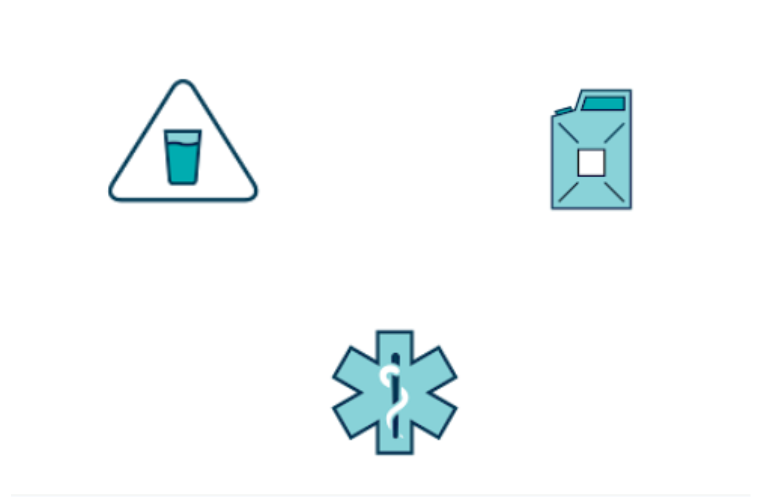
So there we have it; The big three of the global water crisis.
When you suffer from the global water crisis, your livelihood is endangered when you drink dirty water, your livelihood is endangered when you collect dirty water, and your livelihood is endangered when you touch dirty water.
You put all these together…
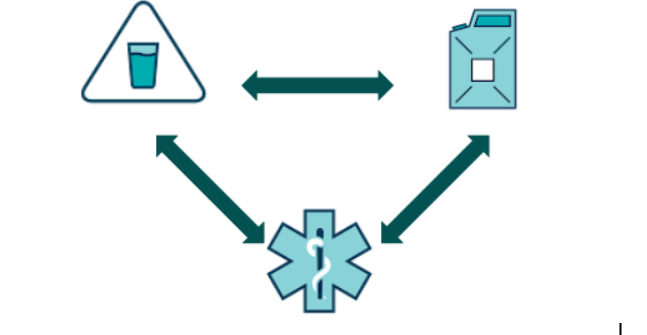
And you start to understand how extreme poverty works. It’s cyclical.