Mockingbird Quiz
 Call Kai
 Learn
Learn Practice Test
 Spaced Repetition
 Match
Match Flashcards
 Knowt Play
1/31

There's no tags or description
Looks like no tags are added yet.
Name | Mastery | Learn | Test | Matching | Spaced | Call with Kai | Chat |
|---|
No analytics yet
Send a link to your students to track their progress
32 Terms
What are characteristics of mockingbird territories?
It is the most prominent aspect of this bird’s behavior. Not only are its territories small, sharply defined, and aggressively defended, but they are also formed twice each year.
When are territories formed?
Once in spring for breeding and again in fall to protect a winter food source.
How are mockingbird territories easy to observe?
They live in urban areas and the territories are marked by the birds loud, imitative song. In the spring only the male sings, but in fall either male or female may sing. The differences between these territories are reflected in the bird’s behavior: in spring the male sings loudly until he attracts a mate, while in fall either male or female may defend a food source such as berries or other fruits. Of course, territory defense is common in many species—robins, starlings, and blue jays among them—but mockingbirds are especially well known for it.
When is a Clijjj-call given?
In spring the male sings loudly until the female arrives. Then there is a short period when he chases her, and either.

What is loop-flight?
Male
Starting from an exposed perch, the bird flies up into the air, makes a short loop, and settles back onto the perch.
Context: Given by males at the height of their spring territory formation and may help to attract a mate. See courtship
What is mate-chase?
Male and female
A female is chased in flight by a male within his territory. Other males may join in the chase, in which case it may cross territorial borders.
Call Chjjj-call
Context: Given by a territorial male in spring when a female first comes near his territory; believed to be part of courtship
What is border-chase?
Male or female
Two birds on the ground, with tails and heads raised, slowly hop back and forth and from side to side.
Context: Occurs near the end of fall territory formation at a border between two adjoining territories; may be a reaffirmation of territorial borders between know neighbors.
What is Drooped-wings?
Male or female
While perched or on the ground, the bird lowers its wingtips well below the level of its tail
Context: Given in the presence of other birds that are intruding upon the displayer’s territory: often a precursor of more aggressive action, such as a direct attack

What is the loose-tail?
Sex: Male or female
Description: The bird spreads its tail slightly so the white border feathers show, then moves the tail loosely up and down and from side to side.
Context: Directed toward possible predators near the nest—such as crows, cats, squirrels, snakes, or humans. Often precedes an attack. See Territory.

What is wing-flashing?
Sex: Male or female
Description: The bird haltingly raises one or both wings, holds them open briefly, and then lowers them. The display may be repeated several times.
Context: Often seen when a bird is feeding on the ground. It is not known whether this behavior has a communicative function.
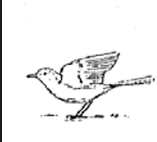
What is song?
Sex: Male in spring; male or female in fall
Description: A long, varied series of imitative phrases, often incorporating calls of other birds.
Context: Used during periods of territory formation and courtship. In spring, only males sing; in fall, both sexes may sing. Often given from an exposed perch. See Territory, Courtship.
Sound: witew witew witew, chicup chicup chicup, peer peer peer peer, etc
What is the Chick-Chick call?
Sex: Male or female
Description: A repeated, short, harsh call given for long periods at a rate of about once every one to two seconds. Context: Given from within cover and often heard at dusk during early fall territory formation. See Nonbreeding Territory.
Sound: chick, chick, chick
What is the Ch’ch Chick Call?
Sex: Male or female
Description: A short, rapid series of harsh notes.
Context: Given by territory holders in fall when another bird enters their feeding territory. Often prompts neighboring mockingbirds to give the same call. See Nonbreeding Territory.
Sound: ch’ch; chick. ch’ch’ch’ chick
What is the Chewk-call?
Sex: Male or female
Description: A loud, sharp sound.
Context: The only call regularly given by mockingbirds in winter; used during nonbreeding territorial defense. See Nonbreeding Territory
Sound: Chewk, Chewk
What are the two types of territories?
A breeding and nonbreeding. The breeding territory is held from April through late summer, while the nonbreeding territory is held from September until February. Like chickadees, mockingbirds are among the few common birds that defend a territory throughout the winter.
What are characteristics of breeding territory?
Type: mating, nesting, feeding
Size: 1-2 acres
Main behaviors: Song, chases, Drooped-wings, loose-tail
Duration of defense: March through july
The start of territory formation in spring is obvious, marked by the male’s song. Early in the season, the song is given intermittently and often from low perches within bushes. Over the following weeks, it becomes louder, more frequent, and nearly continuous. The male becomes even more conspicuous by singing from exposed perches throughout his territory.
If another male mockingbird enters the territory, it is swiftly chased out, often with few or no calls. Within a month, most males in a given area have established stable boundaries and rarely encroach on one another’s territories. During this period, the song grows louder and more persistent and is accompanied by conspicuous looping flights. These displays are considered part of courtship and serve to attract a mate.
Breeding and nonbreeding territories are defended against both birds and mammals, but the most threatening intruders differ by season. The breeding territory is protected against nest predators such as crows, blue jays, snakes, squirrels, cats, and humans. Mockingbirds can be extremely bold in defense, diving at the heads of humans who approach too closely during incubation and nestling phases, effectively taking over part of a backyard or park.
The displays most often accompanying these encounters are Drooped‑Wings and Loose‑Tail, both of which expose the white patches on the wings and tail. Seeing a mockingbird in one of these postures almost always indicates a disturbance nearby, even if the intruder is not visible. These displays frequently precede attacks, taking the form of brief flights above the intruder, sometimes followed by dives.
When the last brood has fledged, breeding territorial boundaries are no longer defended.
What are characteristics of non-breeding territory?
Type: Feeding
Size: 1-2 acres
Main behavior: song, Ch’ch’chick-cell, chick-chick call, Chewk-call, chases, border-dance
Duration of defense: Displays from September through December: territory defended until about February.
Here is a complete breakdown of the non-breeding territory and associated behaviors detailed in your reading:
1. Timing, Purpose, & Structure
Season: Non-breeding territories are held from September through February.
Core Focus: Unlike spring breeding territories which are centered on a nest site, fall/winter territories are centered directly on a food source (such as berry bushes or fruit trees) to ensure survival through the winter.
Territory Holders: Non-breeding territories can be held by a single male, a single female, or a mated pair.
Equal Defense: Unlike the breeding season (where only males sing and defend boundaries), both males and females sing and actively defend non-breeding territories.
2. Timeline of Territory Establishment
September (Early Formation): Birds begin establishing territories. The earliest sign is the Chick-Chick Call, given mostly by immature birds from inside cover or at dusk.
September to Early October: Birds select high overlook perches to monitor their food supplies and call to neighbors.
Mid-October (Fixed Boundaries): Boundaries become set. Observing a bird for just 10 to 15 minutes at this stage is usually enough to determine its territory size and borders.
November (Refinement): As wandering intruders decrease, birds grow quieter and perch lower near their food source, using the Border-Dance to reaffirm boundaries with neighbors.
Midwinter to Early Spring: Mockingbirds become quiet, and their main activity is occasionally chasing intruders away from their food supply.
3. Intruders & Defense Behaviors
Mockingbirds face three main types of fall/winter intruders:
Other Fruit-Eating Birds (Robins, Starlings, Blue Jays): Drawn to the same berries/fruits, these birds are chased out by the territory holder through diving attacks or sharp calls.
Lone Wandering Mockingbirds: When a wandering mockingbird enters, the territory holder flies to an exposed perch and gives the Chewk-call. Surrounding territory holders often join in from their high perches to prevent the wanderer from settling.
Raid Groups (Landless Mockingbirds): Groups of mockingbirds without territories may attempt to raid established food supplies. In response, neighboring territory holders temporarily band together to drive the raiders away before returning to their own individual boundaries.
4. Key Calls & Displays Used in Non-Breeding TerritoriesAuditory Calls
Song: Short, harsh phrases used by both males and females in fall during territory formation.
Chick-Chick Call: A repeated short, harsh note (about once every 1–2 seconds) given from cover during early fall formation in September.
Ch’ch’chick Call: A rapid series of harsh notes given when an intruder enters a feeding territory, which often prompts neighboring mockingbirds to give the same call.
Chewk-Call: A loud, sharp sound delivered from exposed perches. It is the only call regularly given in winter to defend non-breeding territories and chase intruders.
Visual Displays
Border-Dance: Performed along shared borders in November. Two (or three) birds stand face-to-face on the ground with tails raised and bodies erect, hopping side-to-side and back-and-forth while mirroring each other. This display reaffirms territorial boundaries between familiar neighbors.
Drooped-Wings & Loose-Tail: Displays where wingtips are lowered below the tail or the tail is spread and moved loosely. These signal aggression toward intruders/predators and often precede direct diving attacks.
Wing-Flashing: Haltingly raising and lowering one or both wings while foraging on the ground.
Would you like help putting together a checklist of specific perches and behaviors to look for when you map your bird on campus?
What are characteristics of court ship?
Main behavior: Song, Chjjj-call, chases, loop-flight
Duration: Variable
Here is the complete breakdown of courtship and breeding territory behaviors from your reading:
1. Timing, Purpose, & Site
Season: Breeding territories are established in April and held through late summer.
Core Focus: Unlike fall/winter territories (which center on food supplies), spring breeding territories are centered directly on the nest site.
Defended by Males Only: In contrast to non-breeding territories where both sexes defend food, only males sing and defend breeding territories in spring and summer.
2. Timeline of Courtship & Pair Formation
Early Spring Territory Setup (April): The male marks the start of spring territory formation with his song. At first, he sings intermittently from low perches within bushes.
Attracting a Female: Over subsequent weeks, the male moves to high, exposed perches and sings nearly continuously. He performs Loop-flights and flies slowly from perch to perch, flashing the white patches on his wings to attract passing females.
Arrival of the Female: When a female enters the territory, the male suddenly becomes quieter. Her arrival is marked by the Mate-chase and frequent Chji-calls.
Pair Bonding: After 1 to 2 days of chasing, the chases stop and the pair can be seen feeding together around the territory. The male now sings only softly at certain times of day.
Courtship Displays & Nest Site Selection:
Bowing Display: The male stands near the female, lowers his head, and raises his tail and wings while facing her.
Nesting Material Display: The male carries nesting material in his bill and flies to potential nest sites throughout his territory, often followed by the female.
3. Subsequent Nesting & Parental Stages
Nest Building: Both male and female participate in building. The pair may start as many as 5 nests before completing one. The female finishes the final nest by lining it with fine fibers, such as fern bases.
Incubation Phase: Only the female sits on and incubates the eggs (averaging 4 eggs per clutch). The male guards the nest, accompanies her on feeding trips, and provides soft, intermittent songs.
Nestling Phase: Lasts about 12 days. Both parents feed the young and keep the nest clean by removing fecal sacs.
Fledgling Phase: Lasts up to 4 weeks. Young fledglings give a loud, persistent, breathy call so parents can locate and feed them outside the nest.
Unexpected Behaviors:
Loss of Mate: If a male suddenly begins singing loudly and persistently in mid-season, it usually indicates he has lost his mate.
Night Singing: Males will frequently sing loud songs late at night, especially during bright moonlight.
4. Key Calls & Displays Used in Courtship & Nest DefenseAuditory Calls
Song: A long, varied series of imitative phrases. Given only by males in spring from exposed perches to establish territory and attract a mate. Converts to a soft song after a female arrives and during incubation.
Chji-Call: A harsh, drawn-out rasping call given in flight. It accompanies the Mate-chase and is one of the first auditory signs that a female has arrived.
Visual Displays
Loop-Flight: The male flies upward from an exposed perch in a short looping arc and lands back on the perch (or flies down to the ground and back up) to attract a mate.
Mate-Chase: The male aggressively chases the female in flight within his territory (sometimes crossing boundaries if other neighboring males join in).
Bowing Display: Performed on the ground/perch facing the female; the male lowers his head while raising his tail and wings.
Nest Defense Displays (Drooped-Wings & Loose-Tail): Directed toward nest predators (crows, blue jays, cats, squirrels, snakes, and humans). The bird lowers wingtips below the tail or spreads and moves the tail loosely, which precedes diving attacks at the intruder's head.
Would you like help combining all these non-breeding and courtship behaviors into a single, printable PDF or study guide for your assignment?
What are characteristics of Nest-building?
Placement: In shrubs or trees 4-10 feet high
Size: inside diameter 3 inches
Materials: Twigs, leaves, grape bark, fern rootlets, buts of plastic string
1. Signs Nest-Building Is About to Begin
The Shift in Singing: Once a female arrives, the male's loud, continuous song suddenly stops and becomes soft and intermittent[1][2].
Pre-Building Displays:
Bowing Display: The male stands near the female, lowers his head, and raises his tail and wings while facing her[2].
Carrying Material: The male carries nesting material in his bill and flies to potential nest locations, often followed by the female[2].
2. Nest-Building Process & Site Selection
Participation: Both the male and female participate in building the nest[3][5].
Multiple Starts: Mockingbirds frequently make abandoned start attempts; as many as 5 nests may be built before completing the final one in the male's territory[3][4].
Division of Labor:
Male: Repeatedly carries structural nesting material to suitable spots[4].
Female: Completes the final nest by adding finer materials, some leaves, and a soft inner lining (often made of soft fibers from fern bases)[4].
Nest Habitat & Location: Look for nests in suburban yards with plentiful shrubs/thickets or open meadow areas[4].
How to Find the Nest: Observe repeated flights into the same shrub or thicket (note that building is not continuous, as birds take long breaks)[4][6]
How is locating the nest?
Both male and female participate in nest building. The nest is usually loosely constructed, and as many as five nests may be built due to unsuccessful attempts or abandoned starts. At the end of courtship, the male may repeatedly carry nesting material, fly to a suitable spot, and place it there. Often the female will follow him. The final nest is built in the male’s territory.
The female completes the nest by adding finer materials, some leaves, and finally a lining of soft fibers—often taken from the bases of ferns.
Locating the Nest
Where to look:
Open meadow areas
Suburban yards with plentiful shrubs
When to look:
April through June
How to find the nest:
Watch the birds’ movements carefully.
Note that nest building is not constant; birds may pause for long periods.
The best method is to observe the birds’ behavior and follow their repeated flights into the same shrub or thicket.
What are characteristics of breeding?
Eggs: 4
Incubation: 12 says, all by female
Nesting phase: 12 days
Fiedgling pahse: variable 2-4 weeks
Broods: 1-3
What is egg-laying and incubation?
Clutch Size: Averages 4 eggs per clutch[6].
Time: April through June
Incubation Role: Only the female sits on and incubates the eggs[7][8].
Male Role: The male stays near the nest, accompanies the female on trips to gather food, and gives a soft, intermittent song
What is the nestling phase?
Duration: Lasts about 12 days[9].
Care & Feeding: Both parents feed the young[5][9]. Nestlings beg vigorously and will respond to gentle taps on the nest with begging calls[9].
Sanitation: Parents keep the nest clean by removing fecal sacs produced by the young[9][10].
Reaction to Threats: During disturbances near the nest, parents become quiet and remain close by[9].
Call Development: Nestlings begin developing their fledgling call during this phase[9].
What is the Fledgling phase?
Duration: Can last up to 4 weeks[10].
Fledgling Call: Young give a persistent, loud, breathy call outside the nest, which helps parents locate and feed them[10].
Late Summer Dispersal: In late summer, young birds develop aggressive behaviors, chasing and scolding each other before dispersing from the territory[10]
What is the plumage phase?
Annual Molt: Mockingbirds undergo one complete molt each year, which typically occurs in late summer[1].
Juvenile vs. Adult: Juvenile plumage differs significantly from adult plumage[1].
Identical Sexes: Male and female plumage is completely identical[2]. Because there are no visible differences in coloration or patterning between sexes, a bird’s sex must be determined entirely by observing its behavior (e.g., only males sing continuously in spring, whereas both sexes sing in fall)[2]
What are seasonal movement?
Expanding Range: Mockingbirds are continuously expanding their range into northern areas, making general rules about migration difficult[3].
Year-Round Residency: Many mockingbirds stay in or near their breeding territories year-round[3].
Sex Differences in Overwintering: Males are more likely to remain in northern areas during winter than females[3].
Late Summer Dispersal: In late summer, birds disperse from their breeding grounds—some travel only short distances, while others migrate south and return the following spring[3].
What are feeder behavior
Infrequent Feeder Visitors: Mockingbirds are not regular visitors to bird feeders because their diet consists primarily of fruits, berries, and insects rather than seeds[3].
Accidental Territory Inclusion: A mockingbird may establish a winter food territory that happens to encompass a bird feeder[3][4].
Chasing Other Species: When a feeder falls inside a mockingbird's territory, the bird will aggressively defend the area and chase other bird species away from the feeder[4].
Primary Defense Call: While chasing other birds away from the feeder in winter, it frequently uses the loud, sharp Chewk-call[4].
Management: If a mockingbird dominating a feeder becomes a problem for other backyard birds, the reading suggests moving the feeder to a different location[4].
What are unusual breeding scenarios?
Loss of a Mate: If a male suddenly starts singing loudly and persistently in mid-season, it usually indicates he has lost his mate[3].
Unmated Males: Males without a mate may continue singing continuously from exposed perches well into midsummer[15].
Night Singing: Males frequently sing loud songs late at night, especially during bright moonlight