Maintenance
 Call Kai
 Learn
 Practice Test
 Spaced Repetition
 Match
 Flashcards
 Knowt Play
1/250

There's no tags or description
Looks like no tags are added yet.
251 Terms
Why do we do fluid therapy? (2)
Stabilization
Support blood pressure during anesthesia
Remember that only a — of the fluid(crystalloid) we give remains in circulation after equilibrium.
¼
what happens if u give too little fluid therapy (4)
Hypotension
Shock
Ischemia
Organ dysfunction (Kidney)
what happens if u give too much fluid therapy (4)
Edema
Poor wound healing
GI dysfunction
Pulmonary dysfunction
Hemodilution
overhydration
Volume Overload
patients at risk for hemodilution (3)
Anemic (PCV < 20)
Hypoproteinemic (TP <3.5)
Large blood loss during sx
what are the signs of overhydration (7)
Ocular and nasal discharge
Chemosis
SQ edema
Increased lung sounds
Increased resp rate
Dyspnea
Coughing and restless when awake
volume overload Overwhelms the circulation causing (2)
pulmonary edema
cerebral edema
what patient is at greatest risk of fluid overload (3)
<5kg
> 1hr procedures
Renal/Heart disease

whats wrong
chemosis
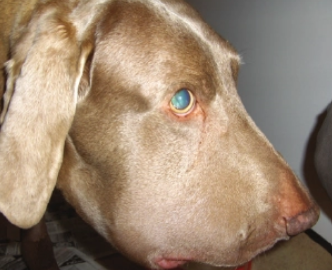
whats wrong
SQ edema
how to prevent fluid therapy complications? (5)
Proper equipment
Use fluid pump
Label fluid bag and monitor amount given
Monitor for signs of overhydration
Calculations to provide appropriate amounts specific to the patient
what are the fluid types (3)
colloids
crystalloids
blood products
colloids have — molecular solutes
large
colloids — freely diffuse
a. do
b. don’t
b. don’t
colloids maintain blood volume by pulling fluid from —
interstitium
when are colloids supposed to be used (3)
Hypoproteinemic patients
Low PCV
When blood pressure can not be maintained with crystalloids or other medications alone
what is a synthetics colloid
contain the very-large-molecular-weight solutes
colloids Should not be used in patients that are at high risk for (5)
adverse effects
preexisting kidney disease
SIRS
sepsis
coagulation disorders
examples of colloids (5)
hetastarch
dextran
pentastarch
gelatin
pentaspan
blood products are for (4)
Anemia
Hypoproteinemia
Coagulation
Thrombocytopenia
examples of blood products are (3)
Plasma
Whole Blood
Packed RBC’s
crystalloid have — molecular solute
small
crystalloids — freely diffuse
a. do
b. don’t
a. do
crystalloids are similar to —
ECF
crystalloids have lower — and — and more —
Na+, Cl-, K+
define isotonic crystalloids
Solute concentration similar to blood plasma
define polyionic crystalloids
several ions
When blood loss occurs, at least — mL of crystalloid fluids must be given for every — mL of blood lost.
3 ml, 1 ml
define balanced crystalloid
Solute profile similar to ECF
what are some examples of balanced Isotonic Polyionic Replacement Crystalloids (3)
Lactated Ringers solution (LRS)
Plasma-lyte A (148)
Normosol-R
whats an example of an isotonic unbalanced replacement crystalloid
saline
why is saline unbalanced
it has only Na and Cl, and H2O
saline is used for (3)
hypochloremic metabolic alkalosis
hypercalcemia
administering blood transfusions
what is 5% Dextrose in water (D5W) for
Correct free water deficits that accompanies simple dehydration or heat stroke
define free water deficits
means replacing pure water that the body has lost without adding extra electrolytes like sodium or chloride.
what is the equipment needed for fluid therapy (4)
IV catheter and placement supplies
Fluid bag of selected fluid type
Drip set
+/- Fluid pump
what needs to be calculated before fluid therapy begins (4)
Patient’s weight
Prescribed rate
infusion rate
drip rate
procedure for fluid therapy (5)
Catheter Selection
catheter Placement
Selection of Fluid Type
Selection of Drip Set
Calculating fluid rate with a drip set
what is the drip set for an animal larger than 10 kg
10 drops/ml
what is the drip set for an animal smaller than 10 kg
60 drops/ml
prescribed rate aka
dosage
what is the prescribed rate in dogs
5 mls/kg/hour
what is the prescribed rate in cats
3 mls/kg/hour
CRI stands for
Constant Rate Infusion
define CRI
A system used to deliver a constant steady rate of medication to a patient over a set period of time
what are 2 ways to do a CRI
fluid pump
syringe pump
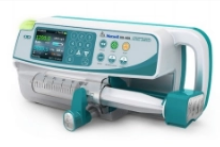
whats this called
syringe pump
what drugs commonly used in CRI (6)
Antibiotics
Analgesics
Anesthetic agents
Combinations (Analgesics and Anesthetics)
Vasopressors
inotropes
define inotropes
increases contractility
Always label ALL syringes containing injectable agents (4)
with name of patient
name of drug
drug concentration
volume of drug in syringe
what does the acronym DVMRC stand for (5)
D: Prescribed dose of drug
V: Volume of bag that you will put drug into
M: Mass of patient
R: Infusion rate (You may need to calculate)
C: Concentration of drug
what is the acronym DVMRC for
calulating CRI
for anesthetic intervention guidelines in cats what temp is considered normal
38
for anesthetic intervention guidelines in cats what temp is considered critical (2)
less than 30
more than 40
for anesthetic intervention guidelines in cats what temp is considered investigate (2)
less than 37
more than 39
for anesthetic intervention guidelines in dogs what temp is considered normal (range)
38
for anesthetic intervention guidelines in dogs what temp is considered investigate (2)
less than 37
more than 39
for anesthetic intervention guidelines in dogs what temp is considered critical (2)
less than 33
more than 40
for anesthetic intervention guidelines in cats what heart rate is considered normal (range)
130 - 170
for anesthetic intervention guidelines in cats what heart rate is considered investigate (2)
less than 100
more than 200
for anesthetic intervention guidelines in cats what heart rate is considered critical (2)
less than 80
more than 225
for anesthetic intervention guidelines in small dogs what heart rate is considered normal (range)
100 - 120
for anesthetic intervention guidelines in medium dogs what heart rate is considered normal (range)
70 - 100
for anesthetic intervention guidelines in large dogs what heart rate is considered normal (range)
50 - 70
for anesthetic intervention guidelines in small dogs what heart rate is considered investigate (2)
less than 80
more than 150
for anesthetic intervention guidelines in medium dogs what heart rate is considered investigate (2)
less than 60
more than 100
for anesthetic intervention guidelines in large dogs what heart rate is considered investigate (2)
less than 40
more than 120
for anesthetic intervention guidelines in small dogs what heart rate is considered critical (2)
less than 60
more than 180
for anesthetic intervention guidelines in medium dogs what heart rate is considered critical (2)
less than 40
more than 150
for anesthetic intervention guidelines in large dogs what heart rate is considered critical (2)
less than 35
more than 150
for anesthetic intervention guidelines in cats what respiratory rate is considered normal
12
for anesthetic intervention guidelines in cats what respiratory rate is considered investigate
less than 10
for anesthetic intervention guidelines in cats what respiratory rate is considered critical
less than 4
for anesthetic intervention guidelines in dogs what respiratory rate is considered normal (range)
8 - 15
for anesthetic intervention guidelines in dogs what respiratory rate is considered investigate
less than 8
for anesthetic intervention guidelines in dogs what respiratory rate is considered critical
less than 4
for anesthetic intervention guidelines in cats what SPO2 is considered normal
more than 95
for anesthetic intervention guidelines in cats what SPO2 is considered investigate
less than 95
for anesthetic intervention guidelines in cats what SPO2 is considered critical
less than 90
for anesthetic intervention guidelines in dogs what SPO2 is considered normal
more than 95
for anesthetic intervention guidelines in dogs what SPO2 is considered investigate
less than 95
for anesthetic intervention guidelines in dogs what SPO2 is considered critical
less than 90
for anesthetic intervention guidelines in cats what ETCO2 is considered normal (range)
35 - 40
for anesthetic intervention guidelines in cats what ETCO2 is considered investigate (2)
less than 30
more than 50
for anesthetic intervention guidelines in cats what ETCO2 is considered critical (2)
less than 25
more than 70
for anesthetic intervention guidelines in dogs what ETCO2 is considered normal (range)
35 - 40
for anesthetic intervention guidelines in dogs what ETCO2 is considered investigate (2)
less than 30
more than 50
for anesthetic intervention guidelines in dogs what ETCO2 is considered critical (2)
less than 25
more than 70
for anesthetic intervention guidelines in cats what SAP is considered normal
120
for anesthetic intervention guidelines in cats what SAP is considered investigate (2)
less than 85
more than 170
for anesthetic intervention guidelines in cats what SAP is considered critical (2)
less than 80
more than 200
for anesthetic intervention guidelines in dogs what SAP is considered normal
120
for anesthetic intervention guidelines in dogs what SAP is considered investigate (2)
less than 85
more than 170
for anesthetic intervention guidelines in dogs what SAP is considered critical (2)
less than 80
more than 200
for anesthetic intervention guidelines in cats what MAP is considered normal
100
for anesthetic intervention guidelines in cats what MAP is considered investigate (2)
less than 65
more than 130
for anesthetic intervention guidelines in cats what MAP is considered critical (2)
less than 60
more than 150
for anesthetic intervention guidelines in dogs what MAP is considered normal
100
for anesthetic intervention guidelines in dogs what MAP is considered investigate (2)
less than 65
more than 130
for anesthetic intervention guidelines in dogs what MAP is considered critical (2)
less than 50
more than 150