Learn: UNLV Chapter 23 Cellular Respiration and Fermentation
 Call Kai
 Learn
Learn Practice Test
 Spaced Repetition
 Match
Match Flashcards
 Knowt Play
1/116

There's no tags or description
Looks like no tags are added yet.
Name | Mastery | Learn | Test | Matching | Spaced | Call with Kai | Chat |
|---|
No analytics yet
Send a link to your students to track their progress
117 Terms
Anatomy
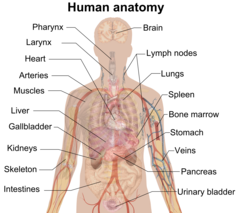
The study of the STRUCTURE and FORM of bodies
Physiology
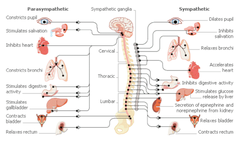
The study of the FUNCTION of body parts
Structure often determines
function
Tightly packed cells with many cell layers
Barrier and protection
Very thin cell layers with extensive surface area
Diffusion and transport
Mineralized (hard) extracellular space
Rigid Support
Fibrous extracellular space
Flexible support
Elongated cells with contractile proteins
movement
Elongated excitable cells with complex cellular connections
long-distance communication

Animal life begins as a single fertilized cell
zygote

Genome
Total amount of native DNA in an organism's cell
Every body cell (known as somatic) in an organism contains
same genome
Same DNA
Different cell types
Gene expression (central dogma of biology)
DNA -> RNA -> Protein
Somatic cells have the same
genome
Different cells express
different genes
Animal bodies have 4 general tissue types
Connective
Musicle
Epithelial
Nervous
All animal tissues are cells embedded in an
extracellular matrix

Extracellular matrix
A network of filamentous proteins, carbohydrates, and interstitial fluid secreted by the cells in the tissue
Extracellular matrix provides
structure, support, and facilitates cell-to-cell comunication
Each tissue's extracellular matrix differs
in amount, composition, and function

Epithelial tissues
Tightly packed cells covering the internal and external surfaces of the body
Ex: skin, mucus membranes, lining of digestive tract, lung lining
3 Main epithelial functions
Protection/barrier
ex. skin
Absorption (moving materials in)
ex. Intestinal lining, kidney
Secretion (moving materials out)
ex. Kidney, glands
Epithelial tissues have
polarity
Apical side
The side exposed to an internal cavity or external surface
Basal side
The side connected to other tissues via basement membrane
Basement membrane glues
epithelial tissue to underlying tissues like connective tissue or muscle
Epithelial cells form tight dense sheets of cells
Cell junctions important for bind cells together and to underlying tissues
Epithelial tissues are classified by
SHAPE and CELL LAYER NUMBERS
Simple epithelial tissues
one layer of cells attached to the basement membrane
Stratified epithelial tissue
have multiple cell layers

Simple squamous epithelium
A single layer of flattened cells that allow substances to pass by diffusion and osmosis
Simple squamous epithelium found in
Lining of Blood vessels
Exchange surfaces of lungs

Simple Columnar epithelial tissue
A single layer of column-shaped cells that secrete and absorb substances (can have cilia to move things)
Simple Columnar epithelial tissue is found in
Lining of digestive tract
Bronchi of lungs
Uterine tubes
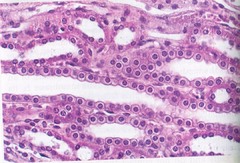
Simple Cuboidal epithelial tissue
A single layer of cuber-shaped cells that secrete and absorb substances
Simple Cuboidal epithelial tissue is found in
Glands
Lining of Kidney Tubules

Stratified Squamous epithelial tissue
Multiple layers of flattened cells that protect areas subject to abrasion
Stratified squamous epithelium is found in
Outer Layer of Skin
Outer layers often dead cells
Connective Tissue
Serve to connect tissues, fill spaces in the body, protect organs, provide structural support, and systemic transport
Connective tissue often contains relatively few cells in
an extensive extracellular matrix

Adipose tissue is found in
Fat cells in minimal extracellular matrix
Adipose Function
Stores fat for energy and insulation
Adipose Location
Beneath skin
Between Muscles
Around heart
Around joints

Blood
Red Blood cells, white blood cells, and platelets in a liquid matrix
Blood function
Transport gases, hormones, wastes, and nutrients
Blood is found inside
Blood vessels

Bone tissue
Cells in matrix of collagen and minerals. Mineralization makes the bone very solid
Bone function
Provides firm support in the skeleton
Anchors muscles for movement
Bone is found in
skeletons

Cartilage
Cells in matrix of fine collagen protein fibers
Cartilage function
Provides flexible support:
Ears
Joines
Bone ends
Respiratory tract

Dense connective tissue
Cells in dense matrix of protein fibers
Dense connective tissue function
Connects muscle to bone and bone to bone
Dense connective tissue is found in
Tendons
Ligaments

Loose connective tissue
Cells in loose matrix of elastin and collagen fibers
Loose connective tissue function
Holds organs in place and attaches epithelial tissues to other tissues
Loose connective tissue is found in
Under Skin
Between organs
Muscle Tissues
Create movement
3 Muscle tissue types
Skeletal
Cardiac
Smooth

Skeletal Tissue
Voluntary body movements
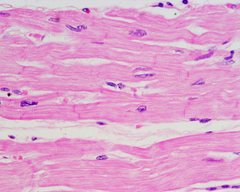
Cardiac Tissue
Involuntary heart movements that propels blood around body
Smooth Tissue
Involuntarily moves some internal substances

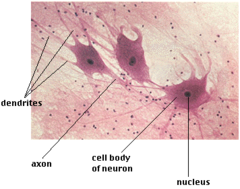
Nervous tissue
Rapidly transmits information through body
Nervous tissue uses
Electrochemical signals to rapidly transmit information throughout an animal's body
Nervous tissue: 2 major cell types
neurons and neuroglia

Neurons
Directly transmits signals and form extensive communication networks

Neuroglia
Surround, support, and protect neurons
Nervous tissue found in
Central nervous system:
Brain and Spinal Cord
Peripheral nervous system:
Nerves

Organ systems
Comprise multiple organs that have interconnected structures and functions
Organ system function
Multiple organs function together to perform larger-scale functions for the organisms
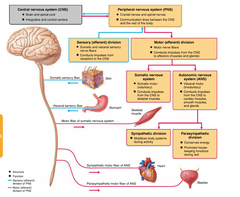
The Nervous system
Rapid electrical communication
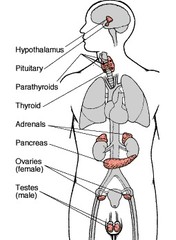
The Endocrine system
Produces and secretes hormones-chemicals that travel around the body and regulate numerous body functions
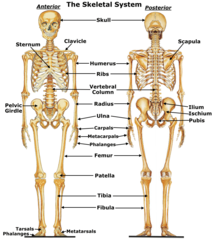
The Skeletal system
Consists of bones, cartilage, tendons, and ligaments
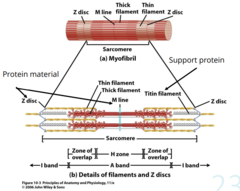
Skeletal muscle system
Attached to a bone, which is moved as the muscle contracts
Cellular ATP generation requires the
digestive, circulatory, and respiratory systems

Digestive system
Food is broken down into simple molecules (monomers) and moved into the blood
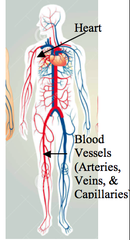
Circulatory system
The heart moves blood around body which contains the absorbed food molecules and respiratory gases (oxygen and CO2)

Respiratory system
Lungs supply oxygen for aerobic cellular respiration and removes CO2 from tissues back to the atmosphere.
The ____, _____,____ systems eliminate toxic substances and infectious microorganisms that harm the body
Urinary, immune, and lymphatic

Integumentary system
Provides a physical barrier to the external environment

Reproductive system
produces specialized sex cells called gametes
(sperm and egg).
Some mammals, female carry offspring in a uterus made of
Muscle, nervous, and epithelium
Reproductive system function requires other systems:
Nervous, endocrine, and circulatory
Homeostasis
Maintaining a consistent internal state
Homeostasis is often maintained by
feedback loops
Components of feedback loop:
Sensor
Control center
Effectors
Sensor(receptor)
senses the current physiological condition
A control center (integrator)
Compares current condition to a "set-point"
2 Feedback loop categories
Negative feedback
Positive feedback

Negative feedback
When a change in a physiological condition triggers a response that directly reverses the change.

Positive feedback
when a change in a physiological condition further amplifies/increases changes which rapidly drives some event to its end point
Hypothalamus is a part of many
homeostasis feedback loops
hypothalamus function for homeostasis
A "master control center" in the brain that responds to
sensors in multiple organ systems.
Can regulate organs in each system to limit changes
and maintain homeostasis
What regulates most homeostatic functions?
Negative feedback
Body temperature is regulated through
negative feedback loops
Too low (cold)=effectors are activated to bring temperature
back up
shivering response- rapid muscle contraction produces extra heat
Too high (hot)= effectors activated to bring temperature down
sweat glands activated, sweat released, and evaporation of sweat from body surface removes heat
Positive feedback is rarer:
Amplifies changes rather than reverses them
Examples of positive feedback
Child birth
Blood clotting