NBP Module 3: Digestive System
 Call Kai
 Learn
 Practice Test
 Spaced Repetition
 Match
 Flashcards
 Knowt Play
1/106

There's no tags or description
Looks like no tags are added yet.
107 Terms

1
Mucosa
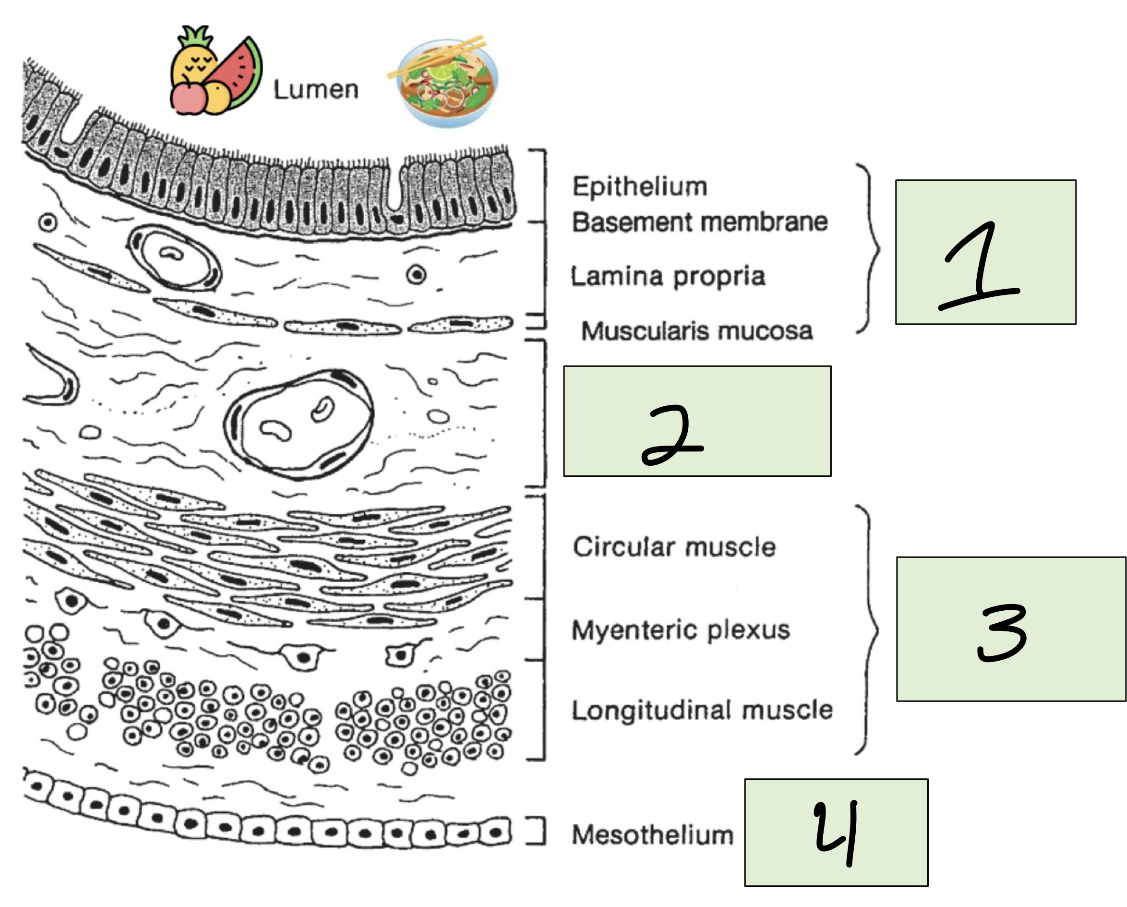
2
Submucosa

3
Muscularis Propria

4
Serosa
Serosa: Connective tissue
Supports the intestine in the abdomen
provides a route for blood vessels, lymphatic vessels, and nerves
Serosa: Squamous epithelial Cells
secretes lubricating fluid reducing friction between organs
Serosa: Adventitia
connective tissue layer that binds structures together
Found outside the peritoneal cavity
Intraperitoneal
organs suspended by the mesentery and almost completely enclosed in visceral peritoneum
organs are mobile
Retroperitoneal
Organs are partially covered by peritoneum
“Outside peritoneum”
Immobile or fixed organs
Muscularis propria (aka externa)
Composed of two muscle layers (circular and longitudinal)
regulates the movement of food through gut
Submucosa
layer of connective tissue (supporting mucosa + submucosal nerve plexus)
Mucosa
made of three basic layers (epithelium, lamina propria, muscularis mucosa)
Layers of Mucosa: Lamina Propria
connective tissue layer containing blood/lymph vessels and nerves
Layers of Mucosa: Muscularis Mucosa
helps squeeze and expel digestive enzymes out of gastric glands
Esophagus
conducts food from the mouth to stomach
mostly produces mucus
no digestive enzymes
Muscular sphincter
at either end of the esophagus to prevent regurgitation
Stomach
churn/mix food mechanically and secretes digestive chemicals from gastic pits
rugae
folds in stomach that allow the stomach to expand

1
Lower esophageal sphincter

2
Cardia

3
Fundus and body

4
Antrum

5
Phylorus

1
Secretion Reservoir
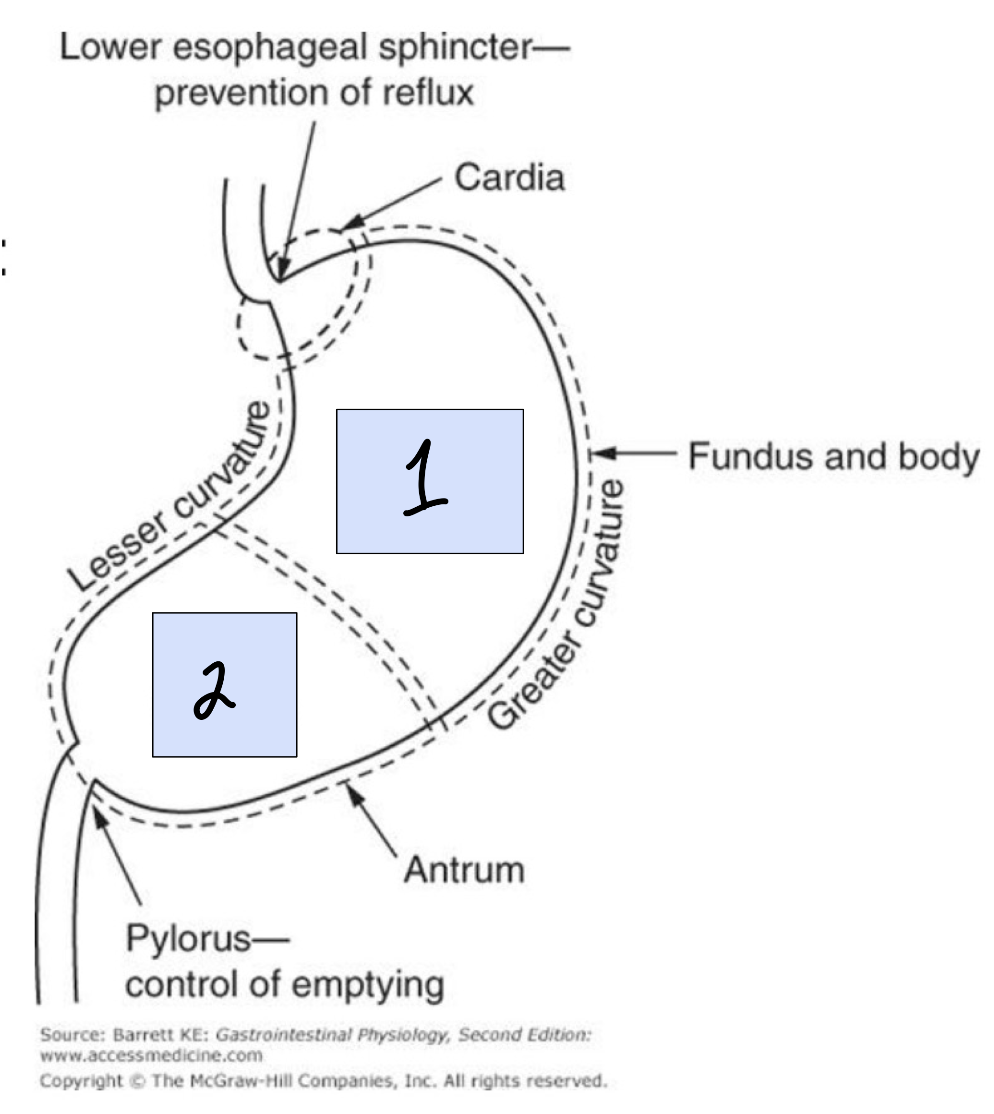
2
Mixing and grinding
Where are gastric glands located?
Fundus and Antrum

Cells of the Gastric Gland: Chief Cell
stores pepsinogen Gastric lipase

Cells of the Gastric Gland: Parietal Cell
Secrete HCl to activate pepsinogen

Cells of the Gastric Gland: Mucus Cell
secretes mucus
Small Intestine
Long with a small diameter
Macromolecule digestion
Site of major nutrient absorption
Large Intestine
absorption of water/vitamins
storage of waste and indigestible material
propulsion of stool
Intestinal epithelial lining: Villi
finger-like projections of epithelium and lamina propria
Composed of: enterocytes, goblet cells, enteroendocrine cells
Intestinal epithelial lining: Crypts
at the base of villi
composed of: enterocytes, goblet cells, enteroendocrine cells, stem cells, paneth cells
Function of the small intestine: Duodenum
receives more digestive enzymes; more acidic than distal SI
Function of the small intestine: Jejunm
pH is more alkaline than duodenim, villi are much longer than duodenum or ileum
Function of the small intestine: ileum
absorbs vitamin B12, bile salts, products of digestion not absorbed by jejunum

1
Duodenum

2
Jejunum

3
ileum

5
Large intestine

6
Rectum
Cecum
the transitional structure between the small intestine and the large intestine
Rectum connects the ____ to the anus
colon

1
Small Intestine

2
Large Intestine
____ are absent in the large intestine making it seem flat
Villi
Microbiota
important for maintaining normal physiology and function (AKA: immune system, metabolism, brain/behavior)
Curvature of stomach: Omentum
a large fold of viscerak abdominal lining (peritoneum) that connects the stomach to other organs in the abdomen
Curvature of stomach: Vessels/Portals
running along the omentum
Curvature of stomach: lesser curvature
connected to the liver
Curvature of stomach: Greater curvature
drapes over small and large intestines, and loops back to attach to the transverse colon
Liver
Critical role in maintaining blood glucose
What is the liver important for?
glycogen storage, gluconeogenesis
Oxidation of fatty acids
Deamination of amino acids
Blood supply to the liver comes from two sources:
Hepatic artery
Hepatic portal system
Hepatic artery
supplies oxygenated blood to the liver
Hepatic portal system
brings venous blood from the intestine to the liver for detoxification (nutrients)
What does every vertebrate have?
Pancreas
Pancreatic juices
are made in pancreatic acinar cells and released into the pancreatic duct, which terminates in the duodenum
Digestive enzymes:
Trypsin (protein)
Amylases (carbohydrate)
Lipases (fat)

1
islet cells

2
Acinar cells
Definition: islet cells
specialized clusters of cells scattered throughout the pancreas that produce hormones to control blood sugar
Definition: Acinar cells
specialized exocrine gland cells that synthesize, store, and secrete digestive enzymes

1
Liver

2
Gallbladder

3
Cystic duct

4
common bile duct

5
pancreas

6
Pancreatic duct
Teeth tissues: Enamal
Hardest substance in the body
lines surface of tooth
Teeth tissues: Cementum
like bone
on surface of roots
Teeth tissues: Dentin
Similar to bone but harder
beneath enamel and cementum
Why do birds have no teeth?
ability to fly means to weigh as little as possible and beaks are lighter than teeth
Mammals tongues: Muscular
crucial for positioning and swallowing
Birds tongues: little musculature
mainly for swallowing and taste
Fish Tongues: No musculature
an angular elevation in the ventral oropharynx to direct food to esophagus
Oral glands: Mammals
Salivary glands on tongues to lubricate and partially digests food
Oral glands: Birds
Goblet cells and few (if any) digestive enzymes
Oral glands: Fish
No salivary glands, Goblet cells (oropharynx), and No digestive enzymes
Pharynx is in
birds and mammals
Function: Pharynx
separates breathing from swallowing
Fish esophagus
very short esophagus that is expandable for larger objects
Swim bladder (fish)
internal gas filled organ that is used to control buoyancy
Physostomic
Swim bladder connected to the esophagus
Physoclistic
swim bladder not conencted to esophagus
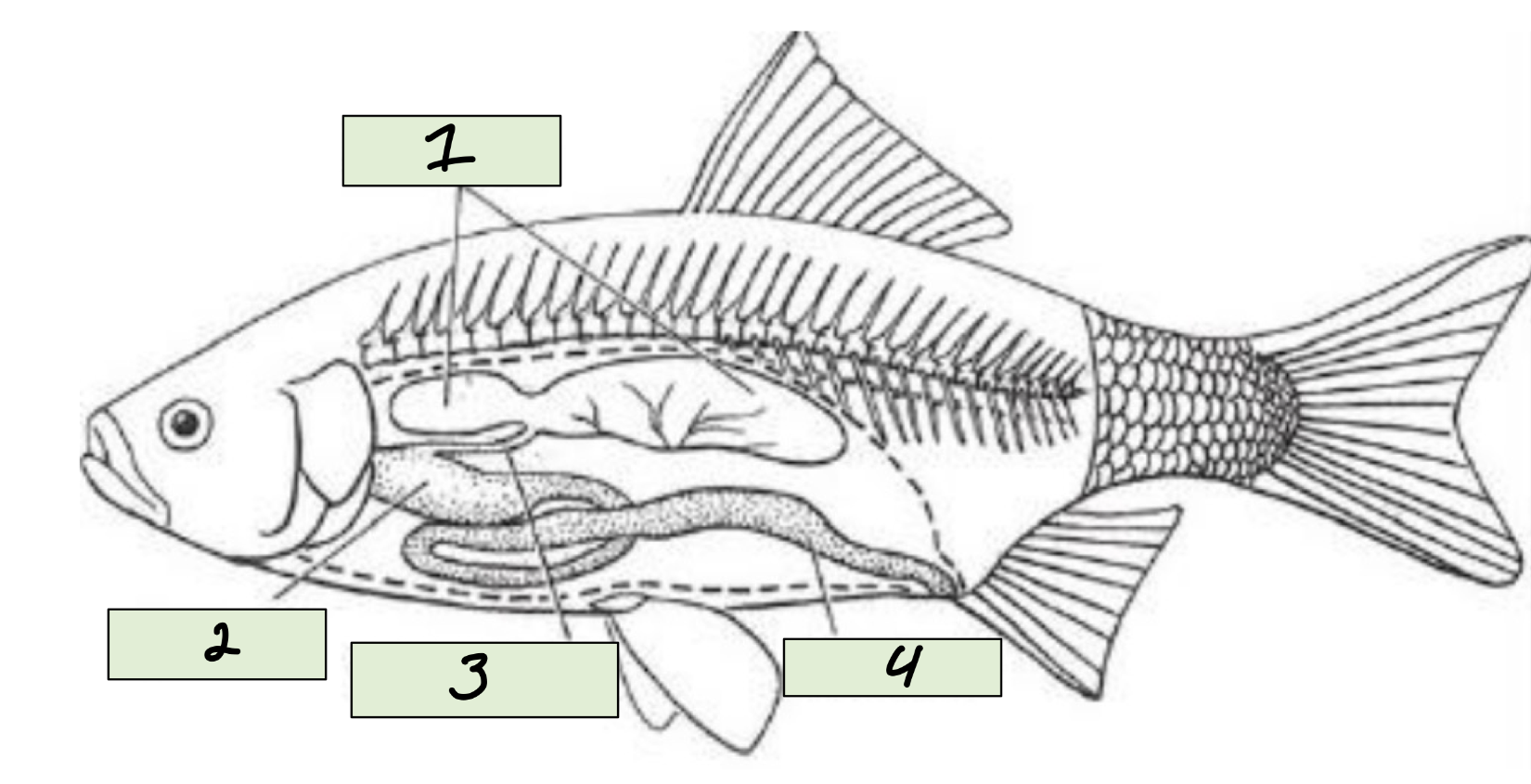
1
Gas bladder

2
stomach

3
Pneumatic duct

4
intestines
fish stomachs are commonly in what shape?
j shape
Bird stomach: Proventriculus
secretes digestive enzymes, acid
Bird stomach: Gizzard
thick musculature that grinds food using small stones that are deliberately swallowed
bird gizzards are coated by ____ ____ epithelium to protect from small rocks
Keratinous squamous
The intestines of ____ is similar to mammals bur with shorter intestines
birds
in ____ it is not possible to distinguish the small and large intestine
fish
Teeth modifications in herbivores: Hypsodont dentition
high crowned: worn down by plant material
Teeth modifications in herbivores: Rootless dentition
have unconstructed roots; grow continuously (beaver)
Ruminates have ____ stomach(s) with 4 compartments
one
Rumen
The largest stomach compartment
Rumination
food is ingested, swallowed, regurgitated, and swallowed again