Physiology Unit 1
 Call Kai
 Learn
 Practice Test
 Spaced Repetition
 Match
 Flashcards
 Knowt Play
1/180

Earn XP
Description and Tags
Exam review for physiology unit 1
181 Terms
What are the stages of the scientific method?
Observation: Observing a phenomenon or identifying a problem.
Hypothesis: Formulating a tentative, testable explanation.
Experimentation: Designing and conducting experiments to test the hypothesis.
Data Analysis & Conclusion: Analyzing results to accept, reject, or modify the hypothesis.
Theory Formulation: Developing a comprehensive explanation backed by extensive experimental evidence.
What is an independent variable?
The factor or condition that is intentionally manipulated by the researcher
What is a dependent variable?
The factor that is measured or observed; its value depends on the independent variable
What is a control group?
The baseline group that does not receive the experimental treatment; used for comparison (placebo)
What is an experimental group?
The group that receives the experimental treatment or manipulation
What is a sampling size?
The number of subjects or observations in an experiment. Larger sample sizes increase statistical reliability
What is a random assignment?
Randomly assigning participants to control or experimental groups to minimize systematic bias
What are blinded studies? What are the two different kinds?
• Single-blind: Participants do not know whether they are receiving the treatment or a placebo.
• Double-blind: Neither the participants nor the researchers running the trial know who is receiving the treatment or placebo (reduces experimenter bias).
What is homeostasis?
a stable, internal environment. a state of dynamic constancy consisting of predictable fluctuations within a normal range
Why is homeostasis important for your health?
Ensures that physiological variables (such as body temperature, blood glucose, and pH) remain within a narrow, life-supporting range. Deviations can lead to illness, cellular damage, or death
How does negative feedback (the balancer) loop maintain homeostasis?
this is the primary way that the body maintains homeostasis. it works by reversing a change to bring the body back to its “ideal” set point
How does a positive feedback (the accelerator) loop maintain homeostasis?
the loop moves away from homeostasis temporarily to complete a specific, urgent process
What are the five core components of homeostatic feedback loops?
Stimulus: A change in the internal or external environment.
Receptor (Sensor): Detects the change and sends an input signal to the integrating center.
Integration Center: Evaluates the input signal, compares it to a set point, and initiates an output response.
Effector: A gland or muscle that receives the output signal and executes the physiological adjustment.
Response: The final action that alters the stimulus to bring the system back to homeostasis.
Negative Feedback Loops (fix it crew) Body temperature
Stimulus: You walk outside and it's 100°F. Your body temp starts to rise.
Receptor: Thermoreceptors in your skin and brain detect the heat.
Integration Center: Your brain (the Hypothalamus) says, "Whoa, way too hot!"
Effector: Sweat glands start pumping; blood vessels near the skin dilate (widen).
Response: You sweat and heat leaves your skin. Your temp drops back to 98.6°F. Homeostasis achieved! ✅
Negative Feedback Loops (fix it crew) Blood Glucose
Stimulus: You eat a giant slice of cake. Your blood sugar spikes.
Receptor/Integration Center: The Pancreas detects the high sugar levels.
Effector: The Pancreas releases the hormone Insulin.
Response: Insulin tells your cells to "eat" the sugar out of the blood. Blood sugar levels drop back down. ✅
Negative Feedback Loops (fix it crew) Blood Pressure
Stimulus: You stand up too fast and your blood pressure drops.
Receptor: Baroreceptors (pressure sensors) in your neck detect the drop.
Integration Center: The brain sends a "Speed up!" signal.
Effector: Your heart beats faster and blood vessels constrict (narrow).
Response: Blood pressure rises back to the normal range. ✅
Positive Feedback Loops (The "Power-Up" Crew 🚀/ want to finish a big job by making the change even bigger) Labor Contractions
Stimulus: The baby’s head pushes against the cervix.
Receptor: Nerve cells in the cervix detect the pressure.
Integration Center: The brain releases the hormone Oxytocin.
Effector: The muscles of the uterus contract.
Response: The contraction pushes the baby harder against the cervix. This leads to more oxytocin and stronger contractions. This keeps looping until the baby is born! 👶✨
Positive Feedback Loops (The "Power-Up" Crew 🚀/ want to finish a big job by making the change even bigger) Blood Clotting
Stimulus: You get a paper cut. A blood vessel is broken.
Receptor/Effector: Platelets (tiny cell fragments) stick to the cut site.
Response: The stuck platelets release chemicals that attract more platelets. Those new platelets attract even more until a solid plug (a clot) is formed and the bleeding stops. 🩸🛑
What are the four major tissue types?
epithelial tissue
connective tissue
muscle tissue
nervous tissue
What is the epithelial tissue? (Epithelial = Envelopes the body)
It covers the body surfaces, lines cavities, and forms glands.
functions in protection, absorption(digestive tract), secretion(sweat and enzymes), and filtration
What is the connective tissue? (Connective = Connects and Cushions)
it binds, supports, protects, and insulates organs and tissues
this includes bone, cartilage, adipose(fat) tissue, and blood
What is muscle tissue? (Muscle = Movement)
Specialized for contraction and movement generation.
Divided into skeletal (moving bones), cardiac (heart), and smooth muscle (in your organs).
What is the nervous tissue? (Nervous = Network of Communication)
Used for rapid communication. It senses changes in the environment and sends electrical signals throughout the body.
Found in the brain, spinal cord, and nerves
What is an atom?
the fundamental unit of matter. “legos” of the universe, everything in the body is built from them
What are the 3 main parts of an atom?
Protons: found in the nucleus, they have a + charge, they determine the identity of the atom
Neutron: also in the nucleus, have no charge. the are the “glue” and hold protons together
Electrons: tiny and zoom around the nucleus in shells. have a - charge
Why do atoms form bonds?
They want to have a full outer shell of electrons to be stable. To get that full shell, they interact with other atoms to form Chemical Bonds. When these atoms bond together in large groups, they form Macromolecules.
What are the Big Four macromolecules?
carbs, lipids, proteins, and nucleic acids
Which elements are common in the body?
Oxygen, Carbon, Hydrogen, and Nitrogen

What is a covalent bond?
the “buddy system”
atoms share electrons
strongest bond and is what holds DNA and proteins together
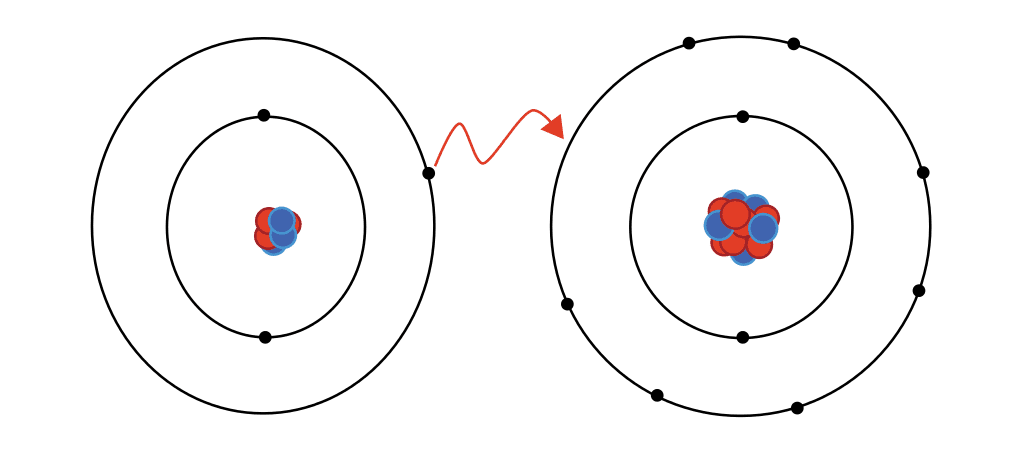
What are ionic bonds?
one atom is the “giver” and the other is the “taker”
one atom transfers valance electrons to another
creates two charged atoms (ions) that stick together like magnets

What are hydrogen bonds?
These are the "weak attractions."
They happen between polar molecules (like water).
Even though they are weak individually, they are super important for giving water its special properties and helping large molecules (like proteins) hold their shape.
What is water?
Water is often called the "solvent of life" because its unique structure allows almost all biological reactions to happen
What is the composition?
A water molecule is made of one Oxygen atom and two Hydrogen atoms
What is water held together by?
polar covalent bonds
What is the bond between the water molecules a Hydrogen Bond?
since water is polar, the slightly negative Oxygen of one molecule is attracted to slightly positive Hydrogen of another
Hydrophilic (water loving)
Polar molecules, have an uneven distribution of charge. Water is the classic polar. E.G. sugar, salt
Hydrophobic (water fearing)
Nonpolar molecules, have an uneven distribution of charge, they are neutral all over. fats and oils are nonpolar. E.G. fats, oils, cell membrane tails
What are the properties of water?
Primary Solvent: It can dissolve more substances than any other liquid.
High Heat Capacity: It takes a lot of energy to change water's temperature (helps us maintain homeostasis!).
Reactivity: It is involved in building and breaking down molecules (Dehydration synthesis and Hydrolysis).
What are acids (pH 0-6.9)?
they are “proton donors”. they release lots of Hydrogen ions into a solution
examples: stomach acid, lemon juice, vinegar, battery acid
What are neutrals (pH 7.0)?
the concentration of H+ is perfectly balanced
Example: pure water
What are bases/alkaline (pH 7.1-14)?
they are “proton acceptors” and they have a very low concentration of H+
examples: bleach, oven cleaners, hair remover, milk of magnesia
What are buffers?
they resist drastic changes in pH when acids or bases are added
maintains homeostasis
it can either soak up or squeeze out H+ (protons) to keep the balance
What are the four organic molecules?
Carbohydrates, Lipids, Proteins, and Nucleic Acids
Carbohydrates 🍞
Monomer: Monosaccharides (Simple sugars like glucose).
Polymer: Polysaccharides (Starch, glycogen, cellulose).
Primary Function: Quick Energy! ⚡ They are the body's go-to fuel source. They also provide structure (like in plant cell walls).
Lipids (Fats) 🥓
Monomer: Fatty Acids and Glycerol.
Not a True Polymer: Triglycerides, Phospholipids, Steroids.
they are not polymers because they don’t form long repeating chains
Primary Function: Long-term Energy Storage 🔋 and Membrane Structure. Phospholipids make up your cell membranes!
Proteins 🍳
Monomer: Amino Acids (connected by Peptide Bonds).
Polymer: Polypeptides.
Primary Function: Doing everything! 💪 They act as Enzymes (speed up reactions), provide structure (collagen), and help with signaling and transport.
Nucleic Acids 🧬
Monomer: Nucleotides.
Polymer: DNA and RNA.
Primary Function: Information Storage. 📜 They hold the genetic "blueprints" for building and operating your entire body.

the chemical structure of the monomer and the corresponding polymer of Protein
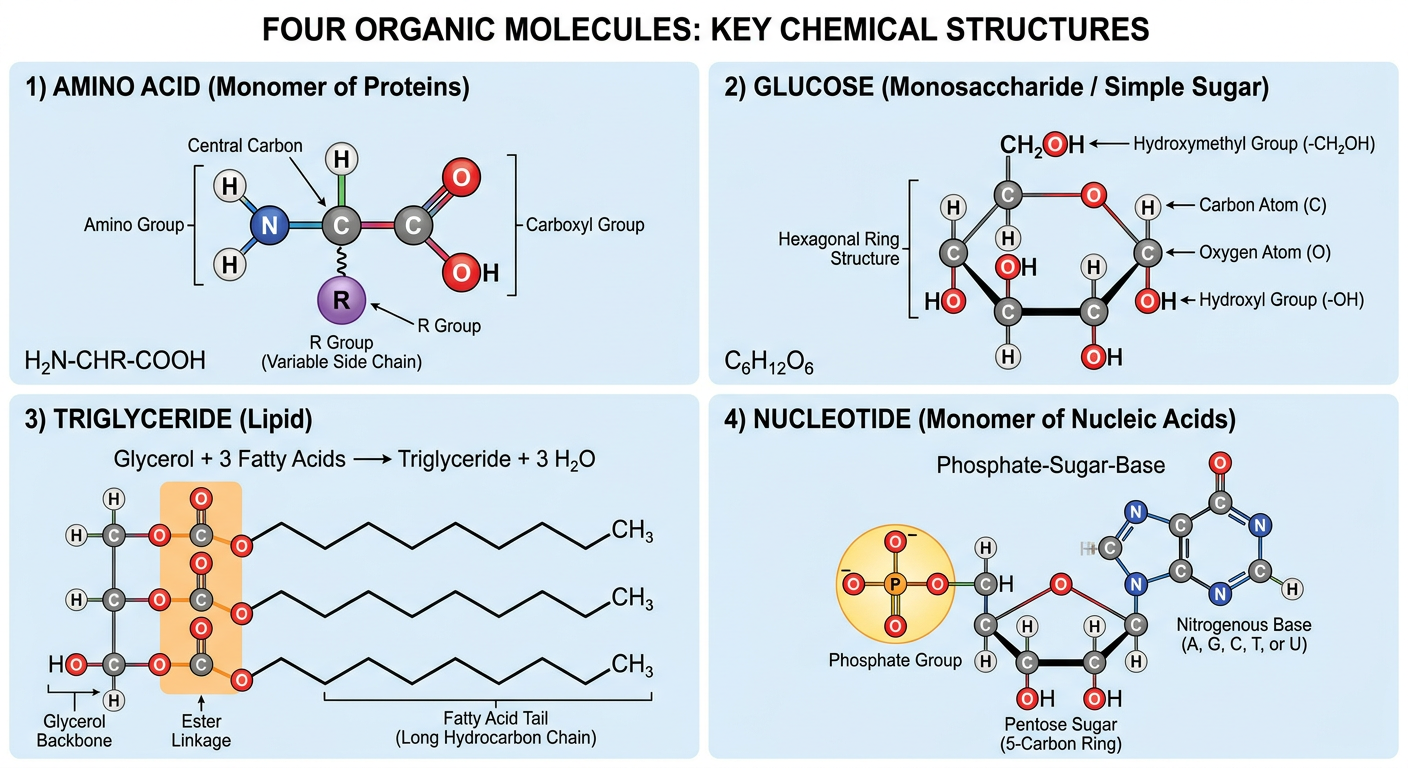
Look for the "N-C-C" backbone. You'll see an NH2 group on one side and a COOH on the other.
the Bond/Peptide bond: This is a covalent bond that links the Carboxyl group of one amino acid to the Amino group of the next.
polymer: polypeptide

the chemical structure of the monomer and the corresponding polymer of Carbohydrates
Look for the Hexagon Ring. It looks like a little stop sign made of carbons! These usually look like a ring of Carbon, Hydrogen, and Oxygen (often in a 1:2:1 ratio, like Glucose: C6H12O6).
Polymer: polysaccharide
the chemical structure of the monomer and the corresponding polymer of Lipids
Look for Long Zig-Zag Chains. If the chain is straight (single bond), it's Saturated (butter). If it has a "kink" or a bend (one or more double bonds), it's Unsaturated (oil)
"Monomers" (Building Blocks):
Glycerol: A 3-carbon "backbone."
Fatty Acids: Long chains of Carbon and Hydrogen (Hydrocarbons)
the Bond: Ester Linkage. It connects the fatty acids to the glycerol

the chemical structure of the monomer and the corresponding polymer of Lipids
Look for the "House, Pool, and Garage" shape. The sugar is the house, the phosphate is the pool, and the nitrogenous base is the garage!
The Bond: Phosphodiester Bond. This creates the "sugar-phosphate backbone" of DNA and RNA.
Polymer: DNA or RNA.
Anabolism (“Building Mode”):
When you want to link monomers together to make a large polymer (like building muscle from amino acids), your body uses these three related processes:
Dehydration Synthesis, Anabolic, and Endergonic
Dehydration Synthesis = drying out
To join two molecules, you must remove a molecule of water (H2O). One molecule gives up an H, the other gives up an OH, and they bond together where the water left.
Anabolic = adding together
This is the general term for "building up" larger molecules from smaller ones.
Endergonic
Building things requires an input of energy. You have to "pay" energy to make the bond happen
Catabolism (“Breaking Mode”)
When you digest food or break down stored energy, you are doing the opposite:
Hydrolysis, Catabolic, Exergonic
Hydrolysis = hydrate to separate
To break a bond, you add a molecule of water back in. The water molecule (H2O) splits and forces its way between the two monomers, breaking them apart.
Catabolic = crash/cut (breaking)
This is the general term for "breaking down" large molecules into smaller ones.
Exergonic
Breaking bonds releases energy. This is how your body gets the fuel it needs to function
Dehydration Synthesis=
Anabolic and its Endergonic
Hydrolysis=
Catabolic and its Exergonic
Monosaccharides: Simple forms of Carbs and consists of one sugar ring
Job: Immediate energy source for cells.
Examples:
Glucose: The main sugar in your blood.
Fructose: Fruit sugar.
Galactose: Found in milk.
Disaccharides: made of 2 Monosaccharides joined together by a dehydration reaction
Job: Transporting sugars.
Examples:
Sucrose: Table sugar (Glucose + Fructose).
Lactose: Milk sugar (Glucose + Galactose).
Maltose: Malt sugar (Glucose + Glucose).
Polysaccharides: there are long chains of hundreds or thousands of monosaccharides
Job: Energy storage or structural support.
Examples:
Glycogen: How animals (humans!) store energy in their liver and muscles.
Starch: How plants store energy (like in a potato).
Cellulose: Provides structure for plant cell walls (we call this "fiber").
What are the three types of lipids?
Triglycerides, Phospholipids, and Steroids
Triglycerides (Energy Storage 🔋):
Structure: One Glycerol head attached to three Fatty Acid tails.
Function: This is how your body stores fat for long-term energy. It also provides insulation and protection for organs
Phospholipids (The Barrier Builders 🧱):
Structure: One Glycerol, two Fatty Acid tails, and a Phosphate group head.
Function: These make up the Plasma Membrane of every cell! The head loves water (hydrophilic) and the tails hate water (hydrophobic), forming a perfect bilayer.
Steroids (The Messengers 📢):
Structure: Four fused carbon rings (they look like four connected hexagons/pentagons).
Function: They act as hormones (like testosterone or estrogen) and cholesterol, which helps keep cell membranes stable.
Saturated fats
all single bonds
straight chains
pack tightly togethre
solid (like butter or lard)
mostly animal fats
Unsaturated fatty acids
one of more double bonds
bent/kinked chains
cannot pack tightly
liquid (any kind of oil)
mostly plant/fish oils
What are the four levels of structures?
Primary, Secondary, Teriatry, and Quaternary

Primary Structure of Protein
The simple sequence of amino acids in a chain.

Secondary Structure of Protein
The chain starts to fold or coil due to hydrogen bonds. It forms either an Alpha Helix (like a spiral staircase) or a Beta-Pleated Sheet (like a folded paper fan)
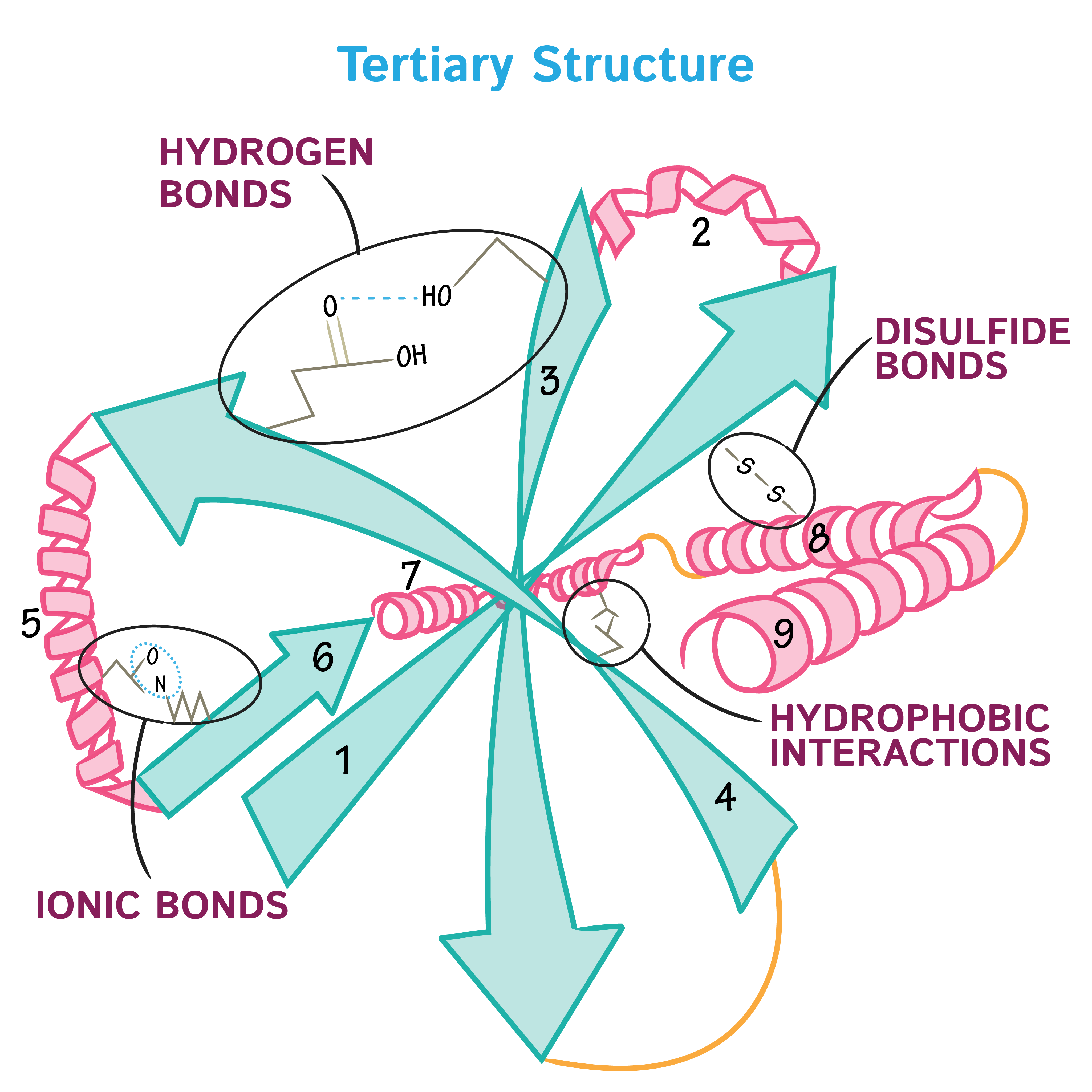
Tertiary Structure of Protein
The "big fold." The protein folds into a complex 3D shape based on interactions between R-groups. This is where the protein usually becomes functional!

Quaternary Structure of Protein
Only happens in some proteins! This is when multiple polypeptide chains (subunits) join together to work as one unit
What is Denaturation?
its when a protein loses its specific shape and unfolds back into a useless string of amino acids
What causes Denaturation?
extreme heat or changes in pH
Why is Denaturation bad?
because if the structure is gone, the protein can no longer grab onto its target and stop working entirely. kinda like frying an egg!
What are the common features of DNA and RNA?
Both are polymers made of monomers called Nucleotides. Every nucleotide has three parts:
A Phosphate group.
A 5-Carbon Sugar.
A Nitrogenous Base.
What is DNA? (database)
structure: double helix
sugar: deoxyribose
bases: adenine, thymine, cytosine, guanine
function: long-term storage of genetic info
location: stays safe in the nucleus
What is RNA? (readable copy)
structure: single-stranded
sugar: ribose
bases: adenine, uracil, cytosine, guanine
function: transfers info to build proteins
location: travels to the cytoplasm
What are the specific jobs of RNA?
mRNA (Messenger): The "Copy." It carries the instructions from the DNA in the nucleus to the ribosome.
tRNA (Transfer): The "Delivery Truck." It brings the correct amino acids to the ribosome.
rRNA (Ribosomal): The "Factory." It makes up the physical structure of the ribosome where proteins are built.
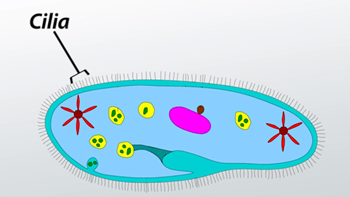
Cilia
Tiny, hair-like projections that move in waves. Think of them like rowing oars that move fluid across the cell surface (like moving mucus in your throat).

flagella
A long, whip-like tail. There is usually only one (like on a sperm cell). It acts like a propeller to move the entire cell
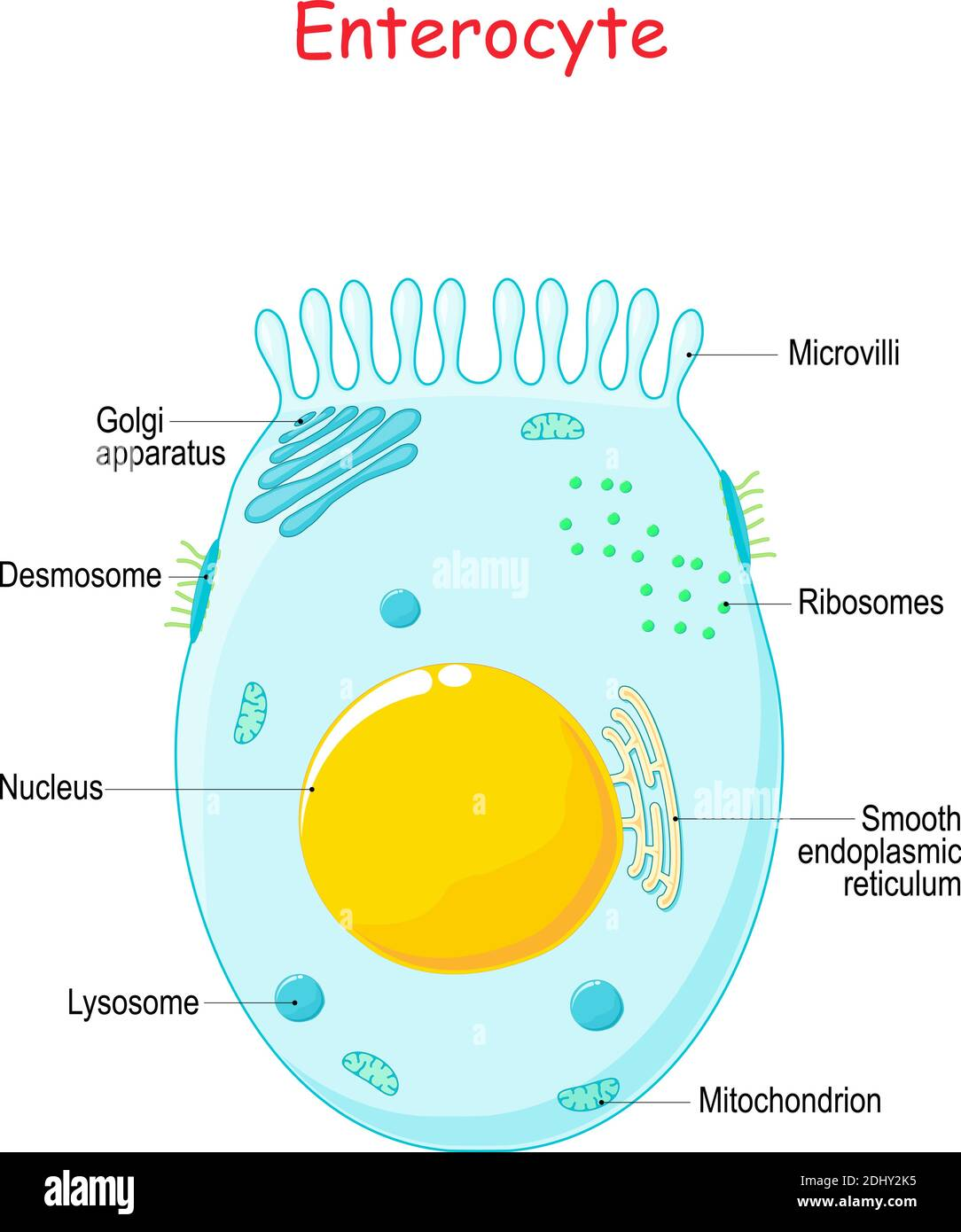
Microvilli
Tiny, finger-like folds of the membrane. They don't move; their job is to increase surface area so the cell can absorb more nutrients (very common in the intestines)

Lysosomes
The Trash Compactor. They use strong enzymes to digest waste and old cell parts.
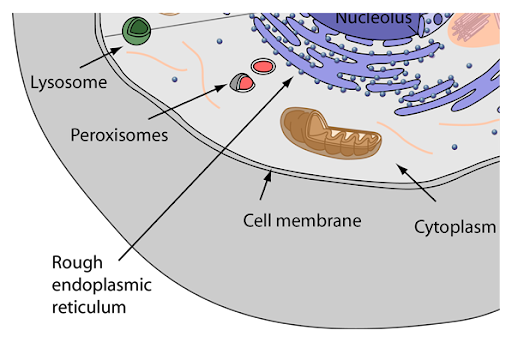
Peroxisomes
The Detox Unit. They specifically break down fatty acids and neutralize toxic substances (like alcohol or hydrogen peroxide)

Mitochondria
The Power Plant. This is where Cellular Respiration happens to create ATP (energy)

Cytoskeleton
The Steel Beams. A network of protein fibers that gives the cell its shape and acts as "tracks" for moving organelles around.
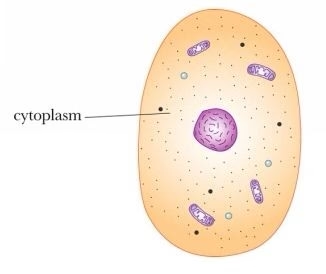
Cytoplasm
The Factory Floor. The jelly-like fluid that fills the space and holds all these organelles.
ribosome
The Workers. They actually build the proteins.
What is the structure of the cell and its components?
cilia, flagella, microvilli, cytoplasm, cytoskeleton, lysosomes, peroxisomes, mitochondria, ribosomes, endoplasmic reticulum, golgi complex, nucleus
How is the plasma membrane one of the 3 major parts of the cell?
it defines the cell’s boundaries, it is selectively permeable (it chooses its nutrients and waste. it also allows contains receptors), and it maintains the internal environment
How is the cytoplasm one of the 3 major parts of the cell?
it houses all the organelles, provides the space for chemical reactions, translation happens here, and it is the site of production and metabolism
How is the nucleus one of the 3 major parts of the cell?
it protects DNA, it is the site of transcription, and it controls everything the cell does (from growing to dividing to building proteins)

What is the Fluid Mosaic model of membrane structure?
it describes the membrane as a flexible, “fluid” sea of lipids where various proteins are tucked in like a mosaic pattern
Hydrophilic Region of Fluid-Mosaic Model
it is the head of the phospholipids. they are polar and face the water both outside the cell and inside the cytoplasm
Hydrophobic Region of the Fluid-Mosaic Model
these are fatty acid tails, they are nonpolar and hide in the interior of the membrane away from water. it is what creates a waterproof barrier

what is the “Mosaic” of Membrane proteins
these are proteins that are embedded in the bilayer to perform specific tasks

Transmembrane (integral) proteins
goes all the way through the membrane, ex. Ion channels or Carrier proteins that act as tunnels to let molecules cross the membrane