ne102 4/10 lecture: cell-to-cell communication + signal transduction
 Call Kai
 Learn
 Practice Test
 Spaced Repetition
 Match
 Flashcards
 Knowt Play
1/7

There's no tags or description
Looks like no tags are added yet.
8 Terms

signal transduction
how a cell responds to an extracellular chemical stimulus

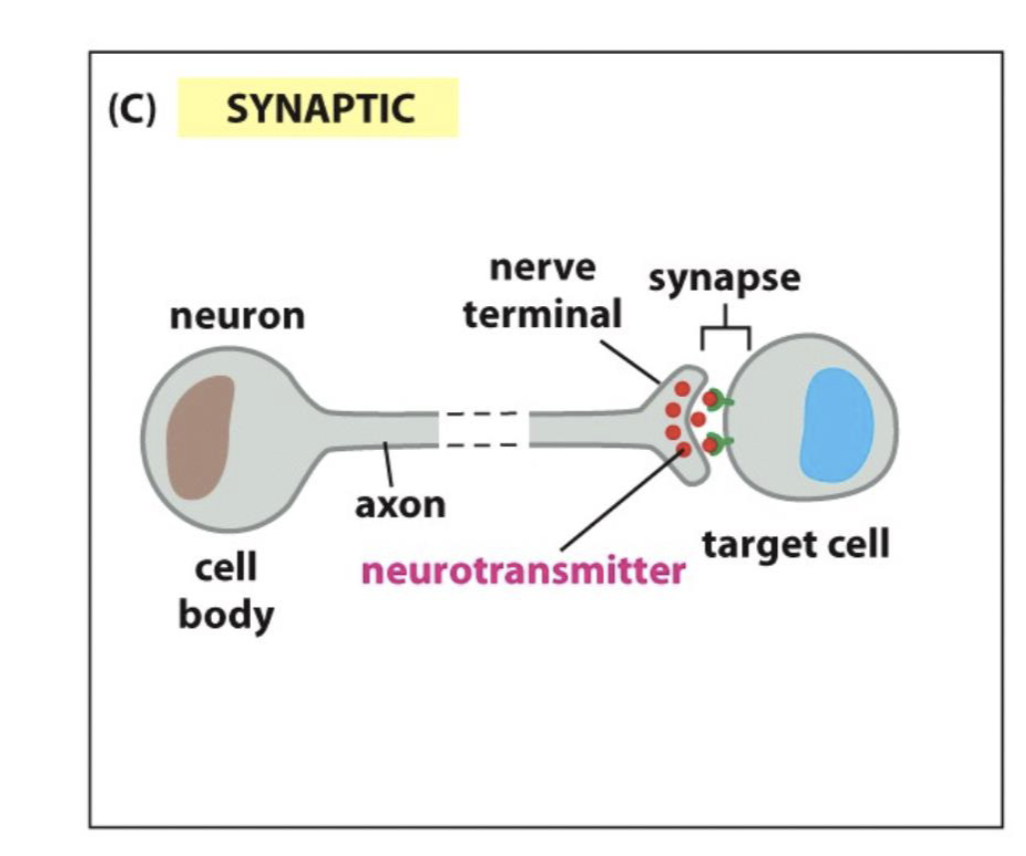
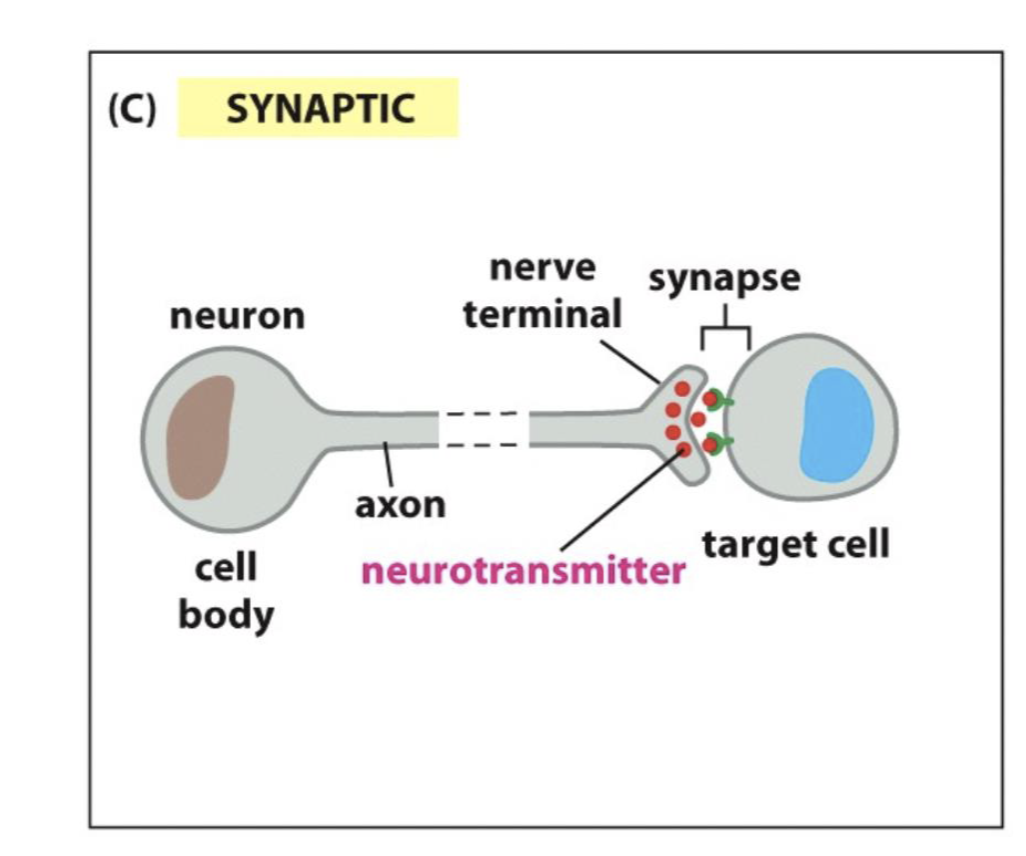
signaling molecules (synaptic)
can be released by specific cells + target other cells. receptors + channels are at the membrane of receiving cell

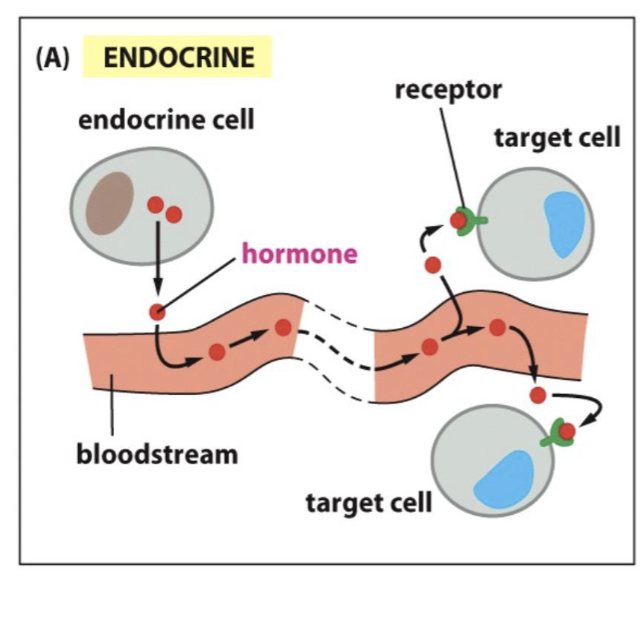
endocrine cells
hormones (insulin) = signaling molecule → flow through bloodstream → bind to receptors on target cells
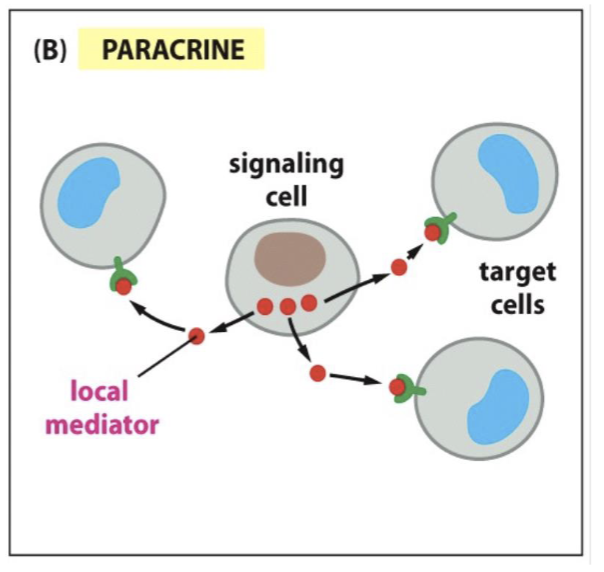
paracrine cells
local mediator = signal molecule from signaling cell → bind to receptors on target cells

autocrine signaling
the cell responds to its own local mediators; cancer

in signal transduction, a signal is:
sent from a sending cell
received by a receiving cell
the receiving cell responds by triggering a series of molecular events + activating specific proteins
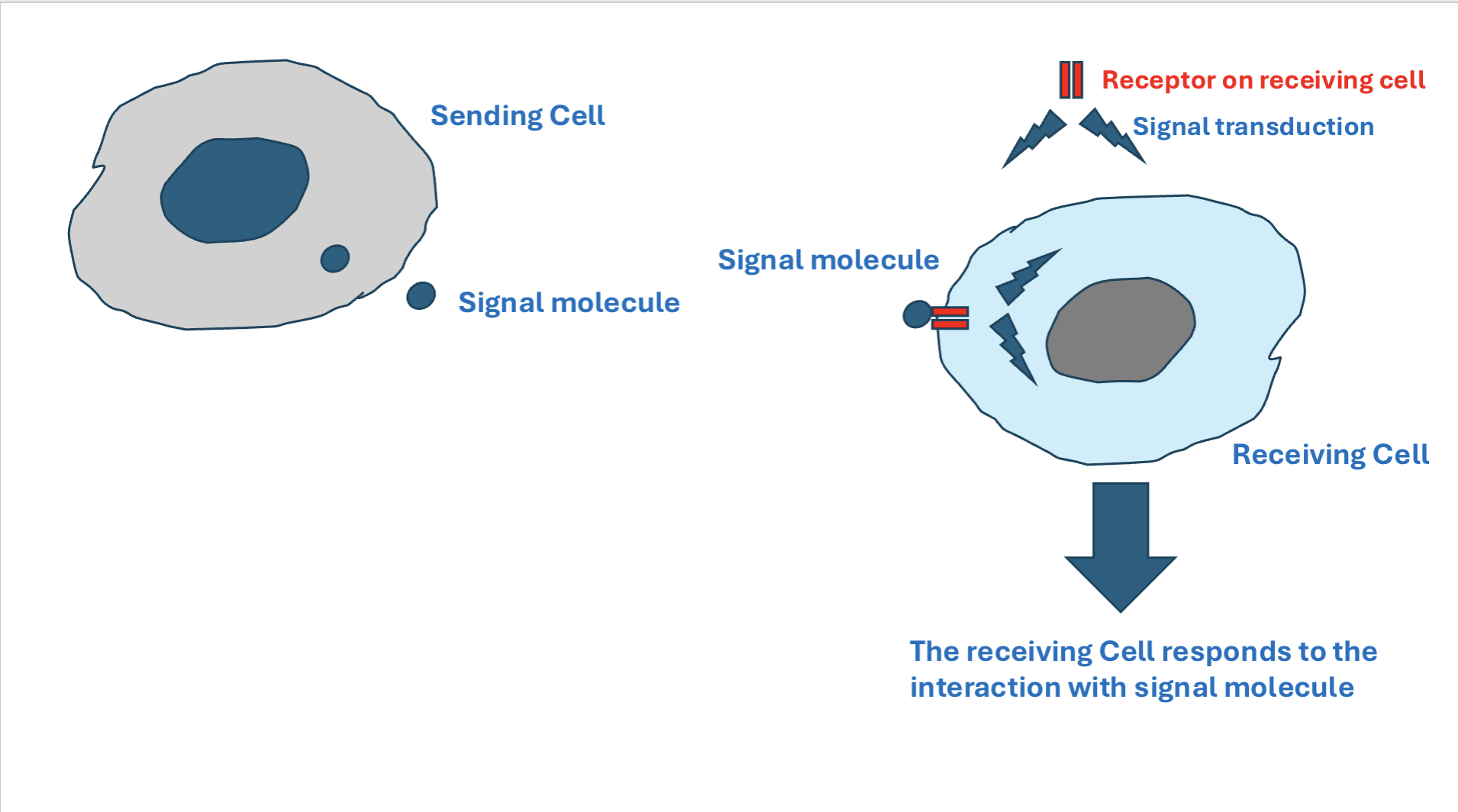
signal transduction process
signal molecule + receptor will interact → induce conformational changes in the receptors → specific proteins will be activated in the receiving cell
purpose of signal transduction
cell can initiate wide range of responses, like the metabolism of specific molecules, cell movement, new protein synthesis, + cell division