hale exam 2 lecture 1 [htn part 1]
 Call Kai
 Learn
 Practice Test
 Spaced Repetition
 Match
 Flashcards
 Knowt Play
1/47

There's no tags or description
Looks like no tags are added yet.
48 Terms
CCBs main classes
- dihydropyridines
- phenylalkylamines [verapamil]
- benzothiazepines [diltiazem]

main thing to remember with dihydropyridines
- 1,4 -dihydropyridine is necessary for CCB blockage
effect of dihydropyridines vs verapamil/diltiazem on bp
- both decrease BP
effect of dihydropyridines vs verapamil/diltiazem on peripheral vasodilation
- both increase vasodilation
effect of dihydropyridines vs verapamil/diltiazem on heart rate
- dihydropyridines increase heart rate
- verapamil/diltiazem decrease or have no effect on heart rate
effect of dihydropyridines vs verapamil/diltiazem on AV node conduction
- dihydropyridines have no effect
- verapamil/diltiazem decrease AV node conduction
effect of dihydropyridines vs verapamil/diltiazem on cardiac contractility
- dihydropyridines have no effect/slight increase in contractility
- verapamil/diltiazem decrease contractility
why are there differences between different classes of CCBs
- each class binds to a different site within the central a1 subunit of L-type Ca2+ channels
- each class differs in its ability to modulate the resting, open, and inactive Ca2+ channel states
- additionally, each class modulates the binding and blocking activity of the other two classes
dihydropyridine Ca2+ channel blockers key SAR
- synthesized via Hantzsch reaction
- 1,4-dihydropyridine is essential for activity [most important]
- C4 phenyl with electron withdrawing ortho or meta substituents is preferred
- ester groups at 3- and 5- positions modulate/maximize activity
- C4 can be chiral, and enantiomers have differing activity
ester groups at 3- and 5- for dihydropyridine CCBs

C4 phenyl with electron withdrawing groups/substituents CCBs

dihydropridines of interest in this lecture
- nifedipine
- amlodipine
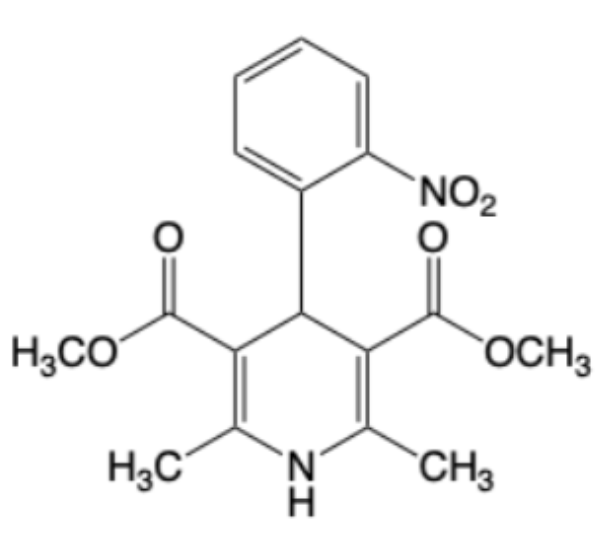
Nifedipine (Procardia XL) therapeutic use
- prototypical 1st gen dihydropyridine CCB
- ER oral formulation for the treatment of HTN and stable angina
- used alone or in combination with other agents
- can lower SBP 10-20 mmHg and DBP 6-12 mmHg
Nifedipine (Procardia XL) MOA
- vasoselective blockage of L-type Ca channels
Nifedipine (Procardia XL) PK
- high oral bioavailability
- relatively short half life because it is rapidly metabolized, but the extended release formulation slows absorption and turns to 2 hour half life into 6 hours
- the drug is completely excreted through the kidney as a metabolite
- overall, the extended release is a great way of getting around the rapid drop in BP and also slows how quickly the drug gets into the blood so that you aren't overdoing it with the nifedipine
Nifedipine (Procardia XL) warnings and precautions
- hypotension, reflex tachycardia, dizziness, flushing, worsening of angina [risks of these are lessened by using XL formulations]
- does not provide protection from rapid beta-blocker withdrawal
Nifedipine (Procardia XL) adverse effects
- not mutagenic or carcinogenic; may impact male fertility
Nifedipine (Procardia XL) DDI
- extensively metabolized by CYP3A4, so inhibitors of CYP3A4 increase plasma concentrations

Amlodipine (Norvasc) therapeutic uses
- most preferred dihydropyridine CCB
- oral formulation of racemate [not symmetrical like nifedipine] as benzenesulfonic salt for the treatment of hypertension and stable angina
- can be used alone or in combination with other agents
- can lower SBP 10-20 mmHg and DBP 5-10 mmHg
Amlodipine (Norvasc) PK
- half life is 30 to 50 hours [very long] and is not rapidly metabolized
- diminished Cmax effects, slow onset and long duration of action follow from properties of basic 2-aminoethylmethoxy side chain with a pKa of 8.7
- multiple excretion pathways as parent and metabolite
Amlodipine (Norvasc) warnings and precautions
- hypotension, worsening angina
- does not provide protection from rapid beta blocker withdrawal
Amlodipine (Norvasc) adverse effects
- not mutagenic or carcinogenic, and no preclinical impact in fertility
Amlodipine (Norvasc) DDI
- metabolized by CYP3A4, so inhibitors of CYP3A4 may increase plasma concentrations
PK/PD SAR of select dihydropyridine CCBs
- duration of action can be extended by slowing absorption, enhancing lipophilicity and/or slowing ester hydrolysis
- onset of action can be slowed via drug formulation, like extended or controlled release seen with nifedipine, nisoldipine, and felodipine
- addition of basic side chain in nicardipine and amlodipine gives drugs that only need standard formulation
- amlodipine also has an extended membrane residence time, which is optimal for end of dosing period, which allows missed doses
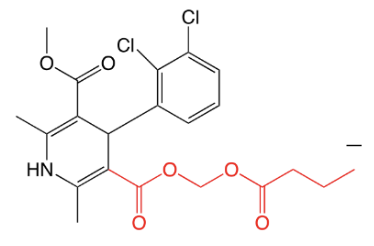
clevidipine
- IV CCB
- rapidly metabolized to inactive compound (When chain becomes COOH → inactive)
- used during hypertensive emergencies when oral dosing is not feasible
- not a prodrug
CCB summary therapeutic uses
- up titration of any CCB will lower BP as monotherapy
- DHPs that provide once daily, 24 hour efficacy are most used to treat HTN
- amlodipine is a 1st line treatment for hypertension and most commonly prescribed DHP CCB in the US
- all CCBs can be combined with other classes of antihypertensives regardless of sex, race, ethnicity, age, dietary Na intake
CCB class toxicity and adverse effects
- immediate release/short-acting agents cause hypotension, reflex tachycardia, dizziness, flushing, worsening angina
CCB class DDI
- with CYP3A4 inhibitors
Beta 1 receptors
- GPCRs primarily expressed in the heart and kidney
- dominant positive mediator of CO
activation of B1
- increased hr, contractility, and conduction velocity, so net effect is increase in cardiac output
- inc renin release and stimulates RAS, so net effect is increase in fluid volume and vasoconstriction
blocking of B1
- decreases CO and fluid volume, but only when sympathetic NS activated
- vasodilation dependent on specific drug
- do NOT generally reduce bp in subjects with normal bp

modification of epinephrine to propranolol
- start with Epinephrine, which has short half life and works on alpha receptors
- if you replace the methyl attached to N with isopropyl, you turn Epinephrine into Isoproterenol and become beta selective
- if you replace hydroxyl groups with Cl [dichloro], Isoproterenol becomes Dichloroisoproterenol and turns it into an antagonist
- if you make the Cl into a ring and make napthalene, you turn Dichloroisoproterenol into Pronethalol and increase potency
- if you insert oxymethylene into Pronethalol it turns into propranolol
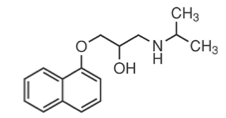
propranolol
- 1st generation, potent nonselective beta blocker
- lack of selectivity against beta 2 can induce bronchoconstriction, mask hypoglycemia, and reduce exercise tolerance
- short duration of action requires long acting formulation [inderal LA] for once daily dosing
- lipophilicity means CNS side effects [fatigue, sleep disturbance, vivid dreams]
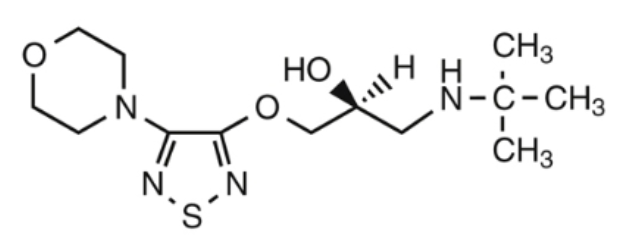
nadolol and [S]-Timolol
- first gen beta blockers that are not as lipophilic as propranolol [less CNS side effects]
- longer duration of action

pindolol
- first gen b-blocker that has sympathomimetic [partial agonist] activity diminishes resting bradycardia [pulmonary effects diminished]
general SAR for beta blocking activity
- aromatic ring and ethanolamine required, with the R after N being small branched alkyl for selectivity of beta over alpha
- majority of chain substitutions not tolerated, and the link between the aromatic ring and the chain is oxygen, which is generally required
- aromatic substitutions are somewhat tolerated → O helps with beta blocking potency, P helps with selectivity for beta 1
- blocking activity resides in S-enantiomer

difference between propranolol and second gen beta blockers [metoprolol, atenolol, bisoprolol, and nebivolol]
- the goal was to make the second gen less lipophilic [smaller clogP] compared to propranolol to reduce CNS side effects
- metoprolol and atenolol had moderate selectivity between beta 1/2
- bisoprolol and nebivolol had high selectivity for beta 1/2
- half life seemed to increase with lipophilicity, but extended release formulation for metoprolol accounted for this
metoprolol comments
- XL formulation of succinate salt allows once daily dosing
- diminished CNS side effects vs propranolol
- most prescribed in US
atenolol why is it so attractive
- very polar and low clogP, so CNS effects seen with propranolol diminished
- renally excreted as parent drug, which means low DDI
bisoprolol comments
- longer acting and no special formulation for once daily dosing
- diminished CNS side effects vs propranolol
nebivolol comments
- has a high clogP compared to other 2nd gens :(, but highly selective and longer acting and only requires once daily dosing
- increases NO production, which adds vasodilation

metoprolol succinate (Toprol XL) therapeutic uses
- hypertension [not first line] but lowers SBP 10-24 mmHg and DBP 5-19 mmHg
- stable angina: demonstrated to reduce number of attacks and increase exercise tolerance
- treatment post-MI: demonstrated to reduce 3-month mortality
- conventional oral and solution formulations of tartrate salt also available as Lopressor
- the most commonly used B1 antagonist in the US and 40% of all new prescriptions
metoprolol succinate (Toprol XL) PK
- good bioavailability
- major elimination is inactive metabolites excreted through the kidney
- primarily metabolized by CYP2D6 to inactive
- genetic differences afford high and low metabolizers, so it can greatly impact the half life depending on the patient
metoprolol succinate (Toprol XL) contraindications
- treatment of acute MI and moderate-to-severe heart failure
metoprolol succinate (Toprol XL) warnings and precautions
- caution when used in pt with bronchospastic disease
- may mask tachycardia due to some metabolic disorders
- abrupt cessation of therapy can exacerbate angina pectoris
- no major concerns of carcinogenicity, mutagenicity, and impairment of fertility
metoprolol succinate (Toprol XL) adverse effects
- generally well tolerated, but <5% experience fatigue, dizziness, diarrhea, skin hypersensitivity
metoprolol succinate (Toprol XL) DDI
- inhibitors of CYP2D6 can increase plasma concentrations of metoprolol
- caution when co-administered with anti-hypertensives or drugs that alter cardiac function
metoprolol CYP2D6 metabolism
