Tests and Measurements Exam
 Call Kai
 Learn
Learn Practice Test
 Spaced Repetition
 Match
Match Flashcards
 Knowt Play
1/39

There's no tags or description
Looks like no tags are added yet.
Name | Mastery | Learn | Test | Matching | Spaced | Call with Kai | Chat |
|---|
No analytics yet
Send a link to your students to track their progress
40 Terms
Nominal
No notion of order, magnitude or size
Ordinal
ranked in order, but the differences between ranked positions are not comparable
Interval
Equal or common unit of measurement; temperature or IQ
Ratio
Absolute zero point indicating absence of the trait, e.g. weight or temperature
Percentile
What % something is compared to others
Mean
Average
Median
Middle
Mode
Most often occurring
Normal Distribution

Positively skewed
most values cluster on the left
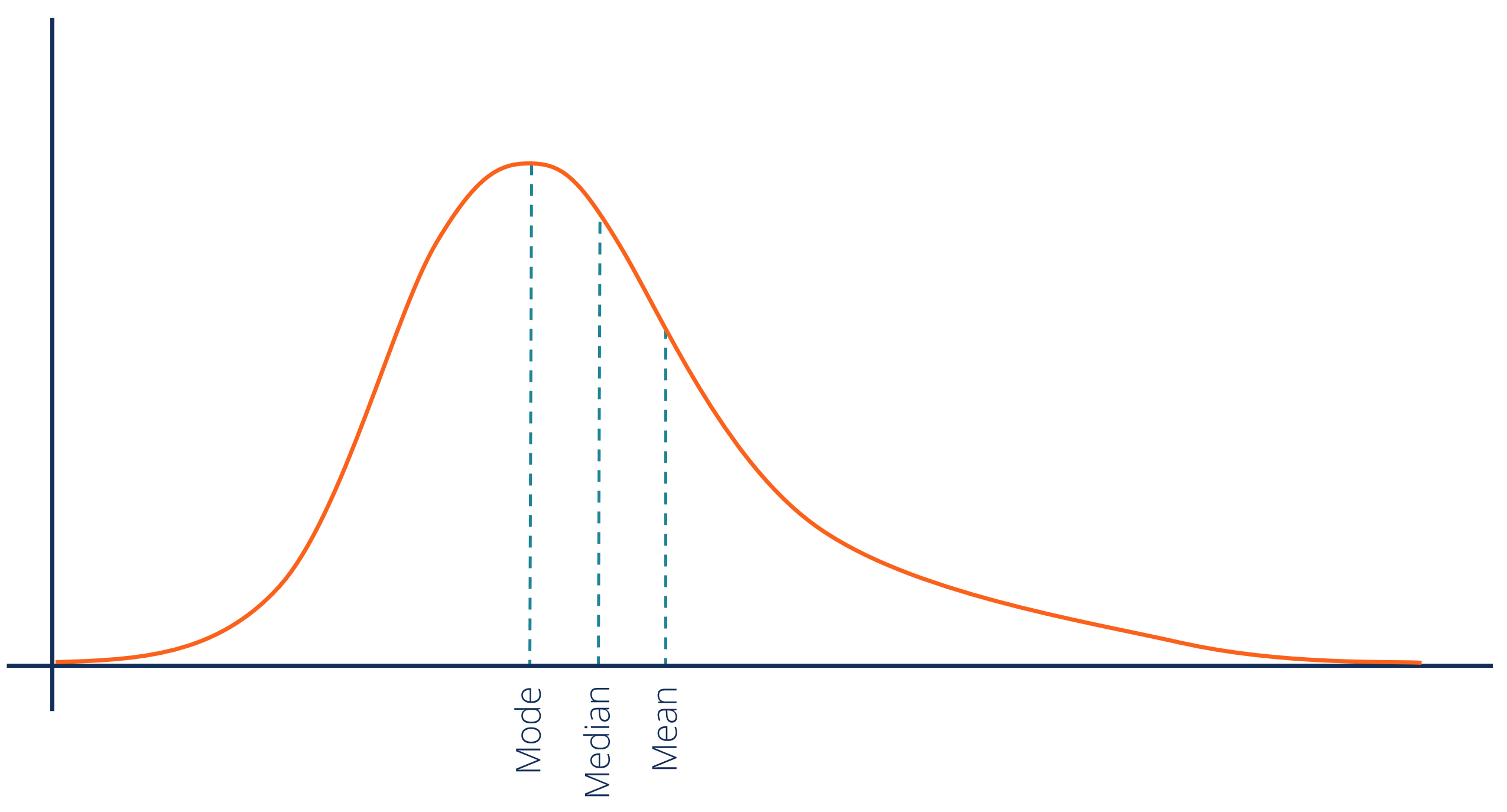
Negatively skewed

Variability
In a set of numbers, how widely dispersed the values are from each other and from the mean
Standard deviation
How scores vary around the mean
Z-score
How many standard deviations a value is from the mean, ranges from -3 - +3
Z = X-M / SD
z score formula
Correlation
How different variables are related to each other
Positive relationship
Variables move in the same direction

Negative relationship
Variables move in opposite directions

Coefficient of Determination
The squared value of r, represents the proportion of shared variance between 2 variables
Regression
Method for estimating the relationship between a dependent and independent variable, y = mx + b (for linear relationships)
Research hypothesis
What you actually believe will occur
Null hypothesis
A statement that there will be no relationship between variables
Alternative hypothesis
A statement that there will be a relationship between variables
Population
The entire group of people or observations in question
Sample
A subgroup of the population of interest
Independent variable
Manipulated by the researcher
Dependent variable
Observed to assess the effect of the experiment
Independent test
Used to examine the difference in one variable between 2 different groups, e.g. athletes vs non-athletes
Dependent test
To compare 2 related (paired) groups on one dependent variable, testing the same group twice
ANOVA
Analysis of variance: can examine with more than 2 groups, e.g. strength test with weights, bands and machines
Norm-referenced standard
Compared to other people
Criterion-referenced standard
Compared to a set standard required
Formative evaluation
Ongoing investigation, e.g. measuring weight each week
Summative evaluation
end of evaluation, measured at the start and the end
Placement
Putting people in general groups based on abilities
Diagnosis
Used to determine weaknesses or deficiencies
Prediction
Used to predict future events or results from present/past data
Motivation
Used to motivate students or athletes
Reliability
information that is accurate and consistent every time
Validity
How well the data conforms to the constraints of the experiment