O-Chem I (CHM 325): Chapter 12 - Spectroscopy
 Call Kai
 Learn
 Practice Test
 Spaced Repetition
 Match
 Flashcards
 Knowt Play
1/33

Earn XP
Description and Tags
Includes questions regarding calculating the degrees of unsaturation (elements of unsaturation); trends observed in IR spectroscopy when interpreting an IR spectrum for a compound's functional group(s); identifying functional groups on the IR spectrum; mass spectrometry (measuring the mass of single molecules (ions) and approximate molecular ion fragments; determination of the molecular formula; NMR spectroscopy and the approximate trends for chemical shifts (in PPM); NMR splitting patterns.
34 Terms
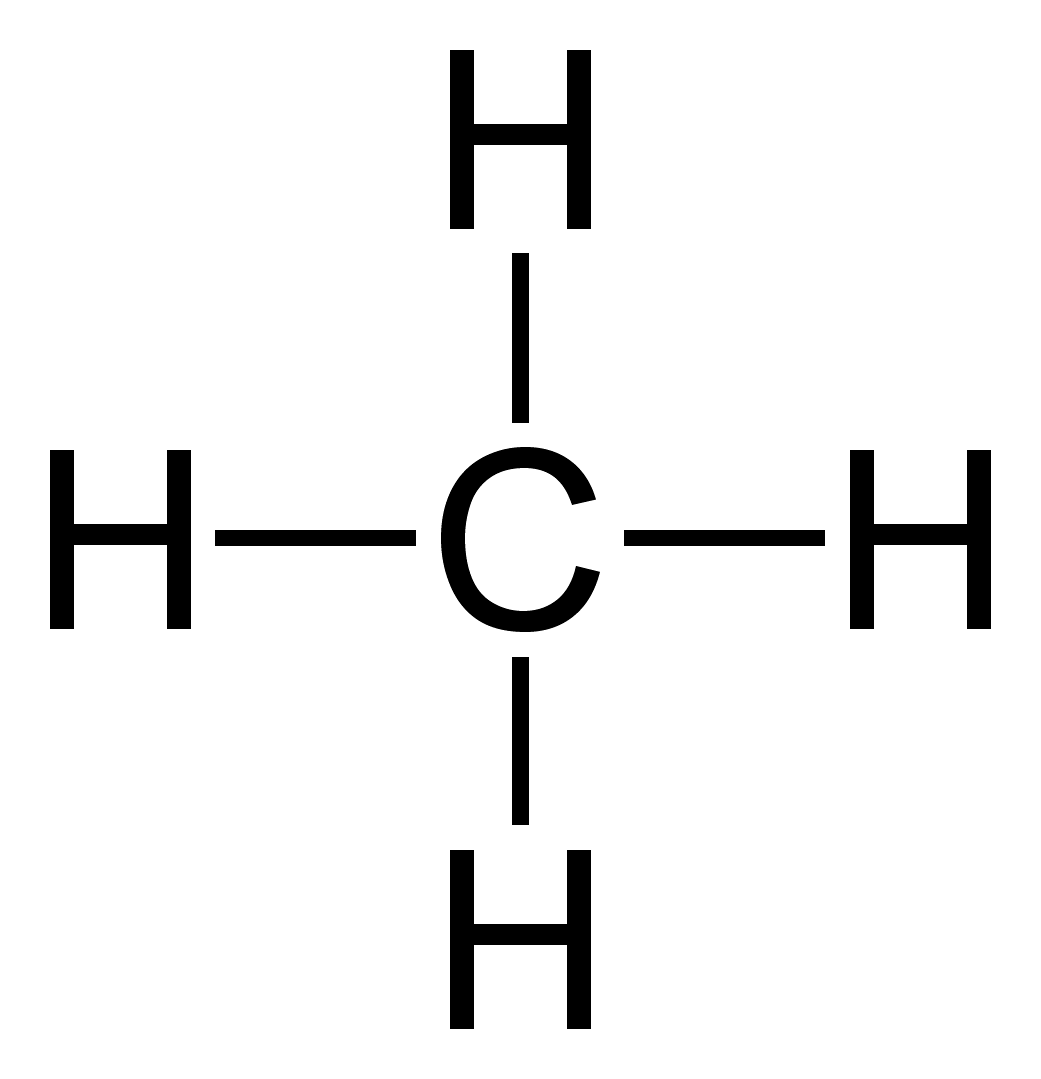
What is the approximate PPM range for a saturated alkane? (e.g., maximum number of hydrogen atoms bonded)?
0 - 1.5 PPM

What is the approximate PPM range for an allylic hydrogen (e.g., H next to a double bonded carbon)?
1.5 - 2.5 PPM

What is the approximate PPM range for a benzylic hydrogen (e.g., aromatic ring with a CH3 substituent)?
1.5 - 2.5 PPM

What is the approximate PPM range for a hydrogen adjacent to an alkyne (e.g., hydrogen bonded to a triple bonded carbon)?
1.5 - 2.5 PPM
What is the approximate PPM range for a hydrogen adjacent to an electronegative atom (e.g., X-CH3 where X = O, N, Cl, etc.)?
2.5 - 4.5 PPM
What is the approximate PPM range for a vinylic hydrogen (e.g., directly bonded to an alkene (double bonded carbon)) (ex. CH2=CH2)?
4.5 - 6.5 PPM
What is the approximate PPM range for an aromatic hydrogen (e.g., Hydrogen directly bonded to an aromatic ring) (e.x., normal aromatic ring)
6.5 - 8 PPM

What is the approximate PPM range for an aldehyde hydrogen (ex. R - C (=O) - H)?
10 - 12 PPM

What is the approximate PPM range for a carboxylic acid?
10 - 12 PPM
Define saturated
Maximum number of hydrogens present; only single carbon-carbon bonds
Define unsaturated
Contains one or more carbon-carbon double or triple bonds
What is the approximate PPM range for an alcohol (OH) hydrogen?
0.5 - 5 PPM
Define shielded
normal electron density protecting the nucleus from the external magnetic field, causing lower chemical shifts (lower PPM)
Define deshielded
Electron density pulled away leading to less electron protection around the nucleus causing a higher chemical shift (higher PPM)
Define the N+1 Rule
A proton with N neighbors is split into N+1 peaks
If there are 0 neighbors, what is the multiplicity? How many peaks would be observed on the spectrum?
Singlet with 1 peak
If there is 1 neighbor, what is the multiplicity? How many peaks would be observed on the spectrum?
Doublet with 2 peaks
If there are 2 neighbors, what is the multiplicity and number of peaks observed on a spectrum?
Triplet with 3 peaks
If there are 3 neighbors, what is the multiplicity and number of peaks observed on a spectrum?
Quartet with 4 peaks
If there are 4 neighbors, what is the multiplicity and how many peaks would be observed on the spectrum?
quintet with 5 peaks
if there are 5 neighbors, what is the multiplicity and how many peaks are observed on a spectrum?
sextet with 6 peaks
if there are 6 neighbors, what is the multiplicity and how many peaks would be observed on the spectrum?
septet with 7 peaks
What is the Degrees of Unsaturation formula?
DoU = ½ (2C + 2 - H - X + N)
What can be determined from an IR spectrum
The functional groups present in a given molecule by measuring how the chemical bonds vibrate with exposed to infrared radiation
What can be determined from Mass spectrometry
The total mass of the molecule by measuring the mass-to-charge ratio as they are sorted into electric and magnetic fields.
What can be determined from NMR spectrometry
The structure, dynamics, and environment or organic compounds (molecules)
Define the Nitrogen rule in Mass spectrometry
If the molecular weight is an odd value, then there is an odd number of nitrogen atoms presents (usually 1 nitrogen atom)
What does NMR stand for?
Nuclear magnetic resonance
Define chemical shift in NMR spectroscopy
The location of an NMR signal measured in PPM (parts per million), reflecting the chemical environment of a nucleus
What is the correct order of the approximate hydrogen environment from lowest to highest chemical shift (PPM)?
Saturated alkane < allylic and benzylic < hydrogen next to electronegative atom < vinylic < aromatic < aldehyde and carboxylic acid
What does a higher chemical shift (PPM) indicate?
greater deshielding
What does a lower chemical shift (PPM) indicate?
greater shielding
Which hydrogen environment is typically the most shielded?
saturated alkane hydrogen
What does the splitting of an NMR signal indicate?
number of neighboring equivalent hydrogens