TI9- antibiotic chemistry 2
 Call Kai
 Learn
 Practice Test
 Spaced Repetition
 Match
 Flashcards
 Knowt Play
1/11

There's no tags or description
Looks like no tags are added yet.
12 Terms
list the different types of beta lactam antibiotics

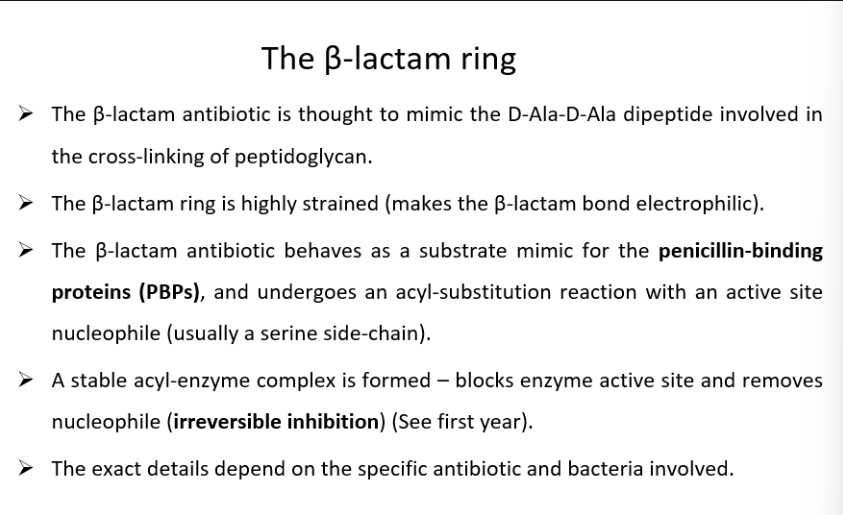
describe beta lactam antibiotics and their functions
they are very reactive to electron rich molecules e.g particular residues within enzymes
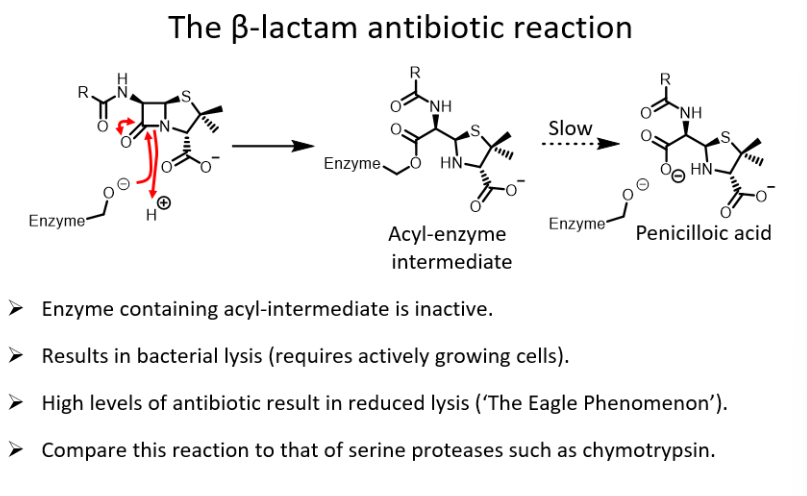
describe the beta- lactam antibiotic reaction
the antibiotic e.g. penicilin binds to a bacterial enzyme e.g. penicillin- binding protein which would normally hlep the bacteria form their cross linkages in their cell wall
the beta lactam ring opens- the enzyme attacks the beta lactam ring in penicillin opening it and forming a stong covalent bond with the antibiotic
the enzyme becomes inactive- the antibiotic remains attached to the enzyme preventing it from carrying out normal functions, the bacteria can no longer cross link their cell wall
the bacterial cell bursts- without the maintained cell wall, the growing bacterium becomes vulnerable to internal pressure and bacterial lysis occurs
describe how resistance in beta lactams and other antibiotics occur
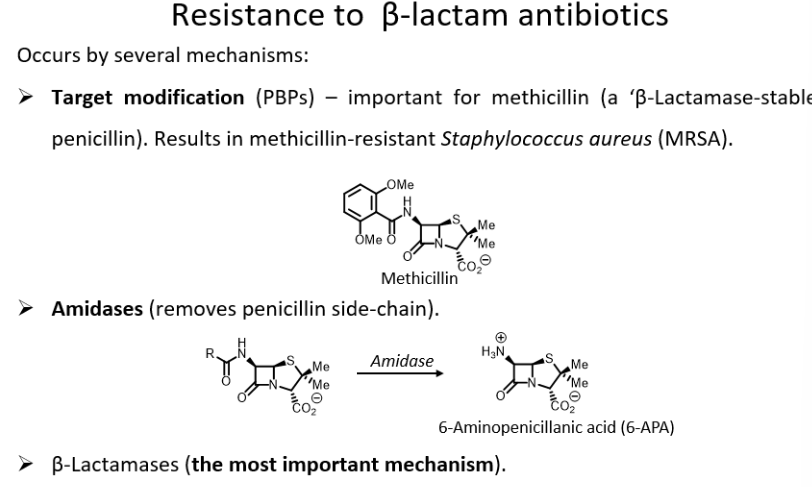
target modification- this is when the penicilin binding protein is changed so that the antibiotic becomes less effective
amidases- they remove the penicillin side chain which makes the antibiotic bind less well to the penicillin binding protein so resistance occurs.
beta-lactamases
what are beta- lactamases and how do they cause resistance
they are enymes that are prodcued by the bacteria that destroy the beta lactam on antibiotics making them inneffective
the antibiotic reaches the bacteria- normally it would bing onto the penicilin binding protiens stopping the bacteria from building a strong cell wall
the bacteria produce a beta lactamases- this enzyme attacks the open beta lactam ring with is essentizl for its activity
the antibiotic is inactivated- the enzyme forms a brief aceyl- enzyme intermediate which is then rapidly broken down into penicilloic acid which causes the enzyme to attack more antibiotic molecules
the bacteria survive.

what are the different type of beta lactamases

what are some ways of overcoming beta lactamases + problems with it
develop new antibiotics which are resistant to hydrolysis of beta lactamses
is is done a lot but resistance is able to quickly develop to new antibiotics espically in hosptials where theres intensive use.
also theres a limited number of antibiotics that need to be discovered as most have already been discovered
also patients often fail to take their full course of antibiotics which increases the problem of resistance
how are new antibiotics discovered

what are semi-sythetic penicllins
these are peniclins with different side which are developed by modifying/manipulating the biosythetic pathway for penicllin
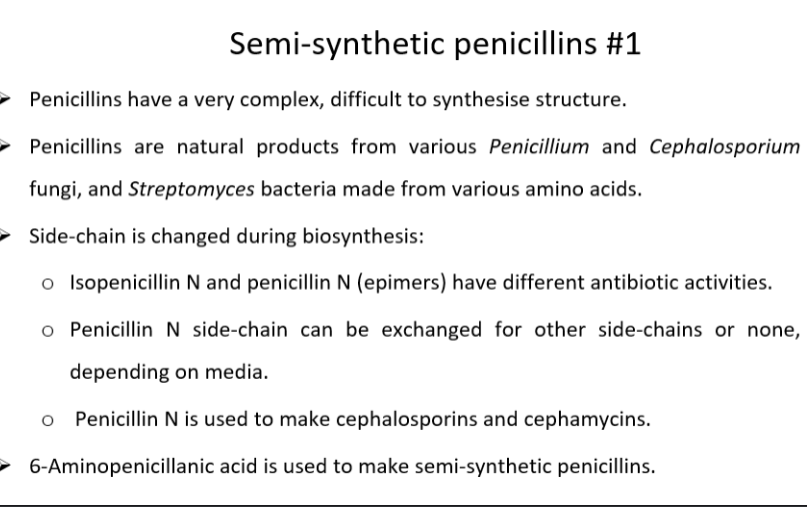
describe penicilin biosythesis

explain how penicilins’s are engineered
