BIO 101 Animalia Unit 4
 Call Kai
 Learn
 Practice Test
 Spaced Repetition
 Match
 Flashcards
 Knowt Play
1/46

There's no tags or description
Looks like no tags are added yet.
47 Terms
Cnidarids
Animal, eumetazoa, radiata
diploblastic (ectoderm and endoderm with mesoglea in between)
no centralized brain
mouth/anus one opening
tentacles surrounding mouth
anthozoa, syccphozoa, cubozoa, hydrozoa
polyp and medusa form
Polyp body form
usually attached
mouth and tentacles face upward
tubular body

Medusa body form
Free swimming
mouth facing downward
bell shaped body
tentacles extend from margin
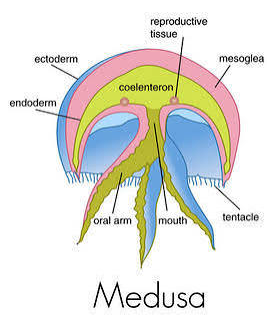
Life stages in cnidarids

Anthozoa
corals and sea anemones
Sycphozoa
True jellyfish
Cubozoa
box jellyfish
eumetazoa
animals with true tissues
Metazoa
Multicellular animals
Bilateria
Animals with bilateral symmetry
two equal halves
radiata
animals with radial symmetry
symmetry around a central axis
Deuterostomia
Blastopore develops into anus
mouth develops later
Protostomia
Blastopore develops into mouth
anus develops later
Lophotrochozoa
Some have feeding structure called lophphore
many have distinctive ciliated larva called trochophore
Ecdysozoa
Shed their external covering through molting (ecdysis)
Cnidarid feeding method
Mostly carnivorous feeding on plankton, crustaceans, small fish, and other invertebrates
extracellular digestion followed by intracellular digestion
digestion begins in gastrovascular cavity with gland cells on endoderm secreting digestive enzymes that break down prey into slurry
Cnidocyte
specialized cells unique to cnidarids
contain nematocysts
triggered by mechanical or chemical stimuli
rapidly discharge microscopic structure to capture/immobilize prey or defend against predators
eject venom
Corals
individuals are polyps
live in colonies
secrete calcium carbonate skeletons that can build enormous reef structures
receive sugars produced by zooxanthellae in their tissues (70-90%) and capture zooplankton and other tiny organisms with tentacles (30-10%)
Zooxanthellae
photosynthetic dinoflagellates living symbiotically within coral tissues
these protists provide sugars and other organic nutrients through photosynthesis
corals provide shelter, CO2, and nutrients
protists
Coral bleaching
when stressed (e.g. by elevated water temperature), corals expel zooxanthellae
corals can regain their symbiotic algae if environmental conditions improve
How corals hunt
tentacles detect prey through hair like triggers, activating cnidocytes
Nematocysts discharge venomous barbs, immobilizing prey
sticky mucus traps prey
tentacles move prey to mouth for digestion
Coral sexual reproduction
most corals release egg and sperm into water
fertilization produces a free swimming larva called planula
planula larva settle on a hard surface and develop into new polyp
some coral retain eggs and sperm internally and release fertilized larva
Moon phase triggers spawning events
Coral asexual reproduction
new polyps grow from existing polyps via budding, forming coral colonies
broken coral pieces can attach to the substrate and grow into new structures
Broadcast spawning
A reproductive strategy in which aquatic animals release eggs and sperm directly into the surrounding water for external fertilization
Ways to monitor reefs
traditionally count corals and fish to measure biodiversity
new approach uses reef structure and water flow to assess ecosystem health
recent study found that measurements from small reef areas may provide insights into larger reef system
Why reef physics matter
supports nutrient exchange through matter movement, delivering plankton and nutrients to corals and remove metabolic wastes
ocean circulation regulates temperature on the reef down, helping reduce heat stress and coral bleaching
Reef structures absorb and break wave energy, protecting the reef itself as well as coastlines from erosion and storm surges
Echinodermata
Brittle stars, star fish, feather stars, sea lilies, sea cucumbers
triploblastic; ectoderm, mesoderm, endoderm
clacerous endoskeleton made of ossicles
water vascular system used for movement, feeding, and gas exchange (tube feet operated by hydraulic pressure)
no centralized brain; simple nerve wing and radial nerves
exclusively marine
Echinodermata groups
Asteroids: sea stars
Ophiurods: brittle stars
Echinoids: Sea urchins and sand dollars
Holothuroids: sea cucumbers
Crinoids: Sea lilies and feather stars
Haeckel’s law
ontogeny recapitulates phylogeny
an organisms embryonic development repeats the evolutionary history of its ancestors
Ontogeny
development of an individual from fertilization to adulthood
Phylogeny
evolutionary history of a species or group of organisms
Echinoderm reproduction
Most echinoderms have separate sexes
broadcast spawners
fertilized eggs develop into planktonic larva undergo metamorphosis to become juveniles then adults
Echinoderm skeleton
Internal skeleton made of calcium carbonate
composed of numerous small plates called ossicles
ossicles held together by dermis
ossicles often form spines that project through skin for protection and movement
Echinoderm regeneration
Echinoderms have the remarkable ability to regenerate lost body parts
regeneration can replace damaged or lost arms, spines, tube feet, and other structures
makes echinoderms subjects for studying tissue regeneration and wound healing
ex. sea stars can regenerate lost arms and sever arms to deter predators
ex. sea cucumbers can regenerate internal organs
Water vascular system
unique hydraulic system found only in echinoderms
uses sea water to operate tube feet through changes in water pressure
used for locomotion, feeding, gas exchange, and sensory perception
Sea star diagram

Feeding in asteroids (starfish)
many sea stars are extra oral feeders
tube feet attach to prey and pull shell open
cardiac stomach pushed out through mouth and into prey
digestive enzymes break down soft tissues, partially digesting food
digestive glands extend into arms to aid with feeding
Sea urchin diagram
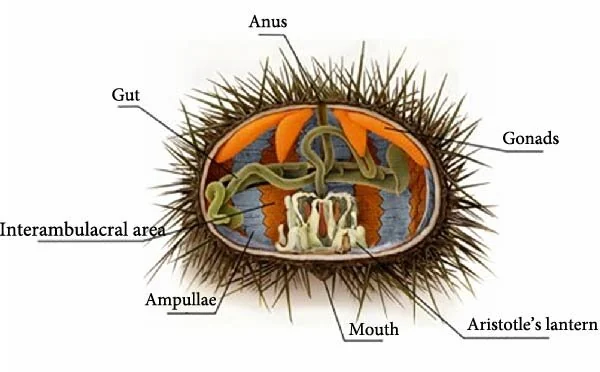
Echinoid (sea urchin) feeding
scrape, bite, and grind food from hard surfaces using Aristotle’s lantern
when sea urchin populations become too abundant intense grazing can create urchin barrens
Aristotles lantern
a complex apperatus in sea urchins containing 5 calcium carbonate teeth
Urchin barrens
areas where kelp forests have been largely removed due to uncontrolled urchin grazing
Sea urchin spines
spines are part of endoskeleton, made of calcium carbonate ossicles
spines are attached to rigid shell by flexible joints
spines deter predators, assist with sea floor movement, and help detect surroundings through changes in light and shadow
Extra oral feeders
feeders that digest food outside their body
Dioecious
when a species has separate sexes
Endoskeleton
internal skeleton
exoskeleton
external skeleton