Adult Health Exam 3
 Call Kai
 Learn
 Practice Test
 Spaced Repetition
 Match
 Flashcards
 Knowt Play
1/563

There's no tags or description
Looks like no tags are added yet.
564 Terms
The nurse determines that teaching about management of migraine headaches has been effective when the patient says which of the following?
a. "I can take the (Topamax) as soon as a headache starts."
b. "A glass of wine might help me relax and prevent a headache."
c. "I will lie down someplace dark and quiet when the headaches begin."
d. "I should avoid taking aspirin and sumatriptan (Imitrex) at the same time."
ANS: C. "I will lie down someplace dark and quiet when the headaches begin."
It is recommended that the patient with a migraine rest in a dark, quiet area. Topiramate (Topamax) is used to prevent migraines and must be taken for several months to determine effectiveness. Aspirin or other nonsteroidal antiinflammatory medications can be taken with the triptans. Alcohol may precipitate migraine headaches.
The nurse expects the assessment of a patient who is experiencing a cluster headache to include
a. nuchal rigidity.
b. unilateral ptosis.
c. projectile vomiting.
d. throbbing, bilateral facial pain.
ANS: B. unilateral ptosis.
Unilateral eye edema, tearing, and ptosis are characteristic of cluster headaches. Nuchal rigidity suggests meningeal irritation, such as occurs with meningitis. Although nausea and vomiting may occur with migraine headaches, projectile vomiting is more consistent with increased intracranial pressure. Unilateral sharp, stabbing pain, rather than throbbing pain, is characteristic of cluster headaches.
While the nurse is transporting a patient on a stretcher to the radiology department, the patient begins having a tonic-clonic seizure. Which action should the nurse take?
a. Insert an oral airway during the seizure to maintain a patent airway.
b. Restrain the patient's arms and legs to prevent injury during the seizure.
c. Time and observe and record the details of the seizure and postictal state.
d. Avoid touching the patient to prevent further nervous system stimulation.
ANS: C. Time and observe and record the details of the seizure and postictal state.
Because the diagnosis and treatment of seizures frequently are based on the description of the seizure, recording the length and details of the seizure is important. Insertion of an oral airway and restraining the patient during the seizure are contraindicated. The nurse may need to move the patient to decrease the risk of injury during the seizure.
A high school teacher who has been diagnosed with epilepsy after having a generalized tonic-clonic seizure tells the nurse, "I cannot teach any more. It will be too upsetting if I have a seizure at work." Which response by the nurse specifically addresses the patient's concern?
a. "You might benefit from some psychologic counseling."
b. "Epilepsy usually can be well controlled with medications."
c. "You will want to contact the Epilepsy Foundation for assistance."
d. "The Department of Vocational Rehabilitation can help with work retraining."
ANS: B. "Epilepsy usually can be well controlled with medications."
The nurse should inform the patient that most patients with seizure disorders are controlled with medication. The other information may be necessary if the seizures persist after treatment with antiseizure medications is implemented.
A patient has been taking phenytoin (Dilantin) for 2 years. Which action will the nurse take when evaluating for adverse effects of the medication?
a. Inspect the oral mucosa.
b. Listen to the lung sounds.
c. Auscultate the bowel sounds.
d. Check pupil reaction to light.
ANS: A. Inspect the oral mucosa.
Phenytoin can cause gingival hyperplasia, but does not affect bowel sounds, lung sounds, or pupil reaction to light.
A patient reports feeling numbness and tingling of the left arm before experiencing a seizure. The nurse determines that this history is consistent with what type of seizure?
a. Focal
b. Atonic
c. Absence
d. Myoclonic
ANS: A. Focal
The initial symptoms of a focal seizure involve clinical manifestations that are localized to a particular part of the body or brain. Symptoms of an absence seizure are staring and a brief loss of consciousness. In an atonic seizure, the patient loses muscle tone and (typically) falls to the ground. Myoclonic seizures are characterized by a sudden jerk of the body or extremities.
When obtaining a health history and physical assessment for a 36-yr-old female patient with possible multiple sclerosis (MS), the nurse should
a. assess for the presence of chest pain.
b. inquire about urinary tract problems.
c. inspect the skin for rashes or discoloration.
d. ask the patient about any increase in libido.
ANS: B. inquire about urinary tract problems.
Urinary tract problems with incontinence or retention are common symptoms of MS. Chest pain and skin rashes are not symptoms of MS. A decrease in libido is common with MS.
A woman who has multiple sclerosis (MS) asks the nurse about risks associated with pregnancy. Which response by the nurse is accurate?
a. "MS symptoms may be worse after the pregnancy."
b. "Women with MS frequently have premature labor."
c. "MS is associated with an increased risk for congenital defects."
d. "Symptoms of MS are likely to become worse during pregnancy."
ANS: A. "MS symptoms may be worse after the pregnancy."
During the postpartum period, women with MS are at greater risk for exacerbation of symptoms. There is no increased risk for congenital defects in infants born of mothers with MS. Symptoms of MS may improve during pregnancy. Onset of labor is not affected by MS.
A 33-yr-old patient with multiple sclerosis (MS) is to begin treatment with glatiramer acetate (Copaxone). Which information will the nurse include in patient teaching?
a. Recommendation to drink at least 4 L of fluid daily
b. Need to avoid driving or operating heavy machinery
c. How to draw up and administer injections of the medication
d. Use of contraceptive methods other than oral contraceptives
ANS: C. How to draw up and administer injections of the medication
Copaxone is administered by self-injection. Oral contraceptives are an appropriate choice for birth control. There is no need to avoid driving or drink large fluid volumes when taking glatiramer.
Which information about a 60-yr-old patient with multiple sclerosis indicates that the nurse should consult with the health care provider before giving the prescribed dose of dalfampridine (Ampyra)?
a. The patient walks a mile each day for exercise.
b. The patient complains of pain with neck flexion.
c. The patient has an increased serum creatinine level.
d. The patient has the relapsing-remitting form of MS.
ANS: C. The patient has an increased serum creatinine level.
Dalfampridine should not be given to patients with impaired renal function. The other information will not impact whether the dalfampridine should be administered.
Which action will the nurse plan to take for a patient with multiple sclerosis who has urinary retention caused by a flaccid bladder?
a. Encourage a decreased evening intake of fluid.
b. Teach the patient how to use the Credé method.
c. Suggest the use of adult incontinence briefs for nighttime only.
d. Assist the patient to the commode every 2 hours during the day.
ANS: B. Teach the patient how to use the Credé method.
The Credé method can be used to improve bladder emptying. Decreasing fluid intake will not improve bladder emptying and may increase risk for urinary tract infection and dehydration. The use of incontinence briefs and frequent toileting will not improve bladder emptying.
A patient with Parkinson's disease has bradykinesia. Which action will the nurse include in the plan of care?
a. Instruct the patient in activities that can be done while lying or sitting.
b. Suggest that the patient rock from side to side to initiate leg movement.
c. Have the patient take small steps in a straight line directly in front of the feet.
d. Teach the patient to keep the feet in contact with the floor and slide them forward.
ANS: B. Suggest that the patient rock from side to side to initiate leg movement.
Rocking the body from side to side stimulates balance and improves mobility. The patient will be encouraged to continue exercising because this will maintain functional abilities. Maintaining a wide base of support will help with balance. The patient should lift the feet and avoid a shuffling gait.
A 62-yr-old patient who has Parkinson's disease is taking bromocriptine (Parlodel). Which information obtained by the nurse may indicate a need for a decrease in the dosage?
a. The patient has a chronic dry cough.
b. The patient has four loose stools in a day.
c. The patient develops a deep vein thrombosis.
d. The patient's blood pressure is 92/52 mm Hg.
ANS: D. The patient's blood pressure is 92/52 mm Hg.
Hypotension is an adverse effect of bromocriptine, and the nurse should check with the health care provider before giving the medication. Diarrhea, cough, and deep vein thrombosis are not associated with bromocriptine use.
The nurse advises a patient with myasthenia gravis (MG) to
a. perform physically demanding activities early in the day.
b. anticipate the need for weekly plasmapheresis treatments.
c. do frequent weight-bearing exercise to prevent muscle atrophy.
d. protect the extremities from injury due to poor sensory perception.
ANS: A. perform physically demanding activities early in the day.
Muscles are generally strongest in the morning, and activities involving muscle activity should be scheduled then. Plasmapheresis is not routinely scheduled but is used for myasthenia crisis or for situations in which corticosteroid therapy must be avoided. There is no decrease in sensation with MG, and muscle atrophy does not occur because although there is muscle weakness, they are still used.
Which medication taken by a patient with restless legs syndrome should the nurse discuss with the patient?
a. Ibuprofen
b. Multivitamin
c. Acetaminophen
d. Diphenhydramine
ANS: D. Diphenhydramine
Antihistamines can aggravate restless legs syndrome. The other medications will not contribute to restless legs syndrome.
A patient who has amyotrophic lateral sclerosis (ALS) is hospitalized with pneumonia. Which nursing action will be included in the plan of care?
a. Observe for agitation and paranoia.
b. Assist with active range of motion (ROM).
c. Give muscle relaxants as needed to reduce spasms.
d. Use simple words and phrases to explain procedures.
ANS: B. Assist with active range of motion (ROM).
ALS causes progressive muscle weakness, but assisting the patient to perform active ROM will help maintain strength as long as possible. Psychotic manifestations such as agitation and paranoia are not associated with ALS. Cognitive function is not affected by ALS, and the patient's ability to understand procedures will not be impaired. Muscle relaxants will further increase muscle weakness and depress respirations.
A 40-yr-old patient is diagnosed with early Huntington's disease (HD). When teaching the patient, spouse, and adult children about this disorder, the nurse will provide information about the
a. use of levodopa-carbidopa (Sinemet) to help reduce HD symptoms.
b. prophylactic antibiotics to decrease the risk for aspiration pneumonia.
c. option of genetic testing for the patient's children to determine their own HD risks.
d. lifestyle changes of improved nutrition and exercise that delay disease progression.
ANS: C. option of genetic testing for the patient's children to determine their own HD risks.
Genetic testing is available to determine whether an asymptomatic individual has the HD gene. The patient and family should be informed of the benefits and problems associated with genetic testing. Sinemet will increase symptoms of HD because HD involves an increase in dopamine. Antibiotic therapy will not reduce the risk for aspiration. There are no effective treatments or lifestyle changes that delay the progression of symptoms in HD.
When a 74-yr-old patient is seen in the health clinic with new development of a stooped posture, shuffling gait, and pill rolling-type tremor, the nurse will anticipate teaching the patient about
a. oral corticosteroids.
b. antiparkinsonian drugs.
c. magnetic resonance imaging (MRI).
d. electroencephalogram (EEG) testing.
ANS: B. antiparkinsonian drugs.
The clinical diagnosis of Parkinson's is made when tremor, rigidity, and akinesia, and postural instability are present. The confirmation of the diagnosis is made on the basis of improvement when antiparkinsonian drugs are administered. MRI and EEG are not useful in diagnosing Parkinson's disease, and corticosteroid therapy is not used to treat it.
A 22-yr-old patient seen at the health clinic with a severe migraine headache tells the nurse about having similar headaches recently. Which initial action should the nurse take?
a. Teach about the use of triptan drugs.
b. Refer the patient for stress counseling.
c. Ask the patient to keep a headache diary.
d. Suggest the use of muscle-relaxation techniques.
ANS: C. Ask the patient to keep a headache diary.
The initial nursing action should be further assessment of the precipitating causes of the headaches, quality, and location of pain. Stress reduction, muscle relaxation, and the triptan drugs may be helpful, but more assessment is needed first.
A hospitalized patient complains of a bilateral headache (4/10 on the pain scale) that radiates from the base of the skull. Which prescribed PRN medications should the nurse administer initially?
a. Lorazepam (Ativan)
b. Acetaminophen (Tylenol)
c. Morphine sulfate (MS Contin)
d. Butalbital and aspirin (Fiorinal)
ANS: B. Acetaminophen (Tylenol)
The patient's symptoms are consistent with a tension headache, and initial therapy usually involves a nonopioid analgesic such as acetaminophen, which is sometimes combined with a sedative or muscle relaxant. Lorazepam may be used in conjunction with acetaminophen but would not be appropriate as the initial monotherapy. Morphine sulfate and butalbital and aspirin would be more appropriate for a headache that did not respond to a nonopioid analgesic.
A patient tells the nurse about using acetaminophen (Tylenol) several times every day for recurrent bilateral headaches. Which action will the nurse plan to take first?
a. Discuss the need to stop taking the acetaminophen.
b. Suggest the use of biofeedback for headache control.
c. Describe the use of botulism toxin (Botox) for headaches.
d. Teach the patient about magnetic resonance imaging (MRI).
ANS: A. Discuss the need to stop taking the acetaminophen.
The headache description suggests that the patient is experiencing medication overuse headache. The initial action will be withdrawal of the medication. The other actions may be needed if the headaches persist.
The health care provider is considering the use of sumatriptan (Imitrex) for a 54-yr-old male patient with migraine headaches. Which information obtained by the nurse is most important to report to the health care provider?
a. The patient drinks 1 to 2 cups of coffee daily.
b. The patient had a recent acute myocardial infarction.
c. The patient has had migraine headaches for 30 years.
d. The patient has taken topiramate (Topamax) for 2 months.
ANS: B. The patient had a recent acute myocardial infarction.
The triptans cause coronary artery vasoconstriction and should be avoided in patients with coronary artery disease. The other information will be reported to the health care provider, but none of it indicates that sumatriptan would be an inappropriate treatment.
The nurse observes a patient ambulating in the hospital hall when the patient's arms and legs suddenly jerk and the patient falls to the floor. The nurse will first
a. assess the patient for a possible injury.
b. give the scheduled divalproex (Depakote).
c. document the timing and description of the seizure.
d. notify the patient's health care provider about the seizure.
ANS: A. assess the patient for a possible injury.
The patient who has had a myoclonic seizure and fall is at risk for head injury and should first be evaluated and treated for this possible complication. Documentation of the seizure, notification of the health care provider, and administration of antiseizure medications are also appropriate actions, but the initial action should be assessment for injury.
Which prescribed intervention will the nurse implement first for a patient in the emergency department who is experiencing continuous tonic-clonic seizures?
a. Give phenytoin (Dilantin) 100 mg IV.
b. Monitor level of consciousness (LOC).
c. Administer lorazepam (Ativan) 4 mg IV.
d. Obtain computed tomography (CT) scan.
ANS: C. Administer lorazepam (Ativan) 4 mg IV.
To prevent ongoing seizures, the nurse should administer rapidly acting antiseizure medications such as the benzodiazepines. A CT scan is appropriate, but prevention of any seizure activity during the CT scan is necessary. Phenytoin will also be administered, but it is not rapidly acting. Patients who are experiencing tonic-clonic seizures are nonresponsive, although the nurse should assess LOC after the seizure.
The home health registered nurse (RN) is planning care for a patient with a seizure disorder related to a recent head injury. Which nursing action can be delegated to a licensed practical/vocational nurse (LPN/LVN)?
a. Make referrals to appropriate community agencies.
b. Place medications in the home medication organizer.
c. Teach the patient and family how to manage seizures.
d. Assess for use of medications that may precipitate seizures.
ANS: B. Place medications in the home medication organizer.
LPN/LVN education includes administration of medications. The other activities require RN education and scope of practice.
A patient is being treated with carbidopa/levodopa (Sinemet) for Parkinson's disease. Which information indicates a need for change in the medication or dosage?
a. Shuffling gait
b. Tremor at rest
c. Cogwheel rigidity of limbs
d. Uncontrolled head movement
ANS: D. Uncontrolled head movement
Dyskinesia is an adverse effect of the Sinemet, indicating a need for a change in medication or decrease in dose. The other findings are typical with Parkinson's disease.
Which nursing diagnosis is of highest priority for a patient with Parkinson's disease who is unable to move the facial muscles?
a. Activity intolerance
b. Self-care deficit: toileting
c. Ineffective self-health management
d. Imbalanced nutrition: less than body requirements
ANS: D. Imbalanced nutrition: less than body requirements
The data about the patient indicate that poor nutrition will be a concern because of decreased swallowing. The other diagnoses may also be appropriate for a patient with Parkinson's disease, but the data do not indicate that they are current problems for this patient.
Which assessment is most important for the nurse to make regarding a patient with myasthenia gravis?
a. Pupil size
b. Grip strength
c. Respiratory effort
d. Level of consciousness
ANS: C. Respiratory effort
Because respiratory insufficiency may be life threatening, it will be most important to monitor respiratory function. The other data also will be assessed but are not as critical.
After a thymectomy, a patient with myasthenia gravis receives the usual dose of pyridostigmine (Mestinon). An hour later, the patient complains of nausea and severe abdominal cramps. Which action should the nurse take first?
a. Auscultate the patient's bowel sounds.
b. Notify the patient's health care provider.
c. Administer the prescribed PRN antiemetic drug.
d. Give the scheduled dose of prednisone (Deltasone).
ANS: B. Notify the patient's health care provider.
The patient's history and symptoms indicate a possible cholinergic crisis. The health care provider should be notified immediately, and it is likely that atropine will be prescribed. The other actions will be appropriate if the patient is not experiencing a cholinergic crisis.
A hospitalized patient with a history of cluster headache awakens during the night with a severe stabbing headache. Which action should the nurse take first?
a. Put a moist hot pack on the patient's neck.
b. Start the prescribed PRN O2 at 6 L/min.
c. Give the ordered PRN acetaminophen (Tylenol).
d. Notify the patient's health care provider immediately.
ANS: B. Start the prescribed PRN O2 at 6 L/min.
Acute treatment for cluster headache is administration of 100% O2 at 6 to 8 L/min. If the patient obtains relief with the O2, there is no immediate need to notify the health care provider. Cluster headaches last only 60 to 90 minutes, so oral pain medications have minimal effect. Hot packs are helpful for tension headaches but are not as likely to reduce pain associated with a cluster headache.
Which intervention will the nurse include in the plan of care for a patient with primary restless legs syndrome (RLS) who is having difficulty sleeping?
a. Teach about the use of antihistamines to improve sleep.
b. Suggest that the patient exercise regularly during the day.
c. Make a referral to a massage therapist for deep massage of the legs.
d. Assure the patient that the problem is transient and likely to resolve.
ANS: B. Suggest that the patient exercise regularly during the day.
Nondrug interventions such as getting regular exercise are initially suggested to improve sleep quality in patients with RLS. Antihistamines may aggravate RLS. Massage does not alleviate RLS symptoms, and RLS is likely to progress in most patients.
Which information about a patient who has a new prescription for phenytoin (Dilantin) indicates that the nurse should consult with the health care provider before administration of the medication?
a. Patient has tonic-clonic seizures.
b. Patient experiences an aura before seizures.
c. Patient has minor elevations in the liver function tests.
d. Patient's most recent blood pressure is 156/92 mm Hg.
ANS: C. Patient has minor elevations in the liver function tests.
Many older patients (especially with compromised liver function) may not be able to metabolize phenytoin. The health care provider may need to choose another antiseizure medication. Phenytoin is an appropriate medication for patients with tonic-clonic seizures, with or without an aura. Hypertension is not a contraindication for phenytoin therapy.
After change-of-shift report, which patient should the nurse assess first?
a. Patient with myasthenia gravis who is reporting increased muscle weakness
b. Patient with a bilateral headache described as "like a band around my head"
c. Patient with seizures who is scheduled to receive a dose of phenytoin (Dilantin)
d. Patient with Parkinson's disease who has developed cogwheel rigidity of the arms
ANS: A. Patient with myasthenia gravis who is reporting increased muscle weakness
Because increased muscle weakness may indicate the onset of a myasthenic crisis, the nurse should assess this patient first. The other patients should also be assessed but do not appear to need immediate nursing assessments or actions to prevent life-threatening complications.
A patient who has been treated for status epilepticus in the emergency department will be transferred to the medical nursing unit. Which equipment should the nurse have available in the patient's assigned room (select all that apply)?
a. Side-rail pads
b. Tongue blade
c. Oxygen mask
d. Suction tubing
e. Urinary catheter
f. Nasogastric tube
ANS: A. Side-rail pads
C. Oxygen mask
D. Suction tubing
The patient is at risk for further seizures, and O2 and suctioning may be needed after any seizures to clear the airway and maximize oxygenation. The bed's side rails should be padded to minimize the risk for patient injury during a seizure. Use of tongue blades during a seizure is contraindicated. Insertion of a nasogastric (NG) tube is not indicated because the airway problem is not caused by vomiting or abdominal distention. A urinary catheter is not required unless there is urinary retention.
A patient with Parkinson's disease is admitted to the hospital for treatment of pneumonia. Which nursing interventions will be included in the plan of care (select all that apply)?
a. Provide an elevated toilet seat.
b. Cut patient's food into small pieces.
c. Serve high-protein foods at each meal.
d. Place an armchair at the patient's bedside.
e. Observe for sudden exacerbation of symptoms.
ANS: A. Provide an elevated toilet seat.
B. Cut patient's food into small pieces.
D. Place an armchair at the patient's bedside.
Because the patient with Parkinson's disease has difficulty chewing, food should be cut into small pieces. An armchair should be used when the patient is seated so that the patient can use the arms to assist with getting up from the chair. An elevated toilet seat will facilitate getting on and off the toilet. High-protein foods will decrease the effectiveness of L-dopa. Parkinson's disease is a steadily progressive disease without acute exacerbations.
A patient who is having an acute exacerbation of multiple sclerosis has a prescription for methylprednisolone (Solu-Medrol) 150 mg IV. The label on the vial reads: methylprednisolone 125 mg in 2 mL. How many mL will the nurse administer?
ANS:
2.4
With a concentration of 125 mg/2 mL, the nurse will need to administer 2.4 mL to obtain 150 mg of methylprednisolone.
Which finding should the nurse expect when assessing a patient who has osteoarthritis (OA) of the knee?
a. Presence of Heberden's nodules
b. Discomfort with joint movement
c. Redness and swelling of the knee joint
d. Stiffness that increases with movement
b. Discomfort with joint movement
Initial symptoms of OA include pain with joint movement. Heberden's nodules occur on the fingers. Redness of the joint is associated with inflammatory arthritis such as rheumatoid arthritis. Stiffness in OA is worse right after the patient rests and decreases with joint movement.
Environmental factors that contribute to SLE are listed below. Select all that apply.
a. sun or ultraviolet light
b. exposure to silica dust in the agricultural or industrial setting
c. sulfa drugs
d. diuretic drugs
e. penicillin
f. tetracycline
g. dairy products (ex. cheese, yogurt, milk)
h. viral infections
i. stress
a. sun or ultraviolet light
b. exposure to silica dust
c. sulfa drugs
d. diuretic drugs
e. penicillin
f. tetracycline
h. viral infections
i. stress
pg 1716
The patient presents with fingers that are fixed in a semiflexed position with tightened skin to the wrist. The nurse recognizes this conditon to be:
a. calcinosis
b. heliotrope
c. sclerodactyly
d. telangiectasia
c. sclerodactyly
Sclerodactyly is associated with scleroderma.
pg. 1721

For which clinical issue is a patient with SLE and secondary antiphospholipid syndrome at increased risk? Select all that apply.
a. peripheral neuropathy
b. stroke
c. fracture
d. pneumoniae
e. heart attack
f. gangrene
b. stroke
e. heart attack
f. gangrene
Secondary antiphospholipid syndrome is a disorder of coagulation that can lead to clots in both arteries and veins, causing the downstream effects of stroke, heart attack, and gangrene. pg 1716-1718
Which hematologic disorder is frequently associated with SLE? Select all that apply.
a. anemia
b. leukopenia
c. erythrocytosis
d. leukocytosis
e. thrombocytopenia
a. anemia
b. leukopenia
e. thrombocytopenia
Blood problems are common as a result of the formation of antibodies against blood cells. Anemia, leukopenia, thrombocytopenia, and coagulation disorders (excess bleeding or clotting) are often present. pg. 1717

Which condition is characterized by a scaly, smooth, or raised rash seen on the knuckles and side of the hands?
a. tophi
b. sclerodactyly
c. gottron papules
d. rheumatoid nodules
c. gottron papules
Associated with patients who have dermatomyositis (DM). pg 1723

The patient presents with red spots on the hands, forearms, palms, face, and lips. The nurse suspects what diagnosis?
a. lyme disease
b. psoriatic arthritis
c. SLE
d. scleroderma
d. scleroderma
Red spots on the hands, forearms, palms, face, and lips, known as telangiectasia, are found in patients with scleroderma. pg 1721
The nurse is assessing a patient with osteoarthritis who uses naproxen (Naproxyn) for pain management. Which assessment finding should the nurse recognize as likely to require a change in medication?
a. The patient has gained 3 pounds.
b. The patient has dark-colored stools.
c. The patient's pain affects multiple joints.
d. The patient uses capsaicin cream (Zostrix).
b. The patient has dark-colored stools.
Dark-colored stools may indicate the patient is experiencing gastrointestinal bleeding caused by the naproxen. The patient's ongoing pain and weight gain will also be reported and may indicate a need for a different treatment and/or counseling about avoiding weight gain, but these are not as large a concern as the possibility of gastrointestinal bleeding. Capsaicin cream is often used along with oral medications.
Which patient symptom would cause the nurse to anticipate a diagnosis of ankylosing spondylitis (AS)?
a. bilateral knee stiffness, especially in the morning
b. redness and swelling in the right elbow
c. increasingly stooped posture the last few months
d. increasing lower back pain, stiffness, and limited motion
d. increasing lower back pain, stiffness, and limited motion
AS primarily affects the axial skeleton. Based on this, symptoms of inflammatory spine pain are often the first clues to a diagnosis of AS. Knee or elbow involvement is not consistent with the typical course of AS. Back pain is likely to precede the development of kyphosis.
pg 1714

The nurse teaches a patient with osteoarthritis (OA) of the hip about how to manage the OA. Which patient statement indicates to the nurse a need for additional teaching?
a. "A shower in the morning will help relieve stiffness."
b. "I can exercise every day to help maintain joint mobility."
c. "I will take 1 gram of acetaminophen (Tylenol) every 4 hours."
d. "I can use a cane to decrease the pressure and pain in my hip."
c. "I will take 1 gram of acetaminophen (Tylenol) every 4 hours."
No more than 4 g of acetaminophen (1 g every 6 hours) should be taken daily to decrease the risk of liver damage. Regular exercise, moist heat, and supportive equipment are recommended for OA management.
The nurse should anticipate the need to teach a patient who has osteoarthritis (OA) about which medication?
a. Prednisone
b. Adalimumab (Humira)
c. Capsaicin cream (Zostrix)
d. Sulfasalazine (Azulfidine)
c. Capsaicin cream (Zostrix)
Capsaicin cream blocks the transmission of pain impulses to the brain and is helpful for some patients in treating OA. Table 69.3 pg. 1700
The other medications would be used for patients with rheumatoid arthritis.
A patient being seen in the clinic has rheumatoid nodules on the elbows. Which action should the nurse take?
a. Draw blood for rheumatoid factor analysis.
b. Teach the patient about injections for the nodules.
c. Assess the nodules for skin breakdown or infection.
d. Discuss the need for surgical removal of the nodules.
c. Assess the nodules for skin breakdown or infection.
Rheumatoid nodules can break down or become infected. They are not associated with changes in rheumatoid factor, and injection is not needed. Rheumatoid nodules are usually not removed surgically because of a high probability of recurrence.
Which action should the nurse include in the plan of care for a patient with a new diagnosis of rheumatoid arthritis (RA)?
a. Instruct the patient to purchase a soft mattress.
b. Encourage the patient to take a nap in the afternoon.
c. Teach the patient to use lukewarm water when bathing.
d. Suggest exercise with light weights several times daily.
b. Encourage the patient to take a nap in the afternoon
Adequate rest helps decrease the fatigue and pain associated with RA. Patients are taught to avoid stressing joints, use warm baths to relieve stiffness and use a firm mattress. When the disease is stabilized, a physical therapist usually develops a therapeutic exercise program that includes exercises that improve the flexibility and strength of affected joints, as well as the patient's general endurance.
A patient with rheumatoid arthritis (RA) tells the clinic nurse about having chronically dry eyes. Which action should the nurse take?
a. Ask the HCP about discontinuing methotrexate.
b. Remind the patient that RA is a chronic health condition.
c. Suggest the patient use over-the-counter (OTC) artificial tears.
d. Teach the patient about adverse effects of the RA medications.
c. Suggest the patient use over-the-counter (OTC) artificial tears.
The patient's dry eyes are consistent with Sjögren's syndrome, a common extraarticular manifestation of RA. Symptomatic therapy such as OTC eyedrops is recommended. Dry eyes are not a side effect of methotrexate. A focus on the prognosis for RA is not helpful. The dry eyes are not caused by RA treatment but by the disease itself.
Which information should the nurse include when preparing teaching materials for a patient who has an exacerbation of rheumatoid arthritis?
a. Affected joints should not be exercised when pain is present
b. Applying cold packs before exercise may decrease joint pain
c. Exercises should be performed passively by someone other than the patient
d. Walking may substitute for range-of-motion (ROM) exercises on some days
b. Applying cold packs before exercise may decrease joint pain
Cold application is helpful in reducing pain during periods of exacerbation of RA. Because the joint pain is chronic, patients are instructed to exercise even when joints are painful. ROM exercises are intended to strengthen joints and improve flexibility, so passive ROM alone is not sufficient. Recreational exercise is encouraged but is not a replacement for ROM exercises.
Which laboratory result should the nurse monitor to determine if prednisone has been effective for a patient who has an acute exacerbation of rheumatoid arthritis?
a. Blood glucose
b. C-reactive protein
c. Serum electrolytes
d. Liver function tests
b. C-reactive protein
C-reactive protein is a serum marker for inflammation, and a decrease would indicate the corticosteroid therapy was effective. Blood glucose and serum electrolytes will also be monitored to assess for side effects of prednisone. Liver function is not routinely monitored in patients receiving corticosteroids.
What suggestion should the nurse make to a group of women with rheumatoid arthritis (RA) about managing activities of daily living?
a. Protect the knee joints by sleeping with a small pillow under the knees.
b. Strengthen small hand muscles by wringing out sponges or washcloths.
c. Avoid activities requiring repetitive use of the same muscles and joints.
d. Stand rather than sit when performing daily household and yard chores.
c. Avoid activities requiring repetitive use of the same muscles and joints
Patients are advised to avoid repetitious movements. Sitting during household chores is recommended to decrease stress on joints. Wringing water out of sponges would increase joint stress. Patients are encouraged to position joints in the extended (neutral) position. Sleeping with a pillow behind the knees would decrease the ability of the knee to extend and also decrease knee range of motion. Table 69.12, pg 1709
How should the nurse suggest that a patient recently diagnosed with rheumatoid arthritis (RA) plan to start each day?
a. A brief routine of isometric exercises
b. A warm bath followed by a short rest
c. Active range-of-motion (ROM) exercises
d. Stretching exercises to relieve joint stiffness
b. A warm bath followed by a short rest
Taking a warm shower or bath is recommended to relieve joint stiffness, which is worse in the morning. Isometric exercises would place stress on joints and would not be recommended. Stretching and ROM should be done later in the day, when joint stiffness is decreased. pg 1709 Cold and Heat therapy
Anakinra (Kineret) is prescribed for a patient with rheumatoid arthritis (RA). What information should the nurse include in teaching the patient about this drug?
a. Avoiding aspirin use.
b. Giving subcutaneous injections.
c. Taking the medication with water.
d. Recognizing gastrointestinal bleeding.
b. Giving subcutaneous injections
Anakinra is administered by subcutaneous injection. GI bleeding is not a side effect of this medication. Because the medication is injected, instructions to take it with fluid would not be appropriate. The patient is likely to be concurrently taking aspirin or nonsteroidal anti-inflammatory drugs (NSAIDs), and these should not be discontinued.
A patient has recently been diagnosed with rheumatoid arthritis (RA) The patient, who has two school-age children, tells the nurse that home life is very stressful. Which initial response should the nurse make?
a. "You need to see a family therapist for some help with stress."
b. "Tell me more about the situations that are causing you stress."
c. "Perhaps it would be helpful for your family to be in a support group."
d. "Your family should understand the impact of your rheumatoid arthritis."
b. "Tell me more about the situations that are causing you stress."
The initial action by the nurse should be further assessment. The other three responses might be appropriate based on the information the nurse obtains with further assessment.
Which information should the nurse include when teaching a patient with newly diagnosed ankylosing spondylitis (AS) about managing the condition? Select all that apply.
a. Exercise by taking long walks.
b. Do daily deep-breathing exercises.
c. Sleep on the side with hips flexed.
d. Take frequent naps during the day.
e. Do daily gently stretching exercises
b. Do daily deep-breathing exercises.
e. Do daily gently stretching exercises
Deep breathing exercises are used to decrease the risk of pulmonary complications that may result from reduced chest expansion that can occur with AS.
Gentle, graded stretching and strengthening exercises preserve ROM and improve thoracolumbar flexion and extension.
Patients should sleep on the back and avoid flexed positions. Prolonged standing and walking should be avoided. There is no need for frequent naps.
pg 1715
Which information from a patient's health history should the nurse identify as a risk factor for septic arthritis?
a. Recently visited South America
b. Several knee injuries as a teenager
c. Has a parent who has rheumatoid arthritis
d. Current use of injectable drugs
e. Smokes a pack of tobacco cigarettes daily
d. Current use of injectable drugs
Factors that increase risk for septic arthritis include (1) diseases with decreased host resistance (e.g., RA, SLE), (2) treatment with corticosteroids or immunosuppressive drugs, (3) debilitating chronic illness (e.g., diabetes), (4) joint trauma or an artificial joint, (5) skin conditions (e.g., psoriasis, eczema), and (6) IV drug use.
pg 1713, 1714
The nurse notices a circular lesion with a red border and clear center on the arm of a patient who is in the clinic reporting chills and muscle aches. Which action should the nurse take to follow up on that finding?
a. Auscultate the heart sounds.
b. Palpate the abdomen for masses.
c. Ask the patient about recent outdoor activities.
d. Question the patient about immunization history.
c. Ask the patient about recent outdoor activities
The patient's clinical manifestations suggest possible Lyme disease. A history of recent outdoor activities such as hikes will help confirm the diagnosis. The patient's symptoms do not suggest cardiac or abdominal problems or lack of immunization.
A patient reporting painful urination and knee pain is diagnosed with reactive arthritis. What long-term therapy should the nurse plan to explain to the patient?
a. methotrexate
b. anakinra (Kineret)
c. etanercept (Enbrel)
d. doxycycline (Vibramycin)
d. doxycycline (Vibramycin)
Reactive arthritis associated with urethritis is usually caused by infection with Chlamydia trachomatis and requires 3 months of treatment with doxycycline. The other medications are used for chronic inflammatory problems such as rheumatoid arthritis.
What finding should indicate to the nurse that colchicine has been effective for a patient with an acute attack of gout?
a. Reduced joint pain
b. Increased urine output
c. Elevated serum uric acid
d. Increased white blood cells
a. Reduced joint pain
Colchicine reduces joint pain in 24 to 48 hours by decreasing inflammation. The recommended increase in fluid intake of 2 to 3 L/day during acute gout would increase urine output but would not indicate the effectiveness of colchicine. Elevated serum uric acid would result in increased symptoms. The WBC count might decrease with decreased inflammation but would not increase.
A patient with gout has a new prescription for losartan (Cozaar). What should the nurse plan to monitor?
a. Blood glucose
b. Blood pressure
c. Erythrocyte count
d. Lymphocyte count
b. Blood pressure
Losartan may be effective for treating older patients with gout and hypertension. Losartan promotes urate excretion and may normalize serum urate. Losartan, an angiotensin II receptor antagonist, should lower blood pressure. It does not affect blood glucose, red blood cells, or lymphocytes.
A patient who takes multiple medications develops acute gout arthritis. Which medication should the nurse discuss with the health care provider before administering a prescribed dose?
a. sertraline (Zoloft).
b. famotidine (Pepcid).
c. hydrochlorothiazide.
d. oxycodone (Roxicodone).
c. hydrochlorothiazide
Diuretic use increases uric acid levels and can precipitate gout attacks. The other medications are safe to administer.
Which statement by a patient with systemic lupus erythematosus (SLE) indicates the patient understands the nurse's teaching about the condition?
a. "I will exercise even if I am tired."
b. "I will use sunscreen when I am outside."
c. "I should avoid nonsteroidal antiinflammatory drugs."
d. "I should take birth control pills to avoid getting pregnant."
b. "I will use sunscreen when I am outside."
Severe skin reactions can occur in patients with SLE who are exposed to the sun. Patients should avoid fatigue by balancing exercise with rest periods as needed. Oral contraceptives can exacerbate lupus. Aspirin and nonsteroidal anti-inflammatory drugs are used to treat the musculoskeletal manifestations of SLE.
A 25-yr-old female patient with systemic lupus erythematosus (SLE) has a facial rash and alopecia. She tells the nurse, "I never leave my house because I hate the way I look." Which patient problem should the nurse plan to address?
a. Impaired communication
b. Activity intolerance
c. Impaired skin integrity
d. Impaired socialization
d. Impaired socialization
The patient's statement about not going anywhere because of hating the way he or she looks expresses social isolation because of embarrassment about the effects of the SLE. Activity intolerance is a possible problem for patients with SLE, but the information about this patient does not support this. The rash with SLE is nonpruritic. There is no evidence of lack of social skills for this patient.
A new clinic patient with joint swelling and pain is having diagnostic tests. Which test should the nurse identify as specific to systemic lupus erythematosus?
a. Rheumatoid factor (RF)
b. Antinuclear antibody (ANA)
c. Anti-Smith antibody (Anti-Sm)
d. Lupus erythematosus (LE) cell prep
c. Anti-Smith antibody (Anti-Sm)
The anti-Sm is antibody found almost exclusively in SLE. The other blood tests are also used in screening but are not as specific to SLE.
A patient with hypertension and gout has a red, painful right great toe. Which action should the nurse include in the plan of care for this patient?
a. Gently palpate the toe to assess swelling.
b. Use pillows to keep the right foot elevated.
c. Use a footboard to hold bedding away from the toe.
d. Teach the patient to avoid acetaminophen (Tylenol).
c. Use a footboard to hold bedding away from the toe.
Because any touch on the area of inflammation may increase pain, bedding should be held away from the toe, and touching the toe should be avoided. Elevation of the foot will not reduce the pain, which is caused by urate crystals. Acetaminophen can be used for pain management.
The health care provider has prescribed the following interventions for a patient who is taking azathioprine (Imuran) for systemic lupus erythematosus. Which order should the nurse question?
a. Draw anti-DNA blood titer.
b. Administer varicella vaccine.
c. Naproxen 200 mg twice daily.
d. Famotidine (Pepcid) 20 mg daily.
b. Administer varicella vaccine.
Live virus vaccines, such as varicella, are contraindicated in a patient taking immunosuppressive drugs. The other orders are appropriate for the patient.
A patient has scleroderma manifested by CREST (calcinosis, Raynaud's phenomenon, esophageal dysfunction, sclerodactyly, and telangiectasia) syndrome. Which action should the nurse include in the plan of care?
a. Avoid use of capsaicin cream on hands.
b. Keep the environment warm and draft free.
c. Obtain capillary blood glucose before meals.
d. Assist to bathroom every 2 hours while awake.
b. Keep the environment warm and draft free.
Keeping the room warm will decrease the incidence of Raynaud's phenomenon, one aspect of the CREST syndrome. Capsaicin cream may be used to improve circulation and decrease pain. There is no need to obtain blood glucose or to assist the patient to the bathroom every 2 hours.
The nurse should determine additional instruction is needed when a patient diagnosed with scleroderma makes which statement?
a. "Paraffin baths can be used to help my hands."
b. "I should lie down for an hour after each meal."
c. "Lotions will help if I rub them in for a long time."
d. "I should perform range-of-motion exercises daily."
b. "I should lie down for an hour after each meal."
Because of the esophageal scarring, patients should sit up for 2 hours after eating. The other patient statements are correct and indicate teaching has been effective.
When the nurse brings medications to a patient with rheumatoid arthritis, the patient refuses the prescribed methotrexate. The patient tells the nurse, "My arthritis isn't that bad yet. The side effects of methotrexate are worse than the arthritis." What is the most appropriate response by the nurse?
a. "You have the right to refuse to take the methotrexate."
b. "Methotrexate is less expensive than some of the newer drugs."
c. "It is important to start methotrexate early to decrease the extent of joint damage."
d. "Methotrexate is effective and has fewer side effects than some of the other drugs."
e. "It will take 4-6 weeks to see the therapeutic effects of the methotrexate."
c. "It is important to start methotrexate early to decrease the extent of joint damage."
Disease-modifying antirheumatic drugs (DMARDs) are prescribed early to prevent the joint degeneration that occurs as soon as the first year with RA. The other statements are accurate, but the most important point for the patient to understand is that it is important to start DMARDs as quickly as possible.
Which assessment information should indicate to the nurse that a patient with an exacerbation of rheumatoid arthritis (RA) is experiencing a side effect of prednisone?
a. The patient has joint pain and stiffness.
b. The patient's blood glucose is 165 mg/dL.
c. The patient has experienced a recent 5-pound weight gain.
d. The patient's erythrocyte sedimentation rate (ESR) has increased.
b. The patient's blood glucose is 165 mg/dL.
Corticosteroids increase appetite and lead to weight gain. An elevated ESR with no improvement in symptoms would indicate the prednisone was not effective but would not be side effects of the medication. An elevated blood glucose is a side effect of prednisone.
The home health nurse is making a follow-up visit to a patient recently diagnosed with rheumatoid arthritis (RA). Which finding indicates to the nurse that additional patient teaching is needed?
a. The patient takes a 2-hour nap each day.
b. The patient has been taking 16 aspirins each day.
c. The patient sits on a stool while preparing meals.
d. The patient sleeps with two pillows under the head.
d. The patient sleeps with two pillows under the head
The joints should be maintained in an extended position to avoid contractures, so patients should use a small, flat pillow for sleeping. Rest, aspirin, and energy management are appropriate for a patient with RA and indicate teaching has been effective.
A patient with an acute attack of gout in the right great toe has a new prescription for probenecid. Which information about the patient's home routine should the nurse understand indicates a need for teaching regarding gout management?
a. The patient sleeps 8-10 hours each night.
b. The patient usually eats beef once a week.
c. The patient takes one aspirin a day to prevent angina.
d. The patient usually drinks about 3 quarts water each day.
C
Aspirin interferes with the effectiveness of probenecid and should not be taken when the patient is taking probenecid. The patient's sleep pattern will not affect gout management. Drinking 3 quarts of water and eating beef only once or twice a week are appropriate for the patient with gout.
Which result for a patient with systemic lupus erythematosus (SLE) should the nurse identify as most important to communicate to the health care provider?
a. Decreased C-reactive protein (CRP)
b. Elevated blood urea nitrogen (BUN)
c. Positive antinuclear antibodies (ANA)
d. Positive lupus erythematosus cell prep
B
Elevated BUN and serum creatinine indicate possible lupus nephritis and a need for a change in therapy to avoid further renal damage. The positive lupus erythematosus cell prep and ANA would be expected in a patient with SLE. A drop in CRP shows decreased inflammation.
Which finding for a patient who is taking hydroxychloroquine (Plaquenil) to treat rheumatoid arthritis should the nurse identify as a likely adverse effect of the medication?
a. Blurred vision
b. Joint tenderness
c. Abdominal cramping
d. Elevated blood pressure
A
Plaquenil can cause retinopathy. The medication should be stopped. Other findings are not related to the medication although they will also be reported.
A 29-yr-old woman is taking methotrexate to treat rheumatoid arthritis. Considering this treatment, which information should the nurse report to the health care provider?
a. The patient had a history of infectious mononucleosis as a teenager.
b. The patient is trying to get pregnant before her disease becomes more severe.
c. The patient has a family history of age-related macular degeneration of the retina.
d. The patient has been using large doses of vitamins and health foods to treat the RA
B
Methotrexate is teratogenic, and the patient should be taking contraceptives during methotrexate therapy. The other information will not impact the choice of methotrexate as therapy.
A patient is taking methotrexate to treat rheumatoid arthritis (RA). Which laboratory result is important for the nurse to communicate to the health care provider?
a. Rheumatoid factor is positive.
b. Fasting blood glucose is 90 mg/dL.
c. The white blood cell count is 1500/µL.
d. The erythrocyte sedimentation rate is increased.
C
Bone marrow suppression is a possible side effect of methotrexate, and the patient's low WBC count places the patient at high risk for infection. The elevated erythrocyte sedimentation rate and positive rheumatoid factor are expected in RA. The blood glucose is normal.
A patient who had arthroscopic surgery of the right knee 7 days ago is admitted with a red, swollen, hot knee. Which assessment finding should the nurse report immediately to the health care provider?
a. The blood pressure is 86/50 mm Hg.
b. The patient says the knee pain is severe.
c. The white blood cell count is 11,500/µL.
d. The patient is taking ibuprofen (Motrin).
A
The low blood pressure suggests the patient may be developing septicemia as a complication of septic arthritis. Immediate blood cultures and initiation of antibiotic therapy are indicated. The other information is typical of septic arthritis and should be reported to the health care provider, but it does not indicate any immediately life-threatening problems.
A patient hospitalized with polymyositis has joint pain; erythematous facial rash; eyelid edema; and a weak, hoarse voice. What safety priority should the nurse identify for this patient?
a. Acute pain
b. Risk for aspiration
c. Impaired tissue integrity
d. Disturbed visual perception
B
The patient's vocal weakness and hoarseness indicate weakness of the pharyngeal muscles and a high risk for aspiration. The other concerns are also appropriate but are not as high a priority as the maintenance of the patient's airway.
A patient with dermatomyositis is receiving long-term prednisone therapy. Which assessment finding should the nurse report immediately to the health care provider?
a. The patient has painful hematuria.
b. Acne is noted on the patient's face.
c. Fasting blood glucose is 112 mg/dL.
d. The patient has an increased appetite.
A
Corticosteroid use is associated with an increased risk for infection, so the nurse should report the urinary tract symptoms immediately to the health care provider. The increase in blood glucose, increased appetite, and acne are also adverse effects of corticosteroid use but do not need diagnosis and treatment as rapidly as the probable urinary tract infection.
Which patient seen by the nurse in the outpatient clinic is most likely to need teaching about ways to reduce the risk for osteoarthritis (OA)?
a. A 56-yr-old man who has a sedentary office job
b. A 38-yr-old man who plays on a summer softball team
c. A 38-yr-old woman who is newly diagnosed with diabetes
d. A 56-yr-old woman who works on an automotive assembly line
D
OA is more likely to occur in women as a result of estrogen reduction at menopause and in persons whose work involves repetitive movements and lifting. Moderate exercise, such as softball, reduces the risk for OA. Diabetes is not a risk factor for OA. Sedentary work is not a risk factor for OA.
Which action should the nurse include in the plan of care for a patient with newly diagnosed ankylosing spondylitis?
a. Have the patient sleep on their back with a flat pillow.
b. Discuss that application of heat may worsen symptoms.
c. Schedule annual laboratory assessment for the HLA-B27 antigen.
d. Assist patient to choose physical activities that involve spinal flexion.
A
Because ankylosing spondylitis results in flexion deformity of the spine, postures that extend the spine (e.g., sleeping on the back and with a flat pillow) are recommended. HLA-B27 antigen is assessed for initial diagnosis but is not needed annually. To counteract the development of flexion deformities, the patient should choose activities that extend the spine, such as swimming. Heat application is used to decrease localized pain.
After teaching a 28-yr-old with fibromyalgia about the disease, which patient statement does the nurse determines indicates a good understanding of effective self-management?
a. "I will need to stop drinking so much coffee and soda."
b. "I am going to join a soccer team to get more exercise."
c. "I will call the doctor every time my symptoms get worse."
d. "I should avoid using over-the-counter medications for pain."
A
Dietitians often suggest patients with fibromyalgia limit their intake of caffeine and sugar because these substances are muscle irritants. Mild exercise such as walking is recommended for patients with fibromyalgia, but vigorous exercise is likely to make symptoms worse. Because symptoms may fluctuate from day to day, the patient should be able to adapt the regimen independently rather than calling the provider whenever symptoms get worse. Over-the-counter medications such as ibuprofen and acetaminophen are frequently used for symptom management.
Which information should the nurse include when teaching a patient with newly diagnosed systemic exertion intolerance disease (SEID) about self-management?
a. Symptoms usually progress as patients become older.
b. A gradual increase in daily exercise may help decrease fatigue.
c. Avoid use of over-the-counter antihistamines or decongestants.
d. A low-residue, low-fiber diet will reduce any abdominal distention.
B
A graduated exercise program is recommended to avoid fatigue while encouraging ongoing activity. Because many patients with SEID syndrome have allergies, antihistamines and decongestants are used to treat allergy symptoms. A high-fiber diet is recommended. SEID usually does not progress.
The nurse assesses a 78-yr-old who uses naproxen (Aleve) daily for hand and knee osteoarthritis management. Which information should the nurse discuss with the health care provider for an urgent change in the treatment plan?
a. Knee crepitation is noted with normal knee range of motion.
b. Patient reports embarrassment about having Heberden's nodes.
c. Patient's knee pain while golfing has increased over the last year.
d. Laboratory results indicate blood urea nitrogen (BUN) is elevated.
D
Older patients are at increased risk for renal toxicity caused by nonsteroidal antiinflammatory drugs (NSAIDs) such as naproxen. The other information will be reported to the health care provider but is consistent with the patient's diagnosis of osteoarthritis and will not require an immediate change in the patient's treatment plan.
A patient with psoriatic arthritis and back pain is receiving etanercept (Enbrel). Which finding is most important for the nurse to report to the health care provider?
a. Red, scaly patches are noted on the arms.
b. Crackles are auscultated in the lung bases.
c. Hemoglobin is 11.1g/dL, and hematocrit is 35%.
d. Patient has continued pain after first week of therapy
B
Because heart failure is a possible adverse effect of etanercept, the medication may need to be discontinued. The other information will also be reported to the health care provider but does not indicate a need for a change in treatment. Red, scaly patches of skin and mild anemia are commonly seen with psoriatic arthritis. Treatment with biologic therapies requires time to improve symptoms.
Which action for the care of a patient who has scleroderma can the registered nurse (RN) delegate to unlicensed assistive personnel (UAP)?
a. Monitor for difficulty in breathing.
b. Document the patient's oral intake.
c. Check finger strength and movement.
d. Apply capsaicin (Zostrix) cream to hands.
B
Monitoring and documenting patient's oral intake is included in UAP education and scope of practice. Assessments for changes in physical status and administration of medications require more education and scope of practice and should be done by RNs.
During assessment of the patient with fibromyalgia, the nurse should expect the patient to report which of the following? (Select all that apply.)
a. Sleep disturbances
b. Multiple tender points
c. Cardiac palpitations and dizziness
d. Multijoint inflammation and swelling
e. Widespread bilateral, burning musculoskeletal pain
A, B, E
These symptoms are commonly described by patients with fibromyalgia. Cardiac involvement and joint inflammation are not typical of fibromyalgia.
Which diagnostic test helps to determine the severity of osteoarthritis and plan the course of treatment? Select all that apply.
a. serum uric acid
b. CT scan
c. MRI
d. Anticitrullinated protein antibody (ACPA)
e. Erythrocyte sedimentation rate (ESR) blood test
b. CT scan
c. MRI
CT and MRI are useful tests in detecting th changes in hte joints due to their high sensitivity. Serum uric acid indicates occurrence of gout. ACPA indicates presence of rheumatoid arthritis. An ESR blood test is done to rule out acute synovitis. pg 1698
The patient with osteoarthritis (OA) has developed nodules on the distal interphalangeal (DIP) joints of the fingers. The nurse knows these are likely what type of nodule?
a. tophi
b. bouchard
c. heberden
d. rheumatoid
c. heberden
Patients with OA may develop small, hard, round nodules on the DIP joints (near the tips of the fingers or toes) called Heberden nodes.
Tophi are hard, white nodules typically seen in subcutaneous tissue, synovial membranes, tendons, and soft tissues in a patient with chronic gout. Bouchard nodes ocur with OA at the proximal interphalangeal joints. Rheumatoid nodules develop in about half the patients with rheumatoid arthritis and appear under the skin as firm, nontender masses. pg 1698
Which clinical manifestation is associated with OA?
a. fever and malaise
b. crepitation in the weight-bearing joints
c. increased erythrocyte sedimentation rate
d. morning stiffness of all joints that tends to last all day
b. crepitation in the weight bearing joints
OA primarily affects the weight bearing joints; therefore crepitation (a cracking or clicking sound heard in joint movement) may be present in affected individuals. Fever and malaise and increase erythrocyte sedimentation rate are manifestations of reheumatoid arthritis. Moring stiffness may appear in OA BUT usually resolves within 30 minutes instead of lasting all day. pg 1697

Which synovial fluid analysis finding is suggestive of RA? Select all that apply.
a. clear yellow in color
b. presence of fibrin flecks
c. presence of sodium urate crystals
d. elevated WBC
e. increased matrix metallopetidase (MMP)-3 enzyme
b. presence of fibrin flecks
d. elevated WBC
e. increased matrix metallopetidase (MMP)-3 enzyme
Synovial fluid analysis in early disease often shows slightly cloudy, straw-colored fluid with many fibrin flects. The WBC count of synovial fluid is increased. The enzyme MMP-3 is increased also. It may be a marker of progressive joint damage.
Clear yellow synovial (with little or no sign of inflammation) is found in OA. The presence of urate crystals is indicative of gout. pg 1704

Which assessment finding may be related to OA?
a. persistent fever of 100.5 to 102F for the past 72 hours
b. severe pain in the hip with leg shortening after a recent fall
c. joint pain and swelling following activity that is releived with rest
d. joint stiffness after rest; stiffness usually subsides 30 mins after activity is resumed
d. joint stiffness after rest; stiffness usually subsides 30 mins after activity is resumed
With OA, joint stiffness after rest (especially early-morning stiffness) or stiffness following an immoble period is common. pg 1697
Which medication used to treat arthritis must be used at regular intervals for maximal effect?
a. salicylate aspirin
b. ketoprofen
c. capsaicin cream
d. methylprednisolone acetate
c. capsaicin cream
Capsaicin cream is a topical analgesic that must be used regularly over time for the greatest effct. Both salicylate aspirin and ketoprofen have an anti-inflammatory and analgesic effect that is not increased if given regularly over time. They need to be given with food, milk, or antacids, and the patient must be monitored for bleeding. Methylprednisolone acetate is a corticosteroid joint injection to reduce inflammation and pain; maximum effects generally occur within hours of the injection and may last for weeks or months. pg 1700
What actions help to reduce the risk of OA?
Select all that apply.
a. avoiding intake of fish
b. exercising on a hard surface
c. increasing vitamin K
d. avoiding forceful, repetitive movements
e. maintaining a healthy BMI
d. avoiding forceful, repetitive movements
e. maintaining a healthy BMI
Avoiding intake of fish is not related to OA. Exercising on a hard surface may tear ligaments and cause permanent damage. Increasing vitamin K reduces the risk of bleeding, but not the risk of OA.
pg 1699 Table 69.2

The nurse is teaching the patient about gout and what factors may precipitate a flare-up. What factors would the nurse teach the patient about? Select all that apply.
a. starvation
b. eating blueberries
c. niacin administration
d. aspirin administration
e. eating peanut butter and nuts
a. starvation
c. niacin administration
d. aspirin administration
Patients who have a history of gout should be informed that it may be precipitated by factors such as excessive caloric intake or overindulgence in purine-containing foods and alcohol, starvation, and drug use (ex. niacin, aspirin, and diuretics). Starvation may precipitate a gout attack. Low fluid intake during starvation can result in low urine output; the uric acid may not be excreted completely, causing it to crystallize and get deposited in the joints. Niacin and aspirin decrease the excretion of uric acid through the kidneys, causing hyperuricemia. Blueberries, pb, and nuts do not trigger gout attacks because these foods are low in purine content. pg 1710 Table 69.13

Which characteristic does the nurse recognize to be specific to RA? Select all that apply.
a. young to middle age onset
b. common effusions
c. overweight patient
d. stiffness lasting an hour to all day
e. localized disease with a variable progressive course
f. synovial fluid WBC less than 2000
a. young to middle age onset
b. common effusions
d. stiffness lasting an hour to all day
pg 1703 See Table 69.5

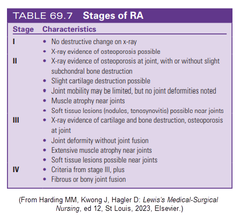
Which stage of RA is associated with extensive cartilage destruction and joint deformity?
a. I
b. II
c. III
d. IV
c. III
pg 1703, 1705
The RA patient suffers with dry eyes and a decrease in the amount of saliva being produced. The nurse recognizes the patient is experiencing which condition associated with RA?
a. felty syndrome
b. rheumatoid nodules
c. atherosclerosis
d. sjogren syndrome
d. sjogren syndrome
A patient with Sjogren syndrome has diminished secretions of the lachrymal and salivary glands.
Manifestations of felty syndrome include splenomegaly and leukopenia. Rheumatoid nodules develop in about half the patients with RA, and appear under the skin as firm, nontender masses. They are not associated with dry eyes or decreased saliva production. Atherosclerosis in patients with RA can result from chronic inflammation that damages endothelial cells within blood vessels; it is not associated with dry eyes or decreased saliva production. pg 1704 Figure 69.5 Extraarticular manifestations of RA
