SCAR 2K03 - quiz 1
 Call Kai
 Learn
 Practice Test
 Spaced Repetition
 Match
 Flashcards
 Knowt Play
1/77

There's no tags or description
Looks like no tags are added yet.
78 Terms
emic
insider perspective about anything, something can be emically true and etically untrue
etic
outsider perspective
what came before buddhism?
indus valley civilization (aka harappan civilization), mohenjo daro pakistan (argument on whether its a written language), harappa pakistan
the aryans/aryas
bring their own language (indoiranian), brought their own religion, collection of hymns and other ritual and philosophical texts (the vedas)
veda
earliest source of knowledge of the arya(n)s, bronze age, oldest sanskrit text (passed down by word of mouth) but oldest manuscript
atharva
2nd oldest; hymns and magic spells
brahmanas
ritual texts attached to the vedas
aranyakas
secret mystical explanations of vedas
upanishads
concerned with mystical interpretation of vedic ritual and its relation to man and the universe
indra
most important god, core of rig veda deals with his deeds, there are many depictions of the gods
how does one keep indra and other gods happy
sacrifies: animals, milk, grain, give something to the gods by giving it to the priests
god agni
god of fire, first hymn of rig veda, uttar pradesh, we see flames

importance of fire worship
provides liaison between men and gods, requires an intermediary (for prayers to be answered, get an answer from the gods, intermediary are the priests - brahmins)
four different social classes of india
brahmanas/brahmins (priests), ksatriyas (warrior class, prince class), vaisyas (virgins, merchants, traders), shudras (labourers and service providers) - first 3 are twice born
religious competition: wandering ascetics
class of people questioning if the brahmins have sole authority to knowledge, philosophical inquiry, meditation
jain ascetics
gujarat, india - face covering (wearing a mask so they do not inhale any living beings - insects), brush or broom (sweep the ground as you go so you are not trampling or killing any living beings), they are extreme asceticism
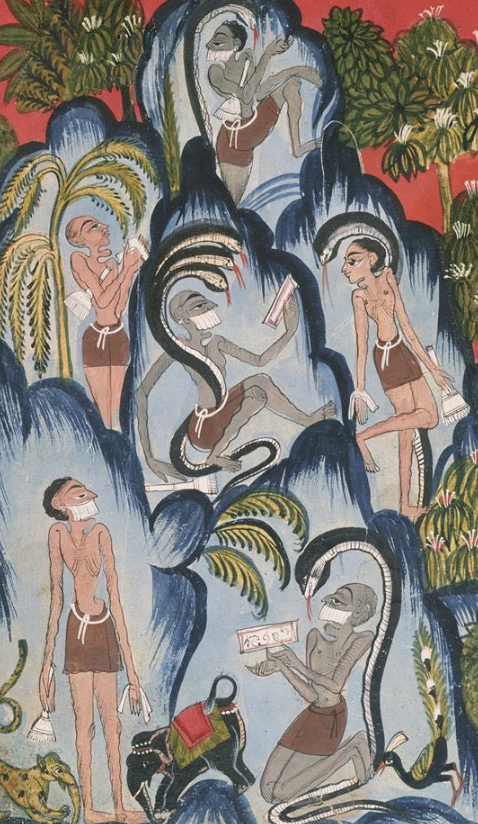
buddhists deny…
the existence of self and individuality (monks), how they dress is the expression of doctrine, no individuality
life of the buddha
buddha is sanskrit for the awaken one (the one that was awakened)
life of the buddha - siddhartha
prediction that he will be one that religious goals have been accomplished
two meanings of the Bodhisat(t)va
mainstream buddhism - refers to the prince, another version - anyone can be him, awakening being, one who strives or wishes to attain order
3 living traditions
south and southeast asia: theravadins (hinayana - the lesser vessel, derogatory term), east asia: dharmaguptakas, tibet: mulasarvastivadins
12 acts of the buddhas life
all their lives kind of follow the same pattern
12 acts of the buddhas life - 1. the bodhisat(t)a awaits in tusita heaven
buddha to be is waiting to be born in the heaven, waits to be reborn finds an appropriate family in which he wants to be reborn

12 acts of the buddhas life - 2. and 3. the bodhisat(t)a (2) decends from tusita and (3) enters side of maya
maya is his mother, want to identify bodhisat(t)a entering his mother, maya dreams of a 6-tusked elephant

12 acts of the buddhas life - 4. seven steps proclaiming superiority
buddha already walking and talking - saying he’s going to be number 1, taking seven steps, sage (asita) notes the 32 mahapurusa-laksanas; cakravartin or buddha 32 marks (physical symbols) of a great buddha (saying he’s going to be a great king, real turning monarch or a buddha, king is not happy so he keeps his son in the palace)
tension: king vs. buddha
queen maya dies after 7 days after giving birth and then buddha is raised by aunt and step mother

12 acts of the buddhas life - 5. the bodhisat(t)a trained in worldly arts
pampered in the palace, disgusted, realizes the impurity and impermanence of the body
12 acts of the buddhas life - 6. disenchantment
4 ‘transformative’ sights, becomes a buddhist text, 4 different gates and outside each gate he encounters 4 different men - old man, sick man, dying man and religious follower/figure (monk but not a buddhist)
only religious follower seems to be happy - bodhisat(t)a decides he will leave home and strive to seek religious liberation
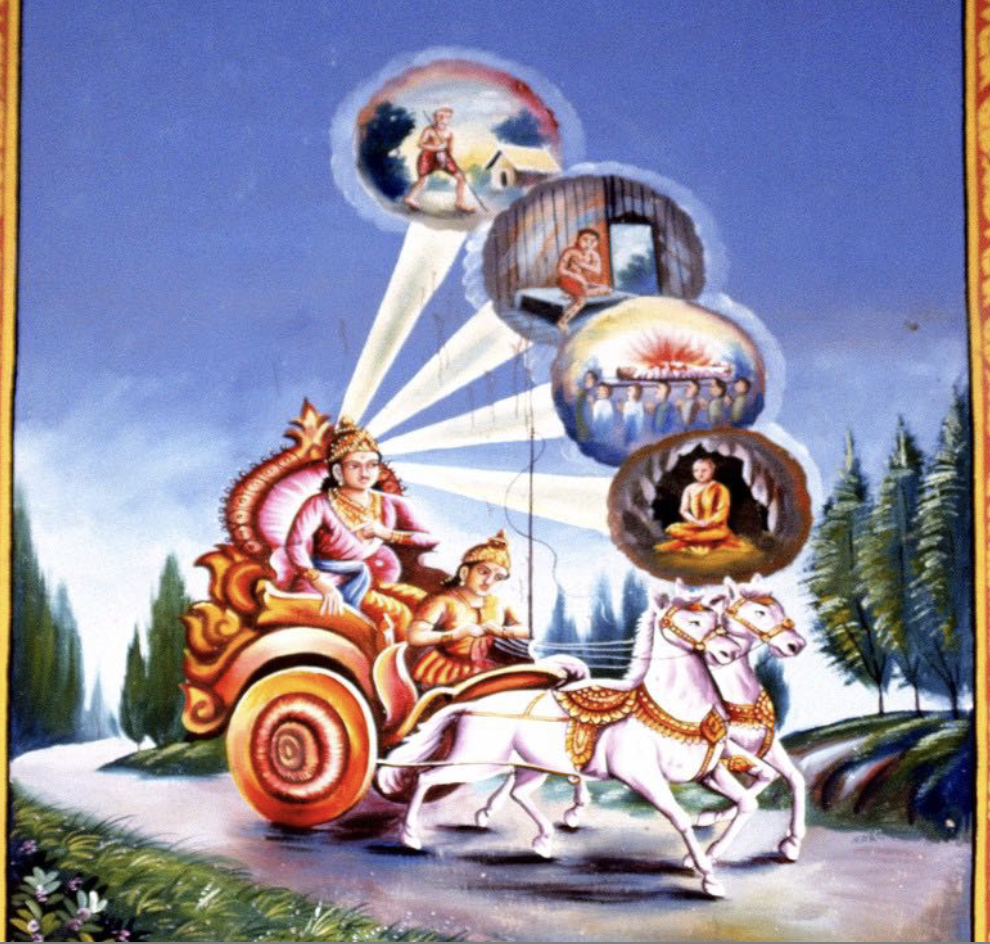
12 acts of the buddhas life - 7. mahapravrajya great departure
leaves on his chariot but gods want to help so king doesn’t stop him, gods carry his horse - able to escape without anyone noticing

12 acts of the buddhas life - 8. austerities/asceticism
starving himself, sitting in same spot, sitting in tree, eventually decides he is not getting anywhere with extreme asceticism and partakes in milk-rice seeks “middle way”
returns to meditation under bodhi tree (foot of tree said to be tree of awakening)
mara (demon) attacks him - buddhist personification of evil
first sends in people with arrows, second tries to seduce him with his daughters (practice of asceticism is celibacy)
calling earth goddess to witness that he is not affected by any of the demon efforts

mudra
hand gesture, indicates what they’re doing, uses the mudra to touch the earth, need to watch for his hands, hands touching tree is sign of fertility
12 acts of the buddhas life - 9.
maras defeat
12 acts of the buddhas life - 10. attains enlightenment, awakening, unconditioned, deathless, nirvana
he doesn’t die, goes on to teach, nirvana means he no longer subject to rebirth (word means extinction, extinguishing - the idea the god of buddhist is to no longer be reborn)
12 acts of the buddhas life - 11. dharma-cakra-pravartana
brahma requests that he teach people, turning the wheel of dharma - dharma means the teaching of buddhism, marks the transmission of buddhism, the formation of buddhism, transmission of knowledge
12 acts of the buddhas life - 12. parinirvana
the great extinction, at approx age of 80 his physical body passes away

depicting a jataka
being reborn as an elephant, monkey, tiger, etc., learn life of buddha
two types of inscriptions
donative and descriptive
donative
important for history, report the name of the person who donated, gave the money to build carving, recording the name of the donor, majority of donors are monks and nun (continue to have personal and private wealth)
descriptive
will tell you very simply what it is, tell you what the scene is depicting
stupa
tell you how to worship the buddha
epigraphy and iconography tree branches
trees are the sign of fertility, seeing a woman holding on to branch - symbol of fertility

tri-ratna: 3 jewels
buddha, dharma (buddha teachings), sangha (buddha community), buddhist is defined as someone who seeks refuge, gives oneself over to these 3 things (place faith in buddha, his teachings, his church)
3 types of understanding of dharma, arising form
sruta (what is heard), cinta (reflection, on what is heard, the teachings), bhavana (practice)
identify a word is feminine
long vowels (letter with long bar on top) usually indicates it is female
3 types of dharma (or 3 ways of practicing the dharma)
pariyatti (textual), patipatti (practice), pativedha (realization), one follows the other
3 main “canons” of the buddhavacana (the word of the buddha)
tipitaka (pali) - three baskets, sanzang/dazangjing, kanjur
tipitaka (3 baskets)
3 baskets of knowledge: sutra (1 or 2 schools’), vinaya (6), abhidharma (2)
3 baskets of knowledge: sutra (1 or 2 schools’)
teachings of the buddha, what he explicitly told his followers, most teachings of indian buddhism disappeared - only 2 schools
3 baskets of knowledge: vinaya (6)
rules that say a monk should do this…
3 baskets of knowledge: abhidharma (2)
metaphysical, commentaries, little obscure
sutra/sutta
comes from word sukta - means well spoken, anything buddha says is well spoken, nothing the buddha wrote down was preserved, oral transmissions seemed to be more accurate, best type of scribe is someone who cannot read the manuscript
4 nikayas (collections)
dirgha - means longer, madhyama - means middle, samyukta - means connected, ekottarika - means numerically, increasing by 1
religious competition at the time of the buddha
buddhism was dominant religion; later developed into hinduism (later development not to be confused for buddhism)
sramana tradition
rise of philosophical inquiry, urbanization/disease/mortality, questioning origins of human suffering
jains
they believe that all things are alive, one must eliminate previous karma and not create any more
ajivakas
died out, survived only until 14 century, don’t have direct documents, reject karma - not all indian religious traditions believe or accept the notion of karma, accept rebirth
the six “heretics”
not buddhist, 6 religious teaches, “followers of other traditions”, names of 6 heretics, their positions that we’re being told are crazy

10 undetermined matters
theres are things the buddha declined to answer - the answers do not help you forward in your spiritual progression, not meaningful questions, knowing the answer will not help you attain nirvana
samsara
the route or cycle of rebirth, what buddhism is trying to rid us of
duhkha
means suffering, also means unsatisfactory (prefix du means bad), opposite is suhkha means happiness, buddhism is to alleviate suffering/pain
anitya
means impermanent (nitya means permanent), prefix a or an - indicates a negative, whole point of our existence is that it is not permanent, the impermanence of anything that we take as pleasurable
3 poisons - keep us in cycle of birth, death and rebirth
3 things that keep us coursing through the cycle of rebirth
lobha - greed, dvesa - hatred, moha - ignorance
3 wholesome qualities
alobha - non-attachment, advesa - loving kindness, prajna - wisdom
4 noble truths
truth and realities for the noble ones
1) suffering
2) origin of suffering
3) cessation of suffering
4) path leading to the cessation of suffering
4 noble truths - 1) suffering
inescapable part of life
4 noble truths - 2) origin of suffering
course and reason behind their suffering, stems from greed, ignorance and hatred
4 noble truths - 4) path leading to the cessation of suffering
path to stop suffering, 8-fold path to attaining nirvana/salvation (buddhist texts indian authors like to categorize things
8-fold path
split into 3 different practices (what buddhists deem to be wrong)
wisdom - way to cultivate through, right view, and right intention
conduct - right speech, right action, right livelihood
mediation - right effort, right mindfulness, right concentration
4 stages (fruits) of attainment
stages of spiritual realization or attainment
1) stream enterer
2) once returner
3) non returner
4) arhat
4 stages (fruits) of attainment - 1) stream enterer
has abandoned the first 3 of 10 fetters/bonds that bind to samsara:
view of individuality, doubt, clinging to precepts/vows, 7 rebirths of awakening (within 7 rebirths you will attain awakening)
4 stages (fruits) of attainment - 2) once returner
abandons same 3 fetters that bind to samara and weaken sensual desire and aversion, reborn as human once more (possible realms of rebirth - 5 or 6 different realms of rebirth: animal, god, hell being, hungry ghost, human or fighting titans - godlike beings always at war with each other), different traditions have different views on if there are 5 or 6, according to buddhism - best realm of rebirth is human
4 stages (fruits) of attainment - 3) non returner
abandons 5 lower fetters that bind to samsara, reborn in one of 5 pure abodes in the world of pure form
4 stages (fruits) of attainment - 4) arhat
highest level of attainment, attains nirvana in this life, full awakening, 2 different types of nirvana
nirvana with remainder
nirvana in this life, means you have attained awakening in this life but you do not pass away immediately, with bodily remainder
nirvana without remainder
buddha attained, no future rebirth
parinirvana
often used to refer to as the second type of nirvana
stupa
place of warship, at top - discs, number of discs indicates the level of attainment (at least 2 different understandings/theories of this)
10 fetters/bonds that bind to samsara
1) view of individuality
2) doubt
3) clinging to precepts/vows
4) sensual desire
5) aversion
6) desire for form
7) desire to the formless
8) pride
9) agitation
10) ignorance
mahaparinirvana-sutta
1st recitation: principles for avoiding decline
2nd recitation: four noble deaths
3rd recitation: ananda (monk, criticised by other monks since he did not take opportunity to get buddha to stay for eternity also for allowing the formation of nuns)
4th recitation: 4 great authorities
5th recitation: 4 place of pilgrimage (where buddha was born, where he attained awakening, where he first turned the wheel of dharma (taught), and where he attained nirvana)
6th recitation: going, going, going