A&P lab (week 5)
 Call Kai
 Learn
Learn Practice Test
 Spaced Repetition
 Match
Match Flashcards
 Knowt Play
1/63

There's no tags or description
Looks like no tags are added yet.
Name | Mastery | Learn | Test | Matching | Spaced | Call with Kai | Chat |
|---|
No analytics yet
Send a link to your students to track their progress
64 Terms
What are the skull bones?
both
cranial bones (8)
facial bones (14)
How many bones are in the skull?
22
What are the different cranial bones?
frontal
parietal
paired
temporal
paired
occipital
sphenoid
ethmoid
What are the different facial bones?
maxilla
paired
palatine
paired
zygomatic
paired
lacrimal
paired
nasal
paired
inferior nasal concha
paired
mandible
vomer
Sutures
where the cranial bones meet
ex. an immovable joint
What are the different sutures of the skull?
coronal
frontal cut
sagittal
cut down middle
lambdoid
cut in back of skull
squamous
paired on thin part of skull
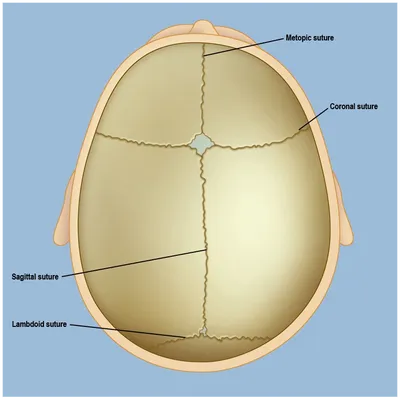
Fontanel
found in the fetal skeleton
termed “soft spots” and allow the brain to grow
What are the different types of fontanels?
anterior
frontal
posterior
occipital
sphenoid
paired
mastoid
paired

True or false, infants are not born with the mastoid process?
true
What is the mnemonic for remembering cranial bones of the skull?
“of pets”
What is the mnemonic for remembering the facial bones?
“monkeys in New Zealand like peaches very much”

Frontal bone
front of skull
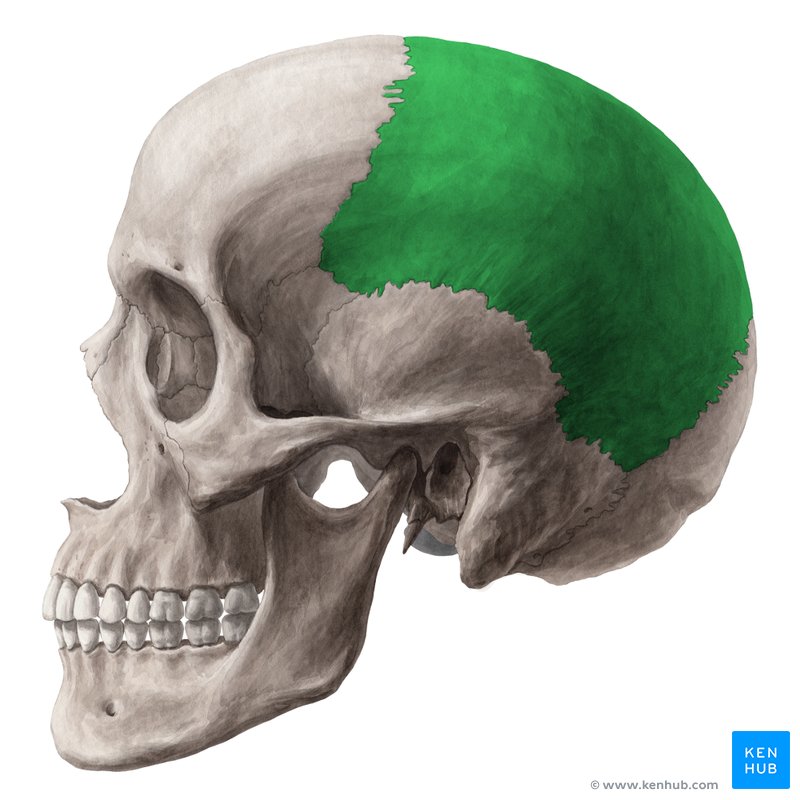
Parietal bones
paired
top of skull

Temporal bones
paired
near temples and ears
Zygomatic process
*temporal bone
touches the zygomatic bone

Mandibular process
where the mandibular condyle of the mandible fits to form the TMJ (temporomandibular joint)


External acoustic meatus
outer ear canal
Internal acoustic meatus
inner ear canal

Temporal bone
Styloid process
sharp process

Temporal bone
Mastoid process
blunt process behind the earlobe
Carotid canal
where artery passes to bring blood to brain

Jugular foramen
formed where the temporal and occipital bones meet
jugular vein passes through it to bring blood back from the brain

Zygomatic arch
the cheekbones
consists of both the zygomatic and temporal process
ex. processes named for bones they touch


Occipital bone
back of skull
What are the parts of the occipital bone?
foramen magnum
where brain stem becomes spinal cord
occipital condyles
rounded bumps on either side of foramen magnum

Sphenoid bone
behind the eyes
butterfly shape

Sphenoid bone
Greater wings
large broad wings

Lesser wings
sharper, more pointed wings
contain the optic foramina

Sphenoid bone
Sella turcica
where the pituitary gland sits
Pterygoid plates (medial and lateral)
visible on the inferior view of the skull posterior to the back teeth

Optic foramen
small round hole in the back of each orbit (eye socket)

Superior orbital fissure
*sphenoid bone
superior portion of the large fissure in the back of each orbit
between the two wings

Inferior orbital fissure
*sphenoid bone
inferior portion of the large fissure in the back of each orbit
ex. can only be seen on skull


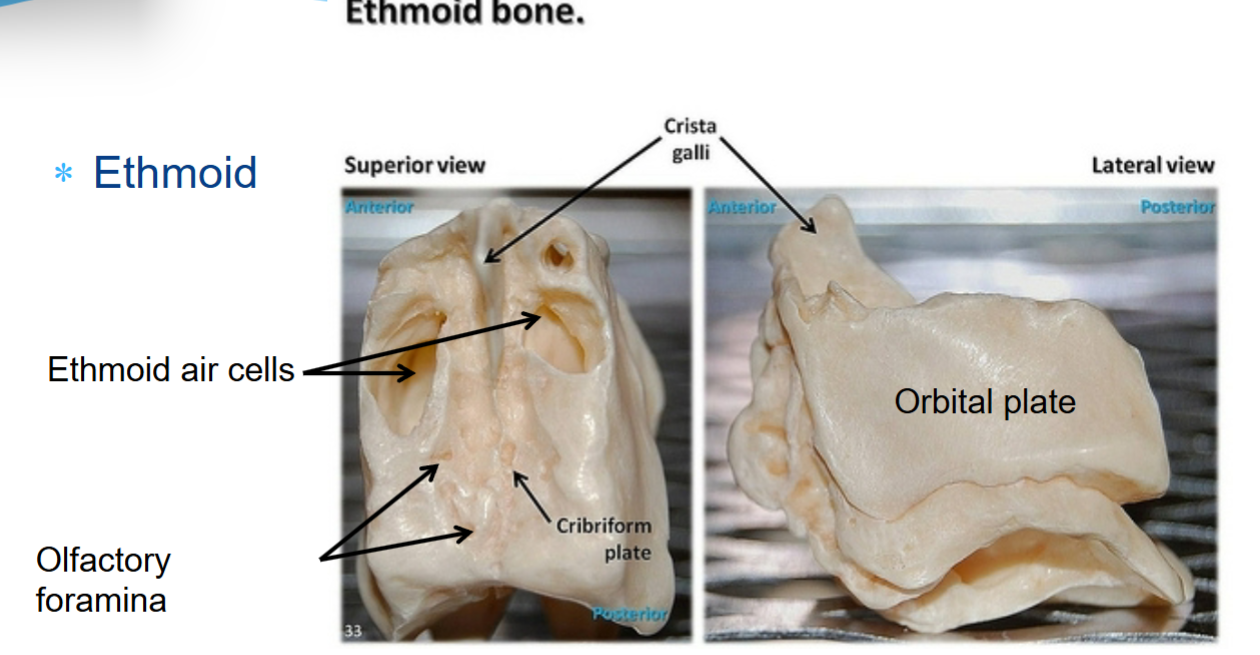
Ethmoid bone
located between eye sockets

Ethmoid bone
Crista galli
resembles a shark fin


Ethmoid bone
Cribriform plate
superior surface of the bone

Orbital plate
*ethmoid bone
lateral surfaces of the bone that make up part of the orbit (eye socket)

Olfactory (AKA Cribriform) foramina
the small foramina in the cribriform plate
ex. multiple

Perpendicular plate
single plate that runs vertically down the middle of the bone
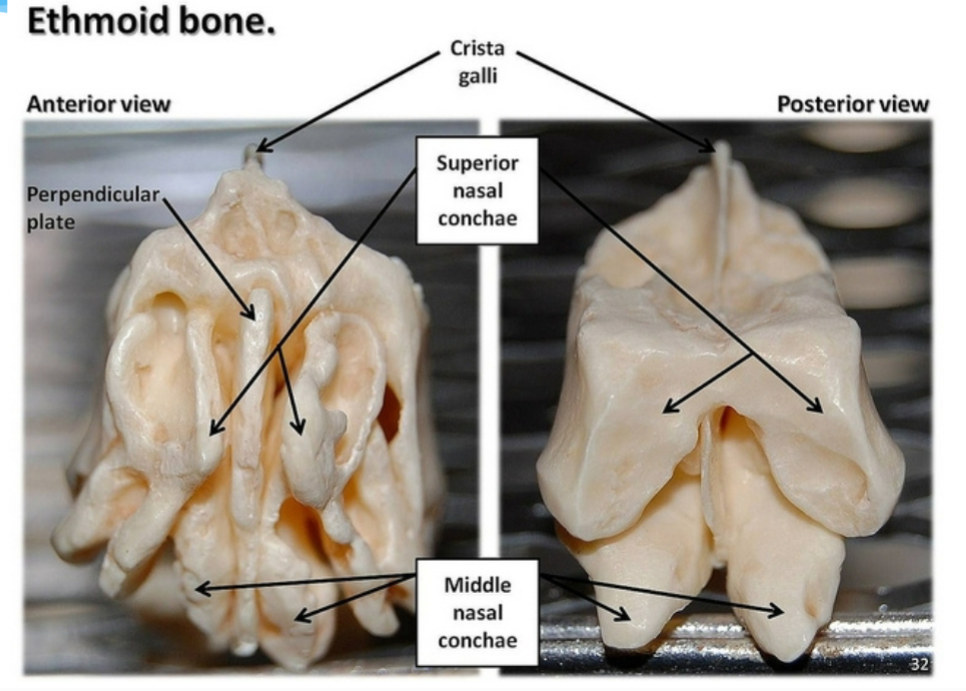
Middle nasal concha
part of ethmoid bone
ex. visible
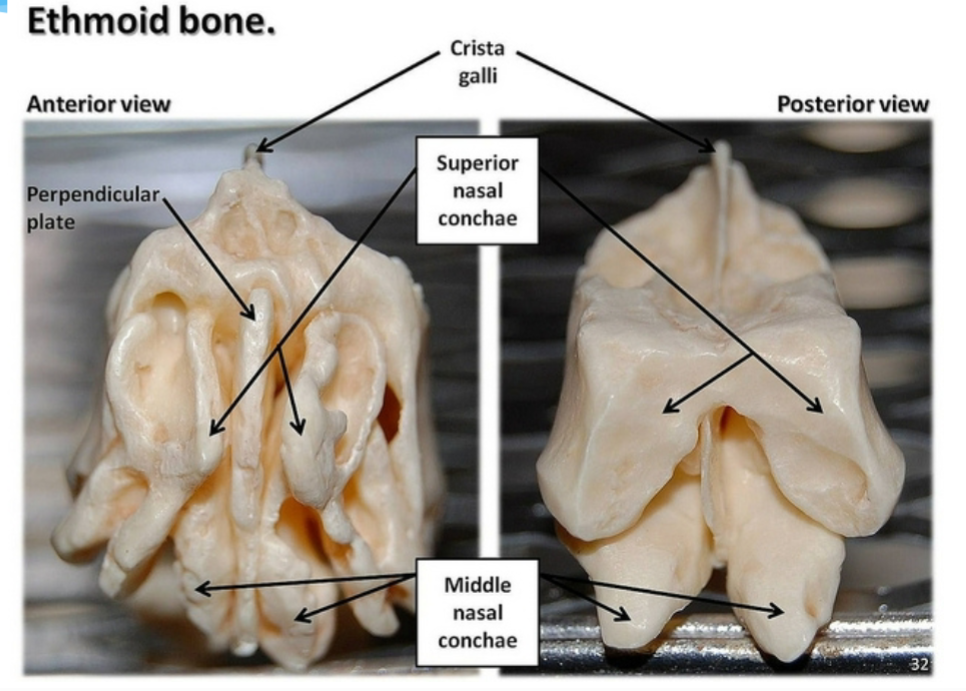
Superior nasal concha
part of ethmoid bone
ex. not visible


Maxilla
holds upper teeth
paired bone
Alveolar processes
*maxilla
sockets for the teeth

Incisive foramen
*maxilla
hole right behind the incisors (two front teeth)
ex. single

The hard palate
composed of the two palatine bones and the two palatine processes of the maxillae
ex. 4 parts

Palatine process
touches the palatine bones and makes up 2/3 of hard palate


Palatine bones
paired
make up 1/3 of hard palate

Zygomatic bone
paired
cheekbones

Temporal process
*zygomatic bone
touches the temporal bone

Zygomatic arch

Lacrimal bones
paired
drains tears from the eyes into the nose
ex. contains lacrimal fossa

Nasal bone
paired
makes up bridge of the nose

Inferior nasal concha
paired
pearls of nose
two separate bones
ex. visible

Vomer
goes down middle of nose
Nasal septum
made of both cartilage and bone
bony part is made up of the vomer and perpendicular plate of the ethmoid bone
cartilaginous part is made up of hyaline cartilage

Mandible
jawbone
Body and Ramus
part of mandible
body is horizontal portion
ramus is vertical portion
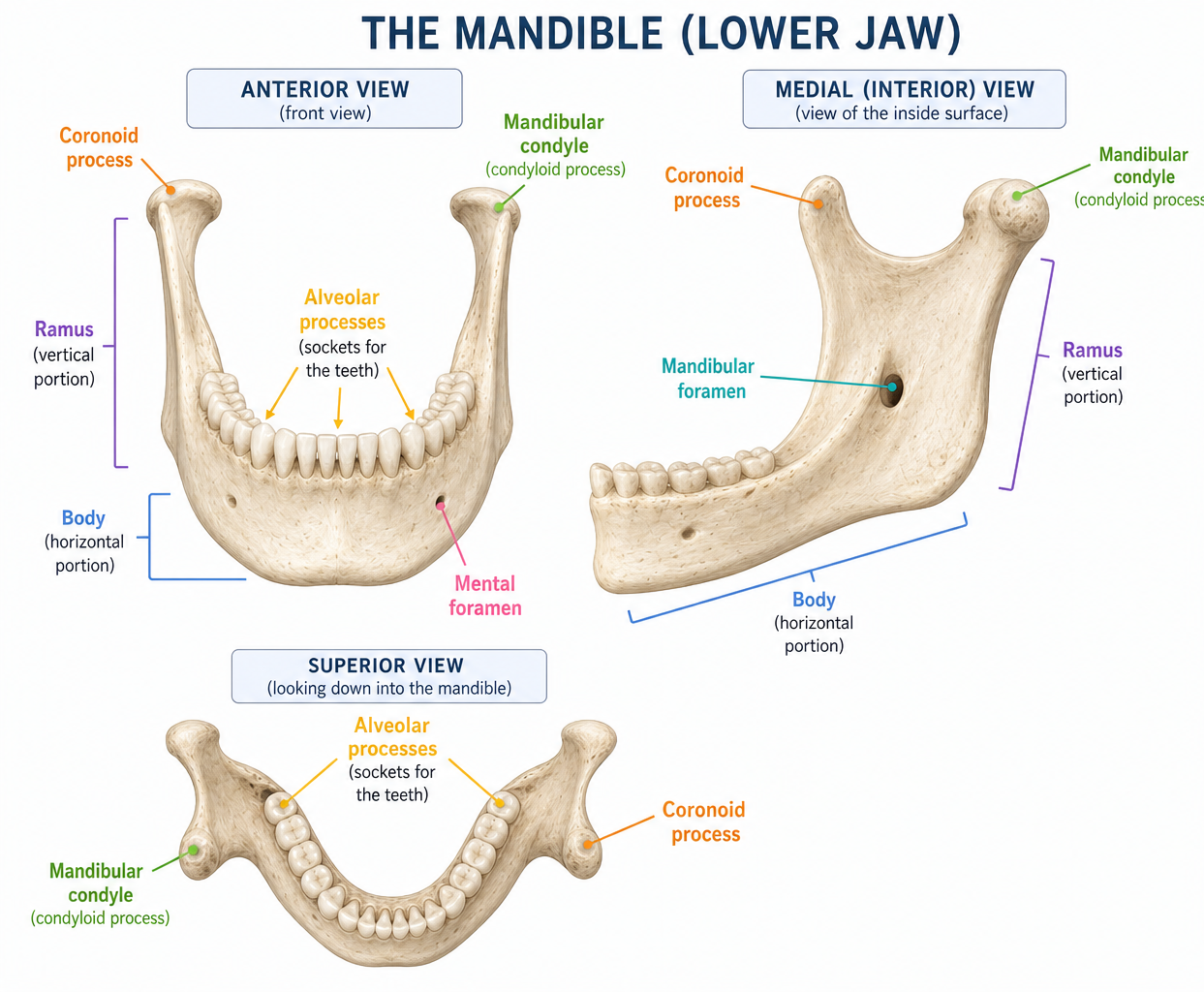
Mental foramen
part of mandible
foramen on the exterior (anterior) surface of the body

Mandibular foramen
part of mandible
foramen of the ramus

Mandibular condyle (condyloid process)
part of mandible
rounded processes that fit into the mandibular fossae of the
temporal bones to form the TMJ

Coronoid process
sharp processes anterior to the mandibular condyles

Ossicles
six small bones of the middle ear
Which foramina on the skull are not paired?
foramen magnum
incisive foramina
olfactory foramina
Which bones are bordered by all five sutures?
the parietal bones