Lungs Brig
 Call Kai
 Learn
 Practice Test
 Spaced Repetition
 Match
 Flashcards
 Knowt Play
1/82

There's no tags or description
Looks like no tags are added yet.
83 Terms
Level for chest tubes
4th ICS
Level for thoracentesis
Posterior 7th ICS
what lobe of what lung can you not differentiate?
RML
which bronchus is more likely to be obstructed with choking
right main bronchus
what highly innervated layer of lung tissue can cause pleurisy with inflammation
parietal pleura
possible cardiovascular causes of chest pain
MI
Pericardium
Aorta
Possible lung and thorax causes of chest pain
trachea and bronchi
parietal pleura
chest wall and skin
possible GI causes of chest pain
esophagus
stomach
gallbladder
Dyspnea
SOB
Uncomfortable Breathing not appropriate for exertion
Description of wheezing
musical respiratory sounds
Wheezing causes
Partial lower airway obstruction
-due to secretions and inflammations
-asthma
-foreign body
acute cough
<3 weeks
subacute cough
3-8 weeks
chronic cough
>8 weeks
hemoptysis - bright red blood streaks
more likely upper respiratory origin
hemoptysis - rusty
likely pneumonia
hemoptysis - coffee grounds/dark
GI tract
signs of respiratory distress
pallor
cyanosis
use of accessory muscles
-tripod
clubbing of nails
what to observe breathing for
rate, rhythm, depth, effort
chest shape
wider than it is deep, ratio of anteroposterior diameter is 0.7-0.75
abnormal chest shape
barrel chest/close to 1:1
COPD
Where will you see asymmetry on chest expansion, lag or delay
pleural disease
asbestosis and pleural effusion
pectus excavatum
concavity of the chest
pectus carinatum
pushed out chest
flail chest
trauma where portion of ribs is broken off
that section of the chest moves inward on inspiration and outward on expiration
crepitus
cracking or grinding due to subcutaneous air
where do you see sinus tracks
TB patients
How to note lung excersion when palpating chest expansion
hands on back, pt inhales deeply
-how far apart hands move = excurtion
normal lung excursion
deep, smooth, symmetrical chest wall expansion
tactile fremitus test
palpable vibrations transmitted through the chest wall
patient repeats ninety-nine
normal tactile fremitus
symmetrical, equal vibrations
increased tactile fremitus
lung consolidation (pneumonia)
decreased or absent tactile fremitus
excess air in lungs or a thickened chest wall
Pneumothorax
COPD
Tumors
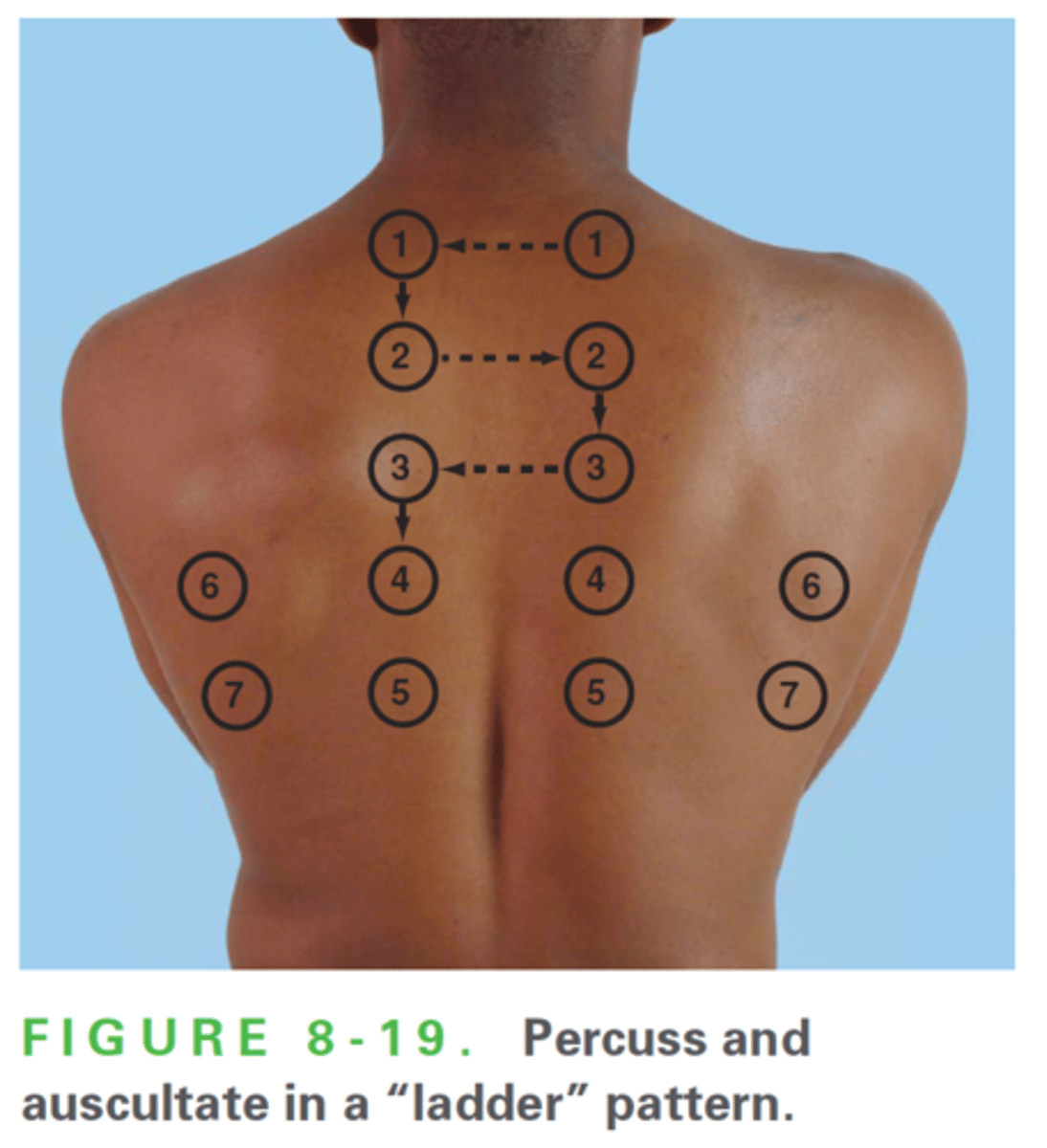
pattern for chest percussion
ladder technique
penetrated 5-7cm deep
must be over bare chest
flat percussion
pleural effusion
dull percussion
lobar pneumonia
resonant percussion
normal
hyperresonant percussion
COPD
Asthma
Pneumothorax
Tympanic percussion
very big pneumothorax
steps of a diaphragmatic excursion
1. estimate level of diaphragm during normal respirations by percussing (sound goes resonant to dull)
2. start a little above estimated level
3. have pt take full breath and percuss down until dullness is noted
4. have pt fully expire and percuss up until resonance noted
5. measure distance between two spots
normal diaphragmatic excursion
3-5.5 cm
listening pattern of chest auscultation
also the ladder pattern
what to note about chest auscultation
-intensity of breath sounds
-pitch
-duration
-inspiratory and expiratory sounds/types
-if there is a silent gap between inspiration and expiration
-note any change after coughing
what can decrease intensity of breath sounds
obstructive lung disease
pleural effusion
pneumothorax
vesicular breath sound
normal
inspiratory sound longer than expiratory
soft

broncho-vesicular breath sound
inspiratory and expiratory about equal

bronchial breath sound
expiratory sound lasts longer than inspiratory ones
loud
tracheal breath sound
inspiratory and expiratory sounds about equal
very loud
fine crackles
soft, high pitched
coarse crackles
lower pitched, louder
causes of crackles or rales
-atelectasis (extra bronchiole secretions)
-bronchitis (may improve after cough)
-pneumonia
-interstitial lung disease
-heart failure
-pulmonary fibrosis
description of wheezes
high pitched, hissing or shrill quality, often expiratory
Rhonchi description
low pitched, snoring-like
causes of rhonchi
pneumonia
cystic fibrosis
COPD
description of pleural friction rub
coarse, grating, usually expiratory
causes of pleural friction rub
pleurisy
pneumonia
PE
stridor description
high pitched, typically inspiratory and heard over neck
is not constant, FB would be
what to note when hearing an adventitious sound
Loudness, pitch, duration
Number - if intermittent sounds like crackles
Timing - inspiration or expiration? Early, mid, late?
Location heard on chest wall
Persistence from breath to breathy
Change after cough or pt position change?
transmitted voice sounds technique
use diaphragm
listen around area noted abnormal sounds
compare b/l
positive = increased likelihood of pneumonia or pleural effusion
egophony technique
have patient say "ee"
positive egophony
if "ee" sounds like "A"
is due to consolidation
Bronchophony technique
ask pt to say ninety-nine
normal bronchophony
muffled and indistinct
positive bronchophony
louder sounds
whispered pectoriloquy technique
have patient whisper ninety-nine
normal whisper pectoriloquy
faint and indistinct
positive pectoriloquy
louder and clearer
purpose of 6-minute walk test
test cardiopulmonary function
technique of 6-minute walk test
-measure 30m
-have pt see how many times they can walk it in 6 min
normal 6-minute walk test
400-700m
6-minute walk test <350m
increased risk COPD exacerbation, hospitalization and mortality
6-minute walk test <250m or decline of 50m in 24 wks
2-3x increased risk of mortality in pts with pulmonary fibrosis
purpose of forced expiratory time
in diseases like COPD, slowed expiration occurs
how to do forced expiratory time
-listen over trachea with diaphragm
-ask pt to take deep breath and breath out as quickly and fully as possible
-time audible expiration
-try to get 3 readings
result interpretation of forced expiratory time
>60 years old and forced expiratory is >9 seconds, pt is 4x more likely to have COPD
what is a pneumothorax
air leaks outside of lung tissue and collects in the pleural space
exam findings of pneumothorax
-pleural rub
-low or absent breath sounds
-hyperresonance
-deep breath discomfort
-rapid shallow breathing
-trachial deviation
-no tactile fremitus
Acute asthma exacerbation
-narrowing and inflammation of the airways
-hyperinflation, wheezing, and increased work of breathing
expected findings in acute asthma exacerbation
-wheezing
-hyperinflated
-visible distress possible
-dry cough
-accessory muscle use
-hyperresonance
-midline trachea
-low tactile fremitis/voice sounds
pneumonia
infection causes inflammation and fluid accumulation in the lungs
pneumonia findings
-trachea midline
-possible distress
-hypoxic
-wet cough
-inc RR
-dull percussion
-rhonchi
-unaffected lobes sound normal
-positive whisper test and tactile fremitis
-crackling
-pleural rub
COPD
-progressive airway and alveoli damage can cause loss of alveoli surface area
-progressive can = poor oxygen exchange and hyperinflation
possible findings of COPD
-pursed breathing
-clubbing
-distress possible
-trachea midline
-decreased or absent breath sounds
-delayed expiration b/c hyper-inflated lungs
-positive adventitious sounds
-decreased voice testing and tactile