Forms and Properties of Energy
 Call Kai
 Learn
 Practice Test
 Spaced Repetition
 Match
 Flashcards
 Podcast
1/29

Earn XP
Description and Tags
Vocabulary flashcards covering the definitions of core energy concepts, types of potential and kinetic energy, heat transfer methods, and energy resources.
30 Terms

Energy
The ability to do work or cause change.

Kinetic Energy
The energy an object has because it is moving.

Potential Energy
Stored energy due to an object's position, shape, or makeup.

Gravitational Potential Energy
Energy stored because of an object's height, where greater mass or height means more stored energy.

Mechanical Energy
The total kinetic and potential energy of an object or system.
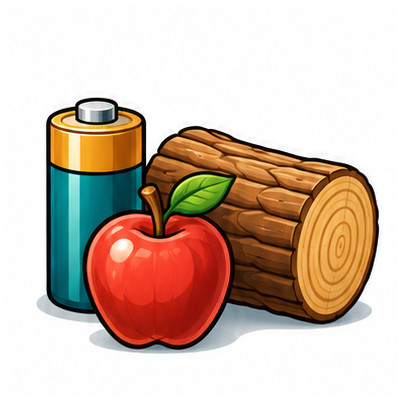
Chemical Energy
Energy stored in substances such as food, fuel, and batteries, which chemical reactions can release.

Electrical Energy
Energy carried by moving electric charges, such as electrons in a wire.
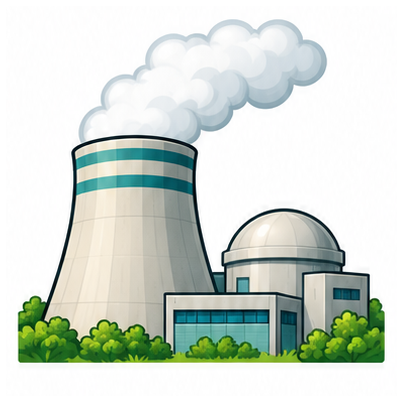
Nuclear Energy
Energy stored in an atom's nucleus that can be released when nuclei split or join.
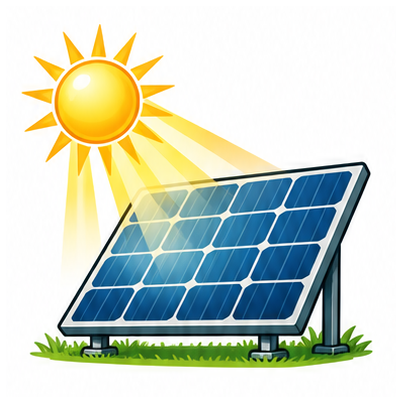
Radiant (Light) Energy
Energy carried by electromagnetic waves, such as sunlight, that can travel through empty space.

Sound Energy
Energy carried by vibrations traveling through matter, such as air or water.

Thermal Energy
The total energy of the particles in a substance due to their motion and interactions.

Law of Conservation of Energy
A principle stating that energy cannot be created or destroyed; it can move between objects or change forms.

Energy Transfer
The movement of energy from one object or place to another.

Energy Transformation
A change from one form of energy to another, such as electrical energy changing to light.

Energy Conversion
Another name for an energy transformation: changing energy from one form to another.
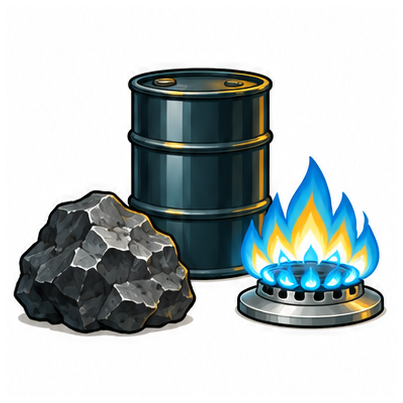
Fossil Fuels
Coal, oil, and natural gas formed from ancient living things over millions of years.

Biofuel
Fuel made from recently living materials, such as plants or animal waste.

Hydroelectricity
Electricity produced by using moving water to turn a turbine connected to a generator.

Geothermal Energy
Energy from heat inside Earth that people use for heating or making electricity.

Heat
Energy that transfers from a warmer object or area to a cooler one because of a temperature difference.

Conduction
The transfer of thermal energy through direct contact between particles.

Thermal Conductor
A material that allows thermal energy to move through it easily, such as metal.

Thermal Insulator
A material that slows the transfer of thermal energy, such as foam.
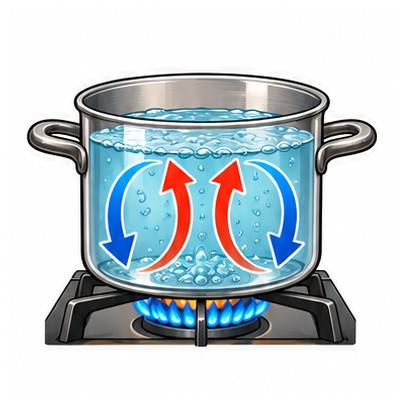
Convection
The transfer of thermal energy by the movement of a liquid or gas.

Radiation
The transfer of energy by electromagnetic waves, which can happen through matter or empty space.

Specific Heat Capacity
The energy needed to raise the temperature of 1 kilogram of a substance by 1∘C.

Elastic Potential Energy
Energy stored when an object, such as a spring or rubber band, is stretched or compressed.

Temperature
A measure of the average kinetic energy of the particles in a substance.

Renewable Energy Resource
An energy source that nature replaces quickly enough for repeated use, such as sunlight or wind.

Nonrenewable Energy Resource
An energy source with a limited supply that nature does not replace quickly, such as coal or uranium.