Lab Exam 2
 Call Kai
 Learn
 Practice Test
 Spaced Repetition
 Match
 Flashcards
 Knowt Play
1/51

There's no tags or description
Looks like no tags are added yet.
52 Terms
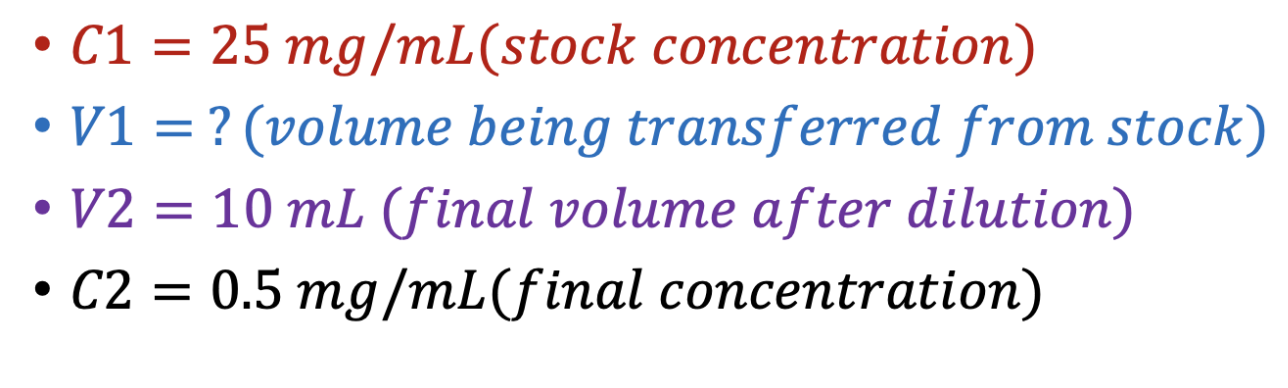
C1V1=C2V2
Molar Concentration
M=moles/Liter
Why onion root tip?
it contains actively dividing cells
ocular lens
top lenses that you look through
used to calculate total magnification
objective lens
lens that are above the sample
arm + base
how you properly hold and move microscope
coarse adjustment knob
big focus adjustments (4x ONLY)
Fine adjustment knob
little focus adjustments (10x and above)
how to bring slide into focus?
start with coarse @ 4x, turn it until thing comes in view→start w/fine knob @ 10x, turn knob to make it crisp
Total magnification calculation
ocular lens x objective lens

Interphase
Preparatory phase of the cell cycle where a cell spends about 90% of its life.
G1
cell increases in size, and duplicates many of its organelles
S
DNA Replication
G2
cell continues to grow, and synthesizes the final proteins and enzymes needed for cell division
Mitosis
cell splits
Each cell has two copies of each chromosome
Prophase
Chromatin condenses into VISIBLE chromosomes

Metaphase
Chromosomes line up in the equator, spindle fibers attach to centromeres

Anaphase
Chromosomes split and sister chromatids get pulled to opposite ends of the cell

Telophase
Spindle fibers breakdown and nuclear envelope reforms

Meiosis
Each cell has one copy of each chromosome
calculating estimated time in a STAGE of the cell cycle

Cellular Respiration
Glucose + oxygen → water + CO2 + ATP
Glycolysis (in cytosol)
Krebs Cycle (in mitochondria)
ETC + Oxidative Phosphorylation (in mitochondria)
ETC
NADH and FADH2 transfer their electrons to molecules near the beginning of the transport chain. In the process, they turn back into NAD+and FAD, which can be reused in other steps of cellular respiration.
As electrons are passed down the chain, they move from a higher to a lower energy level, releasing energy. Some of the energy is used to pump H+ions, moving them out of the matrix and into the intermembrane space→electrochemical gradient.
ALL OF THIS DRIVES ATP PRODUCTION

Electron Donors
NADH and FADH2
Electron Acceptor
O2
Sodium Azide
Sodium azide stops electrons from passing to oxygen, causing electrons to back up in the proteins, halting the entire electron transport chain and preventing the creation of a proton gradient across the inner mitochondrial membrane. This mimics an anaerobic environment.
Fermentation
Happens when cell can’t get OXYEGN
Replenishes NAD+ to glycolysis
Lactic Acid and Alcohol
Yeast
Anaerobic and aerobic respiration
CO2 and ATP results
CO2 and ATP production from fermentation is less than CO2 and ATP production from cellular respiration.
Photosynthesis
Water + light + CO2 → Glucose + Oxygen
Cholorplast
site of photosynthesis
Thylakoid
site for light dependent reactions
Granum
stack of thyalkoid
stroma
fluid area not inside an organelle where dark reactions take place (cytoplasm for plants)
Light dependent reactions
Water is split
O2 is formed
ATP + NADPH is produced
location: thylakoid
reactant: light
products: O2, NADPH, ATP
Light independent reactions/calvin cycle
location: stroma
reactant: NADPH, ATP, CO2
products: glucose
Uses the ATP and NADPH produced during the light reactions to power the reaction
Forms sugar from CO2
DCMU
DCMU disrupts photosystem II and stops electrons from passing to plastoquinone, so electrons can’t pass through ETC generating H+ gradient, halting the light reaction and creation of O2.
Azide-treated cells result
Chlamy can’t swim because they can’t produce ATP to fuel the motion. NO ATP MADE.
DCMU-treated cells result
Chlamy can swim (FOR A BIT) because DCMU inhibits sugar production, not ATP production. Chlamy can use its sugar storage to make ATP. However, eventually, chlamy will run out of sugar and die. NO SUGAR MADE.
Calculating O2 Production

genotype
genetic makeup
phenotype
observable traits
dominant allele
expressed when an individual inherits only 1 copy of the gene
recessive allele
requires 2 copies to be expressed
monohybrid cross
heterozygous cross of 1 trait
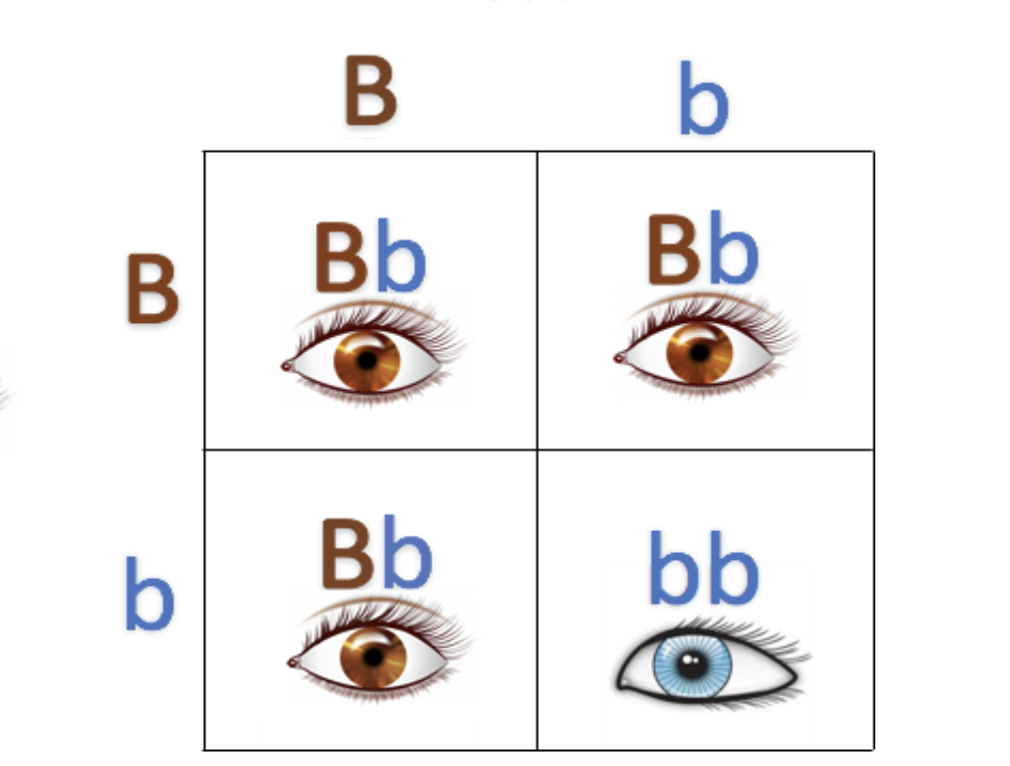
monohybrid cross phenotypic ratio
3:1
dihybrid cross
Heterozygous cross of two traits
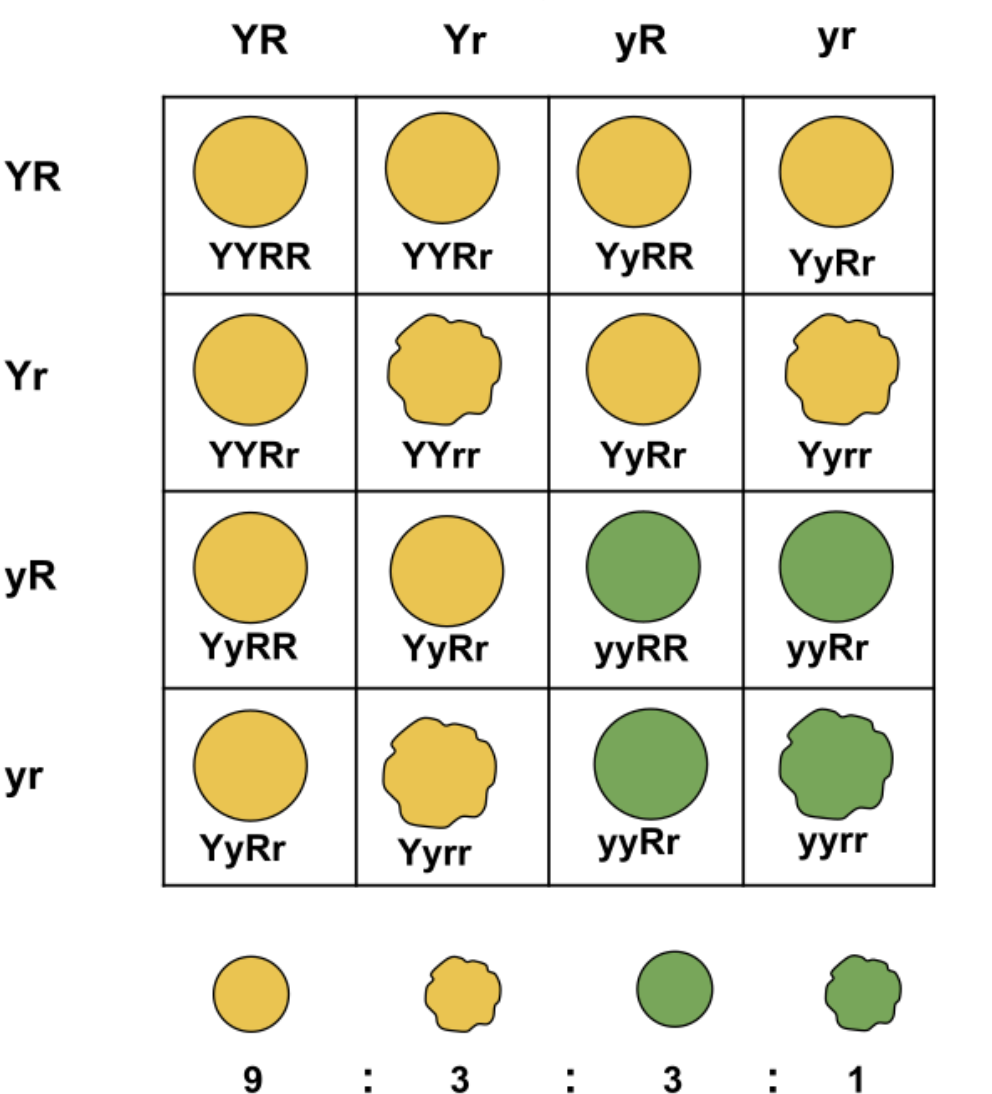
dihybrid cross phenotypic ratio
9:3:3:1
Crossing Over in Meiosis
DNA segments of homologous chromosomes swap making unique chromosomes
Prophase I

Independent Assortment
Chromsomes switch spatial spots
Metaphase I

incomplete dominance
neither allele for a trait is completely dominant over the other, causing the heterozygous offspring to display a blended phenotype.
ex. red flower + white flower = pink flower
Codominance
2 genes are FULLY expressed in an organism
ex. red flower + white flower = BOTH
