Thẻ ghi nhớ: IMAT Chemistry
 Call Kai
 Learn
 Practice Test
 Spaced Repetition
 Match
 Flashcards
 Knowt Play
1/114

There's no tags or description
Looks like no tags are added yet.
115 Terms
Direction of atomic radius trend in periodic table
Increases to the left and to the bottom

General formula of aldehydes and ketones
CₙH₂ₙO

Direction of ionization energy trend in the periodic table
Increases as you go up and to the right of the periodic table

What is the electron configuration for the first energy level?
1s2

What is the electron configuration for the second energy level?
2s2 2p6

What is the electron configuration for the third energy level?
3s2 3p6 3d10

What is the electron configuration for the fourth energy level?
4s2 4p6 4d10 4f14
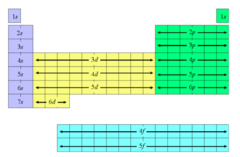
What is the electron configuration for the fifth energy level?
5s2 5p6 5d10 5f14

What is the electron configuration for the sixth energy level?
6s2 6p6 6d10
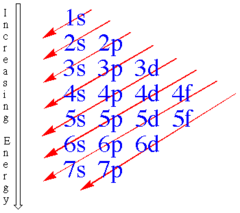
What is the electron configuration for the seventh energy level?
7s2 7p6

alkali metal + water =
metal hydroxide + hydrogen gas
alkali metal + oxygen =
metal oxide
What are the reactivity trends of Group 2A elements?
Reactivity increases as you move down the group due to the decrease in ionization energy, making it easier to lose electrons
What is electronegativity in Group 2A?
Electronegativity generally decreases as you move down. The increasing atomic size reduces the ability of the nucleus to attract electrons.
What are the physical properties of Group 2A elements?
typically shiny, silvery-white metals that are less dense, have higher melting and boiling points, and are good conductors of electricity.
What are the chemical properties of Group 2A elements?
react with water to form hydroxides and hydrogen gas,
&
react with acids to produce salts and hydrogen gas, demonstrating their metallic character.
How does atomic size change in Group 2A?
Atomic size increases as you move down due to the addition of electron shells,
What are transition metals?
groups 3-12 of the periodic table, characterized by their ability to form variable oxidation states and complex ions.
What are the common physical properties of transition metals?
-high melting points & boiling points
-good electrical
-good thermal conductivity
-good malleability
-good ductility
-shiny appearance.
What are the chemical properties of transition metals?
- multiple oxidation states
- form colored compounds
- good catalysts in chemical reactions.
Why are transition metals good conductors of electricity?
They have a high density of free-moving electrons in their metallic structure, allowing for efficient conduction of electricity.
What is the significance of variable oxidation states in transition metals?
Variable oxidation states allow transition metals to participate in a wide range of chemical reactions, making them versatile in forming compounds.
What are the chemical properties of Group 7A elements?
halogens
- highly reactive nonmetals.
- form salts when combined with metals
- participate in various chemical reactions, often gaining one electron to achieve a stable electron configuration.
What are the physical properties of Group 7A elements?
exhibit a range of physical properties: fluorine and chlorine are gases at room temperature, bromine is a liquid, and iodine is a solid. (solidify as you go down the group)
- low melting and boiling points that increase down the group,
- poor conductors of heat and electricity.
What is the trend in reactivity among Group 7A elements?
Reactivity decreases down the group Fluorine is the most reactive, while iodine is the least reactive. This trend is due to the increasing atomic size and the decreasing ability to attract additional electrons.
What are some common uses of Group 7A elements?
chlorine is used in water purification, fluorine is used in toothpaste and Teflon production, bromine is used in flame retardants, and iodine is used as a disinfectant and in medical imaging.
What is the significance of the electron configuration of Group 7A elements?
have seven valence electrons, which makes them one electron short of a full outer shell. This configuration drives their high reactivity as they seek to gain an additional electron to achieve stability.
What are the chemical properties of Group 18A elements(halogens)?
- lack of reactivity due to having a full valence shell of electrons. They do not readily form compounds with other elements.
What are the physical properties of Group 18A elements?
- colorless, odorless, and tasteless gases at room temperature.
- low boiling and melting points, which decrease as you move down the group.
What is the most abundant noble gas in the atmosphere?
Argon is the most abundant noble gas in the Earth's atmosphere, making up about 0.93% of the atmosphere.
What is the significance of the full valence shell in Group 18A elements?
The full valence shell results in their stability and lack of tendency to gain or lose electrons, making them chemically inert.
Reactivity of Alkali Metals
Alkali metals are highly reactive, especially with water, producing hydrogen gas and hydroxides.
Flame Test
A method used to identify alkali metals based on the characteristic colors they emit when burned.

When are Hydroxides formed?
when alkali metals react with water, resulting in strong bases.
Ionization Energy
The energy required to remove an electron from an atom in its gaseous state.
Electronegativity
A measure of the tendency of an atom to attract a bonding pair of electrons.
Atomic Radius
The distance from the nucleus of an atom to the outermost shell of electrons.
Ionic Radius
The measure of an atom's ion in a crystal lattice, typically larger for anions and smaller for cations.
Trend of Ionization Energy Across a Period
Ionization energy generally increases from left to right across a period due to increasing nuclear charge.
Trend of Ionization Energy Down a Group
Ionization energy generally decreases down a group as the distance between the nucleus and outer electrons increases.
Trend of Electronegativity Across a Period
Electronegativity increases from left to right across a period due to increased nuclear charge.
Trend of Electronegativity Down a Group
Electronegativity decreases down a group as the distance from the nucleus increases.
Trend of Atomic Radius Across a Period
Atomic radius decreases from left to right across a period due to increased nuclear charge pulling electrons closer.
Trend of Atomic Radius Down a Group
Atomic radius increases down a group as additional electron shells are added.
Trend of Ionic Radius for Cations
Cations are smaller than their parent atoms due to loss of an electron and reduced electron-electron repulsion.
Trend of Ionic Radius for Anions
Anions are larger than their parent atoms due to the addition of an electron and increased electron-electron repulsion.
Ammonium
A positively charged ion with the formula NH4^+.

Sulfate
A negatively charged ion with the formula SO4^2-.

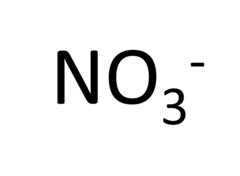
Nitrate
A negatively charged ion with the formula NO3^-.
Phosphate
A negatively charged ion with the formula PO4^3-.

Carbonate
A negatively charged ion with the formula CO3^2-.

Hydroxide
A negatively charged ion with the formula OH^-.

Acetate
A negatively charged ion with the formula C2H3O2^-.

Bicarbonate
A negatively charged ion with the formula HCO3^-.

Chlorate
A negatively charged ion with the formula ClO3^-.

Cyanide
A negatively charged ion with the formula CN^-.

prefix hypo-
-2 oxygen
prefix Per-
+ 1 oxygen
suffix -ite
-1 oxygen
chromate
CrO4 2-

Hydroxyl Group
oxygen atom bonded to a hydrogen atom, commonly found in alcohols.

Carboxyl Group
carbon atom double-bonded to an oxygen atom and single-bonded to a hydroxyl group

Amino Group
nitrogen atom bonded to two hydrogen atoms, commonly found in amino acids.

Carbonyl Group
a carbon atom double-bonded to an oxygen atom, which can be found in aldehydes and ketones.

Sulfhydryl Group
a sulfur atom bonded to a hydrogen atom, often found in thiols.

Phosphate Group
phosphorus atom bonded to four oxygen atoms, crucial in energy transfer and nucleic acids.

Methyl Group
one carbon atom bonded to three hydrogen atoms, often involved in the regulation of gene expression.

Ester Group
formed from the reaction of an alcohol and a carboxylic acid, characterized by a carbon atom double-bonded to one oxygen and single-bonded to another oxygen.

Nitrile Group
a carbon atom triple-bonded to a nitrogen atom, commonly found in organic compounds.

Alkyl Group
derived from alkanes by removing one hydrogen atom, often represented as R in organic chemistry.

Group 1A charge
1+
Group 2A charge
2+
Charge of Group 3-12: Transition Metals
Variable
Group 13 charge
3+
Group 14 charge
4+
Group 15 charge
3-
Group 16 charge
−2
Group 17 charge
-1
Generally, non-metal oxides are...
acidic
Ether
R-O-R

Boyle's Law
pressure and volume are inversely related
Ester
a carbon double bonded to an oxygen, single bonded to an oxygen and single bonded to an R group

phosphoric acid
H3PO4 (Weak acid)

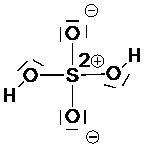
Sulphuric acid
H2SO4 (Strong Acid)

Benzene formula
C6H6

HCl
hydrochloric acid, strong acid

HBr
hydrobromic acid, strong acid

HI
hydroiodic acid, strong acid
HNO₃
nitric acid, strong acid
H₂SO₄
sulphuric acid , strong acid
HClO₄
perchloric acid, strong acid

CH₃COOH
acetic acid (ethanoic acid), weak acid
HCOOH
formic acid (methanoic acid), weak acid

HF
hydrofluoric acid, weak acid
H₂CO₃
carbonic acid, weak acid
H₃PO₄
Phosphoric acid, weak acid
Strong bases are...?
metal hydroxides group 1 or group two and OH
NH₃
Ammonia, weak base
NH₄OH
ammonium hydroxide, weak base
HCN
hydrocyanic acid , weakest acid
