Art History Final :)
 Call Kai
 Learn
 Practice Test
 Spaced Repetition
 Match
 Flashcards
 Knowt Play
1/62

There's no tags or description
Looks like no tags are added yet.
63 Terms
The Assyrian Period Dates
900-600 BCE
The Assyrians: Assurnasirpal
883-859 BCE
Assyrians first to recover from collapse
Empire grew under him
Unequaled military power
Assyrians: Sargon II
721-705 BCE
Founds new capital: Our Sharrukin
Aggressive military campaigns
New style of art and architecture
Assyrians: Assurbanipal
668-627 BCE
Biggest expansion, palace at Nineveh
Why are Assyrians so powerful and how are they defeated?
new iron makes them virtually unstoppable
develop faster war chariot

Name, Date, Location, Period
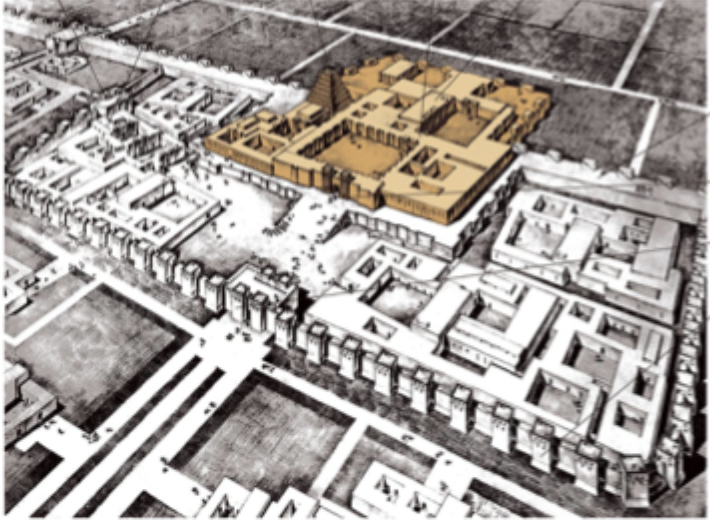
Citadel of Sargon II,
c. 700 BCE,
Dur Sharrukin, Iraq
Assyrian Period
Notes on this image
mostly mud brick - gone
Stone bases
City around citadel
city as protection and citadel is also fortified from city
20-30 ft max walls of mud brick with patrollers on top
Double gated system opens to courtyard - defensive everyone sees you
Palace on raised platform through armed gate
Open courtyard, archives, admin offices, throne room, apartments
Ziggurat : artificial mountain to be higher up to gods - much smaller than Sumerian ziggurats and are incorporated into palace

Name, Date, Location, Age
Lamassu
721-706 BC
Dur Sharrukin Iraq
Assyrian Period

Notes on this image
a gateway of stone → imported
monumental
Lamussu - human/bull with wings
guardian Assyrian creature
carved to be looked at from different perspectives
face is stylized
headdress with bull horns → sign of divinity
muscular bull

Name, Date, Age, Location
Reliefs from the Palace of Ashurbanipal
Nineveh,
c. 640 BCE
Assyrian Period
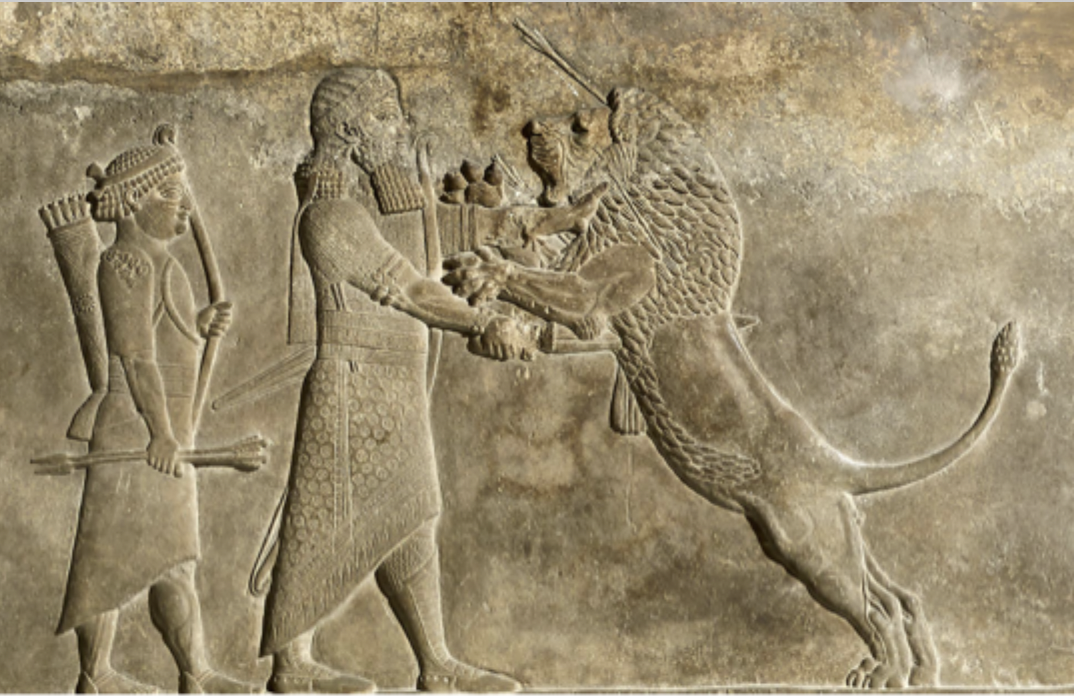
Name, Date, Location, Age
Reliefs from the Palace of Ashurbanipal
Nineveh,
c. 640 BCE
Assyrian Period

Notes on this image
architecture of intimidation
walls lined with stone reliefs eye level with visitor
brutal scenes of warfare of Assyrians putting down violence when conquering
showing people being tortured if they resist/rebel
Assyrians putting up multiple palaces as they conquer
Brutally killing lions - lions don’t have a chance - royal zoos - released from cages - very controlled
Staged hunt for entertainment
more signs of intimidation
Neo-Babylonian Period Dates
600-500BCE
Neo-Babylonian period: Nebuchadnezzar II
605-562 BCE
Conquest of Judah, aristocracy brought to Babylonia
Reconstructed Babylon, great building boon
One of wonders of ancient world
Hanging gardens, ziggurat, palace
Museum of older artifacts
Great library

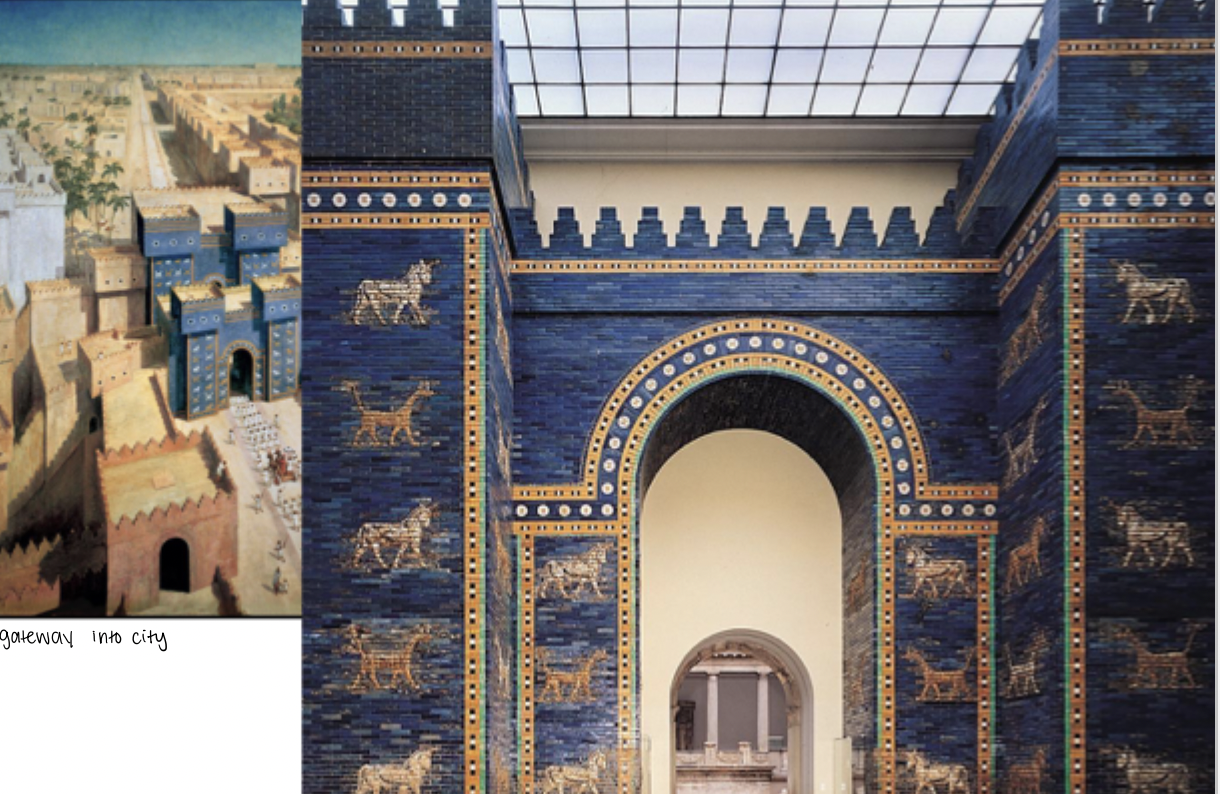
Name, Date, Location, Period
Ishtar Gate
Babylon, Iraq
575 BCE
Neo-Babylonian Period
Notes on this image
lion: symbol of king
Dragon creature: associated with god Ishtar
Bull
Persian empire Date
500-300 BCE
Persian Empire: Cyrus the Great
550-530 BCE
Founds greatest/largest of ancient empires
founds Perian Empire and dynasty
Persian Empire: Darius I
521-486 BCE
Began palace at Persepolis: international effort
Persian Empire: Persian wars
western expansion, conflict with Aegean
defeated twice by Greeks: 490 and 480D
Persian Empire: Darius III
defeated by Alexander the Great in 331 BCE
he adopts much of Persian culture
Persian Empire: Persepolis
expand under Cyrus, Darius, etc.
divide into provinces each with governors who are given lots of freedom
allowed provinces to largely keep their way of life

Name, Date, Location, Age
Palace,
c. 500 BCE,
Persepolis, Iran:
Persian Period

Notes on This image
some columns are fluted
Apadana has monumental gateway
hypostyle fall: filled with columns to support roof

Name, Date, Age, Location
tribute bearers peacefully procession bringing tribute
showing how great an administer their king is
Ahara Mazda - god of light in this religion
traditional Persian religion
pay tribute with produce/good their province is known for
people from every part of the empire

name, date, location, age
Darius and Xerxes receiving tribute
491-486 BCE
Persepolis Iran
Persian Empire

Notes on this image
relief of king himself enthroned
magnificent beard
long greek style robe
carved by a greek
staff as symbol of power
tradition offering alliance by blowing kiss and prostrating
peaceful not forced
The Vedic Period
1500-322 BCE
By 1700, urban phase of Indus Valley ended. Replaced by village culture
Very little art, no script, for next 1000 years
Important because religious foundation laid (hinduism and Buddhism)
Indo-Europeans arrive, spoke Sanskrit - called themselves Aryas (Civilized Ones) -
Oral Tradition
The Vedic Period: Aryan language and culture
Warriors brought horse, chariot
Ritual and Polytheistic religion becomes Hinduism
Vedas
Caste System
Vedas
1500 BCE: Aryans composed first four Vedas (compilations of religious knowledge)
Compilations of religious learning (veda - “knowledge”)
Written in Sanskrit
Intended for Brahmins (priests) to chant/sing
Hierarchical social order (caste system)
priests
warriors
traders
manual laborers (including artists and architects) - majority
very strict
born into level with little movement while alive
Ganges River Valley civilization and Upanishads
800-600 BCE
Next phase of urban civilization in Ganges River Valley
Religious thinkers composed Upanishads: Samsara, Karma, Moksha
Upanishads: Samsara
belief that individuals are born again after death in an almost endless round of rebirths (animal, human, divine)
Upanishads: Karma
belief that individuals past actions (karma) determine the nature of future rebirths
Upanishads: Moksha (nirvana)
ultimate goal to escape cycle of birth and rebirth by merging individual self into vital force of the universe. Escape is called moksha (liberation for Hindus) or nirvana (cessation for Buddhists)
Hinduism
derived from Aryan religion
eventually use images of gods and holy persons in religious rituals
Buddhism
6th century
founded by the Buddha, a historical figure (Siddhartha Gautama)
advocated the path of asceticism (self discipline and self-denial) as the means to free oneself from attachments to people and possessions, thus ending the cycle of rebirth
the Four Noble Truths
Eventually use images of gods and holy persons in religious rituals
Alexander the Great
conquers and unifies Greek World and defeats Persian Empire
ends Classical Period
The Maurya Dynasty
Seleucus Nicator (general of Alexander the Great) re-invaded India Ian 305 BCE
Defeated by Chandragupta Maurya (323-298 BCE)
Chandragupta consolidated most of modern India under his rule, began the Maurya Dynasty
Representing the Buddha: Aniconic to Anthropomorphic
moves from just symbols to represent him to human form
don’t really know reason for sudden change
Ideas: change in Buddha tradition, Greek influence, other influence from trade/seeing different cultures

Name, Date, Location, Age
Lion Capital from Ashoka Column
250 BCE
Sarnath
Maurya Period

Notes on this image
animals like Persians
No depiction of Buddha in human form - instead aniconically through symbol
lions come to be symbol of Buddha but also for protection/guardian
Wheel of law depicts / represents Buddha
Greek influence in column + lion + capitals

Name, Date, Location, Age
Great Stupa
Sanchi, modern India
3rd century BCE – 1st century CE
Maurya Period

Notes on this image
replace efemoral materials with stone over time
symbolic shape for axis of universe
every inch with figural relief carvings
not meant to go inside
but pilgrims go up stairs and around the outside
circumambulation: associated with meditation in Buddhism
mark burial sites of Buddha where his remains were spread
Name, Date, Age, Location
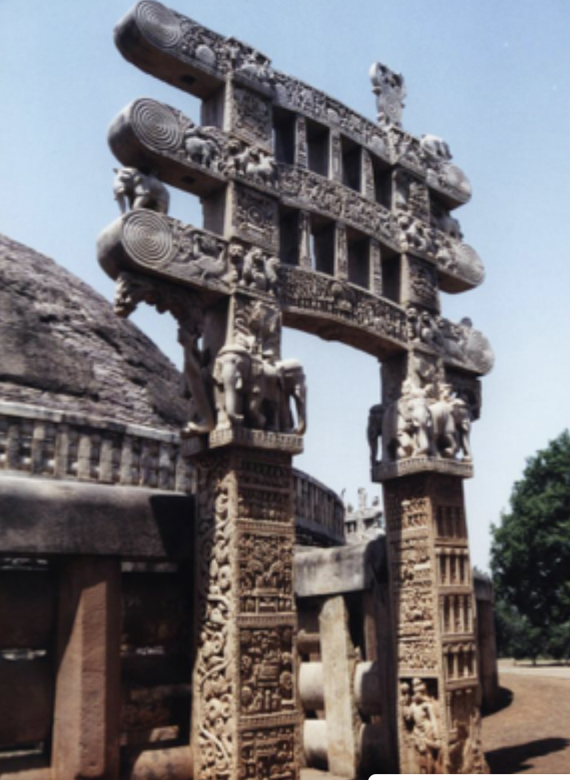
Great Stupa: north torana
Sanchi, modern India
1st c BCE
Maurya Period
Notes on This Image
added by patrons
every inch carved with reliefs
lions symbolize Buddha
scenes of life of Buddha
meant to inspire religious meditation

Name, Date, Location, Age
Great Stupa: yakshi figure
Sanchi, modern India
1st c BCE
Maurya Period

Notes on this image
no clothed female with jewelry
no clothes very prevalent in Buddhism and Hindu
Fertility, riches of fruit
Yogic pose on tree - linked to tree
causing tree to burst into fruit - fertility

Name, Date, Age, Location
Chaitya Hall
Karli, modern India
100 c CE
Maurya Period

Notes on this Image
depictions of temple donors
sides filled with columns - Greek influence + Persian influence
ceiling is barrel vault with ribs
the focus is a stupa in back
walk around stupa in back
Kushan Dynasty / Empire
right along center of Silk Road
Mahayana Buddhism (bodhisattvas)
Hybrid Styles
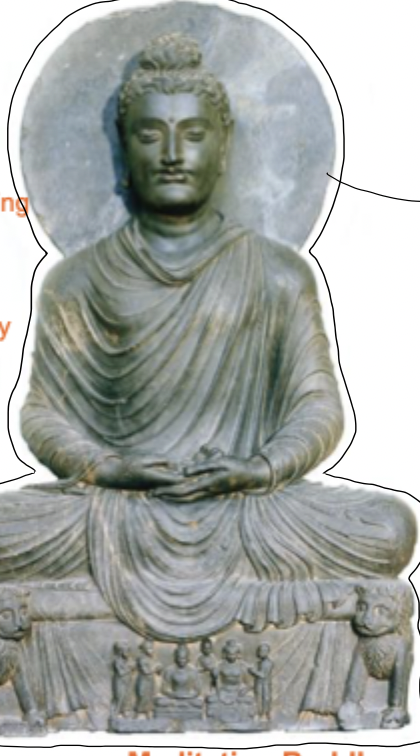
Name, Date, Age, Location
Meditating Buddha
Gandara, modern Pakistan
100 c CE
Gandara and Kushan Dynasty

Notes on this image
sitting pose yogic meditation pose
holy figure shown by halo
clothed - Buddha is always clothed
Greek style dress
Ushnisha and Urna
stylized face - not Greek
Ushnisha
knot of hair over head symbolizing spiritual knowledge
Urna
forehead dot symbolizing divinity
Imaging Buddha along time
more abstract
moving away from Greek naturalist style