Caravaggio Final
 Call Kai
 Learn
 Practice Test
 Spaced Repetition
 Match
 Flashcards
 Knowt Play
1/34

There's no tags or description
Looks like no tags are added yet.
Name | Mastery | Learn | Test | Matching | Spaced | Call with Kai | Chat |
|---|
No analytics yet
Send a link to your students to track their progress
35 Terms
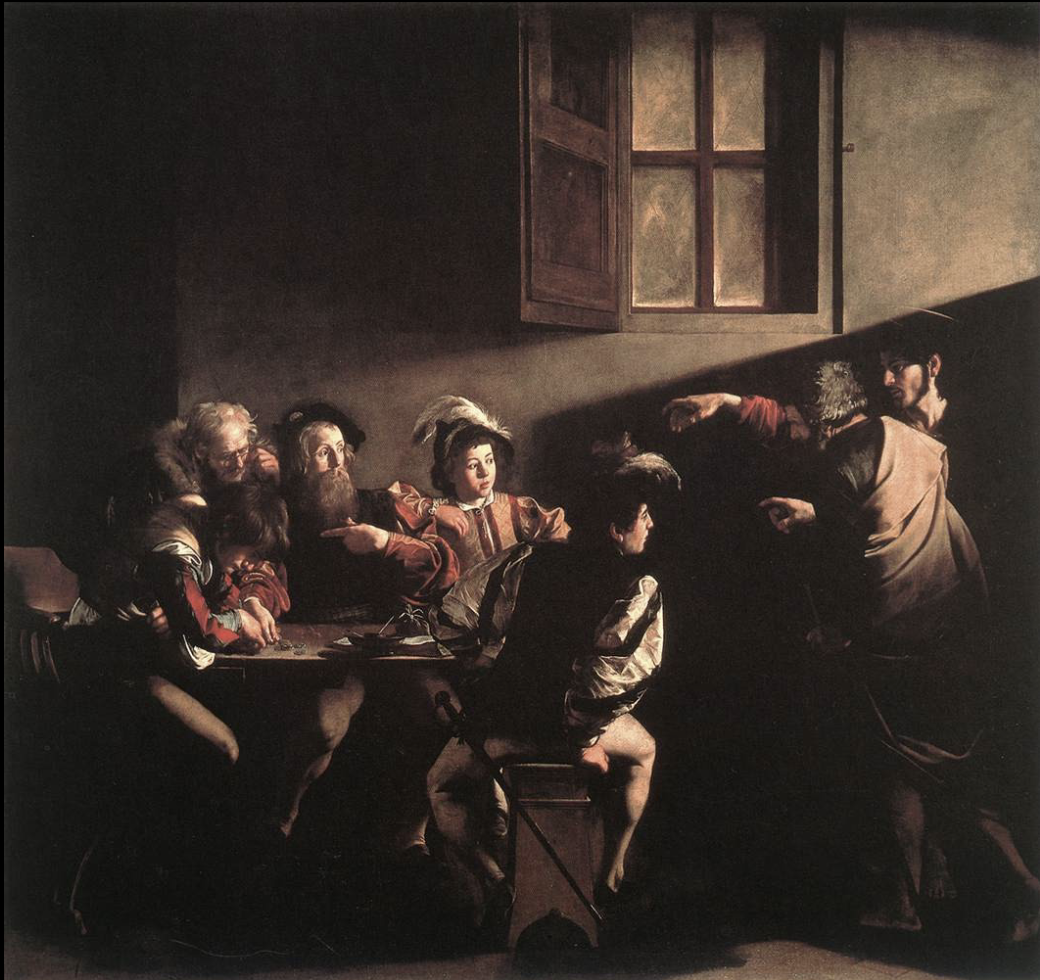
Caravaggio, Contarelli Chapel, San Luigi dei Francesi: The Calling of St. Matthew, 1600
Public Commissions for Churches in Rome. Moment just before the moment of transition that is his spiritual awakening.This idea of capturing the moment of spiritual awakening, a moment of conversion, was something that interested Baroque artists like Caravaggio. the main figure here, and Matthew, too, are both a little bit lost. Christ stands behind Saint Peter. His body is covered by Saint Peter except for his head and his right arm, which reaches out to point to Matthew.Then Matthew is a little bit lost among this group of five colleagues. Matthew is a tax collector, and they’re here looking at the money that they’ve collected.Both figures are identified by light and by gesture. The light streams in from an unseen source just above Christ’s head and moves from the upper right at a diagonal down to Matthew. Christ almost languidly extends his hand, but Matthew responds by pointing to himself with vigor, as if he’s saying, “You’ve got the wrong guy. Why would you call me?” Caravaggio dressed the figures in contemporary clothing. There’s very little about this that looks like a spiritual moment.There’s a sense of a real caught moment — the figure on the upper left is examining the coins. The figure close to us on the left is counting them with his right hand. The figure on the right corner of the table leans and looks out at something outside the space of the painting. The figure right next to Matthew has his arm on his shoulder — and yet this profound moment of spiritual transformation in a normal scene with tax collectors.
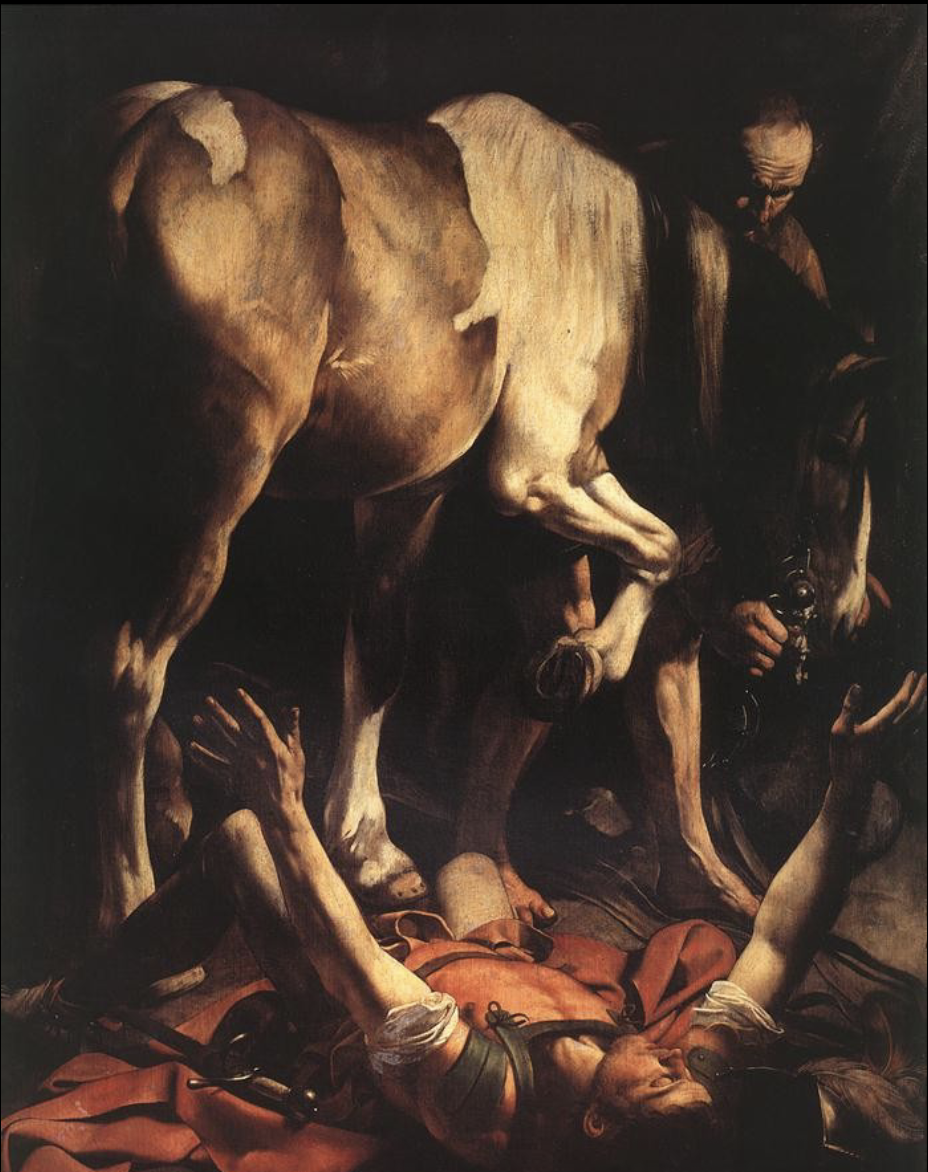
Caravaggio, Santa Maria del Popolo; The Conversion of Paul, second version, 1600, Cerasi Chapel
That’s what makes it all the more personal. That it is only Saul that hears God’s voice. This darkness that this is set in, no architecture, no landscape, this tenebroso, this dark style perhaps deriving from the art of Leonardo da Vinci but here taken so far by Caravaggio, and that darkness eliminating everything else that could distract us from this incredibly powerful moment. When elements are illuminated, they stand out against that background. The naturalism we see here, the way that we’re getting the rear end of the horse, the dirt on the ground. The figure of the groom who’s taking care of the horse looks like a man that Caravaggio probably asked to model for him that he met in Rome. That naturalism is part of this interest in legibility, in clarity, in art that comes out of the Counter-Reformation. Specifically out of the Council of Trent. The idea was that painting could be didactic, intended to teach something, particularly in having moral instruction as a motive. Naturalism meaning capturing the "real" world without embellishment, depicting the world as it appears, emphasizing faithful, unidealized observation of nature and everyday life, often with meticulous detail, contrasting with stylized or symbolic art.
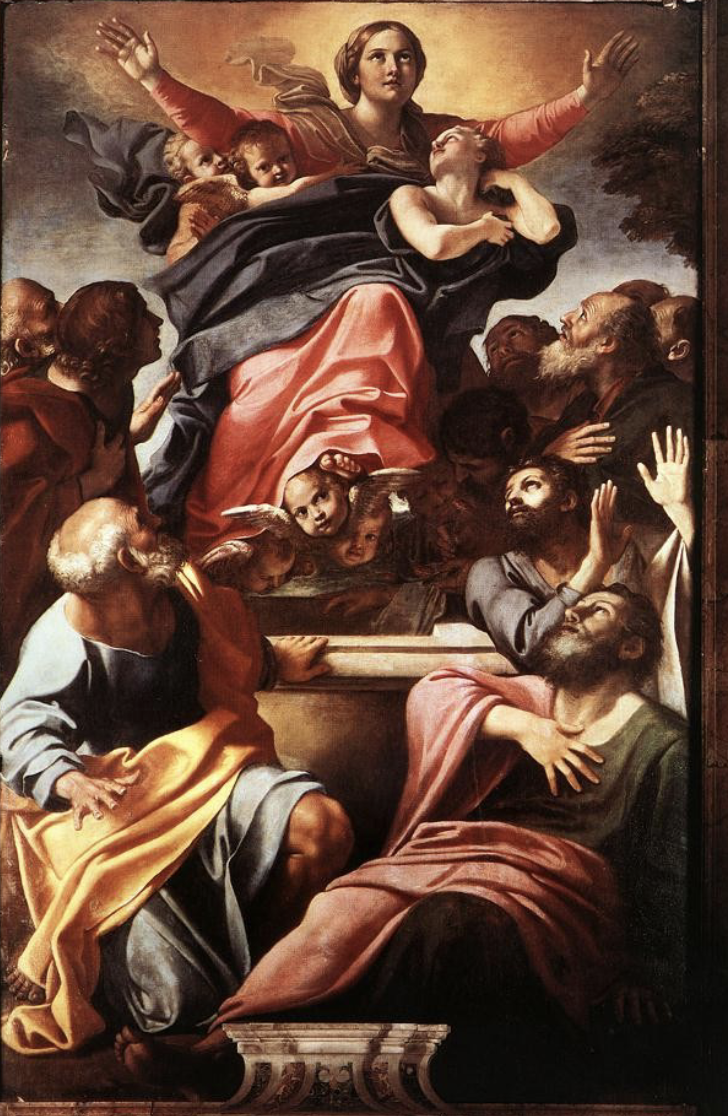
Annibale Carracci, Assumption of the Virgin, 1600, Cerasi Chapel, Cerasi Chapel in Rome was part of a famous artistic showdown with Caravaggio, who painted the chapel's side panels, Carracci's work showcased classical idealism, vibrant color, and natural light, contrasting with Caravaggio's dramatic chiaroscuro and raw naturalism, establishing two foundational paths for Baroque art, Classicism and Tenebrism. There is a radical difference between the Bolognese artist's beautifully bright colors, the powerful blue and red he applies, as against Caravaggio's earth-tones, which he varies only by blue on St Peter and red on St Paul. Caravaggio famously painted life exactly as he saw it, whereas Carracci chose to capture the ideal world as naturally as possible. Two different approaches to naturalism.
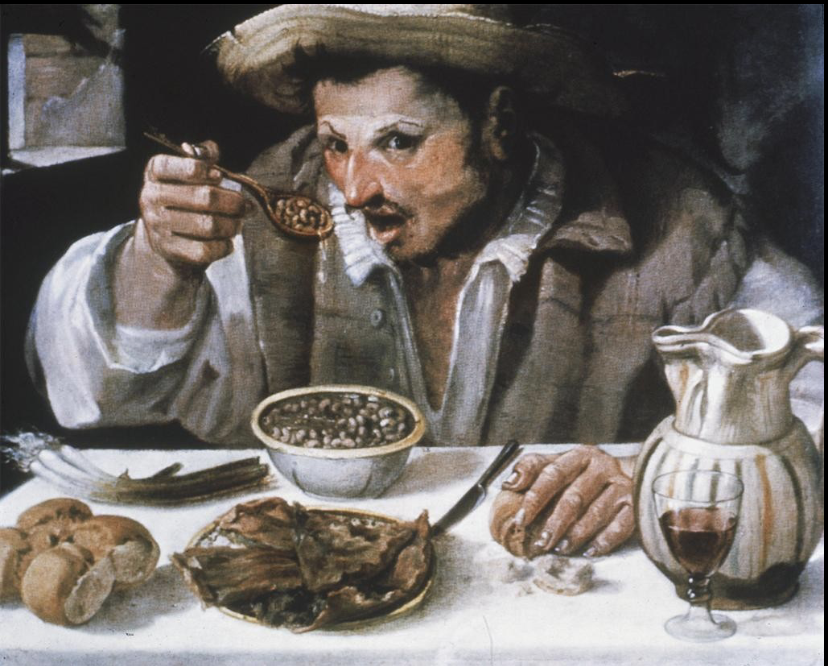
Annibale Carracci, Bean Eater, c. 1585, Cesari Chapel
The Beaneater, a naturalistic genre painting by Carracci, depicts an everyday scene of Italian life. The artwork portrays a man eating a simple meal of beans, onions, bread, and wine. To convey a rustic feel, Carracci employed broken brushwork, deviating from the flat, polished finish preferred by fine artists during the late 16th century.
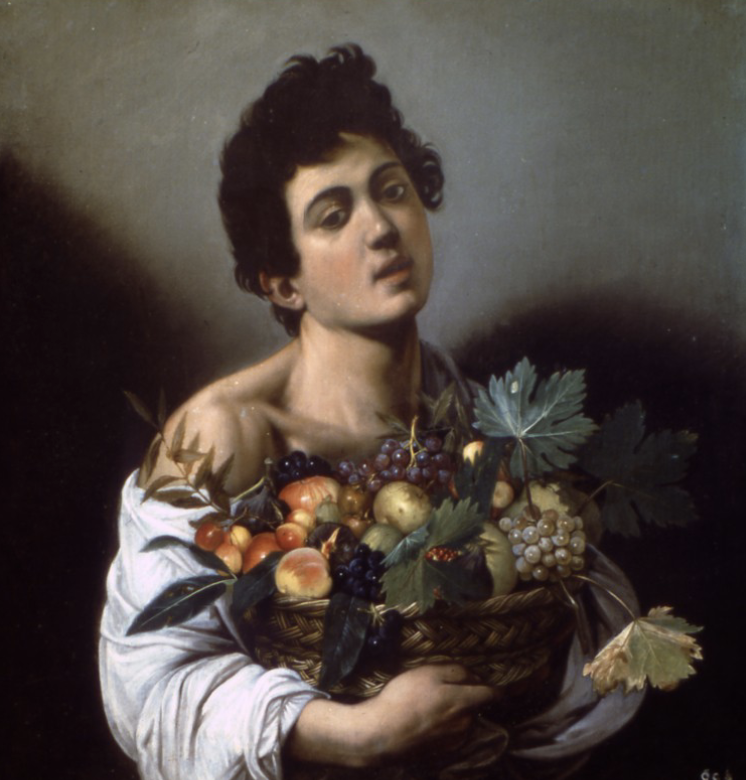
Caravaggio, Boy with Basket of Fruit, c. 1593, Compare to Bean Eater
Boy with a Basket of Fruit likely dates to the 1593–95 period when Caravaggio painted a number of moderately-sized works for general sale. Like Caravaggio’s other early Roman work, the painting features a half-length figure with disheveled hair in front of a plain background. The figure is merely “boy,” a youth. He comes from no myth, religious story, or historical episode. This sort of image that features a unspecified quasi-contemporary figure from everyday life is known as genre painting, a category of art that rose in popularity in the 17th century. Caravaggio has better understanding of the props, Carracci better understanding of the figure. Both still have this idea of naturalism and painting a neutral scene with no outwardly religious figures.
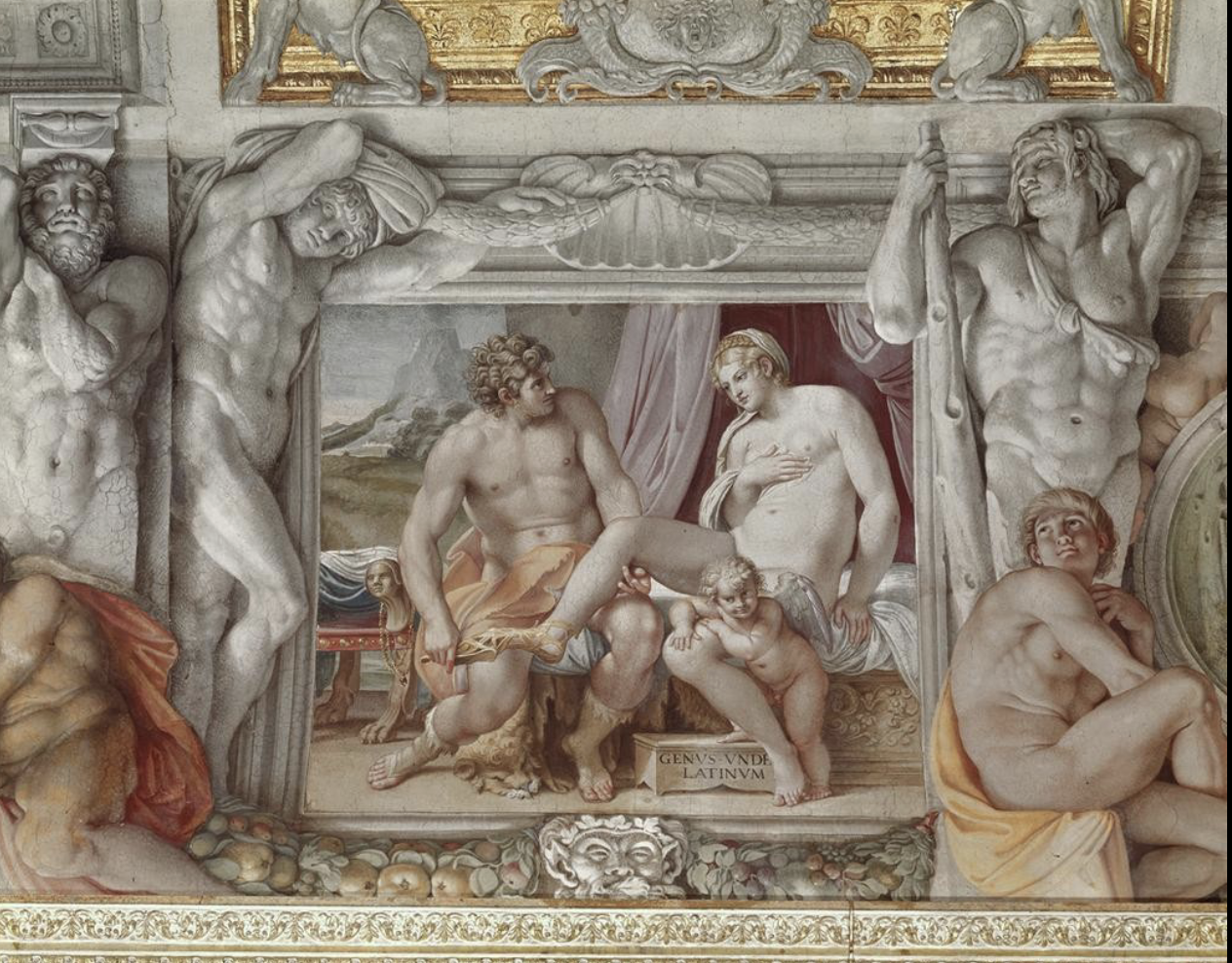
Carracci, Farnese Gallery, Rome, 1597-1601, Venus and Anchises
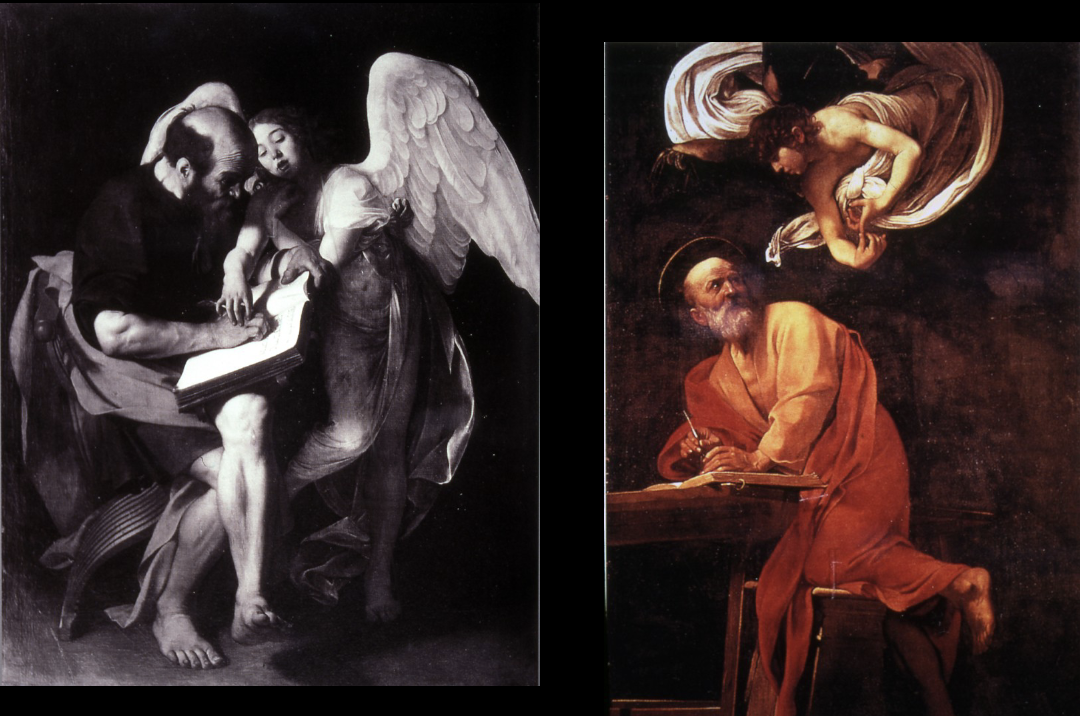
Inspiration of St. Matthew, version 1, 1601-2; version 2, 1602, Contarelli Chapel
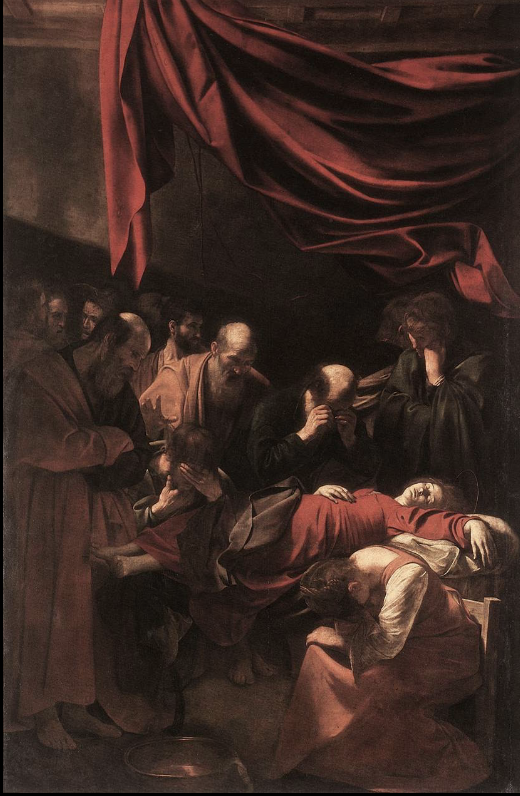
Caravaggio, Santa Maria della Scala, Death of the Virgin, 1601-3, Cherubini Chapel
Story of Mary is she dies but without suffering, critics say Caravaggio went too far and made Mary look too sick, she seems swollen and wrinkling of clothing, idea of suffering a seizure like thing that created a physical turmoil that left the garments wrinkled and moved. Great sense of palpable realness. Maybe. We see that dark tenebroso background and the figure is very, very close to us, but we don’t see anything that we might expect to see in a painting of the Virgin Mary’s death. Normally, we might expect to see her being assumed into heaven, or angels receiving her in heaven.Typical of Caravaggio, he’s created a spiritual scene but brought it totally down to Earth and used very everyday language to depict it.The Virgin Mary herself looks like she could be a contemporary Roman. She doesn’t look particularly spiritual. Aside from the faint halo, which we can barely make out around her head, her hair is undone. Her front of her dress is coming open. Her feet are bare, which was really indecent. We can really sense that this is indeed a dead body. There’s no sense of spiritual rebirth or salvation. We almost feel rigor mortis setting in here.
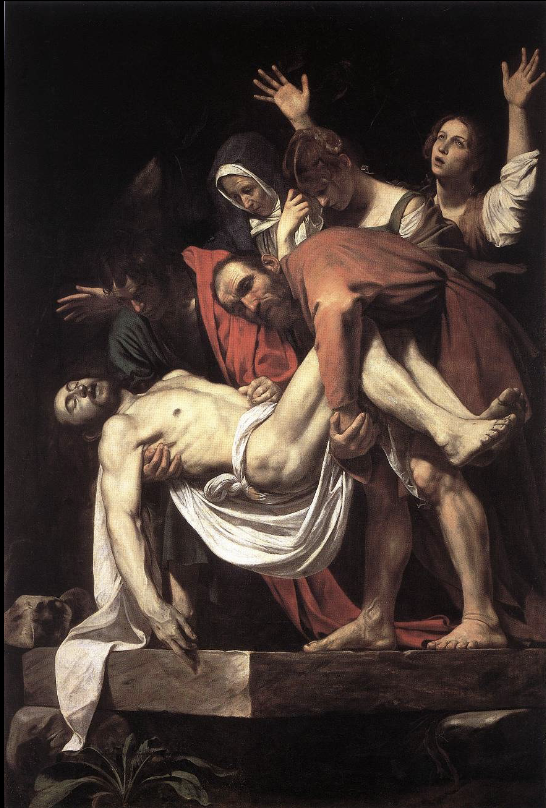
Caravaggio, Chiesa Nuova, The Entombment (or Deposition), 1602-4, Vittrice Chapel
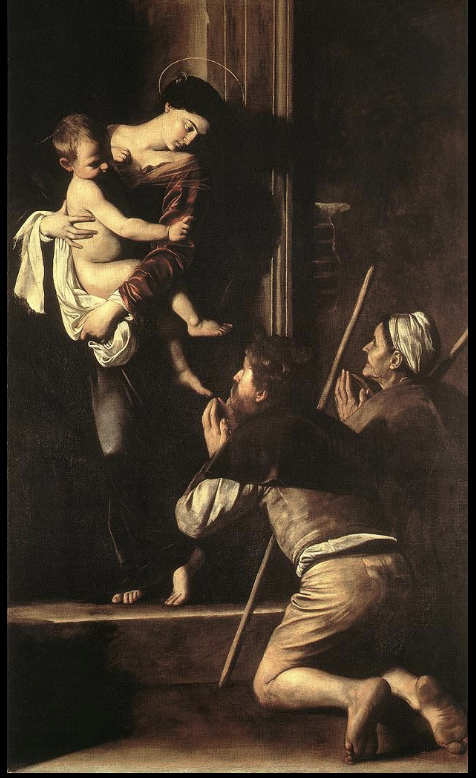
Caravaggio, S. Agostino Madonna di Loreto, 1603-4, Cavalletti Chapel
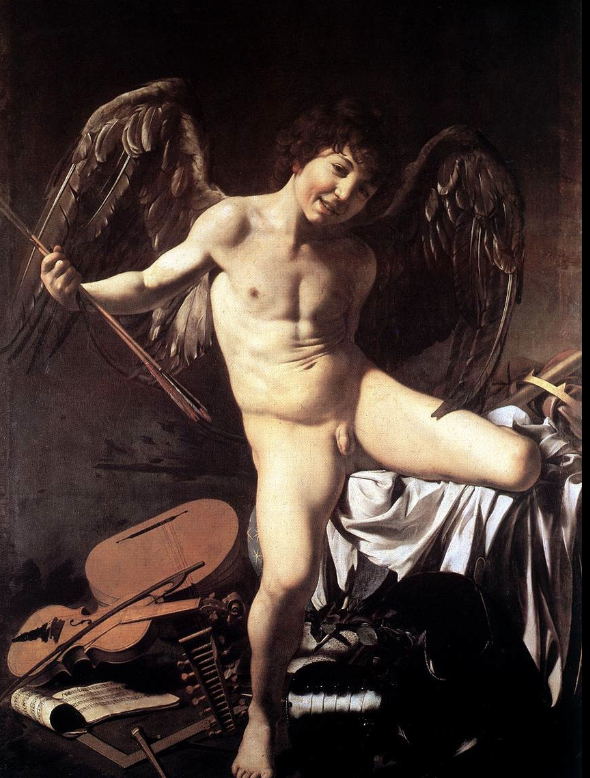
Caravaggio, Amor Victorious, c. 1601-2; for Vincenzo Guistiniani
Private Commissions: Easel Paintings for Galleries
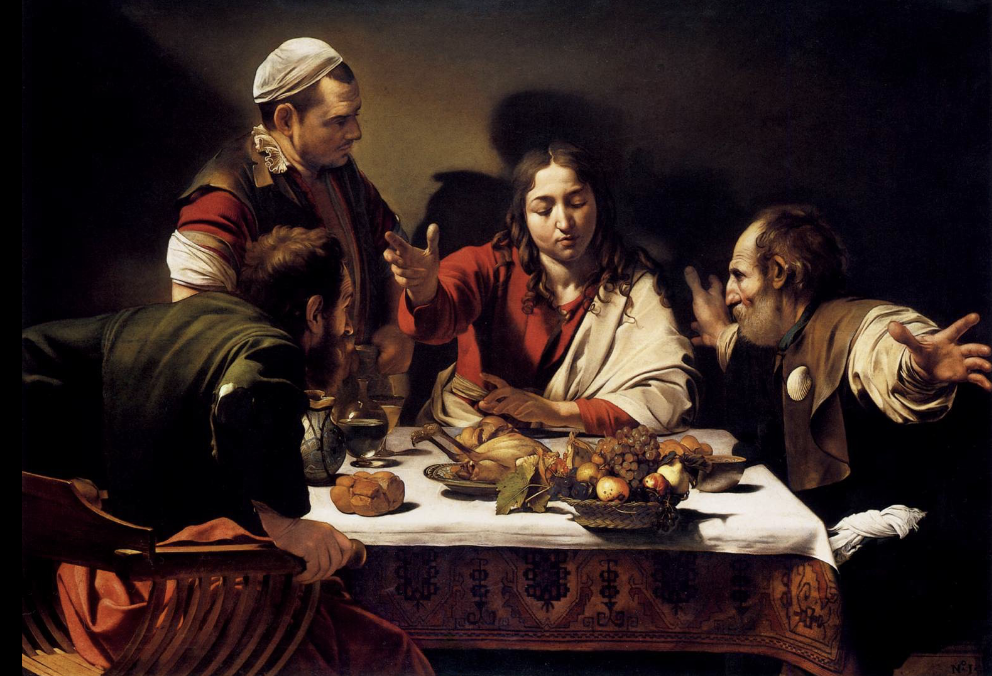
Caravaggio, Supper at Emmaus, 1601, for Ciriaco Mattei, Private Commissions: Easel Paintings for Galleries
makes this hand motion that shows he’s Christ
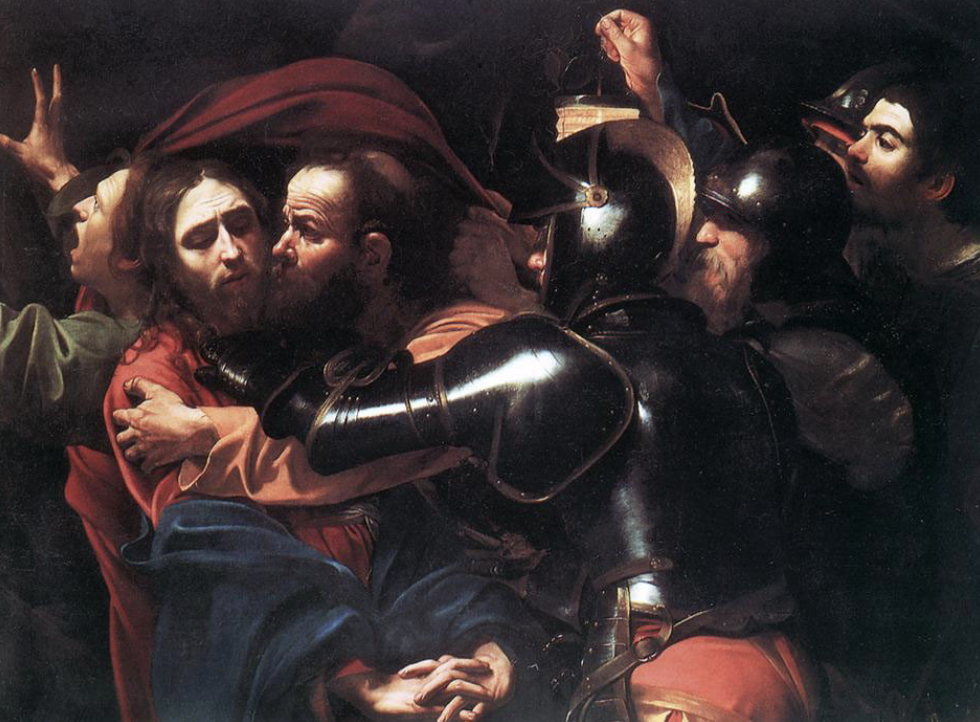
Caravaggio, Betrayal of Christ, 1602-3, for Mattei
Private Commissions: Easel Paintings for Galleries
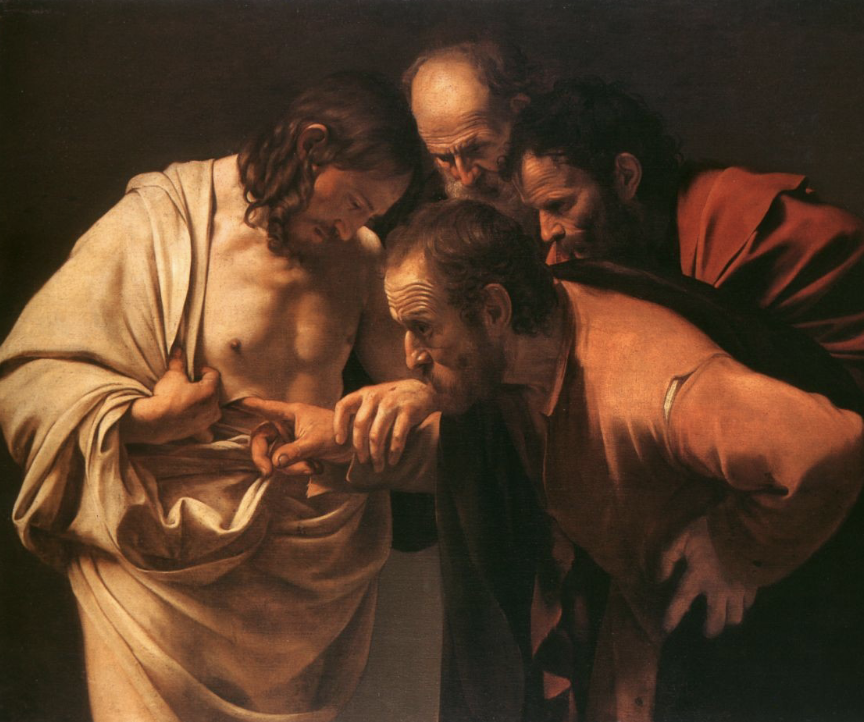
Caravaggio, Incredulity of Thomas, 1602, for Cardinal B. Guistiniani
Private Commissions: Easel Paintings for Galleries
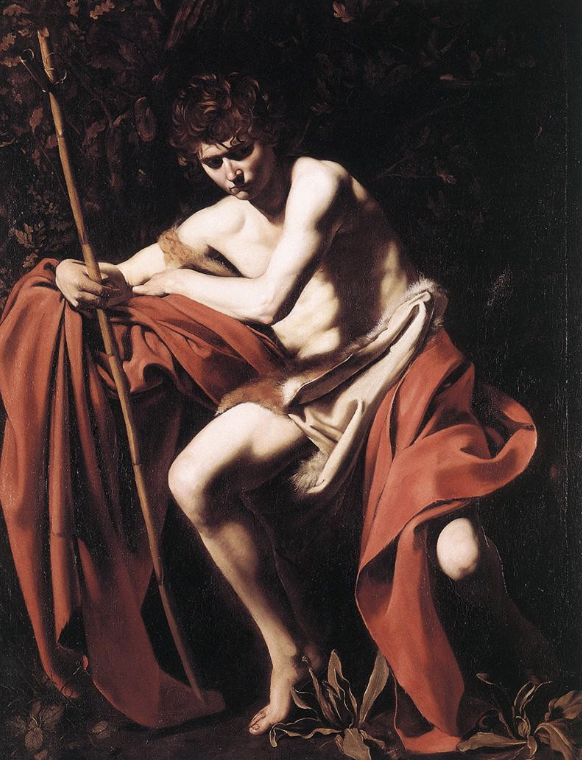
Caravaggio, St. John the Baptist, 1603-5, for Ottavio Costa
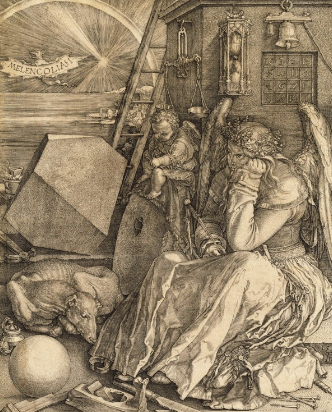
Compare to St. John the Baptist: Durer, Melancholia, 1513
Melancholia is one of the four humors or temperaments, your personality is drawn dependent on how much you have of one of the temperaments/humors, she was creative but also depressed so she comes to represent artists
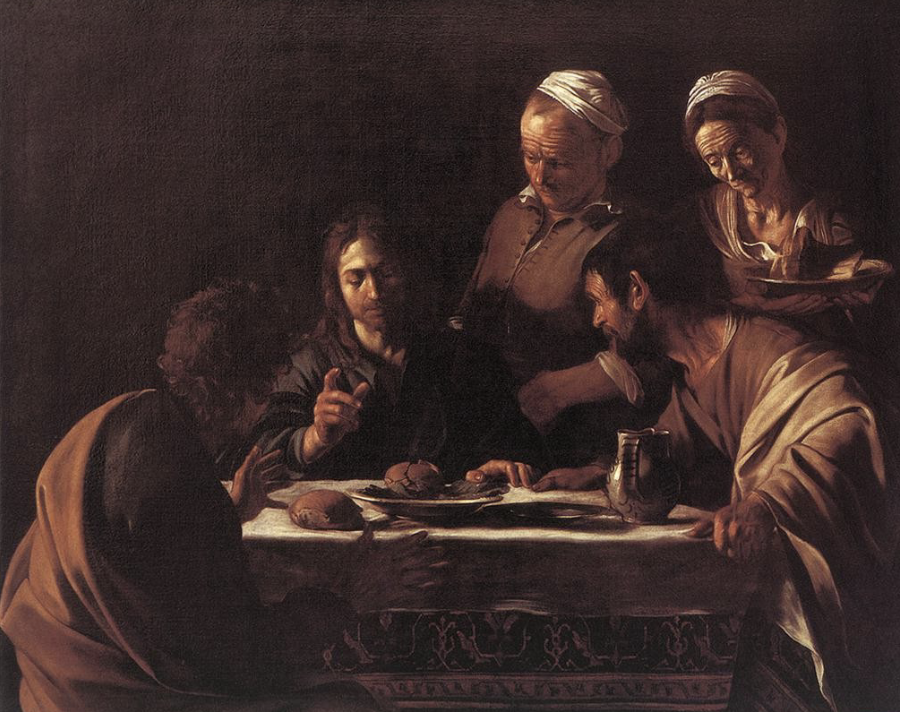
Caravaggio, Supper at Emmaus, 1606, After Fleeing Rome
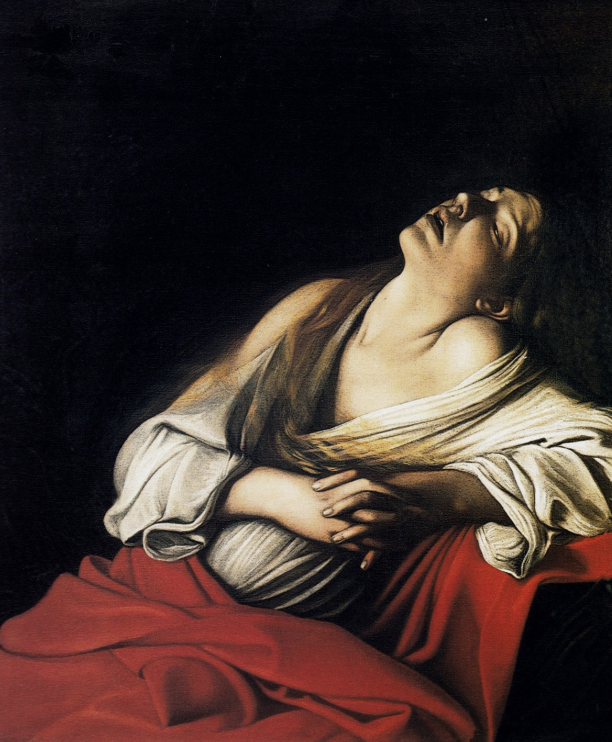
Caravaggio, Magdalen in Ecstasy, 1606, After Fleeing Rome
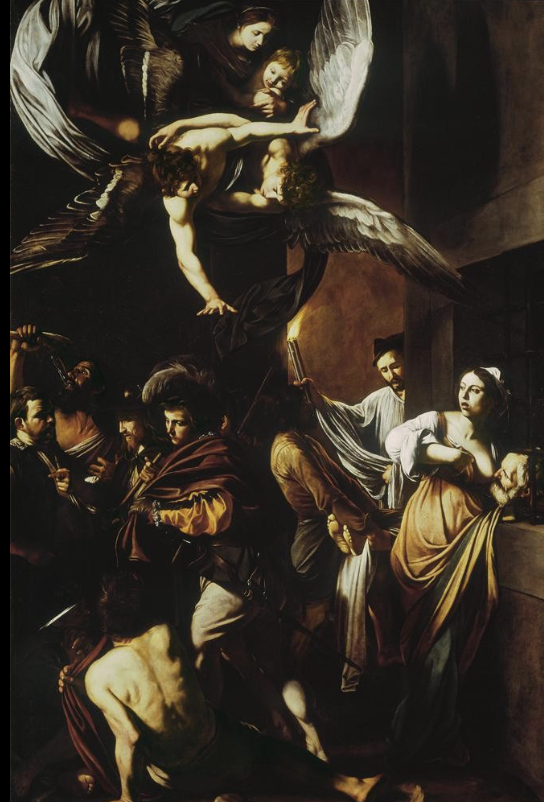
Caravaggio, Pio Monte della Misericordia; The Seven Acts of Mercy, 1606, works in Naples
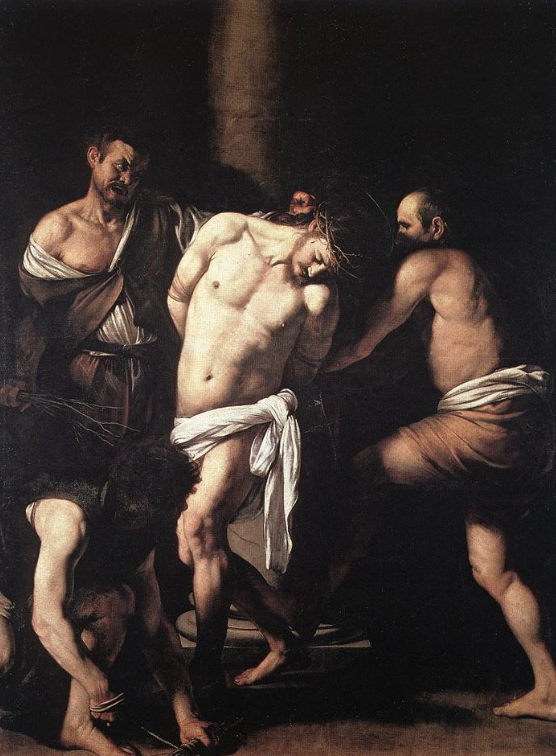
Caravaggio, Capodimonte; The Flagellation, 1607 (altarpiece) Works in Naples
Last moments of Christs life and one of the scenes where he is brought before the torture starts, and then crucifixtion. Composing on the canvas, and made lots of changes. Pentimenti, meaning lots of trial and error underneath, we see through x-ray he even painted in the patron at some point but broke the composition by having contemporary vision so he takes it out
Physicality of Christ as a full length figure, similar to del piombo, we see in this Caravaggio's understanding of the figure and the handling of the body
Contrast between upper and lower torso with the way its turned
Not just contraposto, but more of collapsing of lower part
Christ as a figure whos only momentarily standing who is a new way of showing him, in Piombo has contrapposto where hes just shifting weight, but Caravaggio is pushing over edge where you can see more cruelty and collapse
Commissioned by a group of young men who were members of a fraternity, a religious organization of men who join together as volunteers and dedicate themselves to helping the community, religious position but not priest so no training, above just member of church but below one of the high orders, this is where we can see who's admiring Caravaggio, a group of young people in sync with his ideas, younger group of patrons than usual, their idea to include all acts in one scene, not just separate scenes like normal
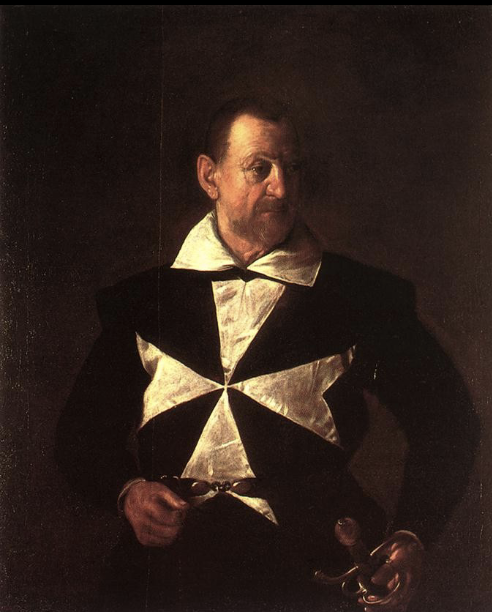
Caravaggio, Portrait of a Knight, c. 1608, Works in Malta
You don't just go to Malta so he had to get special permission because this is where all the knights stay. Becomes kind of an add on knight of Malta. Becomes personal painter to one of the leaders, Alof de Wignacourt. He would come to the island and do whatever painting they needed.
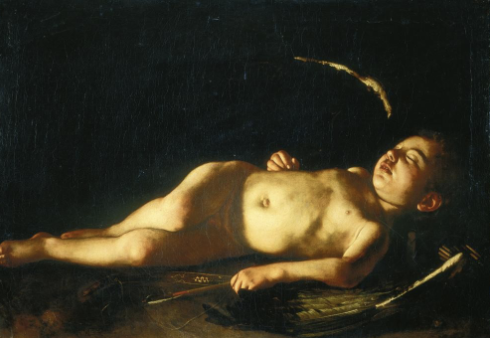
Caravaggio, Sleeping Cupid, 1608, Works in Malta
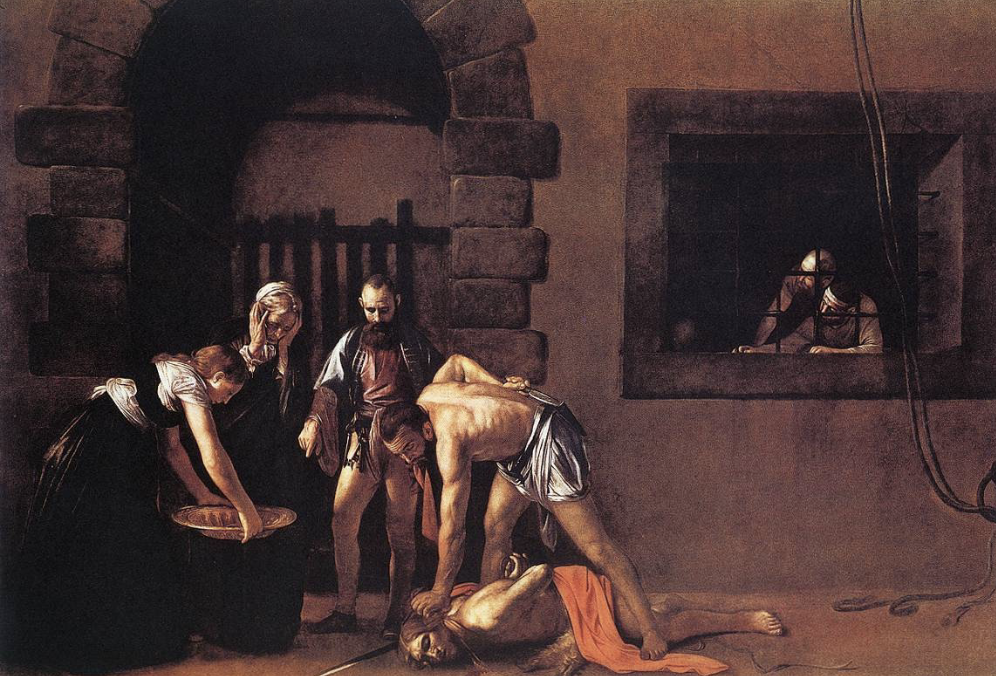
Caravaggio, Oratory of St. John, Co-cathedral of St. John, Valletta: The Beheading of John the Baptist, 1608, Works in Malta
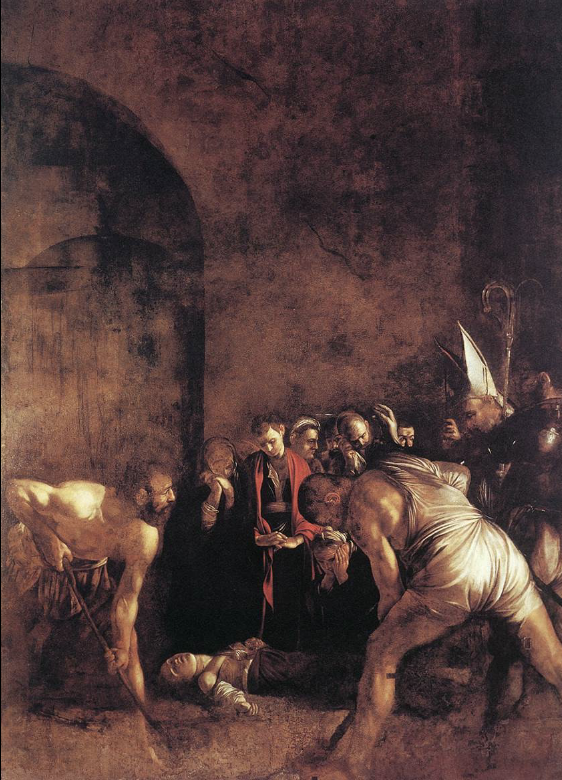
Caravaggio, Santa Lucia, Syracuse: The Burial of St. Lucy, 1608-9, Works in Sicily
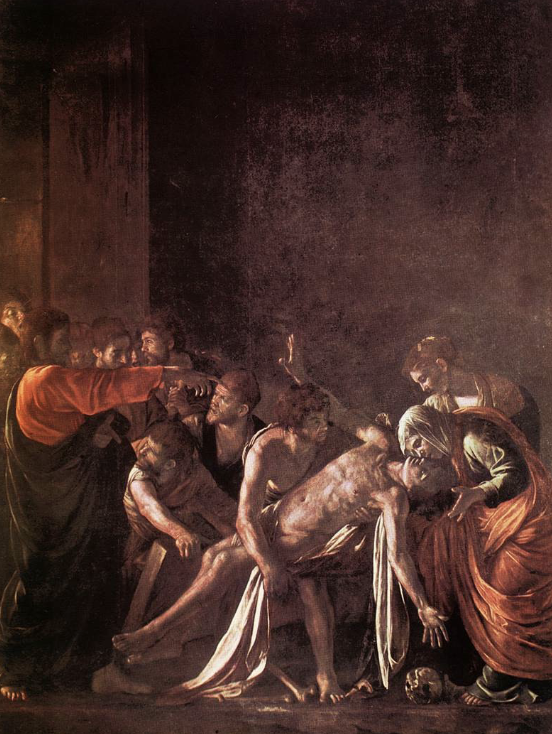
Caravaggio, Messina: The Raising of Lazarus, 1608-9
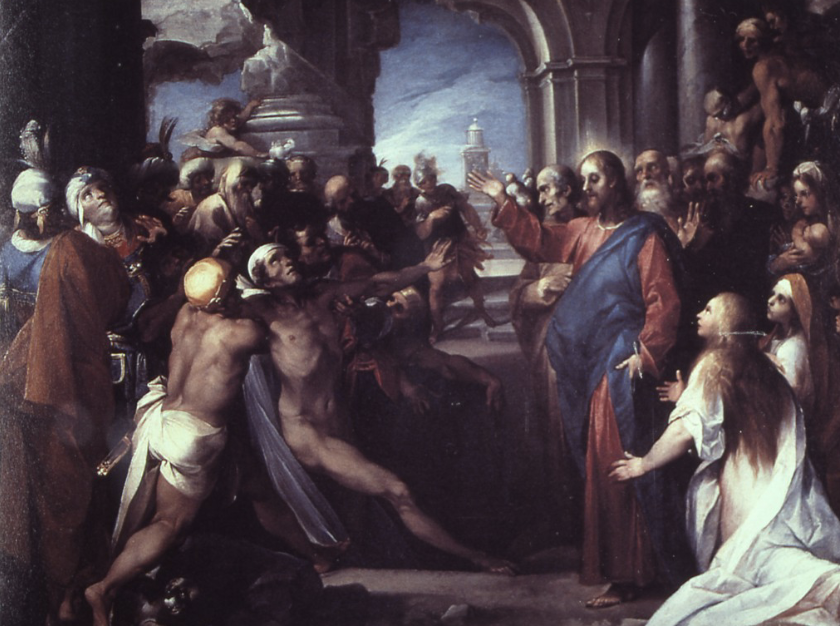
Cesari/D’Arpino, The Raising of Lazarus, 1593, Works in Sicily
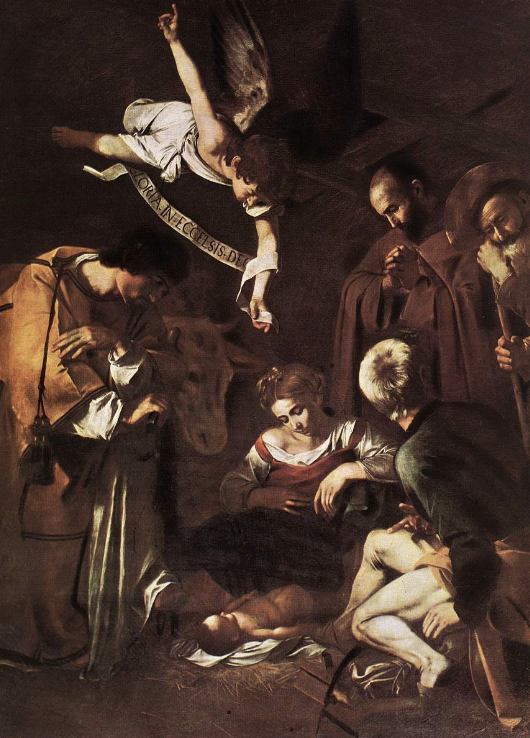
Caravaggio, Palermo: Nativity with St. Lawrence and St. Francis, 1609, Works in Sicily
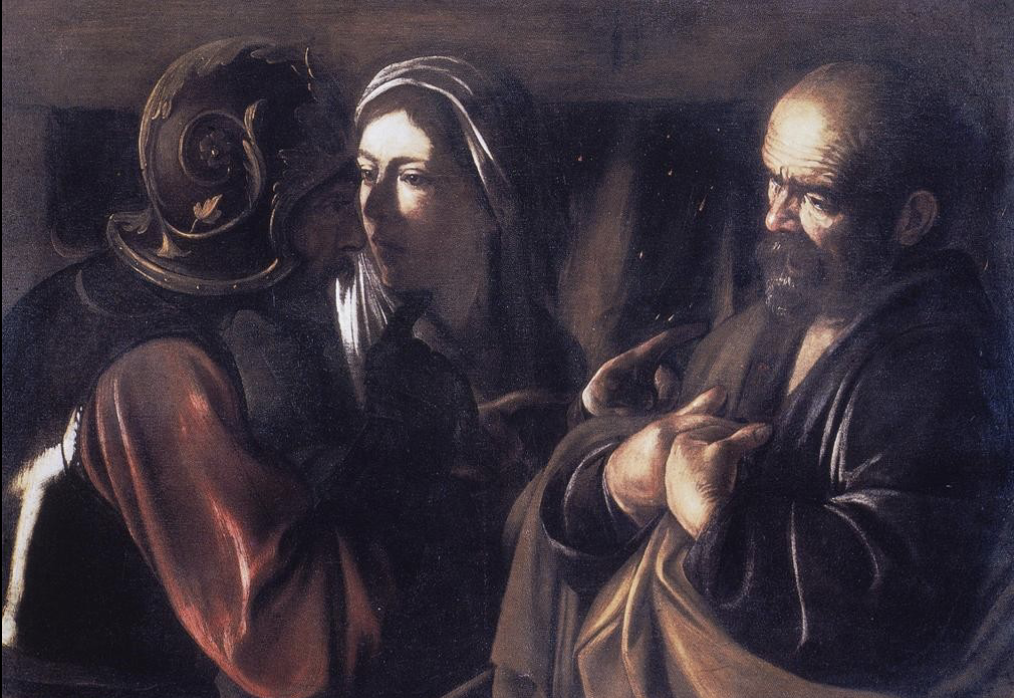
Caravaggio, Denial of Peter, 1609-10, Works in Naples
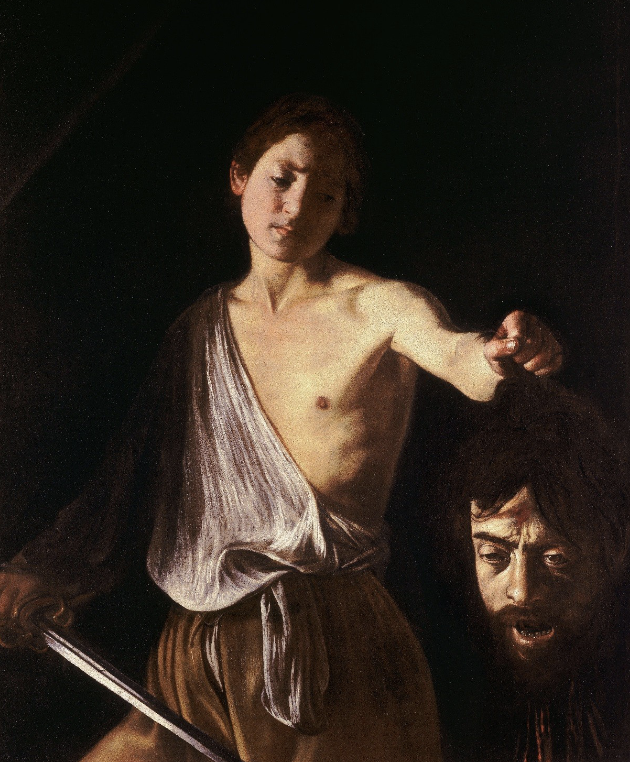
Caravaggio, David with the Head of Goliath, 1609-10, Works in Naples
Many of these have weird fingers wrapped through hair, unnecessary continuation of the scene depicted, physical familiarity between killer and the victim, David super young and Goliath very ugly. Regarded as a late but impressive example of the idea of the ambivalent executioner, David is in the right but there's still some discomfort always in this act of killing, shows him with some remorse and tension, not the proud conqueror he's often shown as. somewhat a self portrait and seems to be more about him in a way, scholars agree that it reflects the attack he suffered with the slash on his face
David often shown bringing the head back like Judith to show he was successful in the killing, hence the sword but now remorseful.
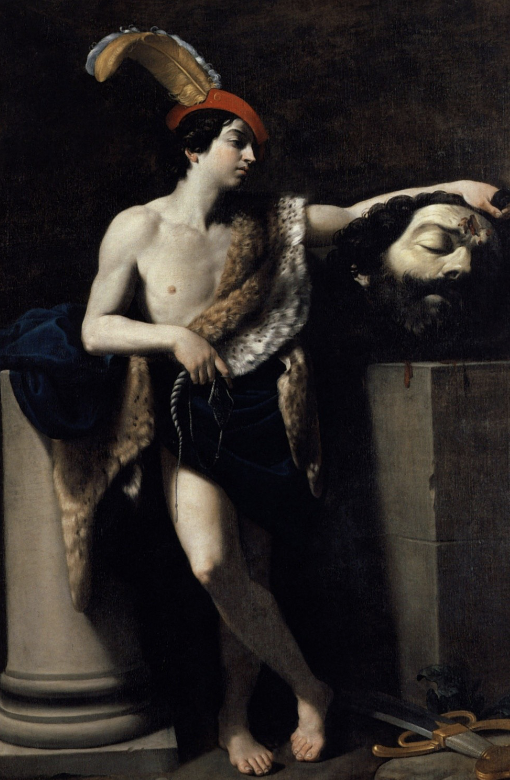
Guido Reni, David with the Head of Goliath, 1605-6
Can flatten out Caravaggio’s influence. Contrast between young and innocent David to monstrous (like in Caravaggio’s) Goliath so similar content. Still focused and dramatic lighting just like Caravaggio. Reni wants to be best artist in Rome but pope at the time did not like this high contrast just wanted just straight facts that you get a glance, pope instituted group of viewers to go check on art at this time so crack down and policing on artworks. Young up and coming artist that would have met Caravaggio, inheriting the style but dispensing it since not path to success anymore since move to Baroque classism which value idealism more than naturalism seen in classical which Caravaggio hated and pushed for realism before.
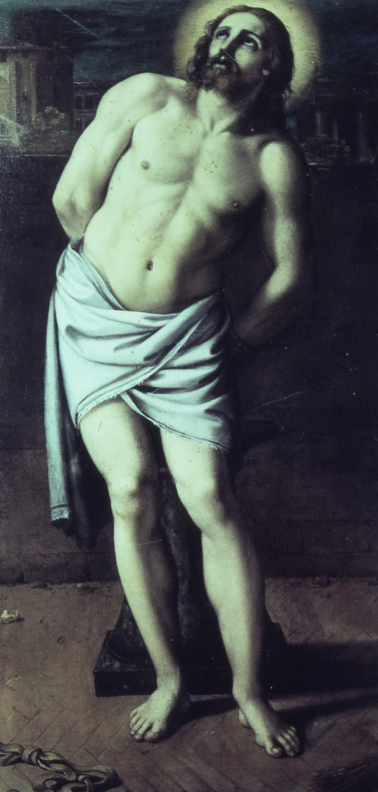
Domenichino, Christ at the Column, 1603
Clearly staged scene, more icon or symbol not this narrative scene, timeless scene where you can just meditate on this idea not an actual story No emphasis on the fold in Domenchinos Caravaggio's type of religious painting is called a narrative because it visually narrates a story from a source, so in a religious painting its trying to show a historical image, you see all the cast of the characters and stage as it happened
Domenichino is out of time and place and idealized, no recognizable place, isolated motif not narrative, called an icon. Icon is something to reflect on and doesn't pull you into the action or connect you to the story .
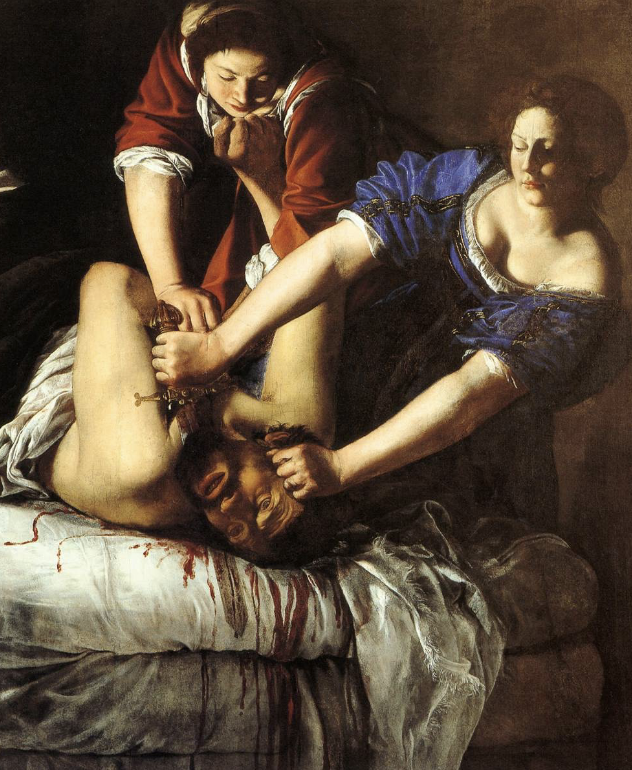
Artemisia Gentileschi, Judith Slaying Holofernes, 1613
Servant much less old and disgusting. Finds other applications for caravaggio’s ideal, looking at familiar subjects like religious people and making corrections for falsehoods and mistakes on these people that came over time, so she does Caravaggio’s work but fixed with more accurate history. Popular topic with women artists specifically. She attended the Santa Maria del Popolo so thats where she wouldve seen Caravaggios works.
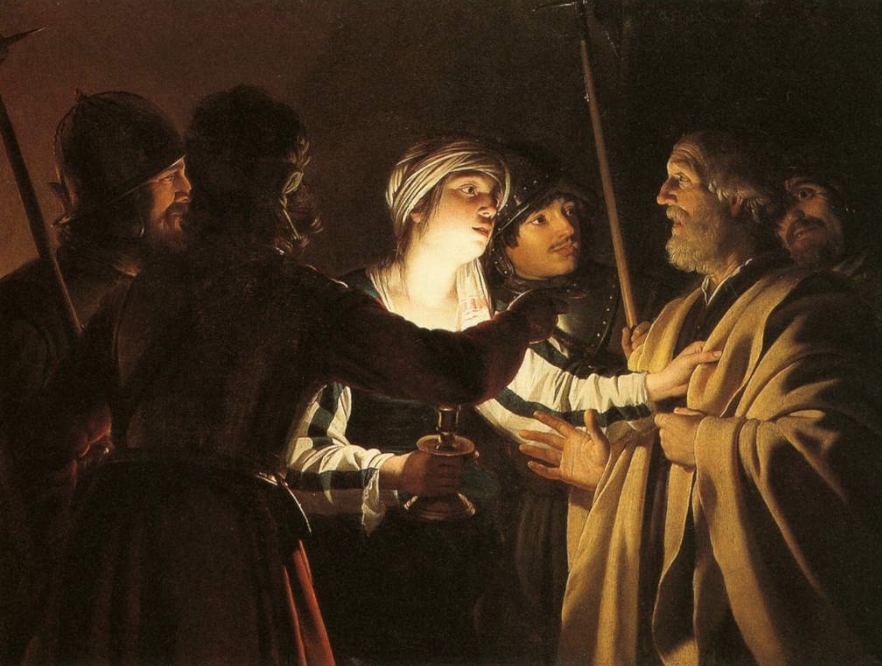
Honthorst, Denial of St. Peter, 1620-25
Called gerard of the night since he’s always painting scenes in the dark, nighttime guy. Aso gets stuff commissioned by the same people like one from the Giustiniani family. Keeps to yellowy warm patter. Looks a lot like Caravaggio’s, also part of the Utrecht Caravaggisti school that studies him. Much greater focus on the illumination of the image, more clearly shown who the main characters and whose arm belong to who which is confusing in Caravaggio’s. Peter’s reaction is more seen as dramatic and not accepting, similar to gestures of actors in Italy. Caravaggio always strays from format but Honthorst is using that. Hand blocks light very strategicially. Easel painting version that exploits his reputation of being able to handle these night time scenes. Looks at many nocturnal scenes, just what you get at night not this examination of light and dark. Scenes in which handling of light is key issue of the scene. No fail Caravaggio choices you could make. Doesnt combine with northern ideas, just done for Roman viewing.
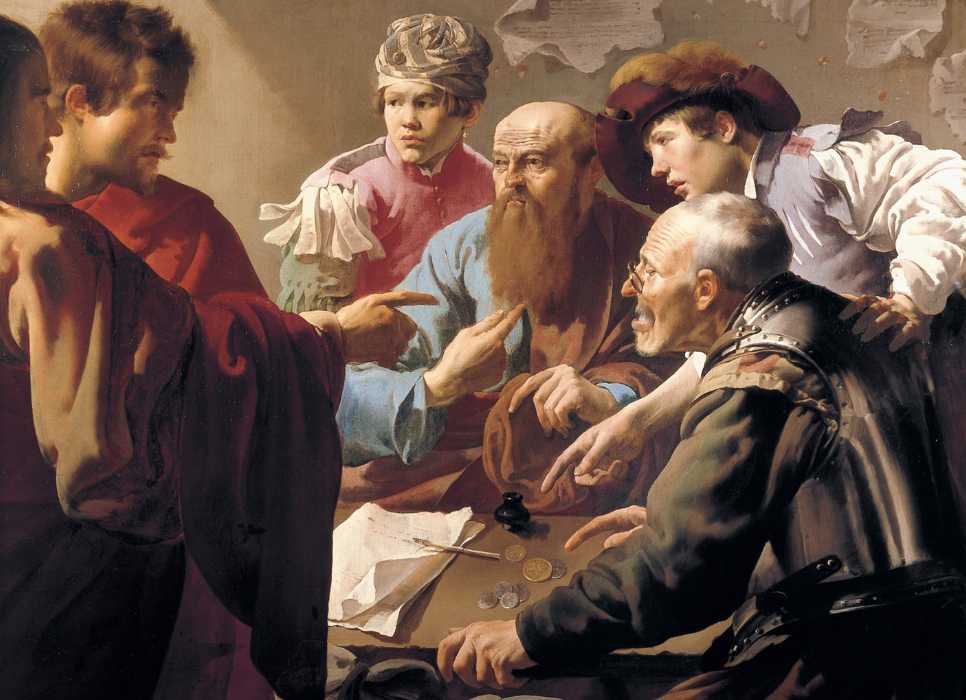
Terbrugghen, Calling of Matthew, 1621
Nobody really knows if they actually met or if he studied under him, just uses his styles. He spent much time in Rome but no art from that time period. Dutch follower but sees stuff from him no doubt when he is in Rome. Part of the Utrecht school, Utrecht Caravaggisti. Taking Caravaggios idea and re casts it, not full length and much more upclose. Different point of view than Caravaggio’s. Much brighter and all over lighting and less contrast. Cool light and almost silver whereas Caravaggios is always yellowish, issue of integrating color scheme with lighting tells us difference between Caravaggio vs. his followers. Still this weird direct raked light at this angle but not this night time artificiality. Terbrugghen fully gets rid of the halo now. Effect of switching the sides of the religious figures and they’re very cropped, puts the emphasis more on Matthew, figures are so close to the foreground, these are repoussoir figures “pushed back” refers to figures so pushed back. Dance of the pointing in terbrugghen, more northern tradition with the fondness of details and love of grotesque like weird pointed figures. Very particular costumes, these outfits are all different unlike Caravaggio’s where they all look like they’re wearing the same thing, creates this costume effect. This has emphasis on the aspect of a religious event being everyday. These Utrecht artists combine influence from Caravaggio and northern art. Leap from Caravaggio but combine things differently, you take something different and do a close up of your own. Also makes easel painting meaning you can sell it to a wider range of audiences. Illusionistic detail with everything casting a shadow on everything. Example of what caravaggio truly introduced.
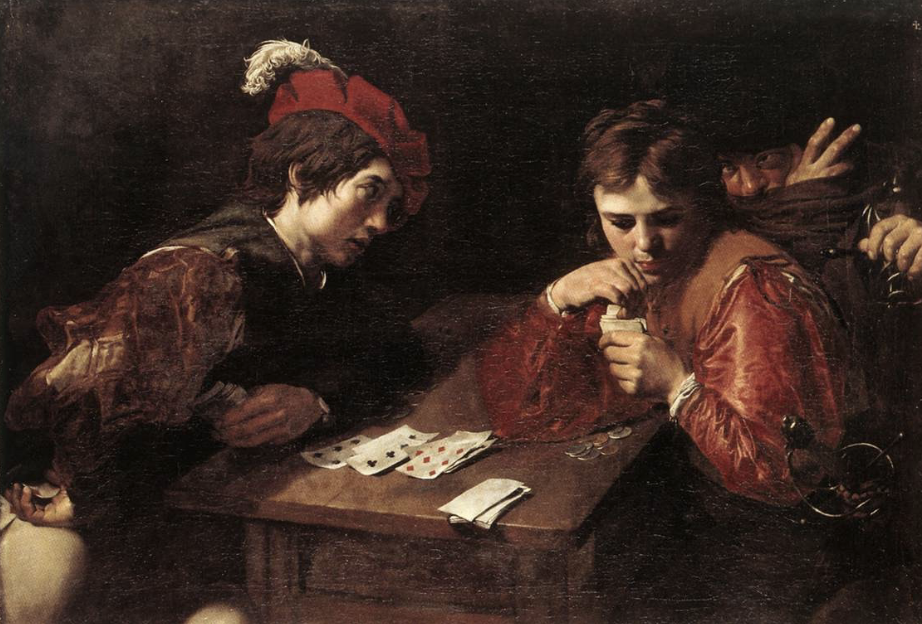
Valentin de Boulogne, Cardsharps, c. 1615-17
French follower, offering alternative variation of Cardsharps by caravaggio. Still that criminal element in everyday scenes, scenes from play with more polished but seem posed since like from an actual legit play.