Chemistry 1 Test 3
 Call Kai
 Learn
 Practice Test
 Spaced Repetition
 Match
 Flashcards
 Knowt Play
1/104

Earn XP
Description and Tags
Includes information on Ch 5: Advanced Theories of Bonding, Ch 6: Composition of Substances and Solutions, and Ch 7: Stoichiometry of Chemical Reactions
105 Terms
What forms molecular bonds between 2 nuclei?
The overlap of atomic orbitals
What are the atomic orbitals?
s,p,d, and f
What is the distribution of the electron density in valence bonds?
Localized
Localized
Restricted to a particular place or part of the body
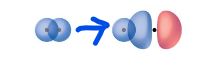
Sigma (σ) Bonds
Formed by direct head-on overlap of atomic orbitals

Where is electron density located for sigma (σ) bonds?
Between the nucei
1st Way Sigma (σ) Bonds form
2 s orbitals
2nd Way Sigma (σ) Bonds form
a s orbital and a p orbital
3rd Way Sigma (σ) Bonds form
Two p orbitals
Every molecular bond contain what?
1 sigma components
Pi (π)
Formed from the overlap of Unhybridized p or d type orbitals
Unhybridized atomic orbitals
Atomic orbitals that have their original shape and energy

Where is the distribution of electron density for Pi (π) bonds?
Above and below the plane of the bond between atomic nuclei centers
What type of bonds are in a single bond?
ONLY 1 sigma bond
What type of bonds are in a double bond?
1 sigma bond and 1 pi bond
What type of bonds are in a triple bond?
1 sigma bond and 2 pi bonds
Hybridizations
Process of forming new atomic hybrid orbitals from mixing atomic orbitals
What does the number of atomic orbital combine equal?
ALWAYS the number of hybrid orbitals formed
The type of hybridizations that occurs corresponds to what?
The electron-pair geometry of the compound
1st Problem with Lewis Theory
Doesn’t give good numerical predictions for bond strength and bond length
2nd Problem with Lewis Theory
Can’t write a “single” correct structure for many molecules
3rd Problem with Lewis Theory
Doesn’t predict the correct magnetic behavior of molecules
Resonance
Describes molecules whose bonding cannot be represented by a single Lewis structure
Molecular Orbital Theory
Formation of bonding (lower energy) and antibonding* (higher energy)
What do electrons occupy?
molecular orbitals not the atomic orbitals the valence electrons came from
For molecular orbital theory, where is electron density distributed?
Delocalized within the moleculeD
Delocalized
Spread over entire molecule
Antibonding Orbitals
Higher in energy than original atomic orbitals and destabilizes a chemical bond
Why do antibonding orbitals destabilize a chemical bond?
Because if has reduced electron density between the nuclei

Where are antibonding orbitals located?
Outside of the region between 2 nuclei
Bonding Orbitals
Molecular orbitals formed by adding the wave functiond of atomic orbitals
How are antibonding orbitals formed?
By subtracting the eave function of atomic orbitals

Where is the electron of bonding orbitals found?
Between the nuclei, stabilizing the molecule

How is the Sigma (σ) Bonding Molecular Orbital from p orbitals formed?
2 p orbitals on different atoms overlap head-on along the internuclear exis
How is the Sigma (σ) Antibonding Molecular Orbital from p orbitals formed?
2 p orbitals aligned along the internuclear axis combine out of phase
How is the Pi(π) Bonding Molecular Orbital from p orbitals formed?
The side-by-side overlap of 2 p orbitals creates 2 π molecular orbitals

How is the Pi(π) antibonding Molecular Orbital from p orbitals formed?
From the combination of out-of-phase p orbitals
What does Molecular Orbitals theory bond order predict?
Whether or not the molecule of ion exists
If the bond order is zero, what does it mean?
The species doesn’t exist

What is the Formula for MO Bond Order
(Bonding electrons # - Antibonding electrons #)/2
What is the bond order of single bonds?
1
What is the bond order of double bonds?
2
What is the bond order of triple bonds?
3

Molecular Formula
Shows the types and actual numbers of atoms of each element in a molecule

Structural Formula
Shows how atoms are connected in a molecule.
Empirical Formula
Shows the simplest whole- number ratio of atoms of each element in a compound
Percent Composition
the percentage by mass of each element in the compound.
How can the Empirical formula be determined?
From % composition of its constituent elements
1st Step for Determining and Empirical Formula from % Composition
Assume there are 100 g of substance
2nd Step for Determining and Empirical Formula from % Composition
Convert % Composition to mass
3rd Step for Determining and Empirical Formula from % Composition
Convert mass to moles, by dividing mass by molar mass
4th Step for Determining and Empirical Formula from % Composition
Divide by the smallest number of moles
5th Step for Determining and Empirical Formula from % Composition
If not whole numbers multiply until whole
Solution
homogeneous mixture of the solvent & solute.
Solvent
The mixture component present in greatest proportion
Solute
The mixture component present in lower proportion.
Molarity (M)
the moles of solute per one liter of solution.

What is the equation for Molarity?
Moles of Solute/ Volume of solution
What are the units for Molarity?
mol/L
How do you find molarity if your given mol element and solution volume?
Dive mol element by solution volume
How do you find moles for a solid solute?
M (mol/L) x V(L)
How do you find sample mass for a solid solute?
Moles A x formula mass of A (g/mol)
What is the formula for making a solution from a concentrated solution?
C1V1 = C2V2
C1
original (stock or concentrated solution)
C2
dilute solution concentration
V1
amount of stock solution used
V2
new volume of the diluted solution

What is the formula for mass percentage?
(mass of component/ mass of solution) x 100%
Parts per million
ppm or mg/L
Parts per billion
ppb or μg/L
Law of Conservation of Mass
Total mass of substances after a chemical process is the same as before the process
Total number of reactant atoms=
Total number of product atoms
If polyatomic ions are present as both reactants and products, what do you do?
Balance them as a unit and not as separate elements
1st Step in Writing Net Ionic Equations
Write a balanced molecular equation.
2nd Step in Writing Net Ionic Equations
Dissociate all strong electrolytes
3rd Step in Writing Net Ionic Equations
Cross out anything that remains unchanged from the left side to the right side of the equation.
4th Step in Writing Net Ionic Equations
Write the net ionic equation with the species that remain.
For writing a net ionic equation, what can’t be dissociated?
Gas (g), precipitate (s), and liquid (l)
1st Type of Reaction
Precipitation
2nd Type of Reaction
Acid/Base
3rd Type of Reaction
Oxidation-Reduction (Redox)
Precipitation Reactions
Dissolved substances react to form one (or more) solid products.
Acid-Base Reactions
typically resulting in neutralization to form a salt and water (or a gas).
Oxidation
When a atom or ion loses electrons
Reduction
When a atom or ion gains electrons
Can oxidation occur without reduction?
No, they can’t occur without the other
Oxidation states (Oxidation numbers)
used to keep track of the electron transfer in redox reactions.
Oxidation–reduction (redox) reactions
Involve transfer of electrons
What is the oxidation number of an atom in an elemental substance?
0
What is the oxidation number of an monoatomic ion?
Equal to the ion’s charge
What is the oxidation number of an hydrogen combined with nonmetals?
+1
What is the oxidation number of an hydrogen combined with metals?
-1
What is the oxidation number for most compounds combined with oxygen?
-2