3. 1 - the work of farmers
 Call Kai
 Learn
 Practice Test
 Spaced Repetition
 Match
 Flashcards
 Knowt Play
1/23

There's no tags or description
Looks like no tags are added yet.
24 Terms
fifth century early medieval ireland overview
arrival of christianity
rome built towns and cities in other european countries, but it was not in ireland, so there were no towns and cities, only rural settlements
so in ireland, we get unique early christianity
bishops held power in other places, but that didn’t work, and instead it was the monasteries that ruled
so abbots held power rather than bishops since they run monasteries
people who keep records are monastic scribes → first literate people on the island, and mainly concerned with the happenings of the church exclusively
we also see here change in structure of society; in iron age → tribal, in 5th century → larger groups split and divide into smaller family based dynasties
important dates of fifth century early medieval ireland
431 → palladius sent as bishop (first written account of christianity in ireland)
432 → arrival of patrick
444 → armagh founded
946 → storming of downpatrick
6th century dates
516 → battle of druim dergi
563 → battle of moin dairi lothair, Iona founded by Colmcille
575 → convention of druim cett
581 → death of beatan maccairill
takeaway: church becomes political power (Iona), Kings go overseas (druim cett, beatan), “high king” is unstable title
7th century overview
widespread acceptance of christianity
we see people leave ireland to spread christianity to other parts of europe
even if people claim “high king”, didn’t mean much because no one ruled the whole island

8th century overview
height of early medieval art
book of kells
despite recording of battles, peace must’ve been because you don’t produce great treasures in wartime
battles held at predetermined times and places, battle for short time, not a lot of long lasting ones
end of 8th century rathlin burned marking vikings

9th century overview
churches have fully integrated throughout society
larger monasteries are focal points
also host fairs and produce crafts and art
first written record of viking contact 495
most active in 9 and 10 century

10th century overview
viking raids move from sporadic to converted efforts
norse vikings (norway)

11th century overview
vikings who settled become integrated into irish society
intermarriage, settlements taken over by irish ruler, trade, etc

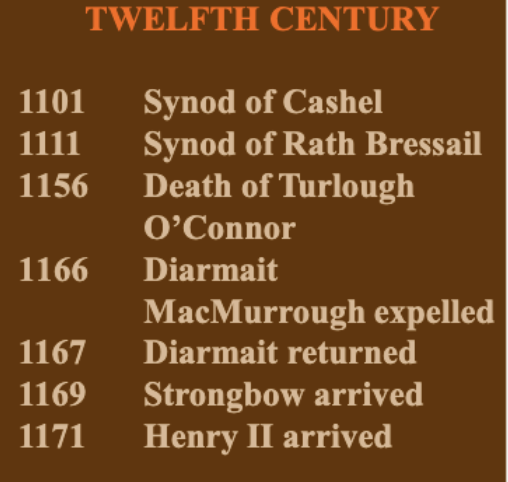
12th century overview
church organization changes → becomes aligned with mainland europe
ireland become aware of whats going on in other island (normans arrive and battle in hastings)
anglonormans arrive on irish shore 1169
marks the start of the medieval centuries
social structure in early medieval society
strictly hierarchical, but not a caste system (you can move up or down)
nobility
free
unfree
nobility ranking
kings
provincial king
overking of a few tuaithe (territories)
king of one tuatha
lords
lord of superior testimony
lord of precedence
high lord
lord of vassalry
lords were measured in economic terms. lord at bottom may have x amount of sheep and the one above may have 2x. also depends on number of clients (tenants). lords would have x amount of tenants of lower standing (farmers for ex).
free people ranking
strong farmer → boaire
small farmer → ocaire
semi-independent youth → fer midboth
lord can give things (protection, land, animals) and free must give (military service, labor, hospitality)
unfree ranking
semi-freeman → fuidir
tenant at will
cottier → bothack
hereditary serf → senchleithe
male/female slave → mug/cumal
slavery here was usually a temporary affair. people defeated in battle may be taken as slave for x amount of time before being sent home. slavery disappeared with intro of christianity, but reemerged with the vikings (where we see more modern slavery).
economy in early medieval
crop cultivation
animal husbandry
gathering, hunting, fishing
craft activity
exchange and barter
crop cultivation early medieval
clearance
prepare the land, use iron blades
ploughing
largely made of wood, iron parts survive, generally plant in spring
harvesting
iron blades/sickles
threshing and winnowing
separates grain
not much archaeological evidence here
kiln drying
to dry wet crops
grain storage
rotary quern
used to make flour
grounds grain to make flour
horizontal water mill
for the wealthier in society
water powered so no need rotary quern
other archaeological evidence of crop cultivation
charred or burnt grain
mainly barley, oats, rye
not much wheat unless you’re wealthy bc not readily available bc not suited for irish weather

animal husbandry in early medieval
cows → dairy
sheep → wool
pig → meat
horses → riding, some evidence of eating meat
chickens → eggs
dogs and cats
hunting in medieval
red deer, wild boar, ferret, otter, wolf, hare, fox, seal, pine marten, badger
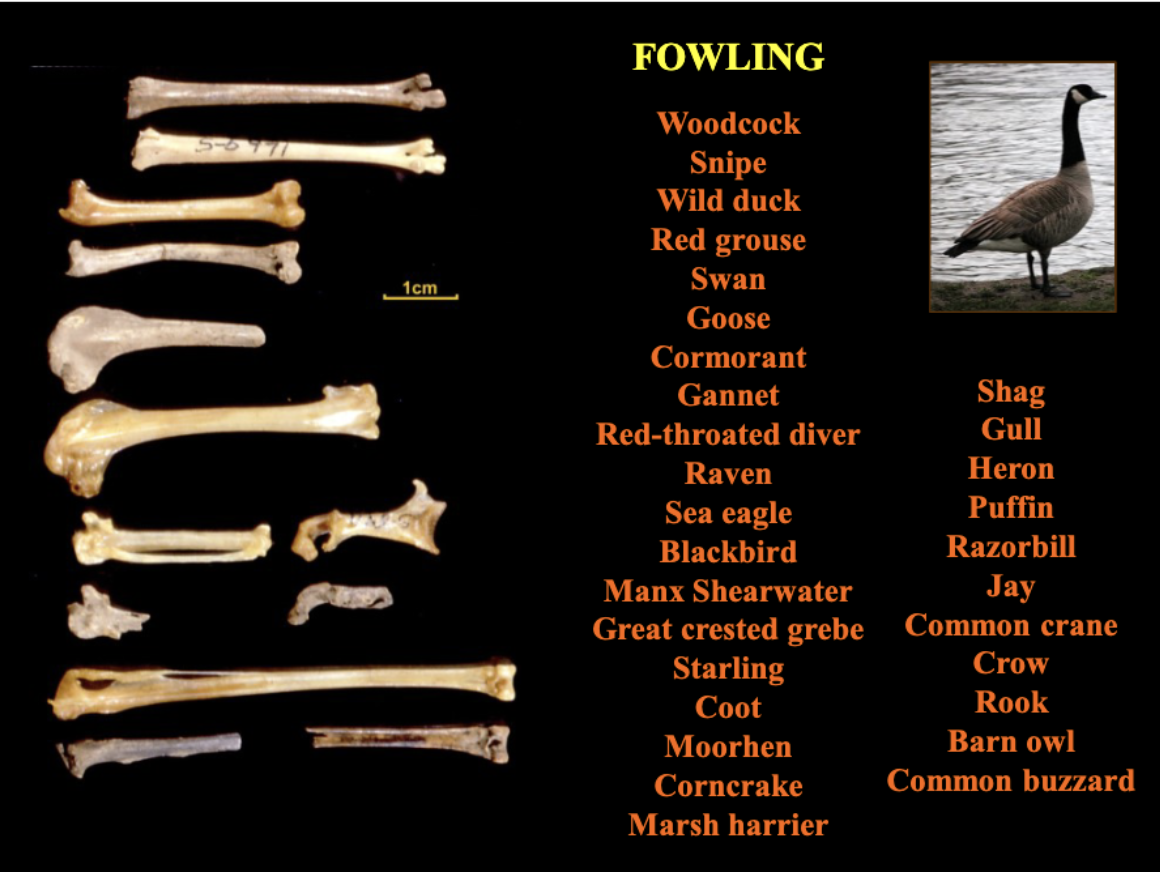
fowling in medieval
wild duck, swan, goose, sea eagle, blackbird, gull, puffin, crow, common crane, barn owl, etc
gathering

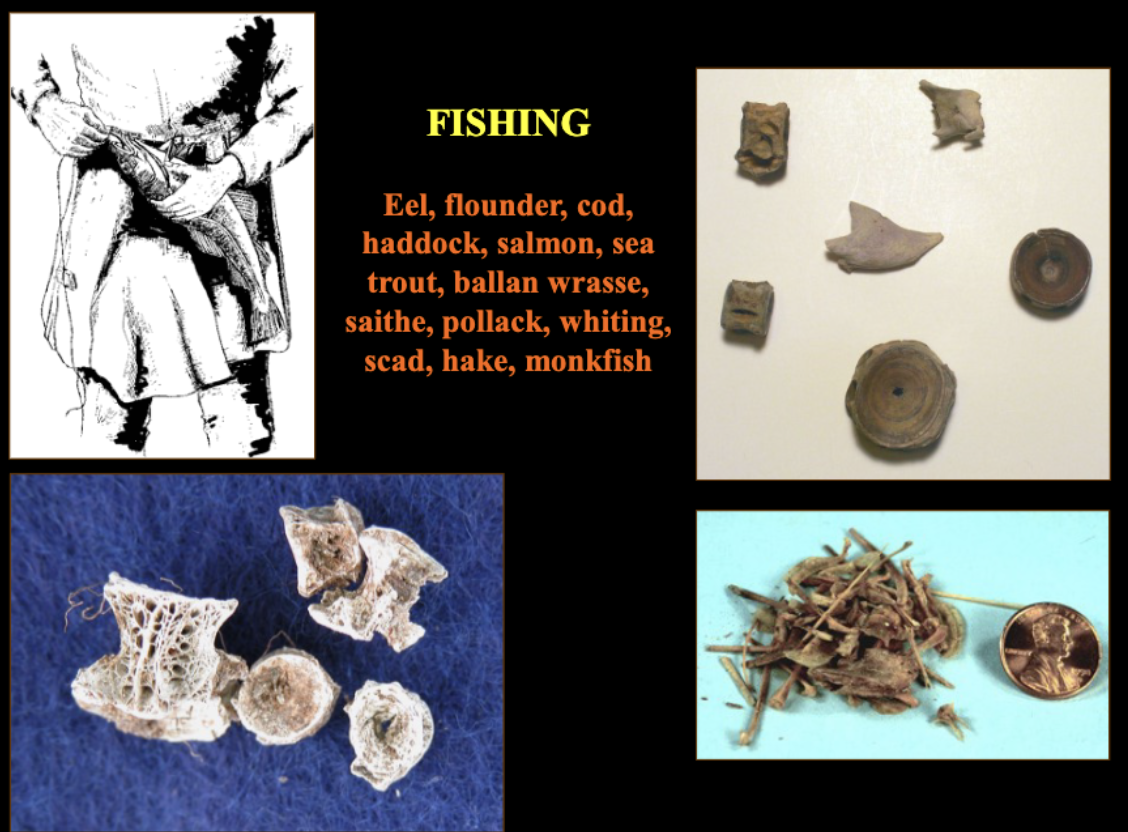
fishing in medieval
crafting in medieval
making clothes
flax seeds → make linen
wool → tools for spinning
weaving → threads from spinning to make cloth
leather working
making shoes!
metalworking
iron slag → abundant in ireland
ross island furnace
we find crucibles and molds for non ferace metals
stone working
bone, antler, horn → combs
wood working → furniture, drinking vessel, wood plate
clary working → pottery, molds, crucible
glass working → beads, bracelets, limited high status
trade and exchange in early medeival
amber → from the Baltic region
tin → southwest of England
oenach
fair gatherings where trading would occur
used to be secular but monasteries took over