NSCI 200: L3 - Brain Anatomy
 Call Kai
 Learn
Learn Practice Test
 Spaced Repetition
 Match
Match Flashcards
 Knowt Play
1/101

There's no tags or description
Looks like no tags are added yet.
Name | Mastery | Learn | Test | Matching | Spaced | Call with Kai | Chat |
|---|
No analytics yet
Send a link to your students to track their progress
102 Terms
dorsal
toward the back for body, top of brain for 4-legged animals
ventral
toward the stomach
anterior
toward the front end
anterior
toward the front end
superior
above another part
inferior
below another part
lateral
toward the side, away from the midline
medial
toward the midline, away from the side
proximal
located close (approximate) to the point of origin or attachment
distal
located more distant from the point of origin or attachment
ipsilateral
on the same side of the body (e.g., two parts on the left side)
contralateral
on the opposite side of the body (e.g., one on left and other on right)
rostral
toward the front of the head, toward the nose
caudal
toward the back end, toward the tail end
grey matter
composed mainly of neuron cell bodies + dendrites + glial cells, typically organized into layers, processes information and handles thinking
parasagittal plane
divides the body into right and left sides
longitudinal section
a section that is parallel to the midline of the body (vertical)
coronal plane (brain)
divides the brain into anterior and posterior sides
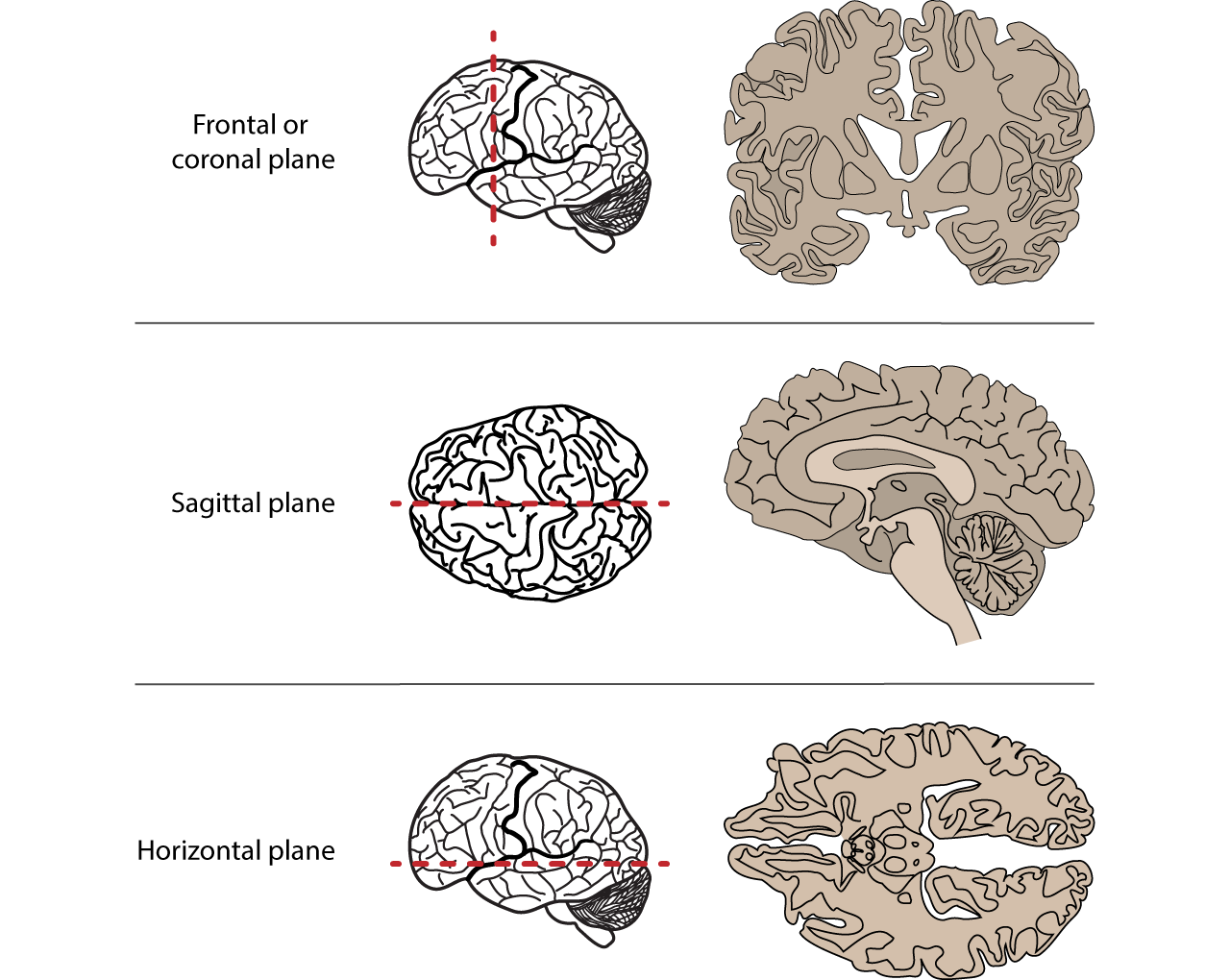
horizontal plane (brain)
divides the brain into superior and inferior parts

central nervous system (CNS)
contains the brain and spinal cord
peripheral nervous system (PNS)
nerves and ganglia located outside the CNS
autonomic nervous system
regulates involuntary processes (e.g., heart rate, blood pressure, secretion of saliva, etc.)
parasympathetic and sympathetic nervous systems
act on many of the same organs with opposite effects (e.g. parasympathetic increases heart rate, sympathetic decreases)
enteric nervous system
located mainly within the the walls of the intestines, regulates many processes of digestion
somatic nervous system
controls voluntary skeletal muscles and transmits sensory information to the CNS
motor (somatic NS)
motor neurons taking signals from CNS out into the body (typically muscles for movement)
sensory (somatic NS)
sensory neurons taking sensory signals from the periphery to the CNS
What are the 2 branches of the PNS?
autonomic NS and somatic NS
What are the 3 branches of the autonomic NS?
parasympathetic NS, sympathetic NS, enteric NS
What are the 2 branches of the somatic NS?
motor and sensory
ganglia
a cluster of neuron cell bodies located in the PNS
nuclei
a cluster of neuron cell bodies located in the CNS
tracts/fiber tracts/projections
a bundle of axons within the CNS
nerve
a bundle of axons within the PNS
white matter
mainly composed of myelinated axons + glial cells, helps with communication between grey matter areas and the rest of the body
grey matter
composed mainly of neuron cell bodies + dendrites + glial cells, typically organized into layers, processes and transmits information + controls movement + memory + emotions
ventricles
4 interconnected cavities within the brain filled with cerebrospinal fluid (CSF)
meninges
3 membranes that surround the brain and spinal cord
dura mater
tough, durable outer layer
arachnoid mater
a thin membrane in between the dura and pia maters
pia mater
innermost membrane that adheres tightly to the surface of the brain
no
Does the brain have pain receptors?
yes
Do meninges have pain receptors?
meningitis
inflammation of the meninges, often caused by a bacterial or viral infection that is painful and can be fatal if not treated properly
forebrain
yellow and orange portion (____brain)

midbrain
pink portion (____brain)

hindbrain
purple portion (____brain)

telencephalon
yellow part

diencephalon
orange part
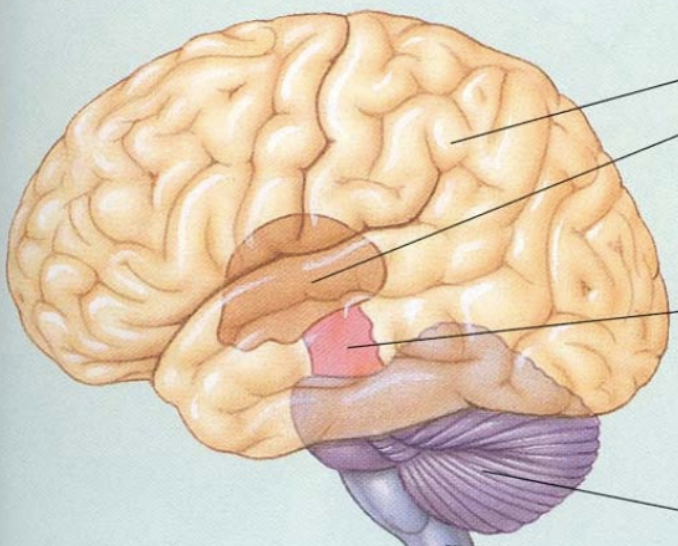
mesencephalon
pink part

rhombencephalon
purple part
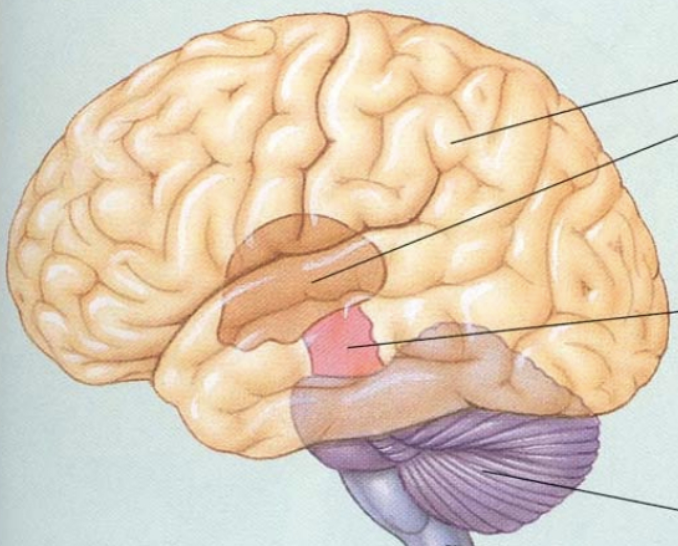
medulla
lower dark blue part

pons
upper dark blue part

cerebellum
teal part

cerebral cortex, hippocampus, amygdala, basal ganglia, olfactory bulb, basal forebrain
What are some major structures included in the telencephalon?
thalamus, hypothalamus, posterior pituitary gland, pineal gland
What are some major structures included in the diencephalon?
tectum, tegmentum
What are some major structures included in the mesencephalon?
superior colliculus, inferior colliculus
What are some major structures included in the tectum?
substantia nigra, cerebral peduncle, ventral tegmental area
What are some major structures included in the tegmentum?
medulla
responsible for regulating many involuntary processes (e.g., breathing, heartbeat frequency, blood pressure, vomiting, cough reflex), receives input about proprioception (position of body) and muscle tension → relays it to cerebellum
medulla and pons
What part of the brain contains nuclei for several cranial nerves?
cranial nerves
a nerve that emerges directly from the brain
afferent, efferent, mixed
What are the 3 types of cranial nerves?
afferent nerves
conduct sensory signals from sensory structures to the CNS
efferent nerves
conduct signals from CNS to target tissues (e.g., muscles, glands)
mixed nerves
contain some afferent axons and some efferent axons
pons
regulating breathing and sleep/wake cycle, contains the locus coeruleus
locus coeruleus (LC)
a nucleus which produces norepinephrine and plays an important role in mental arousal (alert/wakeful) + attention/memory + stress response
mammals
Only _______ have distinct pons
pons
many fibre tracts pass through the ______ — axons from each half of the brain decussate (cross) to the opposite side of the spinal cord such that the left hemisphere controls the muscles of the right side of the body and vice versa
cerebellum
extensively folded with outer cerebellar cortex of grey matter surrounding white matter, helps regulate motor movement + balance + coordination, important for shifting attention between auditory and visual stimuli, critical for certain types of learning (e.g. forming procedural memories)
Purkinje cell
large, distinctive neurons located in the cerebellar cortex of the brain
cerebellar cortex
the outer layer of gray matter that covers the cerebellum
1 Purkinje cell can have _________ synapses with parallel fibres of granule cells
7 million
granule cells
a class of very small neurons that make up the most numerous type of neuron in the human brain
reticular formation
red part (extends through the medulla, pons, and midbrain)

reticular formation
regulates sleep/wake cycles, circadian rhythms, coordinates heart rate + blood pressure + respiration, motor coordination (stabilizes posture during voluntary movement)
raphe nuclei
part of the reticular formation that produces serotonin → affects mood, emotions, perception of pain
tectum, tegmentum
What are the two major structures that the midbrain is divided into?
dorsal
Is the tectum the dorsal or ventral region of the midbrain?
ventral
Is the tectum the dorsal or tegmentum region of the midbrain?
tectum
purple part

tegmentum
pink part
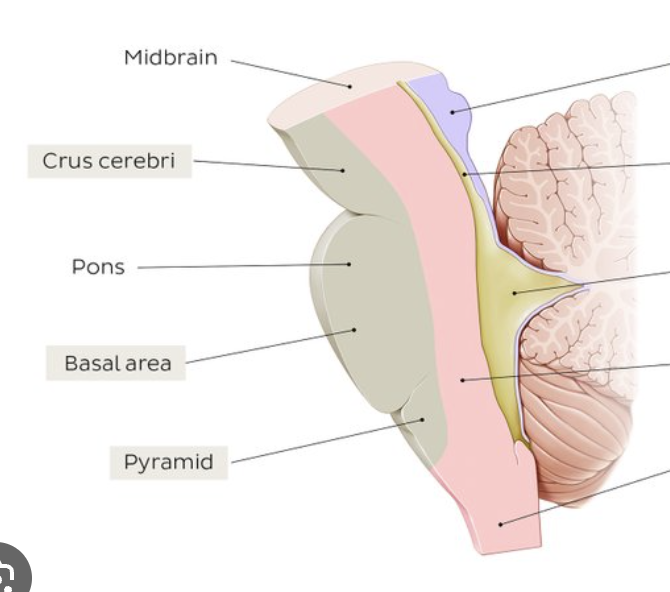
tectum
the “roof“ of the midbrain that contains the superior colliculus and inferior colliculus
superior colliculus
upper part of tectum
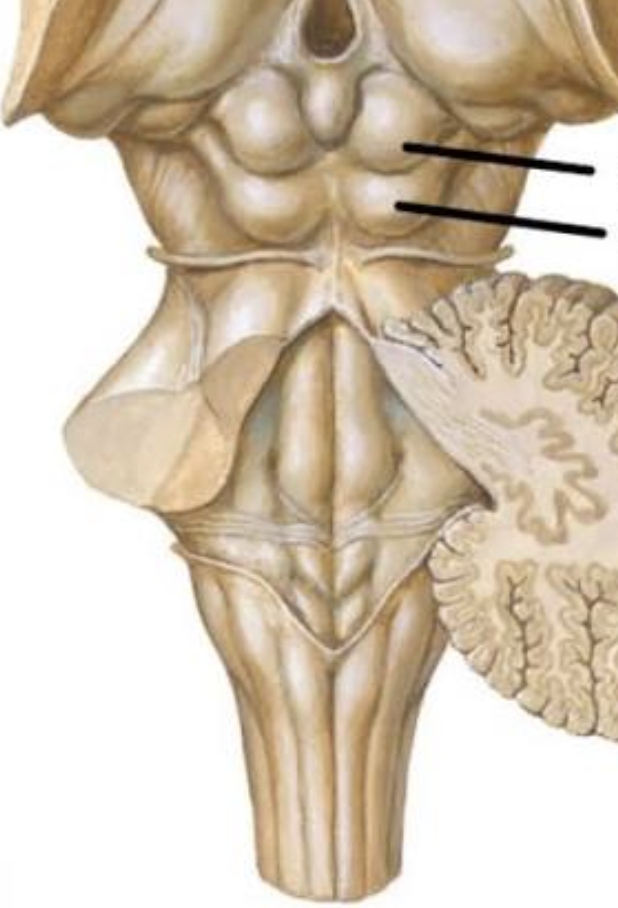
inferior colliculus
lower part of tectum

superior colliculus
processes and integrates visual + auditory + somatosensory information, using it to coordinate head and eye movements for gaze shifts
inferior colliculus
processes and integrates input from auditory and somatosensory systems to determine the location of sounds, may help filter sounds and initiate wakefulness in response to certain sounds
tegmentum
contains the rostral region of the reticular formation, the nuclei for 2 cranial nerves, the cerebral peduncle, substantia nigra, and ventral tegmental area
cerebral peduncle (crus cerebri)
dark green part
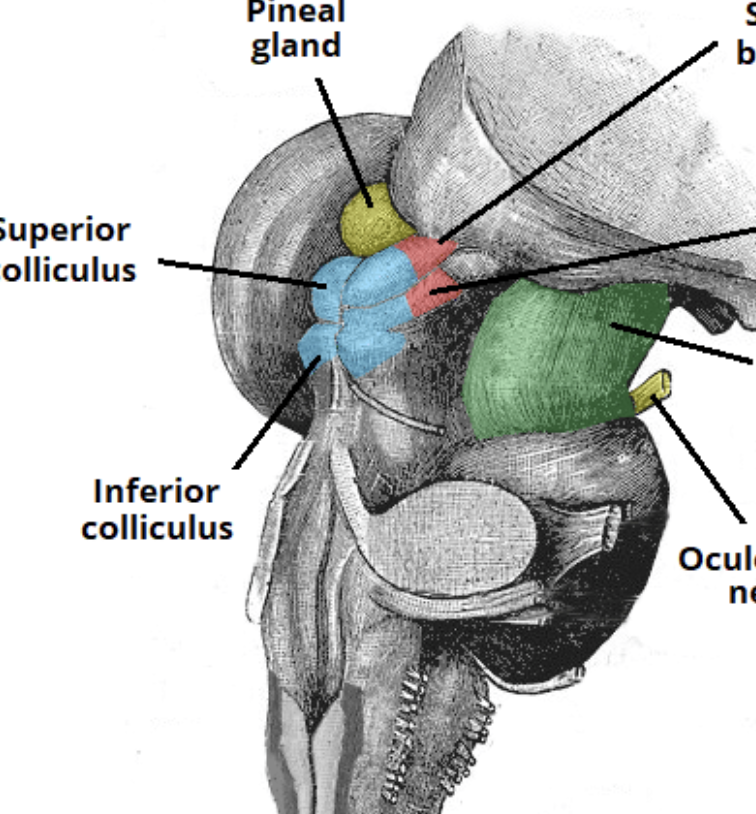
cerebral peduncle
a region of white matter fibre tracts: output from the cerebrum to the pons, medulla, and spinal cord
substantia nigra
black parts
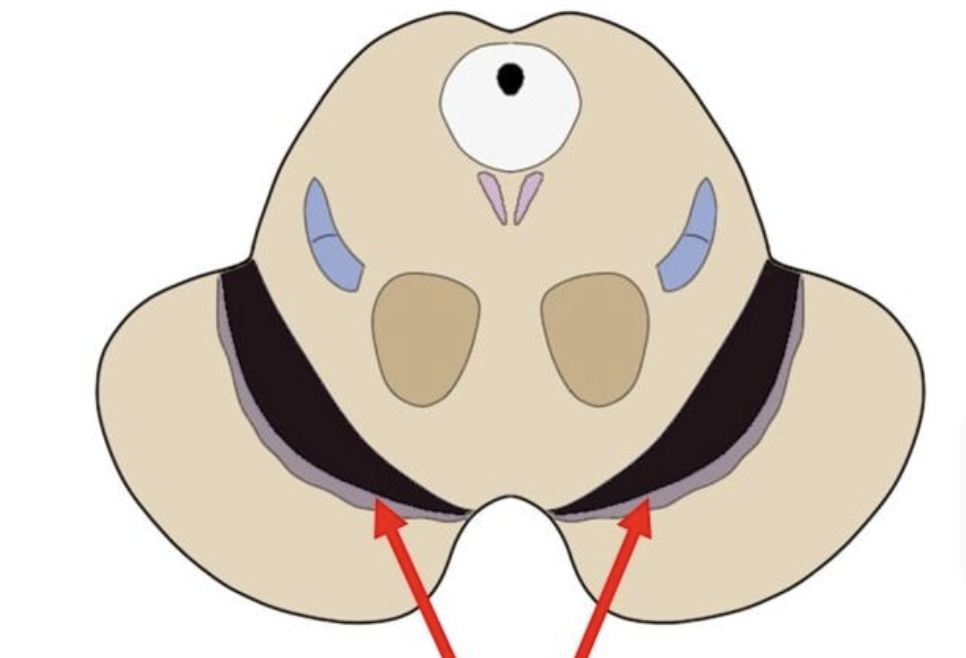
contains a high concentration of pigment neuromelanin
Why does the substantia nigra look dark
cerebral peduncle, substantia nigra, ventral tegmental area
What are the 3 major parts of the tegmentum?
substantia nigra
produces dopamine, outputs to the basal ganglia contribute to regulation of initiation of voluntary movement, involved in spatial learning and reward processing
ventral tegmental area (VTA)
blue part

ventral tegmental area
contains many neurons that produce dopamine, controls reward processing + motivation + learning + memory, involved in addition behaviours
cerebral aqueduct
green part
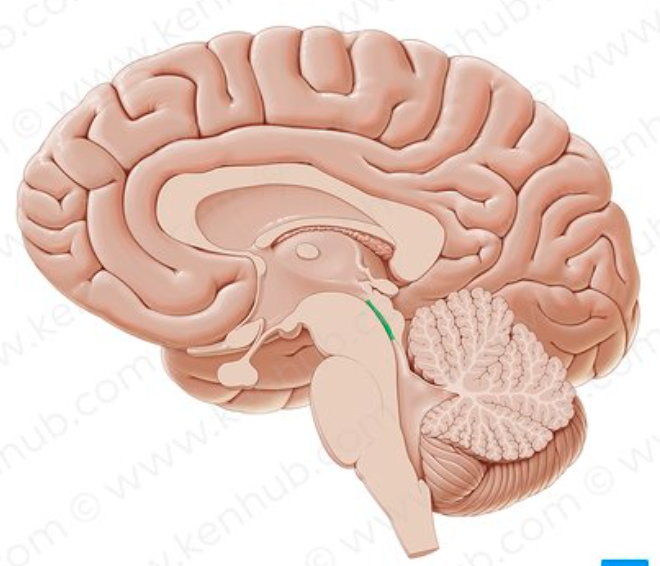
cerebral aqueduct
small canal-like structure between tectum and tegmentum that cerebral spinal fluid can flow through, connects the fourth ventricle to the third ventricle