Chapter 10: The Muscular System
 Note
 Call Kai
 Learn
 Practice Test
 Spaced Repetition
 Match
 Flashcards
 Knowt Play
1/44

There's no tags or description
Looks like no tags are added yet.
45 Terms
What does the muscular system do?
It produces movement, helps maintain posture, and contributes to body temperature regulation
What does the skeletal muscle do?
it attaches to bones and produces voluntary movement. It also helps maintain posture and generate heat
What does the cardiac muscle do?
It’s found in the heart & It contracts involuntarily to pump blood
What does the smooth muscle do?
It’s found in the walls of organs and blood vessels. It moves substances through organs and adjusts the diameter of blood vessels

What muscle moves the arm at the shoulder?
Deltoid

What muscle helps move the arm forward and toward the body?
Pectoralis major

What muscle flexes the elbow?
Biceps brachii

What muscle extends the elbow?
Triceps brachii

What muscle flexes the trunk?
Rectus abdominis

What muscle extends the hip?
Gluteus maximus

What muscle extends the knee?
Quadriceps femoris

What muscle primarily flex the knee and help extend the hip?
Hamstrings

What muscle helps point the foot downward at the ankle?
Gastrocnemius
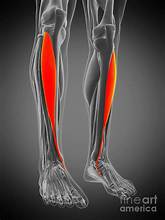
What muscle lifts the foot upward at the ankle?
Tibialis anterior
How do muscles work together?
Muscles generally pull rather than push. Many movements involve opposing muscle groups.
Ex: the biceps brachii flexes the elbow, while the triceps brachii extends it
Usually the less movable attachment of a muscle
origin
Usually the more movable attachment
Insertion
Muscle primarily responsible for a movement
Agonist
Muscle that opposes or reverses a movement
Antagonist
Muscle that assists the main muscle
Synergist
Muscle that stabilizes a body part
Fixator
Muscle that produces flexion
Flexor
Muscle that produces extension
Extensor
Muscle that moves a part away from the midline
Abductor
Muscle that moves a part toward the midline
Adductor
Connective tissue attaching muscle to bone
Tendon
Continuous, low-level muscle activity that supports readiness and posture
Muscle tone
Define agonist and antagonist pairs for neck flexion and extension
Neck flexion: Agonist: sternocleidomastoid. Antagonist: neck extensors.
Neck extension: Agonist: neck extensors, such as splenius capitis. Antagonist: sternocleidomastoid.
Define agonist and antagonist pairs for elbow flexion and extension
Elbow flexion: Agonist: biceps brachii. Antagonist: triceps brachii.
Elbow extension: Agonist: triceps brachii. Antagonist: biceps brachii.
Define agonist and antagonist pairs for knee flexion and extension
Knee flexion: Agonist: hamstrings. Antagonist: quadriceps.
Knee extension: Agonist: quadriceps. Antagonist: hamstrings.
What are the primary muscles of breathing?
The diaphragm and external intercostals
What are the accessory muscles of breathing?
The sternocleidomastoid, scalenes, and pectoralis minor.
When are accessory breathing muscles typically recruited?
During heavy exercise, difficulty breathing, or respiratory distress.
What muscles support the trunk?
The erector spinae, rectus abdominis, transversus abdominis, obliques, and multifidus
What is the role of synergist muscles?
They assist the agonist in performing a movement.
What is muscle co contraction?
When opposing muscles contract at the same time to stabilize a joint.
What happens to the diaphragm during exhalation?
It relaxes and moves upward into its dome shape.
What is the function of the oblique muscles?
They help rotate and bend the trunk sideways
What do the internal intercostal muscles do?
They help pull the ribs down during forced exhalation.
What is the function of the diaphragm?
It contracts and flattens to help draw air into the lungs.
What is the difference between flexion and extension?
Flexion decreases the angle of a joint, while extension increases it