Unit 0 Vocab
Psychology: The field devoted to understanding how the brain creates thought, feeling, motives, consciousness, memories, and other mental processes.
Case Study: Research method that involves an in-depth and detailed examination of a particular individual, group, event, or phenomenon.
Confounding Variable: Outside factors that influence an accurate measurement
Control Group: The group that does not receive the treatment; used as a benchmark
Correlation: Research method used to examine the relationship between two variables.
Correlation Coefficient: A number that represents the strength and direction of the correlation between 2 variables (-1: Negative Correlation) (+1: Positive Correlation) (0: No correlation)
Critical Thinking: Thinking that does not blindly accept arguments and conclusions
Debriefing: When an experimenter tells the subject more information once the study is completed about the purpose and procedures.
Dependent Variable: Variable that is observed, measured, or recorded to assess the effect of the independent variable
Descriptive Statistics: Used to organize or summarize a set of data. Ex: measures of central tendency (mean, median, mode), measures of dispersion (range, standard deviation)
Double-Blind Procedure: When both the person holding the study and the ones taking part do not know if they are receiving treatment. Don’t know who is in the control group or the experimental group.
Effect Size: Magnitude of the expected difference between two groups in a study. How meaningful the relationship between variables is
Empiricism: The idea that all knowledge comes from experience
Experiment: procedures used to test research hypotheses. Includes experimental group, control group, independent and dependent variable.
Experimental Group: Group receiving the treatment
Experimenter Bias: When experimenter affects the results of their own study because of their expectations
Falsifiability: Principle that states that a research hypothesis must have the ability to be false
Hindsight Bias: “Knew-it-all-along” way of seeing past events as more predictable than thew really were
Histogram: Graph that organizes a group of data points in specified ranges
Hypothesis: A testable explanation usually constructed in the relationship of 2+ variables (If… then…)
Illusory Correlation: 2 variable that seem like they may correlate but in reality does not.
Independent Variable: Variable that the researcher deliberately manipulates or controls in order to observe its effect on another variable
Inferential Statistics: Data from the sample that allows the experimenter to make a conclusion about the population from a general sample. Ex: T-test, ANOVA, Hypothesis testing, distribution
Informed Consent: The subject is given enough information on the study to make an informed decision about their participation
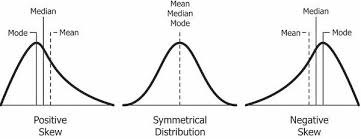
Mean: The average, add up all of the numbers than divide it by the amount of values
Median: Number in the middle. Set the values from lowest to highest then find the one in the middle.
Meta Analysis: Statistical integration of the results of independent studies, leads to more reliable conclusions than those derived in independent studies. Analyzes mutliple studies
Mode: Number that occurs the most often
Naturalistic Observation: Research method used to study behavior in its natural environment without intervention or manipulation by the researcher. The goal is to gain insights into naturally occurring behaviors, interactions, and phenomena in their natural context.
Normal Curve: Represents data that clusters around a mean. Symmetrical - half of all scores below and above the mean. Mean, median, and mode would be the same
Operational Definitions: Description of the procedure of a study so others can copy the study
Peer Reviews: reviewing the study before it gets study to provide critiques
Percentile Rank: Percentage of people in a norm group who scored lower. Ex: 75% = scored higher than 75% of the people
Placebo: Fake substance
Placebo Effect: When a group of people feel and effect of a drug when they have only taken a placebo
Population: All cases in a group being studied, sample
Qualitative Research: Method of studying people and their experiences by gathering nonnumerical data. Explores depth of people’s thoughts, feelings, and behaviors to understand their motivations, beliefs, and perspectives. Ex: words, images, or observations
Quantitative Research: Method of studying people or other subjects by collecting and analyzing numerical data. It uses statistics and mathematical models to understand patterns, relationship, and trends
Random Assignment: Method used in experimental research to ensure that each participant has an equal chance of being assigned to any of the experimental conditions. Unique to experiments. Did the Independent Variable cause the outcome of the study?
Random Sample: randomly selecting people to be put in an experiment to represent a population
Range: Lowest number subtracted by the highest number
Regression Toward The Mean: Outliers (values much higher/lower than the mean) tend to be followed by values closer to the mean.
Replicate: Following the operational definition to recreate the experiment
Sampling Bias: When the participants are collected in a bias by the experimenter in order to get the results they want
Scatter plot: Graph that visually represents the relationship between 2 variables. Used in correlational studies
Self Report Bias: When human beings inaccurately evaluate themselves in a self-report
Single Blind Procedure: When the subjects do not know all of the information about the study, especially which group they belong to.
Skewed Distribution: Distribution in which most of the scores fall to one side or the other
Social Desirability Bias: When participants provide answers according to society’s expectations rather than their own beliefs
Standard Deviation: Measure of dispersion in a data set relative to the data’s central mean value
Statistical Significance: Whether or not an observed relationship is likely to be due to chance. High degree = unlikely to be due to chance (uses P-Value p<0.5)
Survey: Uses a list of questions filled out by a group of people to assess attitude/opinions, typically with a representative random sample
Theory: Organized sets of principles and propositions designed to explain and predict behavior and mental processes
Validity: Whether or not the test actually assesses what it claims
Variable: Any factor or condition that can change or vary, and that is measured, manipulated, or controlled by the researcher