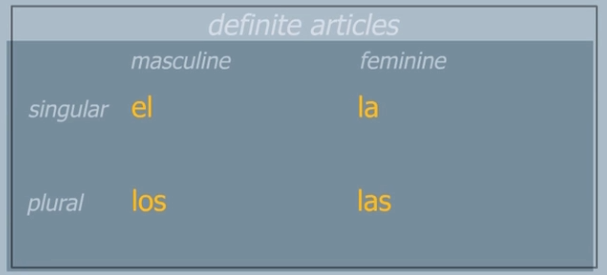
Nouns and Articles
ALL Spanish nouns have gender (masculine or feminine)
many nouns referring to males end in “-o” or “-or”
nouns referring to females end in “-a” or “-ora”
Some nouns are GENDER NEUTRAL and can only be identified as masculine or feminine based on their article
ex: “el turista” / “la turista” (the [male/female] tourist)
ex: “el joven” / “la joven” (the young [man/woman])
ex: “el estudiante” / “la estudiante” (the [male/female] student)
For SOME nouns that refer to non-living things, there are some endings associated with EACH gender
nouns ending in “-o,” “-ma,” or “-s” are usually masculine
ex: “el cuaderno” (the notebook)
ex: “el diario” (the diary)
ex: “el diccionario” (the dictionary)
ex: “el número”
ex: “el video”
ex: “el problema” / “el programa”
ex: “el autobús” (the bus)
ex: “el país” (the country)
nouns ending in “-a,” “-ción,” or “-dad” are usually feminine
ex: “la computadora” (the computer)
ex: “la cosa” (the thing)
ex: “la escuela” (the school)
ex: “la maleta” (the suitcase)
ex: “la palabra” (the word)
ex: “la lección” (the lesson) / “la conversación” (the conversation)
ex: “la nacionalidad” (the nationality) / la comunidad (the community)
There are exceptions to the rules established above
ex: “el mapa” (the map) / “el día” (the day)
although they end in “-a,” they are masculine
ex: “la mano” (the hand)
although they end in “-o,” they are feminine
To make a noun (that ends with a VOWEL) plural, add an “-s” to the end of it
ex: el chico → los chicos
ex: el diario → los diarios
ex: el problema → los problemas
For nouns (that end with a CONSTANTENT), add “-es”
ex: la nacionalidad → las nacionalidades
ex: el país → los países
For nouns (that end with “Z”), replace the “Z” with “-ces”
ex: el lápiz (pencil) → los lápices (pencils)
Generally, singular nouns that have an ACCENT will have that accent dropped in the plural forms
ex: la lección → las lecciones
ex: el autobús → los autobuses
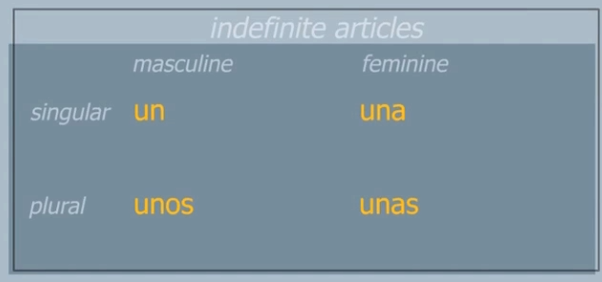
The Four Spanish Indefinite Articles
Used for unspecified people or things
ex: “un pasajero” (a [one] passenger)
ex: “unos pasajeros” (some passengers)
ex: “una fotografía” (a [one] photograph)
ex: “unas fatagrafías” (some photographs)