1. Weather and Climate.docx
Climate change # 1 Weather and Climate
Meteorologist
- a scientist who studies the weather and forecast the weather for specific areas.
Weather
- atmospheric conditions, in a particular location over short period of time.
(ex" a high of 25o, sunny, scattered clouds, probability of rain 30% ")
- weather information has been collected and recorded daily since 1800s. Methods of collections weather data include: weather stations, weather balloons and satellites.
Climate
- average seasonal weather patterns of a region over a long period of time (30 years or more)
- the climate of a region gives you information about what you might expect at a certain
time of the year.
- the climate of a region also determines the types of plants and animal that are in there.
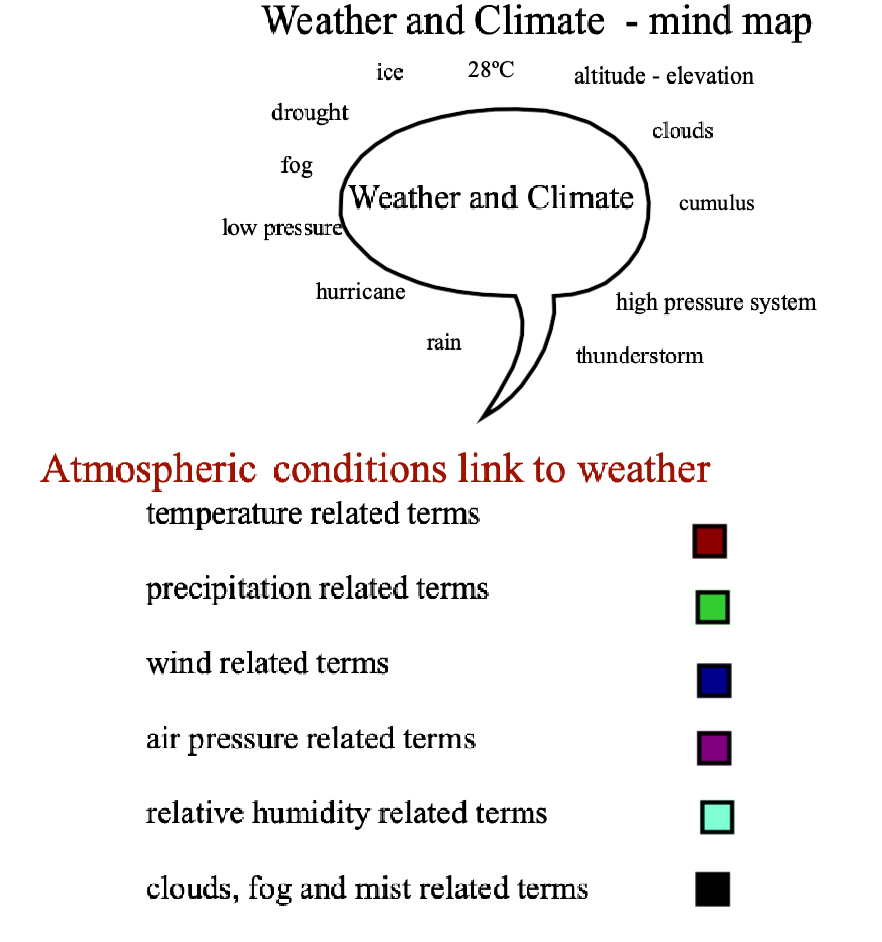
- Temperature: The degree or intensity of heat present in a substance or object Units: Celsius (oC)
- Precipitation: Condensed water that falls to the ground. (e.g., snow, rain, sleet, drizzle, etc.) Units: millimetres (mm)
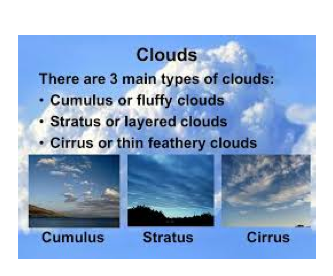
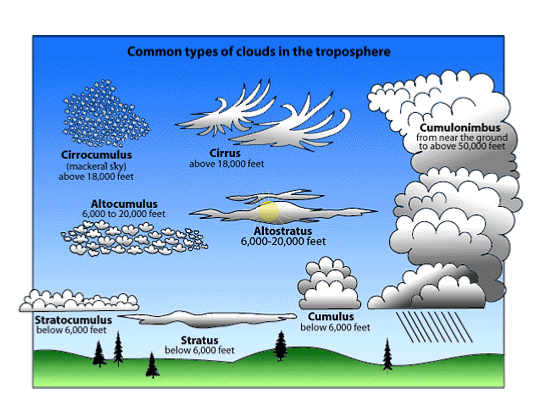
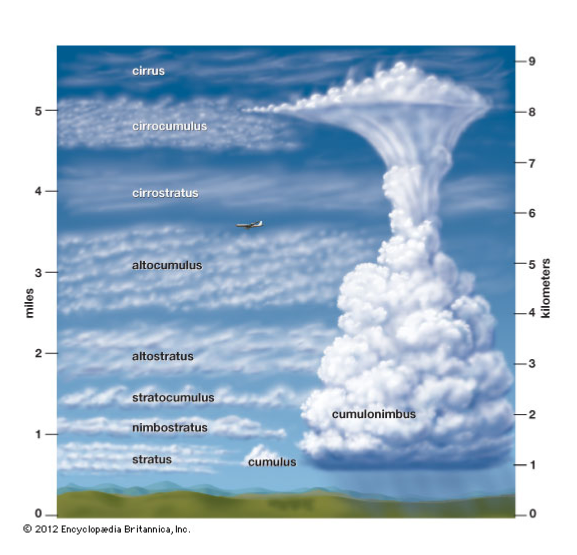
- Clouds: Condensed water/ice too small to fall to the ground.
- Humidity: The relative amount of water vapour in the air. Units: %
- Wind: Movement of air over the Earth’s surface. Units: km/h
- Atmospheric Pressure: A measure of the force per unit of area produced by the particles of gas in the atmosphere. Units: kilopascal (kPa)
- Low Pressure: cloudy, rainy weather.
- High Pressure: clear, sunny weather.
What Causes Weather?
1) Energy (heating) from the Sun
2) Interaction between water and air on Earth
Energy from the Sun :
- heats Earth's atmosphere
- creates winds
Interaction between water and air in Earth causes:
- evaporation
- condensation (clouds formation)
- precipitation