Final Exam:
Unit 1:
Know the main functions of eukaryotes organelles.
Nucleus
delimited, contains chromatin (chromosomes)
Nucleolus
Dense area within nucleus which directs the synthesis and processing of rRNA and the assembly of rRNA and ribosomal proteins
Ribosomes (free vs membrane-bound)
Membrane bound - proteins made on RER ribosomes are often secrete or inserted in ER membrane as integral membrane proteins
free ribosomes synthesize nonsecretory and nonmembrane proteins
Endoplasmic reticulum (ER)
a continuous network of flattened sacs, tubules, and vesicles through the cytoplasm of a eukaryotic cell, lipid synthesis
RER- protein processing (w/ ribosomes)
SER- drug detox, carb metabolism, Ca storage, steroid biosynthesis
Golgi apparatus
Location of further glycosylation and processing of side chains, sorted and distributed to other locations in cell
Lysosomes
has hydrolytic enzymes of pH 4-5 that degrades macromolecules by digesting contents and fusing w/ endosomes
Membrane-bound vesicles
transportation of secretory proteins
Cytoskeleton
protein fibers that maintain cell shape and move organelles around
Peroxisomes
detoxifies harmful compounds, contains catalase for degrading H2O2
c
double membrane, inner fold = cristae that increase SA, interior matrix, has mtDNA and rDNA through binary fission
Cilia
shorter and arranged in rows
respiratory and fallopian tube epitheliums
Flagella
long, single sperm tails
Cell junctions
tight junctions - barrier, prevents leaking
adhesion (desmosomes) junction - provides strength at stress points in cardiac muscle + skin
gap junctions - channel connect cells, allows direct ion flow in muscle
Know the functions of structures found in all bacteria
Cell membrane (aka cytoplasmic membrane)
Cytoplasm
Ribosomes
Chromosome(s)
double stranded DNA of a single circular chromosome = genetic material
support growth, cellular respiration, and reproduction
Exterior surface coating called the glycocalyx
slime/capsule that makes it harder for phagocytes to engulf the pathogen
Most bacteria have a cell wall
maintain cell shape, important for cell growth, movement, and reproduction
Most bacteria have cytoskeletal structures
provides shape and support to the cell
Know the functions of structures found in some bacteria
Flagella, pili, and fimbriae
An outer membrane
Nanowires/ nanotubes
Plasmids
small, circular DNA pieces that replicated independently to provide useful traits (against antibiotic resistance)
Endospores
contributes to the resistance of the bacteria in denatured environment
Know the differences between Gram-positive and Gram-negative cell wall
GP - thicker peptidoglycan layer, present teichoic acid and lipoteichoic acid
GN- thinner peptidoglycan layer, present lipopolysaccharides (LPS)
Know how the Gram stain works
Used to differentiate bacteria based on cell wall (useful as first tool in deciding treatment)
GP = purple
GN= pink
Know what is an endospores—why they form and their importance
Endospore is a structure that provides high resistance to survive unfavorable conditions such as nutrient depletion, desiccation, and temperature extremes
Know the basic structure of viruses—naked vs enveloped
Naked- Just the capsid
Enveloped- External covering of a capsid, usu a modified piece of a host’s cell membrane
take a bit of cell membrane when they are released from a host cell
can insert their own viral-specific proteins into the membrane
pleomorphic
Know the steps of viral replication
adsorption (=attachment)
penetration (=entry)
uncoating
of entire genome or nucleocapsid
synthesis
replication and protein production
assembly
virus self assemble using parts manufactured during synthesis process
release
controlled by virus size and health of the host cell
Know what happens in lysogenic conversion
When a bacterium acquires a new trait from its temperate phage
occasionally, phage genes in the bacterial chromosome cause the production of toxins/enzymes that the bacterium would not otherwise have
Unit 2:
Know the mechanisms of action of antibiotics and examples of each:
Cell wall synthesis: (PCVT)
Penicillin, Cephalosporins, Vancomycin and Teicoplanin
Protein Synthesis Inhibitors (
McACE- 50s
macroslides
cephanicol
azithromycin
clarithromycin
erythromycin
TAGS- 30s
tetracyclines
aminoglycosides
gentamicin
streptomycin
Metabolic Antagonists (folic acid):
Sulfonamides or Sulfa Drugs; Trimethoprim
Nucleic Acid Synthesis Inhibition:
Quinolones
Drugs That Target Cell Membranes:
Polymyxin B; Daptomycin
Understand the mechanisms of drug resistance demonstrated in bacteria. (PEDUM)
Preventing entry
drug cant bind to or penetrate pathogen
bacterial decrease in permeability
Efflux pumps
actively transport drugs outta the bacterial cell
Drug inactivation
chemical modification of drug by pathogen
Use of alternative pathways
changes in the metabolic potential of the bacterial cell by-pass the processing being blocked by the antibiotic
Modification of target
due to mutation → changes in the target
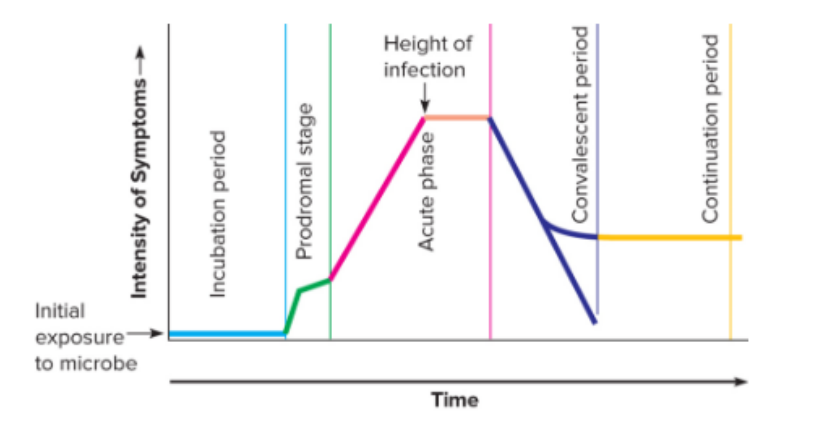
Know what happens in the course of an infection
Incubation period
initial contact w IA to appearance of symptoms
Prodromal stage
earliest notable symptoms appear
vague feeling of discomfort: head and muscle aches, fatigue, upset stomach, general malaise
Acute phase
present fever and specific SS
Convalescent phase
infection and symptoms decline
many patients stop taking antibiotics during this period
Continuation phase (applicable to only some)
lingers for months, years, or indefinitely
Understand the concepts of latency and sequelae
latency - a dormant state of microbes in certain chronic infectious diseases
sequelae- long term or permanent damage to tissues or organs caused by infectious disease
Understand how pathogens damage host cells and tissues.
Exoenzymes
Mucinase
digests the protective coating on mucous membranes
Hyaluronidase
digests the substance that cements animal cells together
Exotoxins
Botulinum toxin
block the release of acetylcholine
produces a flaccid paralysis
re-engineered as Botox products
Enterotoxin (Cholera toxin)
affects small intestine, dont need bacteria growth → diarrhea
cholera toxin
disrupt the normal flow of Na+ ions in the small intestine
large H2o secretion into the intestinal lumen follows, producing diarrhea
possible death from dehydration
Tetanus toxin
blocks the release of glycine from inhibitory neurons
Endotoxins
the lipid A portion from the LPS of all Gram-negative species
causes fever and other systemic toxic effects
Know the different patterns of transmission
Vertical
parent to offspring transmission
Horizontal
disease is spread through a population from one infected individual to another
Indirect
pathogen to human w/o direct human touch
Direct
pathogen to human directly
Vector
mechanical: insect carries microbes to host on its body parts
biological - insect injects microbes into host; part of microbe life cycle completed in insect
Vehicle
indirect- natural, nonliving, material (air, h2o, soil, food)
fomite- inanimate
Understand the concept of a zoonosis
zoonosis- an infection indigenous to animals but naturally transmissible to humans
some have multi-host environment
some have complex life cycles in the wild
Understand the concepts of prevalence vs incidence of a disease
prevalence- total # of cases of a disease in a population
incidence- # of new cases of a disease in a time period
Know the definitions of morbidity and mortality
morbidity- the number of persons infected
mortality- the total # of deaths
Know what happens in epidemics
common-source/point-source
same exposure (in the same event)
propagated
no common source, spread from person to person
Unit 3:
Know the following blood cells and their main job
Monocytes
blood phagocytes that rapidly leave the circulation; mature into macrophages and dendritic cells
Macrophages
large phagocytic cells, high capacity for killing microbes and cleaning up dead cells; antigen-presenting cells
Dendritic cells
reside in tissues and MPS, process foreign matter and present it to lymphocytes, antigen-presenting cells
T cells
Helper - activate macrophages, assist B cell processes, and help activate cytotoxic T cells
Regulatory - control the T-cell response by secreting anti-inflammatory cytokines or preventing proliferation
Cytotoxic - lead to the destruction of infected host cells and other foreign cells
B cells
plasma cells - release (/secrete) antibodies into the tissue and the blood
memory - circulate via lymphatics to encounter antigen
regulatory - secrete IL-10 to regulate T cell response
NK cells
lymphocyte derivatives related to T cells that lack specificity, first to respond to virus-infected and cancer cells
Neutrophils
general purpose phagocytes and first responders, primary component of pus
Eosinophils
active in protozoal, helminth, and inflammatory reactions
Basophils
function in inflammatory events
Mast cells
specialized tissue cells similar to basophils that trigger local inflammatory reactions (allergy)
Know the components of the first line of defense and how they work.
Skin, hair, mucous membranes, ciliary escalator
Mucus, tears, saliva, urination, defecation, vomiting
Resident microbiomes
Physical barrier of cells
Interaction/competition with invading microbes
Non-specific chemical defenses
Stomach acid, lysozyme
pH differences
Know the components of the second line of defense and how they work.
Phagocytosis
stick of pseudopodia, phagosome → phagolysosome,
Inflammation (RWSP (redness, warmth, swelling, pain))
Fever
inhibits microbes replication, reduces Fe availability for bacteria, increase metabolism, stimulated rxns and naturally protective physiological processes
Antimicrobial products (IAC)
Used to prevent and treat disease
IFN: induce changes in genetic expression and can inhibit cancer genes expression of cancer genes and have tumor suppressor effects
Alpha and beta stimulate phagocytes
gamma = immune regulator of macrophages and T and B cells
antimicrobial peptides
defensin
insert themselves into bacterial membranes and creates a pore in it
Complement
+30 blood proteins working tgt to destroy bacteria and certain viruses, parasites, and nearby cells
Understand how Adaptive Immunity comprises the 3rd line of defense against infectious agents.
Know the outcomes of T-Cell and B-Cell activation
B- Cell Activation
B cells divide
Know the five classes of antibodies and their characteristics
IgG, IgA, IgM, IgD, IgE
Antibodies | Cross Placenta | number of binding sites | functions | fc region |
G | yes | 2 | primary/2nd response, neutralize toxin, opsonizes, fixes complement system (phagocytes) | phagocytes |
M | no | 10 | B cell receptor | |
D | no | 2 | receptors B cell, can activate B cells | |
A | no | 2,4 | mucosal immunity | |
E | no | 2 | allergy, parasitic norm, infections, asthma, anaphylaxis | mast, basophils |
Understand the significance of the primary and secondary responses to antigens
Primary has longer latent period, IgM > IgG
Secondary has rapid response, IgG > IgM.
Know the 4 types of adaptive immunity
| passive- natural (human to human active- immunity from vaccination/ infection (b cell response) |
For the listed diseases, know the: Signs and symptoms, mode of transmission, virulence factors, prevention and treatment.
SS-VF-P-T | Diseases | SS | MOT | VF | P | T |
3412 | Strep throat/related sequelae | pharyngitis throat inflammation pus on tonsils | Airborne | S. pyogenes exotoxin A M protein Capsule | good hygiene | antibiotics antibiotic treatment to prevent serious sequelae |
8212 | measles | sore throat dry cough headache conjunctivitis lymphadenitis fever Kolpiks' spots exanthem SEKFCDL | airborne | large syncytia inhibited cell-mediated immunity ILS | MMR vaccine | Vit A Management of symptoms |
2A2F8111 | rubella | rash of pink macules and papules (face down) adults- joint inflammation and pain fetus- deafness, cardiac abnormalities, ocular lesions, anemia, pneumonia, carditis, bone infection, mental and physical disabilities | airborne | rubella | MMR vaccine | postnatal rubella is usu benign and requires symptomatic treatment no specific treatment is available for congenital manifestations |
malaria | ||||||
4112 | tetanus | jaw clenched, back arch, arm flexion, leg extension, sardonic grin | spores entrance | tetanus exotoxin | toxoid vaccine | antitoxin therapy w human TIG antibiotics |
1-4-2-113 | botulism | flaccid paralysis early (4): 2x vision, difficulty swallowing, dizziness, no sensory or mental lapse later(2): descending muscular paralysis, respiratory compromise | toxin/bacteria infection | botulinum toxin | food hygiene | antitoxin therapy, antibiotics, supportive care |
4112 | chlamydia | asymptomatic (>75%), painful urination, discharge, vaginal bleeding, testicular pain | direct (sex) | unique PG structure, intracellular life-style cytokines/ inflammation | barrier protection | antibiotics, 3-4month check up, treatment to prevent reinfection |
P1S7T2-121 | syphilis | primary: chancre secondary: fever, headache, sore throat, lymphadenopathy, peculiar red/brown rash, lesions tertiary: damage arteries in the aortic cell wall, gummas | direct contact | lipoproteins: inflammation | barrier protection, prophylactic antibiotic treatment for contacts | antibiotics |
4112 | cholera | massive loss of h2o and electrolytes, watery vomiting, rice water stools | food/water | vibrio cholerae | h2o hygiene | oral rehydration, antibiotic therapy in severe cases |
3212 | c. difficule | diarrhea after antibiotic use, abdominal pain, cramping, fever | direct | enterotoxins A and B | good hygiene | withdrawal of current antibiotic therapy, may require subsequent therapy w vancomycin |
Unit 4: Patterns of Chromosomal Inheritance/DNA Biology & Gene Expression
Know these terms:
Genotype vs phenotype
genotype determines phenotype (expressed)
Dominant vs recessive
(dominant > recessive in expression)
Locus vs allele
(locus is the area in the allele)
Know how to use a Punnett square to determine the outcome of a one-trait or two-trait cross
Know how to use rules of probability to predict outcomes of crosses.
Product rule: probability that 2 or more independent events will occur is equal to the product of their individual probabilities
Understand how pedigrees are used as tools to show patterns of inheritance in families.
Know how to interpret a pedigree to identify genotypes or phenotypes
autosomal dominant
affected child has affected parent, trait present in every gen, no different in presence between sexes
autosomal recessive
don’t need parents to be affected for offspring to be affected, trait can skip gen, no difference in presence between sexes
x-linked
more likely to affect Xy individuals
mitochondrial
affected XX individuals will have affected children
Recognize the following are autosomal recessive disorders:
Cystic fibrosis
a recessive human trait
caused by a defective Cl channel that is encoded by CFTR allele on C7
Cl- can’t pass through the defective CFTR chloride channel
Causes abnormally thick mucus to form in the bronchial tubes and pancreatic ducts
Tay-Sachs (BTS- brain tay-sachs)
lack of a lysosome enzyme, hex A, which clears out FA proteins in the brain
caused blindness, seizures, and paralysis
no cure; affected children die by age 5
Sickle-Cell (clog)
RBCs are sickled shaped
caused by abnormal hemoglobin that differs by only one AA
sickle shaped cells cant pass through narrow capillaries → clog vessels and prevent circulation
have shorter life span (only 2 weeks but should be 4M)
results in anemia, tissue damage, jaundice, joint pain, and gallstones
treatment: blood transfusions, bone marrow transplants
het- RBCs are normal unless they experience dehydration or O2 deprivation
experience episodes + symptoms like homo patients
confers resistance to malaria, so gene is preserved
Recognize the following are autosomal dominant disorders:
Huntington’s Disease
gene mutation for a protein called huntington
causes neurons in parts of the brain to gradually break down and die
alters a person’s functional abilities and usually results in movement, cognitive, and psychiatric disorders
Osteogenesis imperfecta
weakened, brittle bones
mutations in 2 genes for type I collagen - one of the most abundant proteins in the human body
collagen provides strength and rigidity to bone and forms the framework for most tissues
Understand how traits controlled by genes on the sex chromosomes (X, Y) are inherited
Recognize the following are sex-linked disorders:
Red-green color blindness
Duchenne muscular dystrophy
Fragile-X syndrome
Hemophilia
Understand what happens in traits that are controlled by more than one gene or that do not follow simple dominant/recessive expression:
Polygenic inheritance
Skin color - melanocytes + sunlight
Height
Multifactorial traits and environmental influences
Temperature and coat color (Siamese cats, Himalayan rabbits)
Cleft lip/palate (nutrition, environmental influences-smoking, medications)
Incomplete dominance (het phenotype is intermediate between those of 2 homozygotes)
Familial hypercholesterolemia
het has half the normal number of receptors in the liver for LDL cholesterol
homo for the mutant allele totally lacks the receptor and so their serum cholesterol level is very high
Codominance
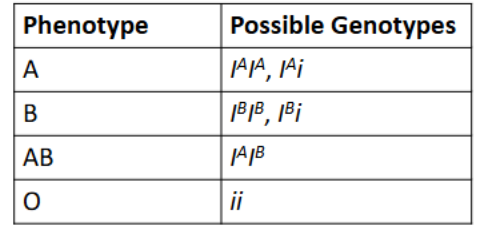
ABO blood types
each person has only 2 possible alleles
each person has only 2 of 3 possible alleles, and both IA and IB are dominant over i
2 possible genotypes for type A blood and 2 possible genotypes for type B blood
IA and IB are fully expressed when tgt
therefore, if a person inherits one of each of these alleles, that person will have type AB blood
Type O blood results from 2 i alleles
Define nondisjunction and know what happens if disfunction occurs.
Nondisjunction: An incorrect number of autosomes in the gametes
If chromosomes fail to separate correctly during meiosis I or II, change in chromosome number occur
Recognize the following syndromes/ Variations that result changes in chromosome number
Autosomes:
Down Syndrome (Trisomy 21)
3 copies of chromosome 21
(possible) characteristics
intellectual disability
short stature
low muscle tone
single deep crease across center of the palm
Sex chromosomes
Turner Syndrome (XO)
only one x chromosome
may require hormone supplements for growth and estrogen; often experience cardiovascular disease
Klinefelter Syndrome (XXY)
two X chromosomes and one Y chromosome
may experience infertility
Jacobs Syndrome (XYY)
can result from nondisjunction during spermatogenesis
individuals are tall
Poly-X syndrome (more than 2 X chromosomes)
more than two x chromosome and extra Barr bodies
may be tall and thin (earlier growth)
Know the types of changes that happen in chromosome structure and recognize the diseases fall into each category.
Deletion - the loss of DNA sequences
Williams
C7 loses an end piece
may have cardiovascular disease, developmental delays, and learning disabilities
the gene for elastin is missing; causes skin to age prematurely
Cri-du-chat
C5 is missing short arm
affects the development of glottis and larynx, creates a distinctive cry
may have intellectual disabilities and motor dysfunctions
Duplication - extra copies of a chromosomal region are formed, resulting in different copy numbers
Inversion - occurs when a segment breaks off and reattached within the same chromosome, but in reverse orientation
Translocation - occurs when a chromosome breaks and the fragmented pieces re-attach to different chromosomes
Alagille
C2 and 20
exhibit a combo of heart defect called, “tetralogy of Fallot“
Clubbing (widening of fingertips) may also occur
Chronic Myelogenous Leukemia
C9 and 22
BCR-ABL gene is formed on C where piece of C9 attached
Changed C22 —> Philadelphia Chromosome
Define extranuclear inheritance in humans.
Mitochondrial genome has only 37 genes
Inherited from egg-producing parents
Recognize the diseases affect cells and organs that require high levels of ATP
Leber’s hereditary optic neuropathy (LHON)
A mutation in one of several mitochondrial genes that encode e- transport proteins
loss of vision
Mitochondrial myopathies
weak and flaccid muscles
Understand what happens in epigenetic changes to DNA.
DNA methylation
another method of pre-transcription control
methyl group is added to cytosine
methylated DNA inhibits transcription
unmethylated DNA promoted transcription
Histone modification
amino terminal tails of histone proteins subject to several types of covalent modifications
histone acetyltransferase attached acetyl groups to the amino terminal trails of histone proteins
acetylated histone proteins do not bind as tightly to the DNA, which promotes transcription
acetylation: acetyl group added to histone tail; promotes transcription
Chromatin remodeling
change location of nucleosomes
creates gaps w no nucleosomes (more tightly or loosely)
changes the composition of nucleosomes by replacing standard histone proteins w histone variants that are modified
Understand that epigenetic (the study of how environment affects gene expression, don’t alter genetic sequence) changes can be inherited
inheritance through gametes
changes may include: DNA methylation, chromatin remodeling, and covalent histone modification
Know what happens in X-chromosome inactivation
One x is inactivated in different group of cells
provides dosage compensation
Know the examples of environmental agents that cause epigenetic changes.
Direct
Pesticides and Parkinson’s Disease
Disease Symptoms Arise first, and then cause epigenetic changes
TB infection cause immunosuppression
Indirect (association w 3rd factor)
environmental toxic agent may cause a disease and cause epigenetic changes, but the changes don’t contribute to disease
Cancer/Cancer Treatments
Know the characteristics of cancer cells.
Lack differentiation
nuclei abnormal, often enlarged
loss of contact inhibition
abnormal cells not removed via apoptosis
issues prone to dividing more likely to acquire mutations and become cancerous
epithelial cells lining respiratory, digestive tracts
epithelial cells from skin
connective tissue cells - include blood cells
Continued division
telomerase enzyme repairs ends of chromosomes beyond lifespan
Know what types of cells are most likely to become cancer cells.
lung, colon
Know what happens in the 3 phases of carcinogenesis (development of cancer).
IPP
1. initiation (one cell mutates and begins to divide repeatedly)2. promotion (a tumor develops; tumor cells continue to divide and undergo more mutations)
3. progression (one cell gains the ability to invade surrounding tissue)
Define angiogenesis and its role in cancer.
angiogenesis - the formation of new blood
To grow larger, a tumor must have good blood supply
Describe what happens in metastasis.
metastasis - cells cross the basement membrane, invade a blood or lymphatic vessel, and move into new location
cells spread to other organs
cells forms a new tumor
Understand how mutations produce cancer
+2 more critical mutations to start cancer
consists hundreds of accumulated mutations
Define proto-oncogenes and how they contribute to the formation of cancer.
Proto-oncogenes (pedal): a code for that promotes cell cycle but prevents apoptosis
mutated PO → oncogenes
only one must be mutated to lose control of the cell cycle
overstimulate growth and produce abnormally high level of activity
may promote cancer by keeping the cell division signaling pathway in a permanent “on” position
dominant
Define tumor suppressor genes and how they contribute to the prevention or formation of cancer.
tumor suppressor (brake): a protein that promotes the cell cycle and apoptosis
Functions:
maintain genome integrity by monitoring and/or repairing DNA damage
checkpoint proteins check the integrity of the genome and prevent a cell from progressing past a certain point in the cycle
inhibitors of cell division
necessary to properly halt cell division otherwise division becomes abnormally accelerated
Contribution to cancer formation
both copies of this gene must be mutated to loss control of cell cycle
Describe apoptosis and its role in cancer/prevention?
apoptosis: programmed cell death
Know the significance of p53 in cancer.
activated DNA repair enzymes and turns on genes that stop the cell cycle
Know the significance of Rb (RB) to cancer.
in negative control of G1 checkpoint- blocks entry to S
one mutation inherited, when second mutation occurs in the other allele, cancer develops (recessive)
Understand how susceptibility genes like BRCA1 and BRCA2 contribute to the development of cancer.
BRCA-1,2: codes for DNA repair enzyme that works w p53
mutations keep the body from recognizing DNA damage so cells progress through the cell cycle
susceptibility to breast cancer
Recognize examples of viruses that cause cancer (majority caused my mutagens)
Hep B + C → liver cancer
B vaccine and C treatment available
HPV → cervical, H+N
vaccine available → most effective in children prior to adult exposure
The Epstein-Barr —> nasopharyngeal cancer
retrovirus HTV-1 —> hairy cell leukemia
HIV —> AIDs (suppresses immune function)
mutagen- an agent that causes mutations
carcinogen- a chemical that causes cancer by being mutagenic
Recognize examples of environmental carcinogens that cause cancer.
mutagen and carcinogen
environmental + hereditary
radiation (radon gas, nuclear fuel, x rays)
UV
pollutants like metals, dust, chemicals, pesticides
Ni, Radon, Vinyl chloride, and benzene
organic chemicals (tobacco)
List common methods of cancer screening. (AsymmetryBorderColorDiameterElevated)
Self-exams
monthly exams (breast and testicular)
Mammography (breast)
pap test (cervical cancer)
Colonoscopy-direct visual exam
Stool DNA tests “Cologuard” (for average risk)
Tumor marker tests
PSA → prostate cancer
CA-125 → ovarian cancer
AFP test → live tumors
List typical treatments for cancer.
Surgery
preceded by radiation therapy and chemo (need to shrink size of tumors to make surgery easier)
Radiation Therapy
ionizing radiation causes chromosomal breakage and cell cycle disruption
more susceptible to its effects than other cells
can be administered through a beam/tiny radioactive sources can be implanted into the body
Chemotherapy
A systemic treatment: goal to kill cancerous cells that escaped from the original tumor
most drugs damage DNA or interfere w DNA synthesis
combo destroys a greater number of cancer cells and reduce the risk of the cancer developing resistance
Know the mechanism of chemotherapies.
Alkylating agents- block the DNA replication
antimetabolites- block the enzymes needed for growth
antitumor antibiotics- DNA breakage (different from those used to treat bacterial infections)
mitotic inhibitors - inhibit cell division
nitrosoureas - impede the enzyme that repair DNA