Week 5 | Day 2 | PSYA02
Week 5 | Day 2 | PSYA02
Social-Cognitive Approach
- Social cognitive approach: Personality is how a person deals with the situations encountered in daily life
- Underlying assumptions
- People note the consequences of their behaviour
- People observe the behaviour of others across many situations
- Out of these observations, they develop cognition about themselves
- Unique personalities occur because of our different cognition
- Theorists:
- Albert Bandura
- Julian Rotter
- Walter Mischel
Bandura’s Self-System
- The self-system involves cognition that we use to observe, evaluate, and regulate our behaviour
- Imitate the successful behaviour of others and avoid unsuccessful behaviour
- Learn how to act appropriately in the situation and fit in
- Self-efficacy: (aka confidence) is how well we think we will perform in a given situation
- Monitor your own behavior to determine when it is successful or not
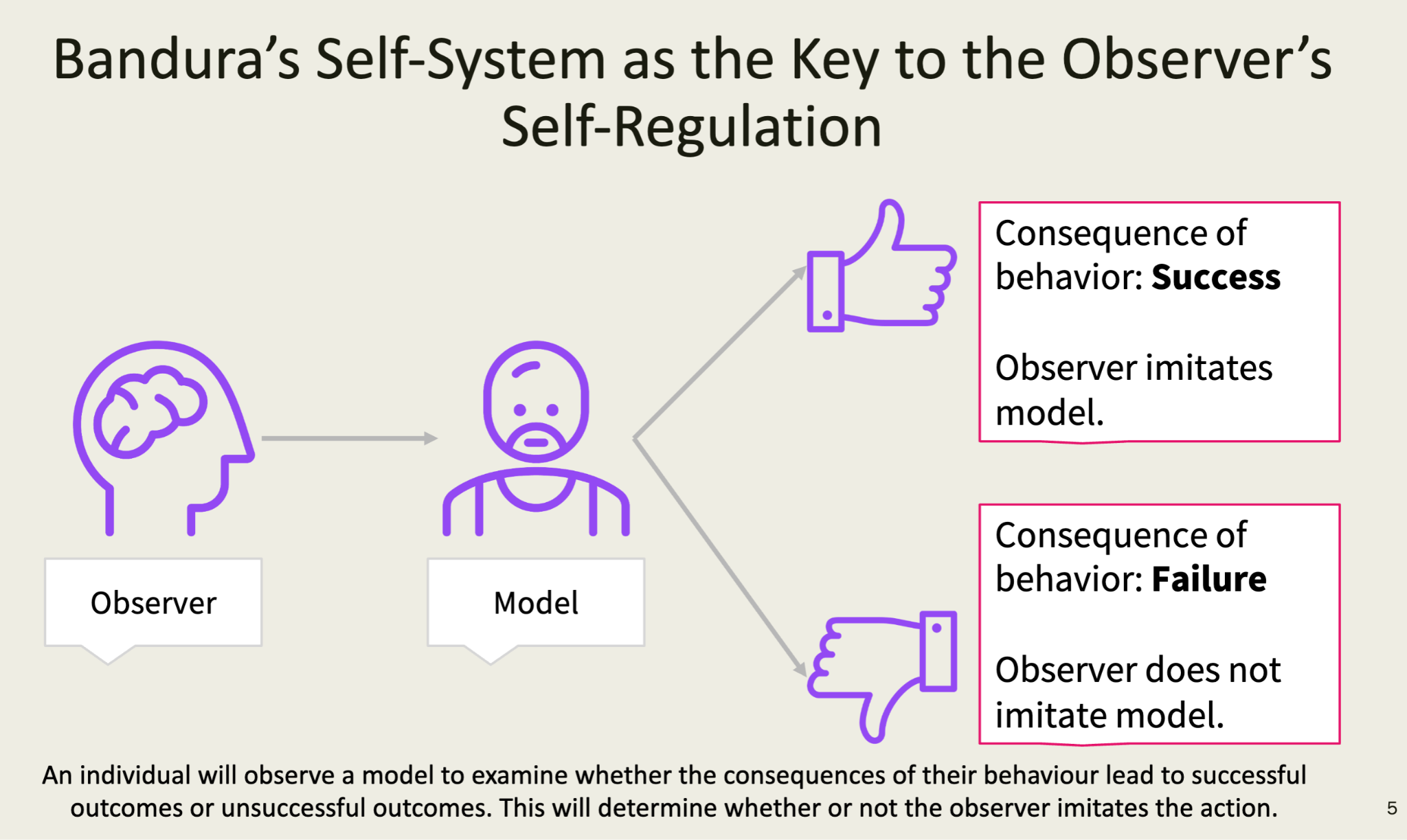
- Monitor your own behavior to determine when it is successful or not
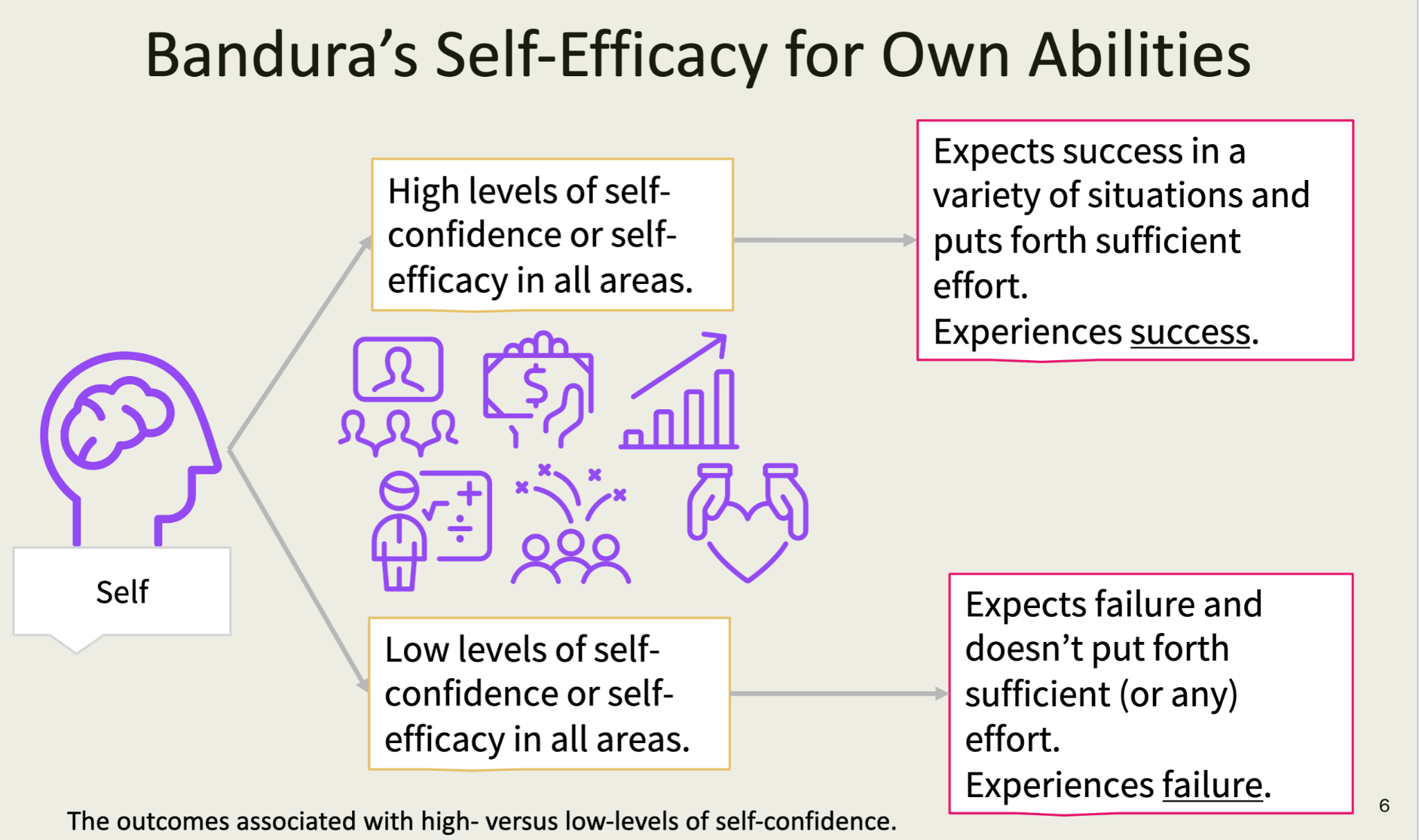
Rotter’s Social Learning Perspective
- Locus of control: belief about how in control you are of the events that can happen to you
- Internal = you’re in control
- External = events out of your control
- Internal locus of control: better adjusted and able to cope with stressors
- External locus of control: learned helplessness and higher prevalence of maladaptive behaviour
The Delay of Gratification: The Power of “Willpower”
- Walter Mischel’s (2014) Marshmallow Test for delayed gratification (aka are you willing to sacrifice a small, sooner reward for a bigger, later reward)
- Important for expression of personality
- 20 years after the original delay of gratification study, the researchers interviewed the participants
- The preschool children who waited for the larger reward (i.e. several marshmallows) were better-adjusted adults
- Higher SAT scores + planned ahead + more mature
- Physical health
- Less drug abuse + criminal offence
- Delay of gratification is a core component of successful personality adjustment and predicts future success BUT his research was a little biased since they used kids from campus, which means socioeconomic status + background can determine future success and delayed gratification
The Biological Perspective
- The biological perspective: assume that certain biological processes serve to influence the underlying operation and expression of personality
- Behavioural Genetics Perspective
- Neurological Perspective: Physiological and Cortical Influences
- Evolutionary PerspectiveEven if they were raised differently (100% DNA, different environment) personality comes from a lot od genetics
Monozygotic/Identical Twins | Dizygotic/Fraternal Twins |
|---|---|
• One egg and one sperm. • 100% shared genetic material. • Twins raised together are more similar to those raised apart | • Two eggs and two sperm. • Up to 50% shared genetic material. • Less similar than monozygotic twins. |
Neurological Perspective: Physiological and Cortical Influences
- Physiological Factors: Hormones and neurotransmitters.
- Higher levels of testosterone are linked to dominance, aggression, persistence, and high-risk behaviour.
- Lower levels of serotonin are associated with a greater willingness to engage in thrill-seeking activities
- Brain Activity: Arousal and inhibition.
- Introverts have higher levels of arousal in ARAS
Evolutionary Perspective
Survival | Reproduction |
|---|---|
• Living longer. • Positive personality characteristics. • Conscientiousness • Optimism • Negative personality characteristics. • Hostile Type A personality • Neuroticism | • Functionally Infertile Individuals (FII) • Low rate of reproductive success. • Women who are high FII: • Low cooperativeness. • Men who are low FII: • Self-confidence, extraversion, social assertiveness. |