Nutrition Notes
MODULE 1: NUTRITION AND NUTRIENTS
Lecture 1: Nutrients and Food Choices
Chapters Covered: 1 and 2
Lecture Icons
Icons within slides indicate specific features:
Audio Recorded: Icon found in slide header.
Audio Playback: Click icon at the bottom of the slide.
Embedded Video: Icon in slide header, hover to play.
Important Information Indicator: Denotes crucial slide content.
Red Background Slides: Signify definitions.
All lectures conclude with a summary and knowledge testing questions.
Presentations must be in slide show mode for audio and video access.
What is Nutrition?
Nutrition: The study of how compounds in foods nourish and influence body functions and health.
Nutrients: Components found in food including:
Water
Carbohydrates
Proteins
Fats
Vitamins
Minerals
Nutrition examines how these nutrients interact with the body and how to create a nutritious diet.
Important Fact: By age 65, an individual has consumed more than 70,000 meals.
Importance of Good Nutrition
Role of Nutrients:
Build the body (skin, muscle, and blood).
Support growth, maintenance, and repair of body tissues.
Consequences of Nutritional Imbalance:
Deficiencies, excesses, and imbalances can lead to malnutrition and various diseases.
Impact on Health:
Proper nutrition significantly influences health and can mitigate risks for diseases, including cancer.
Good nutrition can reduce the risk of diseases
You Are What You Eat
Key Nutrients:
Vitamins
Minerals
Fats
Proteins
Carbohydrates
Water
Concept of Eating: Reflects dietary choices
Nutrition and Health
Personal lifestyle choices and genetics can significantly affect health outcomes.
Certain causes of death are related to nutrition:
Heart diseases
Cancers
Strokes
Diabetes mellitus
What are the Nutrients?
Nutrient- chemical that an organism needs to live and grow or a substance used in an organism
Come from food and provide:
Energy (measured in kilocalories or kcal)
Building blocks for the body
Maintenance for cell functions (help with enzymatic reactions)
Enzymes: Definition and Function
Enzyme: A molecule that accelerates or catalyzes chemical reactions.
Involved in breaking down the foods we eat so the body can use them
Names of enzymes usually end in the suffix -ase
Substrate: The molecule acted upon by an enzyme; binds at the active site.
The Six Classes of Nutrients
Categories:
Carbohydrates (also known as carbs, saccharides, or sugars)
Contain carbon, oxygen, and hydrogen
Fats (known as lipids or fatty acids)
Contain carbon, oxygen, and hydrogen
Proteins
Contains carbon, oxygen, hydrogen, and nitrogen
Vitamins
Contain carbon, oxygen, and hydrogen
Minerals
Water
Elements in Nutrients
Organic Compounds- nutrients containing carbon
Specific Nutrient Composition:
Proteins are the only nutrient containing nitrogen
Vitamins
Fats
Carbohydrates
Minerals are inorganic
Carbon Content: Carbon, oxygen, hydrogen, and nitrogen are essential elements in organic nutrients.
Nutrients and Their Functions
Macronutrients- Essential nutrients needed in larger amounts which yield energy:
Carbohydrates: 4 kcal/g
Fats (Lipids): 9 kcal/g
Proteins: 4 kcal/g
Note: Alcohol provides energy (7 kcal/g) but is not classified as a nutrient because it is not necessary for survival (it is not needed to live and grow)
Micronutrients- non energy-yielding nutrients
Vitamins:
Organic compounds required in small quantities for bodily functions.
Assist in body processes but are vulnerable to destruction and must come from dietary sources.
Minerals:
Inorganic elements needed in varying amounts for structural functions.
Indestructible and often assist enzyme functions.
Water
Vital for numerous body processes including:
Serving as a fluid medium inside and outside of cells.
Acting as a lubricant for joints, eyes, and gastrointestinal tract.
Providing a protective cushion for organs.
Involved in chemical reactions, like those in energy production.
Key role in nutrient and oxygen transport and waste removal.
Daily Need: Large amounts of water are essential (exact amounts vary by individual).
What is a Calorie?
Definition: A calorie is a unit of measurement for energy
Specifically, it is “the amount of heat it takes to raise the temperature of 1 gram of water by 1 degree Celsius.”
Energy in food is typically measured in kilocalories (kcal) but often just referred to as calories
To measure the amount of calories in a food you use a bomb calorimeter
1 degree change in temperature in 1 gram of water represents 1 calorie of energy
Measuring Kcalorie Values of Macronutrients
Carbohydrates: 4 kcal/g
Fats (Lipids): 9 kcal/g
Proteins: 4 kcal/g
Alcohol: 7 kcal/g (not a nutrient because it doesn’t support growth)
Measuring Kcalorie Values of Micronutrients
Vitamins: 0 kcal/g
Minerals: 0 kcal/g
Water: 0 kcal/g
Additional Nutritional Concepts
Essential Nutrients: Nutrients the body cannot synthesize, found in all classes of nutrients
Phytochemicals: Non-nutrient compounds from vegetables that give color, taste, and other characteristics (Ex: carotenoids, antioxidants)
Many phytochemicals are bioactive in food so they positively contribute to health
Ex: Carotenoids give carrots their orange color
Bioactive Foods: non-essential molecules present in foods that can influence one or more metabolic processes
Fibers: Indigestible parts of plants, aid health yet yield 0 kcal/g.
promote digestion and health GI tract
Nutrition Recommendations
For the public:
Dietary Reference Intakes (DRIs) —> nutrient based focusing on macro and micro nutrients
MyPlate and other food guides —> food based with recommendations for food groups like fruits and vegetables
For professionals:
DRIs
Dietary Guidelines for Americans
Healthy People 2020
Approaches: Food-based and nutrient-based recommendations.
Dietary Reference Intakes (DRI)
DRIs: Set intake standards for nutrients, including water, fibers, and caloric energy.
Components include: green for micronutrients
Recommended Dietary Allowances (RDA)
Adequate Intakes (AI)
Estimated Average Requirements (EAR)
Tolerable Upper Intake Levels (UL)
Nutrient Consumption
Not everyone in a population has the same nutrient needs —> this can be represented on a graph
The need for the whole population can also be visualized in the same graph based on the curve
The middle of the curve divides the population in half with 50% on either side and is the average requirement
This results in a bell curve because most people should be consuming the average
If the average amount is consumed, everyone to the left will be covered (around 50%)
If we move farther to the right of the curve and pick an amount being consumed, the need of almost everyone in the population will be met
Consuming an amount past the right boundary of the curve means consuming more than anyone in the population needs (consuming too much)
Illustration: Different nutrient needs for individuals indicating that consumption amounts may vary widely for healthful dietary choices.
RDA and Adequate Intakes (AI) - recommended intake values
RDA (Recommended Dietary Allowance): Meets the needs of almost all healthy people in a population (≈ 97%).
Generally 2 standard deviations above the EAR (estimated average requirements)
AI (adequate intakes): Established when there is insufficient evidence to create an RDA; based on estimates of intakes that appear to maintain nutrition status
Based on observed or experimentally determined approximations of nutrient intake
Does not have a known position on the requirement curve
Less precise because it doesn’t have a known position on the requirement distribution
Both vary with age, sex, height and physiological status like pregnancy
Both focus on micronutrients (vitamins and minerals), waters and fibers, and dictate amount to ensure adequate intake and prevent deficiencies and chronic disease
EAR (Estimated Average Requirements)
EAR- intake value that meets the needs of 50% of the healthy individuals in a population
Used as the recommendation for caloric intake to prevent overeating
Population-wide average
Females need around 2000 Kcal/day
Males need around 3000 Kcal/day
Nutritional Intake Recommendations by Age and Gender
Detailed recommendations for Thiamin intake, RDA levels vary by age and physiological states (e.g., pregnancy).
Understanding the DRIs
Key Points:
RDA or AI covers the needs of 97% of specific populations.
EAR is targeted for 50%, applied for caloric needs and avoiding over-nutrition.
Average caloric needs:
Females ~ 2000 kcal/day
Males ~ 3000 kcal/day
Tolerable Upper Intake Levels (UL)
Definition: Maximum of usual daily nutrient intake likely to pose no risk of harmful health effects, not intended as goal intake but as a safety ceiling.
Assessment Tool: Guide for supplements and fortified foods to avoid toxicity from excess intake.
Not enough info to set Upper Intake Level for all nutrients
Example UL for Nutrients
Vitamin D:
UL for adults set at 50 µg/day, which equates to 2000 IU.
Having more than that can negatively impact your health
Application of DRIs in Dietary Assessment
Framework for evaluating nutrient intake concerning vitamins, minerals, water, fibers, and caloric needs.
For vitamins, minerals, water, and fibers (non-energy yielding)
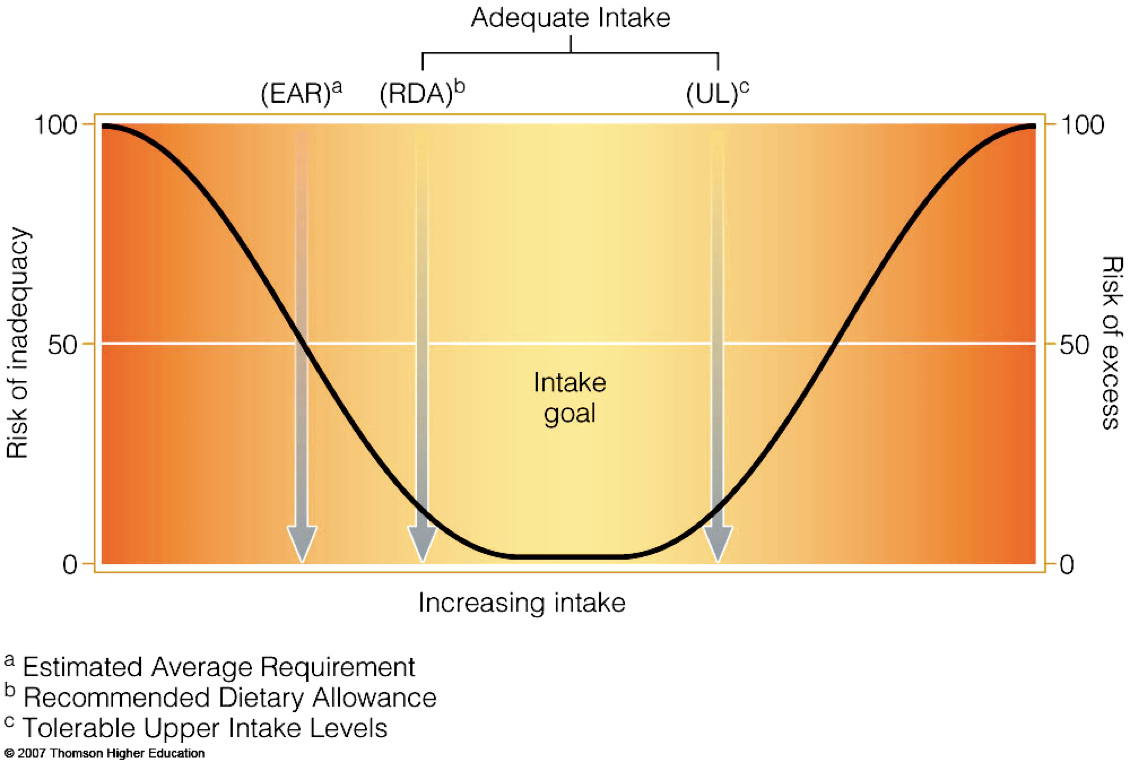
Intake that falls between RDA and Upper Limit (UL) makes sure you are getting enough but not too much of that nutrient
Way too much or way too little of a nutrient puts you at a 100% risk for inadequacy or excess
Adequate intake falls between RDA and UL
Acceptable Macronutrient Distribution Ranges (AMDR)
Macronutrients provide calories → carbs, fats, and proteins
ADMR- distribution range of intakes recommended for macronutrients, associated with reduced risk of chronic disease
Expressed as percent of total calories that should come from each macronutrient
Carbohydrates: 45-65% of total energy intake
Men (3000 Kcal total) → 50% of that would be 1500 kcal a day
Carbs have 4 kcal/g so 1500 kcal/4 would be 375g of carbs a day
Proteins: 10-35% of total energy intake
Fats: 20-35% of total energy intake
Daily Value (DV)
Found on food packaging, these values reflect dietary needs for an average person consuming 2000 kcal/day.
One set of values that applies to everyone → about right for moderately active women, teen girls, and sedentary men
Simplifies comparison among food products and helps tell whether or not a food has a lot or little of a nutrient
Example of Nutrition Facts and Labeling
Sample label outlining nutritional content and percentages of daily value for key nutrients.
Summary and Review Points
Key Themes Discussed:
Nutrition = study of nutrients in food and in the body
Nutrition affects long-term health (cancer, strokes, diabetes).
Nutrients provide energy, building blocks, and help maintain body functions
Nutrient classification:
Macronutrients (energy-yielding): Carbohydrates, Fats, Proteins.
Micronutrients (non energy-yielding): Vitamins, Minerals, Water.
Nutrient Classifications Recap
Macronutrients: Energy-providing nutrients requiring higher intakes (Carbohydrates - 4 Kcal/g, Fats - 9 Kcal/g, Proteins - 4 Kcal/g).
Micronutrients: Non-energy yielding essential nutrients, vitamins, and minerals.
Water’s Role: Integral for processes, with additional components like
Phytochemicals and fibers present in food, contributing to health
Dietary Reference Intakes (DRI) Overview
DRIs provide nutrient intake benchmarks and adapt based on age, sex, and physiological status.
Components include RDA (recommended dietary allowances), AI (adequate intake), EAR (estimated average requirements), and UL (upper intake levels) reflecting group-specific needs.
RDA or AI covers the need of 97% of population (specific life stage and sex)
Micronutrients (non energy-yielding) → vitamins and minerals
Water and fibers
Amount t ensure adequate intake and prevent deficiencies and chronic illnesses
EAR covers caloric need of 50% of a population
Prevent over nutrition
UL is ceiling not a goal
highest level of intake that doesn’t pose a risk
Additional Recommendations: AMDR and DV
AMDR for energy-yielding nutrients
ranges of recommended intakes associated with reduced risk of chronic disease
carbs = 45-65% of total calories
fat = 20-35% of total calories
protein = 10-35% of total calories
Daily Value for average consumer needs on food labels
Set of values on food label that applies to everyone
based on the “average” person consuming 2000 kcal/day
Sample Questions for Revision
Can nutrition affect certain cancers?
Yes, maintaining proper nutrition can reduce the risk of chronic illnesses including cancer
What functions do nutrients serve?
Nutrients support growth, maintenance, and repair of body tissues as well as build the body (skin, blood, muscle)
What are the six classes of nutrients?
Carbohydrates
Fats
Proteins
Vitamins
Minerals
Water
Which nutrients are organic and what are their caloric values?
Organic nutrients are those containing carbon
Carbs: 4 kcal/g
Fats: 9 kcal/g
Proteins: 4 kcal/g
Vitamins: 0 kcal/g
What is the purpose of the Dietary Reference Intakes?
Set intake standards for nutrients, fibers, and energy
How are vitamins recommended intakes determined?
Vitamins are micronutrients (non energy-yielding) so their recommended intakes are determined using RDAs, AIs (in the event there isn’t enough evidence to create an RDA), and ULs
Lecture 2: Decoding the Food Label
Food Label Regulations
Tightly controlled by the Food and Drug Administration (FDA) to allow consumers o make choices that support their health and wellbeing
Only apply to foods → NOT dietary supplements
Foods are tightly controlled and monitored but supplements are not
Code of Federal Regulations, Title 21 has laws and regulations pertaining to food
Industry not following the rule causes government agencies to get involved and can have serious legal consequences along with recalls
All small packaged foods are required to label EXCEPT
Very small companies
Plain coffee, tea, and spices
Items prepared and sold in the same establishment
Fresh fruits and vegetables
Some fresh meats
What’s on the Food Label
Food labels are regulated by the FDA and must contain the following
Product name
Company name and address
Ingredients by descending order of weight (listed in order of decreasing amounts)
Ex: In a bottle of ketchup tomatoes are listed first and the second one by weight is sugar
Amount in the product
Product bar code
Nutrition facts panel
To avoid having sugar listed as the first ingredients, a lot of labels will list different types of sugar
You can also find descriptive terms about the product (also tightly regulated)
Nutrient content claim- characterizes the level of nutrient in the food (ex: “fat free” or “less sodium”)
<5% DV = low source
10-19% DV = good source
≥20% DV = high source
Health claim- claim that links food components with disease states
Must meet FDA criteria
Nutrient or food substance must be related to disease or health conditions for which most people, or a specific group, are at risk
Ex: calcium and reduced risk of osteoporosis
Ex: a diet low in total fat may reduce the risk of some cancers
Structure-function claims- describe the effect that a substance has on a structure/function of the body
Do not make references to diseases
Requires FDA notification but not approval → no need to submit evidence
Ex: “supports immunity and digestive health” or “calcium builds strong bones”
Can look a lot like a health claim
Health claim = lowers cholesterol
Structure-function claim = helps maintain normal cholesterol level
A small label should say that the FDA has not evaluated the claim
Allergen Statement- labels must list in plain English the tope 8 allergens in the US
They can be listed in the ingredients OR they can added in a warning at the end
Nutrition Facts Panel
Food label MUST contain the nutrition facts panel (based on 2000 calories/day intake)
Nutrition facts panel must contain the following
Serving size → FDA established specific serving sizes that reflect amounts people customarily consume
Beverages = 8 oz
Ice cream = ½ cup
Total food energy (Kcals or calories)
Food energy from fat (Kcals from fat)
Total fat (g)
Saturated fat (g)
Trans fat (g)
Cholesterol (mg)
Sodium (mg)
Total carbohydrates (g)
Dietary fibers (g)
Sugars (g)
Added sugars
Protein (g)
Vitamin A, Vitamin C, Iron, Calcium (% Daliy Value)
FDA New Nutrition Facts Panel
Changes were made like making serving sizes that better reflect portion sizes and making the calories per serving larger and in bold
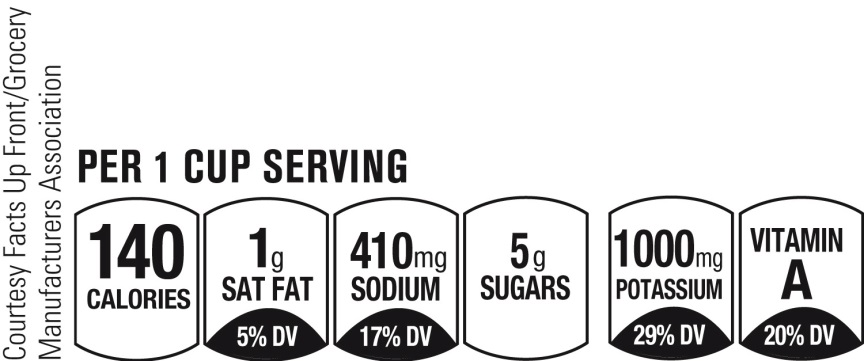
Short Cut Labels
Most of the info on the product and food label can be put in short-cut labels
Example Questions
What types of fats have to be listed on a food label?
Total fat, saturated fat, and trans fat as grams with saturated fat and trans fat being listed under total fat
How are ingredients listed on a food label?
In order of decreasing weights → first ingredient is present in the highest weight and they go down from there
What vitamins and minerals have to be listed on a food label?
Vitamin A, Vitamin C, Iron, and Calcium
Give an example of a health claim.
Diets low in saturated fat and cholesterol may reduce the risk of heart disease
Give an example of a structure/function claim.
Calcium builds strong bones
Lecture 3: Dietary Guidelines for Americans
Refresher
Food is composed of nutrients that furnish energy, building blocks, and help maintaining body functions
6 classes of nutrients:
carbohydrates
fat
proteins
vitamins
minerals
water
The DRI (Dietary Reference Intake) = RDA/AI, EAR, UL
Vitamins and minerals = RDA, AI
Energy = EAR
Where do you find the different nutrients?
Carbohydrates (also call saccharides)
One (mono-) or two (di-) saccharides are small molecules that are easily absorbable
These are sugars
Ex: candies, pastries, honey, jam, fruits
Polysaccharides (long chain) require digestion
These are grains
Grains can also contain fibers (whole grains)
Ex: starch, corn, bread, potatoes
Vegetables
Contain mono- and polysaccharides, fibers, and phytochemicals
Proteins
Found in meat, fish, eggs, soy, legumes (lentils, beans), and dairy (milk, cheese)
Legumes- plants in the family fabaceae (or leguminosae), or the fruit or seed of such a plant
Have symbiotic nitrogen-fixing bacteria in structures called root nodules
Ex: alfalfa, clover, peas, beans, lentils, lupins, mesquite, peanuts, soybeans
A legume fruit is a simple dry fruit that usually opens a long seam on 2 sides (common name for this type is a pod)
Fats (Lipids)
There are different types of fats
Fatty acids (most common)
There are also different types of fatty acids
Essential fatty acids = omega 3 and omega 6
Omega 3 = fatty fishes, canola oil, walnut
Omega 6 = sunflower oil, margarine
Essential nutrients = nutrients the body cannot make itself, must come from food
Trans fat- unsaturated fat with a trans-isomer fatty acid(s), formed during processing in food production and are not health
Steroids
Phospholipids
Micronutrients
Minerals and vitamins are found in different types of foods
Consuming a variety of foods ensures adequate intake
Ex: iron comes from red meat, calcium from dairy, vitamins from fruits/vegetables
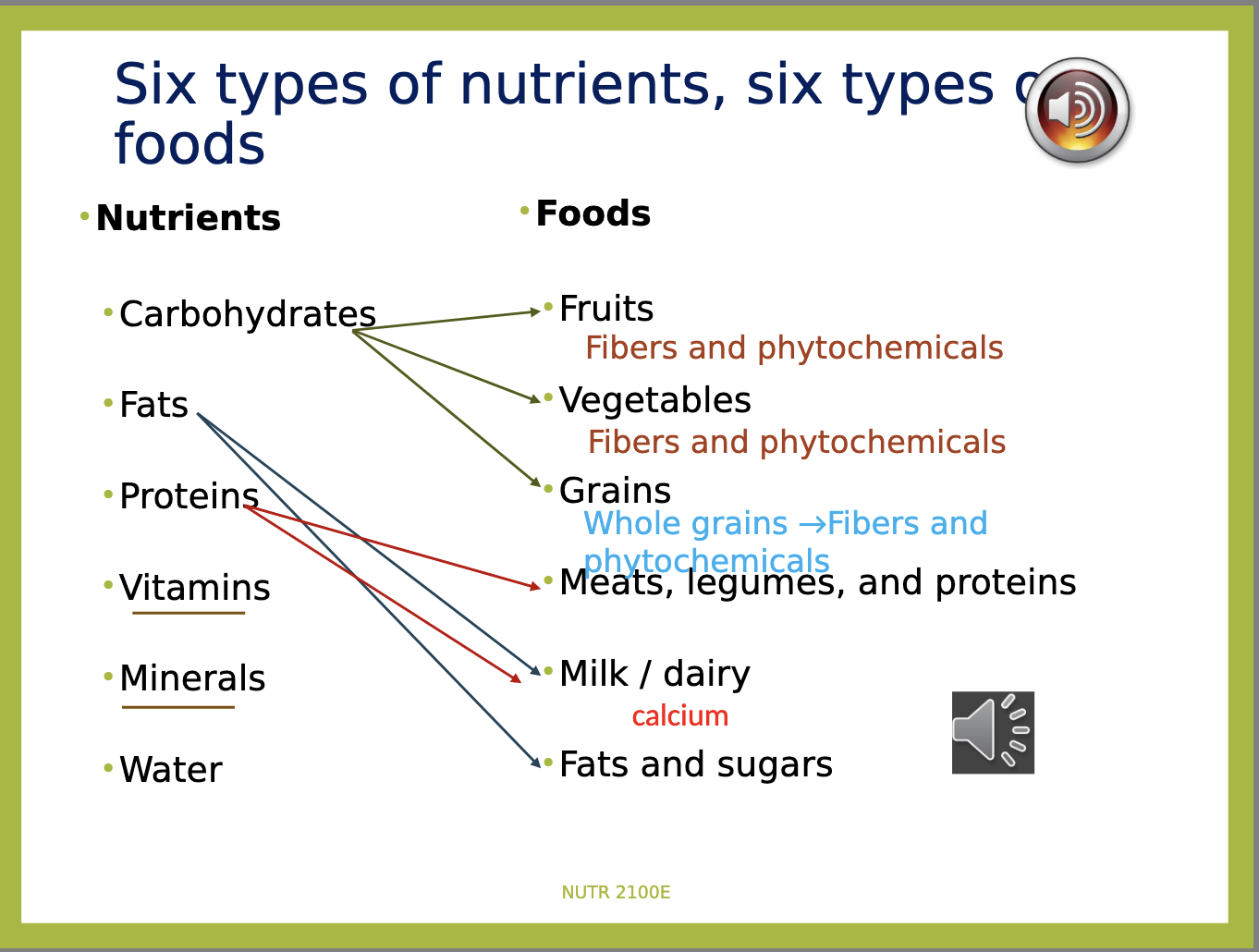
Six types of foods | Contain |
Fruits | Carbs (Mono- /poly-) Fibers and phytochemicals |
Vegetables | Carbs (Mono- /poly-) Fibers and phytochemicals |
Grains | Long chain carbs - polysaccharides Whole grains : Fibers and phytochemicals |
Meats and legumes/ Protein | Proteins |
Dairy /Milk | Calcium Proteins Fats |
Fat and sugars | Fats Carbs (Monosaccharides) |
Phytochemicals are mostly found in fruits, vegetables, and whole grain foods
What is a healthy diet?
Adequacy: a diet should provide enough of each essential nutrient
Balance: balance the diet to provide enough of everything
Calorie control: energy intake should not excess needs
Moderation: certain foods should be limited for health’s sake
Variety: diet should provide enough of each essential nutrient
Consume a variety of foods balanced by a moderate intake of each food
Food providing
Essential nutrients from all 6 classes
Fibers and phytochemicals → whole grains, fruits, and vegetables
Whole foods are the basis of a nutritious diet (non-processed food)
Meat, fish, fruits, vegetables etc
Whole Foods
Foods that are unprocessed and unrefined, or processed and refined as little as possible
Whole foods typically do not contain added ingredients, such as salt, carbohydrates, or fat
Ex: unpolished grains, beans, fruits, vegetables, and non-homogenized dairy products
Food processing is the transformation of raw ingredients into food, or food into other forms
All foods are not created equal
Nutrient density → comparison of vitamin and mineral content to number of kcals
Empty calories → provides kcals and few to no other nutrients
increase the energy of the food and reduce the nutrient density
Discretionary calories → difference between calories needed and those in food required to supply nutrients
Energy density → comparison of the kcal content to the weight of the food
Food Groups
Fruits
Any fruit or 100% fruit juice counts as part of the fruit group
Fruits may be fresh, canned, frozen, or dried, and may be whole, cut-up, or pureed
Vegetables
May be raw or cooked; fresh, frozen, canned, or dried/dehydrated
May be whole, cut-up, or mashed
Starchy vegetables have long chain polysaccharides, are energy dense, and some countries classify them as grains
Dark Green
Red & Orange
Starchy
Other
Broccoli
Collard greens
Spinach
Romaine
Butternut squash
Carrots
Tomatoes
Corn
Black-eyed peas
Potatoes
Lima beans
Artichoke
Avocado
Cauliflower
Green beans
Okra
Grains
Any food made from wheat, rice, oats, cornmeal, barley or another cereal grain is a grain product
Ex: bread, pasta, oatmeal, breakfast, cereals, tortillas, grits
Whole grains: contain the entire grain kernel (bran, germ and endosperm → fibers)
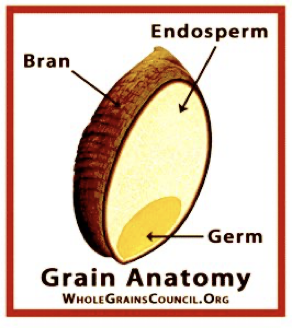
Refined grains: milling removes dietary fiber, iron, and many B vitamins
Try and make at least half of your grains whole grains
Whole Grains
Refined Grains
cracked wheat
oatmeal
whole cornmeal
brown rice
white flour
de-germed cornmeal
white bread
white rice
Protein
Includes meat, poultry, seafood, beans and peas, eggs, processed soy products, nuts, and seeds
Dairy
Cream cheese, cream, and butter, have little or no calcium - they are not included
Calcium-fortified soymilk is also part of the dairy group
Average American diet
Too much grains and proteins
Too much meats and beans
Not enough fruits and vegetables
Not enough milk
Unhealthy diets and lack of exercise are linked with increasing obesity rates in the US
Increasing prevalence of obesity among US adults by state
Average American diet is high in
Sodium (salt from processed foods)
Saturated fat
Calories
Average American diet is low in
Vitamin D
Calcium
Fiber
Dietary Guidelines for Americans (DGA)
Target audience: health educators, health professionals, policymakers
Offer food-based strategies for achieving DRI values
Updated every 5 years to reflect advancing science by the US Department of Agriculture (USDA) and Health & Human Services (HHS)
For healthy people ages 2+ years
Includes people at risk for chronic disease
Shortfall and Over-consumed Nutrients
Chronically undersupplied in US diets
Vitamin A
Vitamin D
Folate
Calcium
Iron
fiber
Potassium
Chronically oversupplied in US diets
Saturated fat
Added sugars
Sodium
Healthy People 2030
National goals to help the US identify pressing health threats and goals to reduce those threats
They are set every 10 years
MODULE 2: DIGESTION, ABSORPTION, TRANSPORT
Why do we want to eat?
Food consumption can be trigger by a physiological and/or psychological drive to eat
Hunger- physiological sensation that prompts us to eat
Satiety- the feeling of being full
Appetite- psychological desire to eat certain foods
Hormone- a chemical released by one or more cells that affects cells isn other parts of the organism
Body’s chemical messengers that travel in the bloodstream to tissues or organs
Only a small amount of a hormone is required to have an effect
Hormones affect different processes including
Growth and development
Metabolism- how your body gets energy from the foods you eat
Sexual function
Reproduction
Mood
Some hormones stimulate food intake/hunger
Some hormones produce a feeling of satiety
Hormones are released from the gut and other organs (fat tissue, pancreas) and act on the brain to promote hunger or satiety
Food in the GI tract is outside the body → the GI tract is one continuous, hollow tube from the mouth to the anus that acts as a passage open to the external environment
Taking food into the mouth does not assure admission to the body
Food has to undergo digestion, absorption, and transport to be absorbed in the body
Take place in the GI tract
Gastrointestinal (GI) Tract
Organization
Series of organs, from the mouth to the anus
Accessory organs- not part of the GI tract, are also involved in digestive processes
Salivary glands, liver, pancreas, gallbladder
Functions
Ingestion
Transport, propulsion and mixing of Gi contents
Secretion of digestive juices
Digestion
Absorption
Elimination
Gastrointestinal (GI) tract- a series of organs arranged as a long tube that works together to process foods
Digestion- process of breaking down food into individual molecules small enough to be absorbed through the intestinal wall to release nutrients
2 types of digestions
Mechanical
Enzymatic (chemical)
Absorption- the process of moving nutrients from the GI tract into the bloodstream
Transport- the process of moving absorbed nutrients throughout the body through the circulatory and lymph systems
Elimination- the excretion of undigested and unabsorbed food through the feces
Anatomy of GI Tract
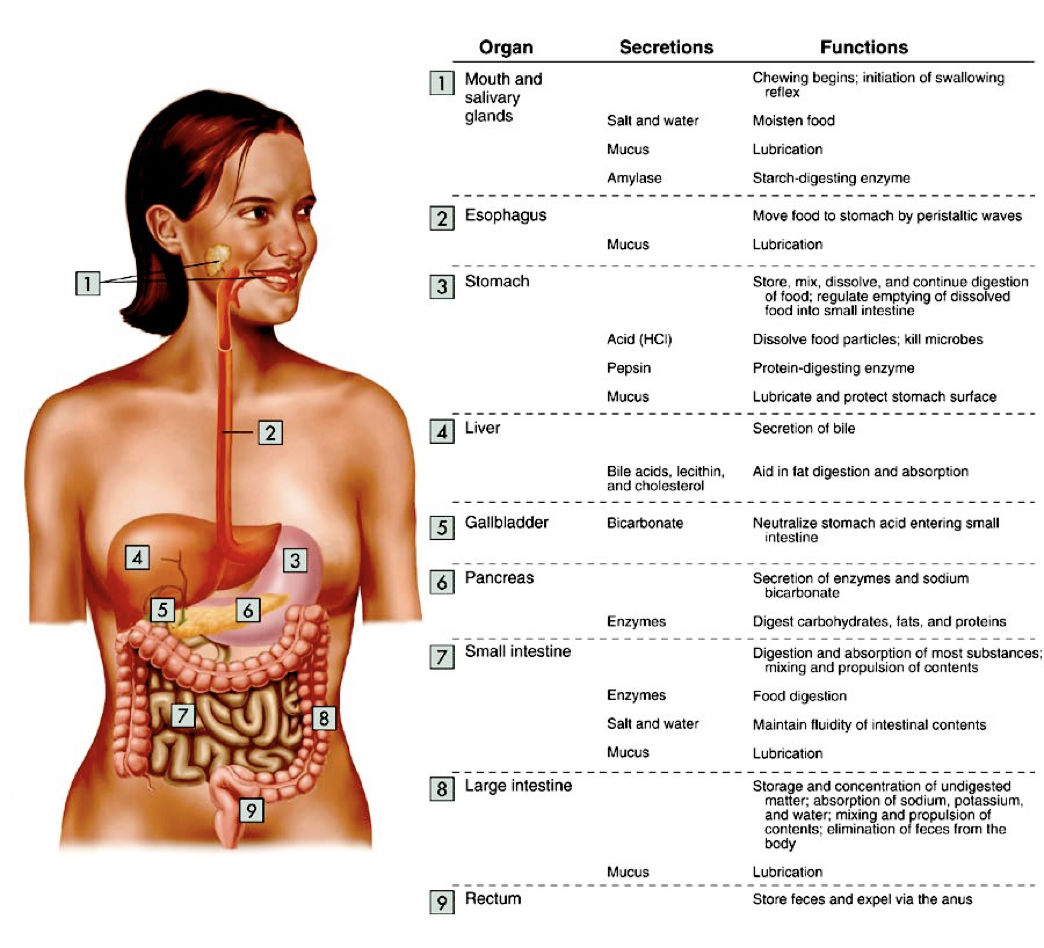
Mouth → digestion begins in the mouth
Esophagus → “tube” from mouth to stomach
Stomach
Small intestine
Large intestine
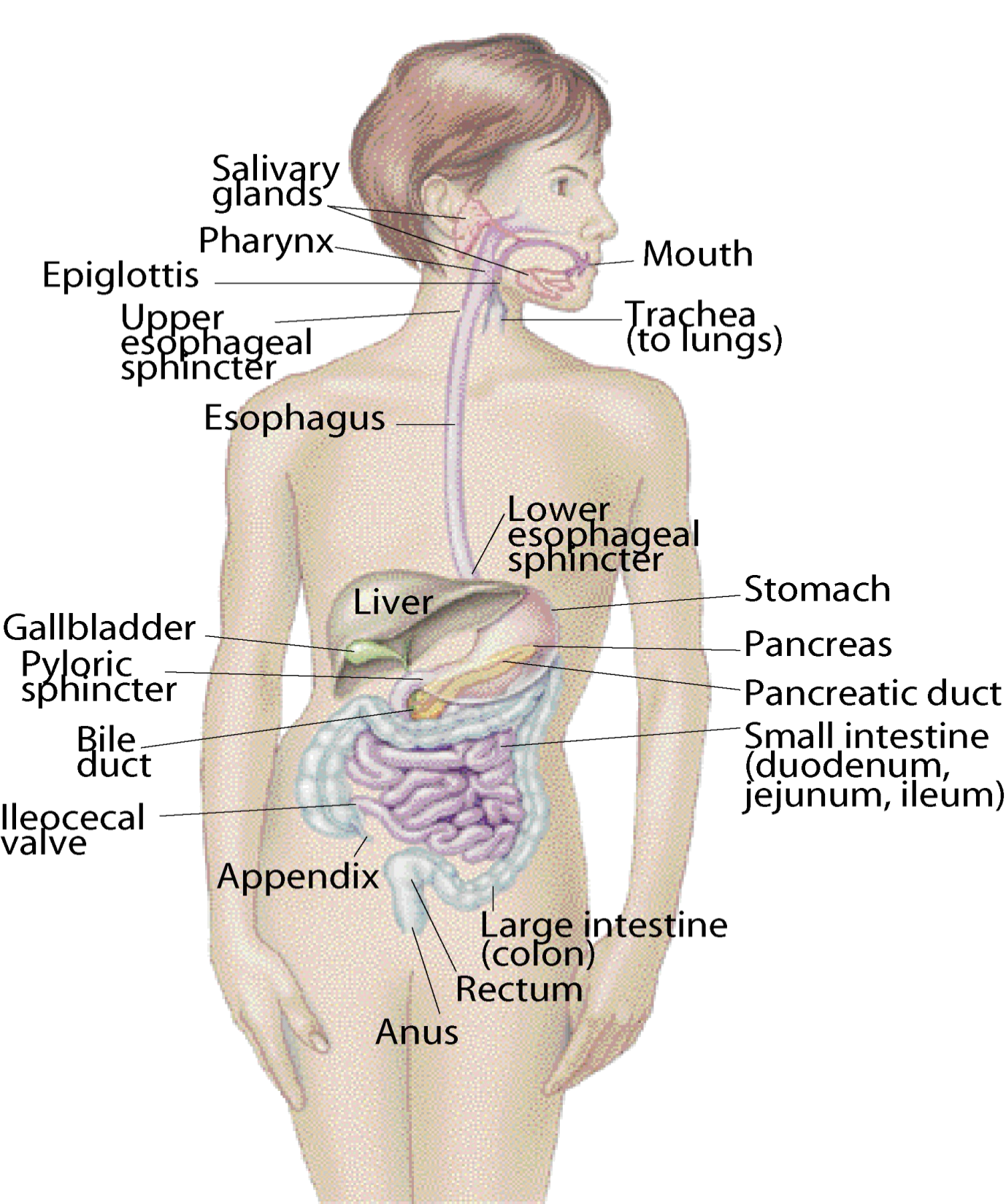
The Mouth
Mechanic
Teeth break down food, which is mixed with saliva
Affects how long food will stay in the stomach
Enzymatic
Salivary glands secrete enzymes
Salivary amylase → carbs digestion
Lipase → fats digestion
Saliva also helps with lubrication and contains haptocorrin
Haptocorrin- protein secreted by the salivary glands that binds to the acid-sensitive vitamin B12 and protects it in the stomach
Swallowing process
Epiglottis closes over larynx, blocking the entrance to the lungs via the trachea so that food can pass into the esophagus
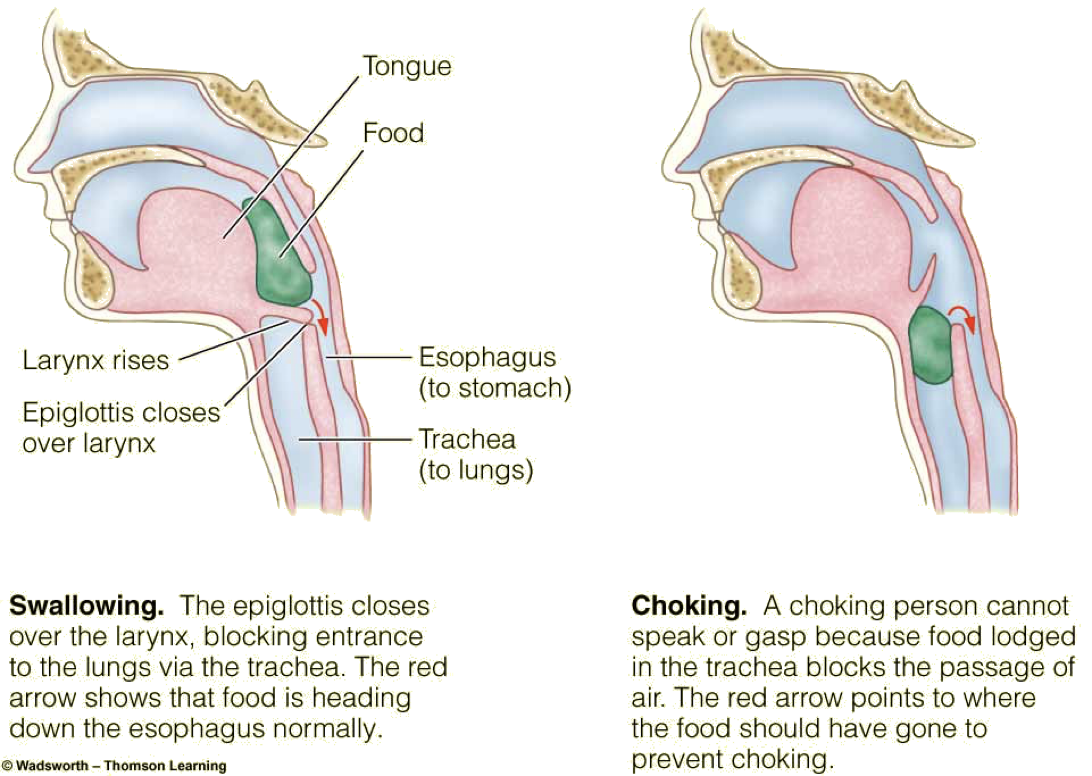
Esophagus - not under conscious control
Structure - 12'“ tube
2 sphincters: the upper esophagus sphincter (UES) and the lower esophagus sphincter (LES)
Upper esophagus sphincter (UES) opening is triggered by swallowing
Lower esophagus sphincter (LES) protects esophagus from stomach acids (one-way valve mechanism)
Function
Transports food from mouth to stomach
Muscle contraction (peristalsis) and gravity aid food movement
Digestion
Mechanical (limited)
Enzymatic- carbs digestion continues (salivary amylase)
Stomach
Structure → muscular sack that can expand
Digestion
Mechanical (3 muscle layers) → stomach muscles grind food into paste called chyme
Enzymatic
Chemical Digestion
Proteins | Enzyme: Pepsin Secreted by chief cells in the stomach Works at pH 3-4 |
Carbohydrates | Salivary amylase (from saliva) Works at pH >4 |
Fats | Lingual lipase (from saliva) |
Protein digestion is starting in the stomach
Carbs and fats digestion still ake place but its not as important due to the low pH
Gastric acid has pH 1.5 to 3.5
Secretions → several substances are being secreted by the stomach
Pepsin - protein digestion (enzyme)
Gastrin - hormone that stimulates stomach to release secretions
Gastric (hydrochloric) acid - unravels proteins, kills bacteria, activates pepsin, helps absorption of iron, calcium
Mucus - secreted by goblet cells, protects stomach, moistens food, prevents autodigestion
Intrinsic factor - protein needed for vitamin B12 absorption
Physiology and secretions
Goblet cells- secrete mucus
Chief cells- secrete enzyme
Parietal cells- secrete gastric acid
Functions
Hydration, dilution of the chyme
Homogenization of chyme
Hydrolyze food
Enzymes from salivary glands
Gastric enzymes
Gastric acid (pH 3-5)
Regulates digestion and absorption via gastric emptying
Gastric emptying
Depends on
Quality of food in the stomach
Quality
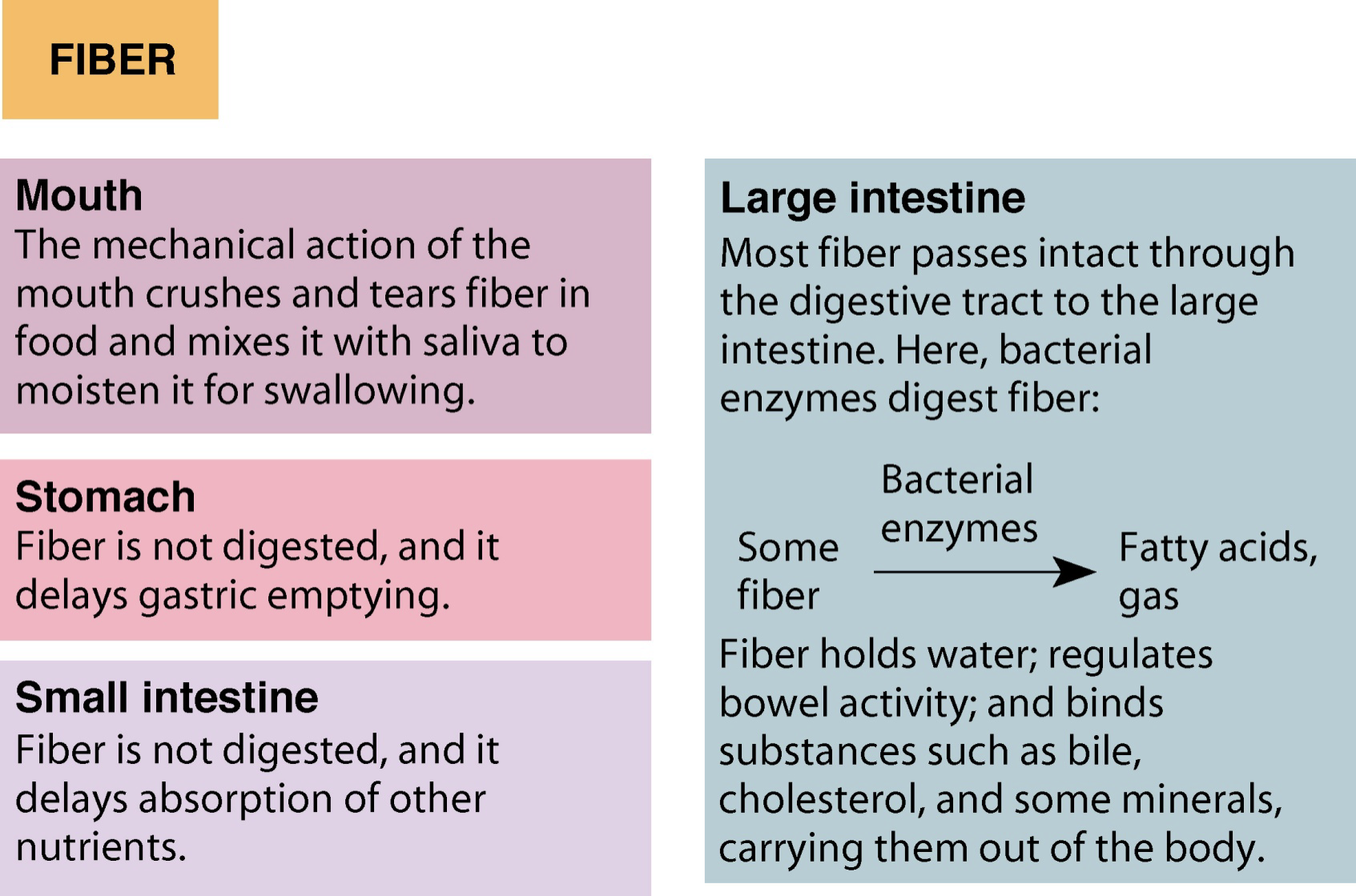
An increase in stomach content, caloric content, viscosity and fiber content will decrease gastric emptying
Gastric emptying is also influence by sex, physical activity, pregnancy
↑ Fluidity
↑ Gastric emptying
↑ Viscosity
↓ Gastric emptying
↑ Stomach content
↓ Gastric emptying
↑ Fat / caloric contents
↓ Gastric emptying
↑ Fiber contents
↓ Gastric emptying
Once in the small intestine, chyme inhibits motor activity of stomach
Review
Food undergoes different processes:
Digestion
Absorption
Transport
Elimination
Gastrointestinal (GI) tract:
Is a series of organs arranged as a long tube that works together to process foods
Mouth → anus
1) Mouth
2) Esophagus
3) Stomach
4) Small intestine
5) Large intestine
Accessory organs
Salivary glands, liver, pancreas, gallbladder
Digestion
The process by which food is broken down into absorbable units to release nutrients
Ingestion does not ensure absorption, when in the GI tract, nutrients are OUTSIDE the body
2 types of digestions:
Mechanical
Enzymatic (chemical)
Enzyme = molecules that catalyzes chemical reaction
Organs | Mechanical digestion | Enzymatic digestion | Other secretions | Accessory organs |
Mouth 5-10% digestion | Teeth break food down | Salivary amylase (carbs) Lingual lipase (fats) | Haptocorrin | Salivary glands secrete amylase and lipase |
Esophagus | Limited | Salivary amylase (carbs) | Salivary glands secrete amylase and lipase | |
Stomach Regulates digestion and absorption via gastric emptying | 3 muscles layers grind food into chyme | Pepsin (chief cells - proteins) Salivary amylase (carbs) Lingual lipase (fats) | Intrinsic factor Mucus (goblet cells) Gastric acid (parietal cells) Hormone
| Salivary glands secrete amylase and lipase |
Circulatory System
Permits blood and lymph circulation
Lymph contains white blood cells but no red blood cells
Ex: liquid in a blister is lymph
Lymphatic system works with blood circulation system
Small Intestine
Major site of digestion and absorption
Digestion of carbohydrates, fats, proteins
Vitamins and minerals do not need digestion
Nutrients are absorbed into either capillaries (blood) or lacteals (lymph)
About 20 feet long → folds all along the inside with finger like structures (villi) lining the walls/ folds with more finger like structures on each one (microvilli)
Divided into: duodenum, jejunum, ileum
Villi are tiny finger-like projections in the small intestine that increase the surface area for absorption, allowing for more efficient nutrient uptake
Each villus is covered with even smaller projections called microvilli that provide the absorptive surfaces that allow nutrients to pass through to the body
Microvilli and villi increase the contact surface between chyme and GI cells
Secretions of the small intestine
Mucus by goblet cells -→ protects lining of small intestine from the acidity of the chyme
Digestive enzymes that finish the digestion of carbs, fats, and proteins
Hormones → Gastric-inhibitory peptide, secretin, CCK
Hormones
Gastric-inhibitory peptide → produced when chyme enters small intestine
Slows stomach secretions so that chyme isn’t released all at one time
Slows GI motility
Secretin → produced when chyme enters small intestine
Stimulates pancreatic secretions
Cholecytokinin - CCK → produced when fat/proteins enters small intestine
Stimulates gallbladder to release bile and pancreatic secretion
Slows GI motility
Reduces food intake
Secretions INTO small intestine
Pancreatic secretions
Digestive enzymes → digestion of carbs, fats, proteins
Sodium bicarbonate → neutralizes acidic chyme
Liver and gallbladder = bile
liver makes bile
gallbladder concentrates and stores bile
bile aids to digest lipids (fat)
Digestion
Mechanical
Peristalsis (muscle contraction) pushed food through small intestine
Segmentation mixes chyme with digestive juices and breaks up food mass into smaller masses
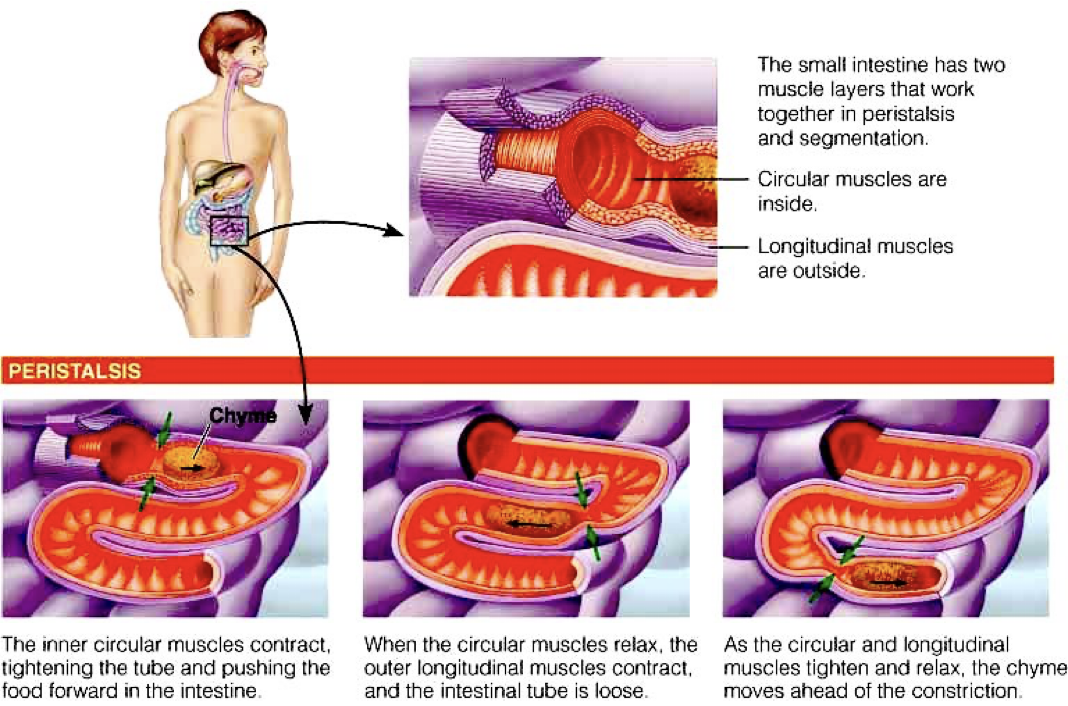
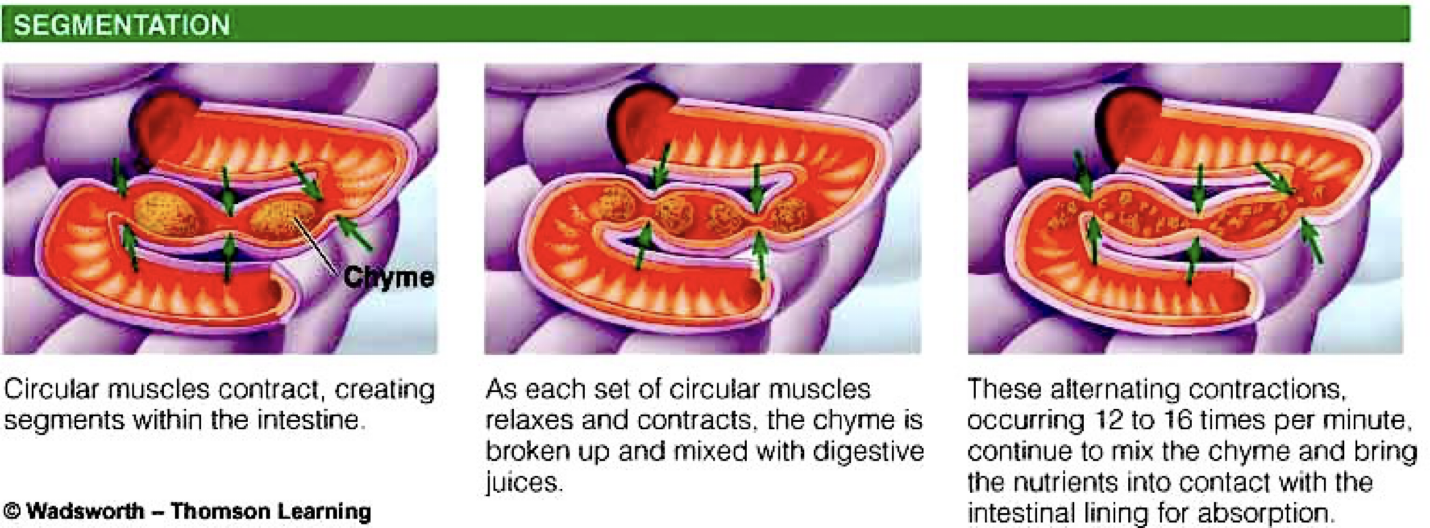
Chemical/enzymatic
Pancreatic and small intestine enzymes digest carbs, fats, and proteins into absorbable units
Absorption
Absorbed into capillaries → Blood takes nutrients to the liver for processing after absorption
Digested carbs and proteins
Minerals
Water soluble vitamins
Absorbed into lacteals (lymph) → nutrients travel through lymph system to chest area where lymph and blood join, nutrients enter blood and travel to liver
non-water soluble or fat related
Digested fats
Fat soluble vitamins
Cholesterol
The End Products of Digestion
Nutrients need to be broken down into small units that can be absorbed
Big unit → little unit
Protein → amino acids
Carbohydrate → monosaccharides
Fat → fatty acids
If you don’t absorb it then you don’t get any calories from it
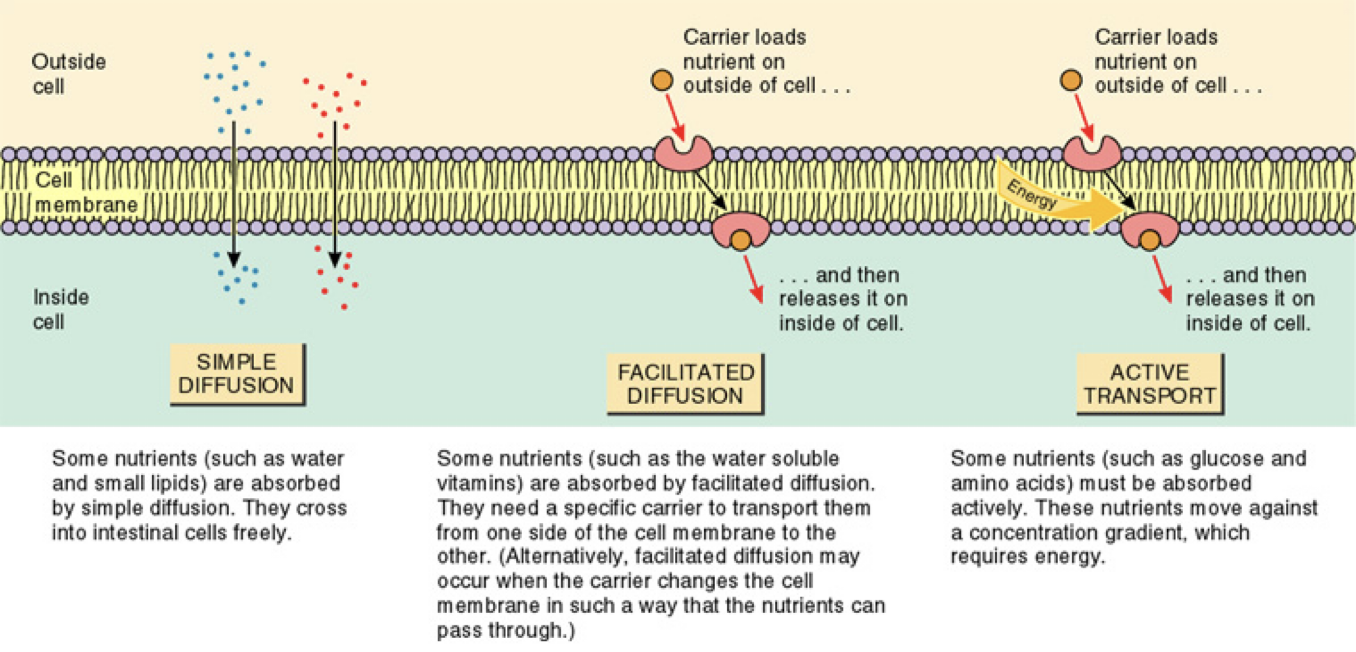
Simple diffusion = water and small lipids
Facilitated diffusion = water soluble vitamins
Active transport = glucose and amino acids
Organs | Mechanical digestion | Enzymatic digestion | Other secretions | Accessory organs | Absorption |
Mouth 5-10% digestion | Teeth break food down | Salivary amylase (carbs) Lingual lipase (fats) | Antibodies Haptocorrin | Salivary glands secrete amylase and lipase | |
Oesophagus | Limited | Salivary amylase (carbs) | Salivary glands secrete amylase and lipase | ||
Stomach Regulates digestion and absorption via gastric emptying | 3 muscles layers grind food into chyme | Pepsin (chief cells - proteins) Salivary amylase (carbs) Lingual lipase (fats) | Intrinsic factor Mucus (goblet cells) Gastric acid (parietal cells) Hormone
| Salivary glands secrete amylase and lipase | |
Small intestine site of digestion and absorption Duodenum-Jejunum- Ileum Villi and microvilli | Peristalsis Segmentation | Digestives enzymes (carbs, proteins, fats) | Mucus (goblet cells) Hormones
| Pancreas
Liver
Gall bladder
| capillaries Carbohydrates
lacteals
|
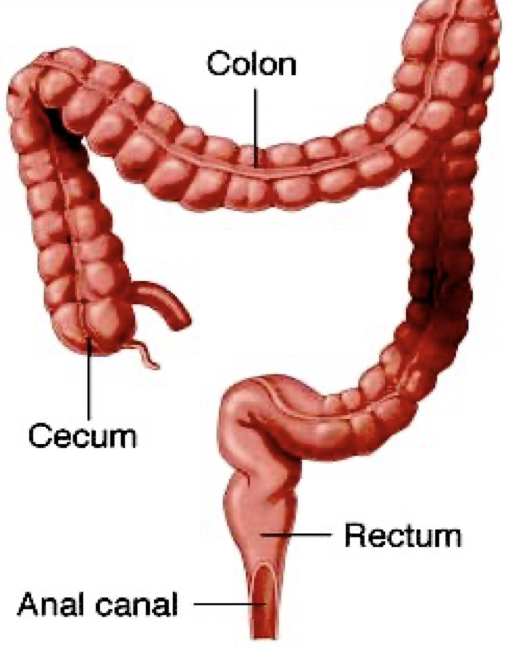
Large Intestine (Colon)
Lower part of the intestine that is wider than the small intestine and has no villi
Digestion
Nutrient digestion already complete
Some digestion of fibers by bacteria
Absorption
Water
Sodium, potassium, chloride
Vitamin K (produced by bacteria)
Elimination
Feces pass from colon into rectum
Rectum stores feces until excretion occurs
Liver
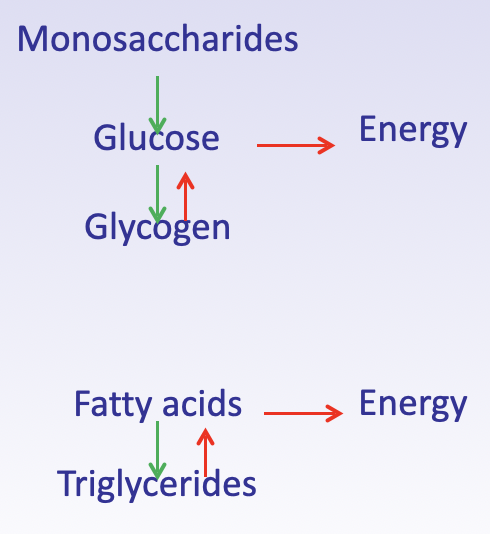
Liver = produces and stores “energy”
Nutrients in the liver
Carbohydrates
Monosaccharides → glucose
Glucose → energy
Glucose ← → glycogen
Lipids
Products of digestion → fatty acids
Fatty acids → energy
Fatty acids ← → triglycerides
Proteins
Makes non-essential amino acids (AA)
Removes excess amino acids (AA) from blood
Removes ammonia (NH3) from blood
Makes other nitrogen-containing compounds (DNA, RNA)
Makes blood proteins such as clotting factors
Other functions of the liver
Detoxifies alcohol, drugs and poisons; prepares waste products for excretion
Helps break down red blood cells
Stores most vitamins and many minerals
Forms lymph
Digestive Problems
Gastroesophageal reflux disease (GERD) → heartburn
Stomach contents re-enter esophagus
Treatment
Smaller meals, no food 3 hours before bed
Elevate head of the bed, use of antacids
Celiac disease
Allergy to gluten
Gluten = protein found in wheat, barley, rye
Antibodies are released and attack microvilli → GI inflammation
Managed by gluten-free diet
No wheat, rye, barley
Irritable Bowel Syndrome (IBS)
Affects 20% of Americans
Inflammation of the GI tract
Cramps, gassiness, bloating, irregular bowel function
Treatment
Elimination diet → eliminate foods that cause symptoms from the diet
Moderate caffeine intake
Favor low fat foods and small meals
Stress reduction
Constipation- hard, dry, infrequent stools that can be reduced by high fiber, intake, exercise
Diarrhea
Loose, watery, frequent stools
Symptom of diseases/infections
Can cause dehydration
Diverticulosis
“Pouches” along colon
High fiber diet reduces formation
Review
MODULE 3: CARBOHYDRATES AND ALCOHOL
What we already know about carbs
Carbs
Organic nutrient
Mono and polysaccharides
4 kcal/g
Found in fruits, vegetables, grains, and “sweets”
Digestion and absorption
Digestion starts in the mouth (salivary amylase)
Not much happening in the stomach
Digestion continues in the small intestine
Fibers are digested by bacteria in the large intestine
Absorbed in capillaries (monosaccharides) via active transport
Where do carbs come from
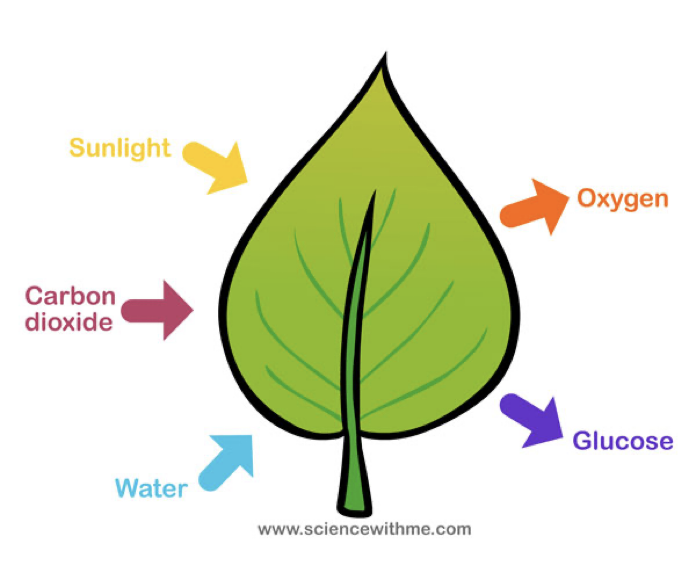
Plats convert the sun’s energy into carbohydrates by photosynthesis
Converting light energy from the sun into chemical energy stored in carb molecules
Simple vs Complex Carbohydrates
Carbs are composed of carbon, hydrogen, and oxygen (CHO)
Each units contain 6 carbon atoms, 12 hydrogen atoms, 6 oxygen atoms (C6H12O6)
Simple carbohydrates
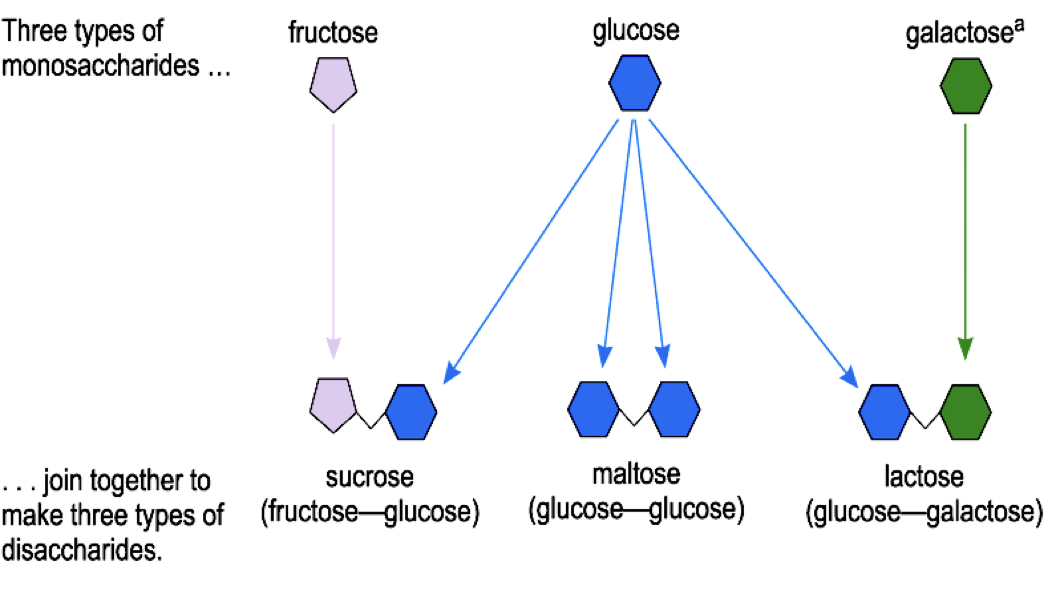
Monosaccharides: one unit
Disaccharides: two units
their name ends in -ose
Mono- and disaccharides are also called
Complex carbohydrates
Polysaccharides: long chain on units
Dietary fibers are polysaccharides
Simple Carbohydrates = sugars
Monosaccharides- single sugar unit
Glucose
found in fruits, vegetables, honey
“blood sugar” → used for energy
Fructose
Found in fruits, honey, corn syrup
“fruit sugar”
Galactose
Found as part of lactose in milk
Disaccharides- two linked monosaccharide units
Sucrose = glucose + fructose
“table sugar”
made from sugar cane and sugar beets
Lactose = glucose + galactose
“milk sugar”
found in milk and dairy products
Maltose = glucose + glucose
Found in germinating cereal grains
Product of starch breakdown
Complex Carbohydrates
Polysaccharides
2 types of complex carbs
Digestible
Starch- long chains of glucose units
Amylose- straight chains
Glycogen- highly branches chains of glucose units
Body’s storage form of carbohydrates in liver and muscles but undetectable in meat
Non-digestible
Dietary fiber- cannot be digested so 0 kcal/g
bacteria can digest some of them
Chains of monosaccharides
Short chains (oligosaccharides)
Long chains
Dietary Fibers
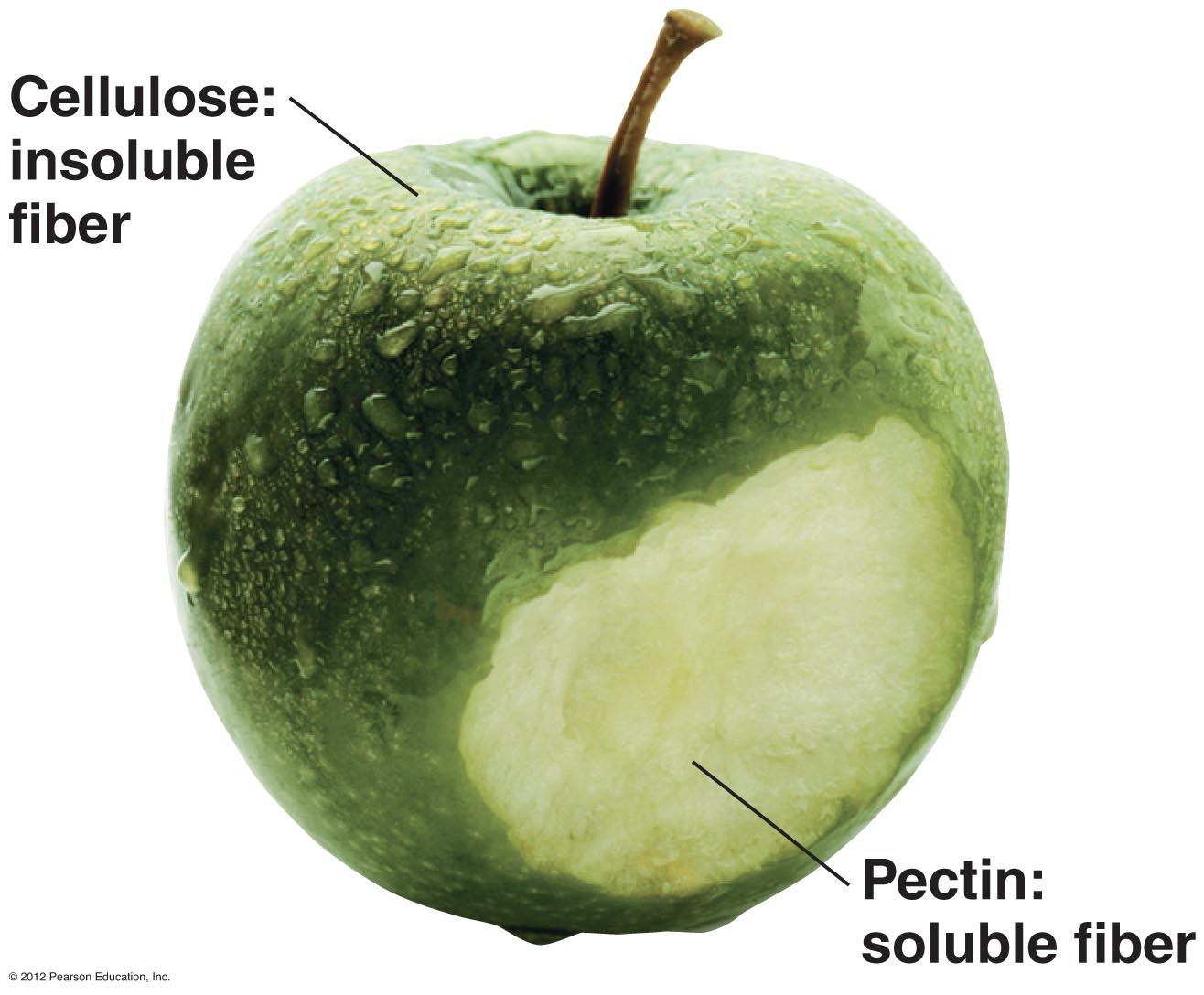
Soluble fibers
Dissolves in water and is fermented by intestinal bacteria → can be digested by bacteria in the colon
Found in oats, legumes (dried peas and beans)
Ex: pectin in fruits and vegetables
Lowers blood and cholesterol
Control blood glucose
Insoluble fibers
Do not dissolve in water
Found in bran of whole grains, seeds, vegetables
Ex: cellulose, hemicellulose, lignins
Increases GI transit
Prevents constipation
Most plant food contain soluble and insoluble fibers
Carbohydrates Consumption, Digestion, and Absorption
Consumption
Populations of the world derive more then ½ of their nutrients from carbohydrate foods
Easy to grow
Highly palatable (=good)
Can be stored for reasonable periods → Classic examples: rice, corn, wheat, potatoes, oats
Most desirable form of energy for body
In form of glucose
Brain and red blood cells especially rely on glucose for fuel source
Digestion
Begins in the mouth → salivary amylase begins digestion of starch
Digestion slows in the stomach
Digestion resumes in small intestine
Pancreatic amylase (secreted by pancreas)
Starch digestion to disaccharides
Brush border enzymes (secreted by small intestine)
Digest disaccharides to monosaccharides
Absorption
End products: monosaccharides
Glucose, fructose, galactose
Absorbed by active transport
Absorbed into bloodstream then processed in the liver
Are converted to glucose (for galactose and fructose) in the liver
Fibers are not digested
Use of Glucose
Glucose is the main source for energy for your body
Blood glucose levels must be maintained
Adequate glucose levels → where does the extra glucose go?
Storing glucose as glycogen → when we have adequate carbohydrate from diet, liver stores extra as glycogen
Converting glucose to fat → when we have excessive carbohydrate, and glycogen stores are filled, will store extra as body fat
Inadequate glucose supply → where do we find glucose
Glucose blood levels must be maintained
Short term → making glucose from glycogen
Blood glucose come from breakdown of liver glycogen
This pathway will be used when fasting for short time (ex: sleeping)
Long term → making glucose from protein
Blood glucose comes from breakdown of muscle (protein)
This pathway will be used when there is not enough dietary glucose (ex: low carb diet)
Byproduct of muscle breakdown is NH3 (ammonia) excrete through the kidneys as urea
This stresses the kidneys
When there is inadequate carbohydrates in the diet, the has 2 problems
Having no glucose, the body turns to protein to make some glucose
breakdown of muscle
Kidney stress
Without carbohydrates in the diet, fat cannot be used correctly for energy, and the body converts its fats into ketone bodies
Glucose can be stored into fats, fats can not be used to make glucose
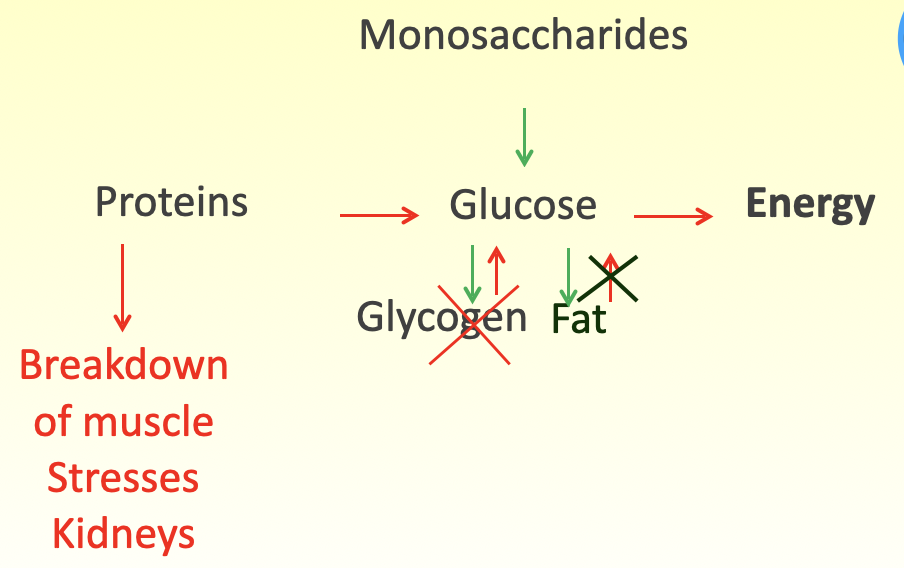
Glucose = sugar used by body for energy
After digestion monosaccharides are converted to glucose in the liver
When there is enough glucose the rest is stored as glycogen
When glycogen stores are full its going to be stored as fat
When blood glucose levels are low we need more glucose → first we make it from glycogen
Glucose cannot be made from fat
When all glycogen is depleted, protein will be used to make glucose → breakdown of muscle and causes stress to kidneys
Break down of glucose provides energy
Hormonal Regulation of Blood Glucose
Insulin and glucagon are 2 hormones involved in regulating blood glucose (glycemia)
Insulin triggers storage of glucose as glycogen
Glucagon triggers glycogen break down to release glucose
Both of these are secreted by the pancreas and release depends on blood glucose
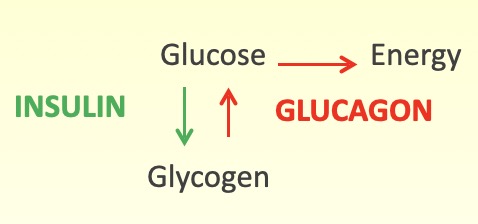
Eat a meal
Increase blood glucose (high BG)
High BG increases insulin release from pancreas
Insulin decreases BG by letting glucose into tissues/organs
When fasting
Low BG
Low BG increase glucagon release from pancreas
Glucagon increases BG by breaking down glycogen
Diabetes
Diabetes Mellitus- persistent high blood glucose levels
Type 1: lack of insulin production (immune disease)
Own immune system attacks pancreas
Treat with insulin (insulin-dependent)
Type 2: liver cells are resistant to insulin
Treat with diet and exercise
May treat with oral medications
May treat with insulin
Type 1 Diabetes | Type 2 Diabetes | |
Age of Onset Body cells Body fatness Insulin shots required Hypoglycemic agents effective Natural insulin Pancreatic function Severity of symptoms | Childhood or mid-life Responsive to insulin action Generally low to average Yes No Pancreas makes too little or none Insulin-producing cells impaired or nonfunctional Relatively severe, many are apparent on diagnosis 5%-10% | Adulthood (usually) but, can occur in childhood Resistant to insulin action Generally high Possibly Yes Pancreas makes enough or too much Insulin producing cells normal Relatively mild; few or one may be present on diagnosis 90-95% |
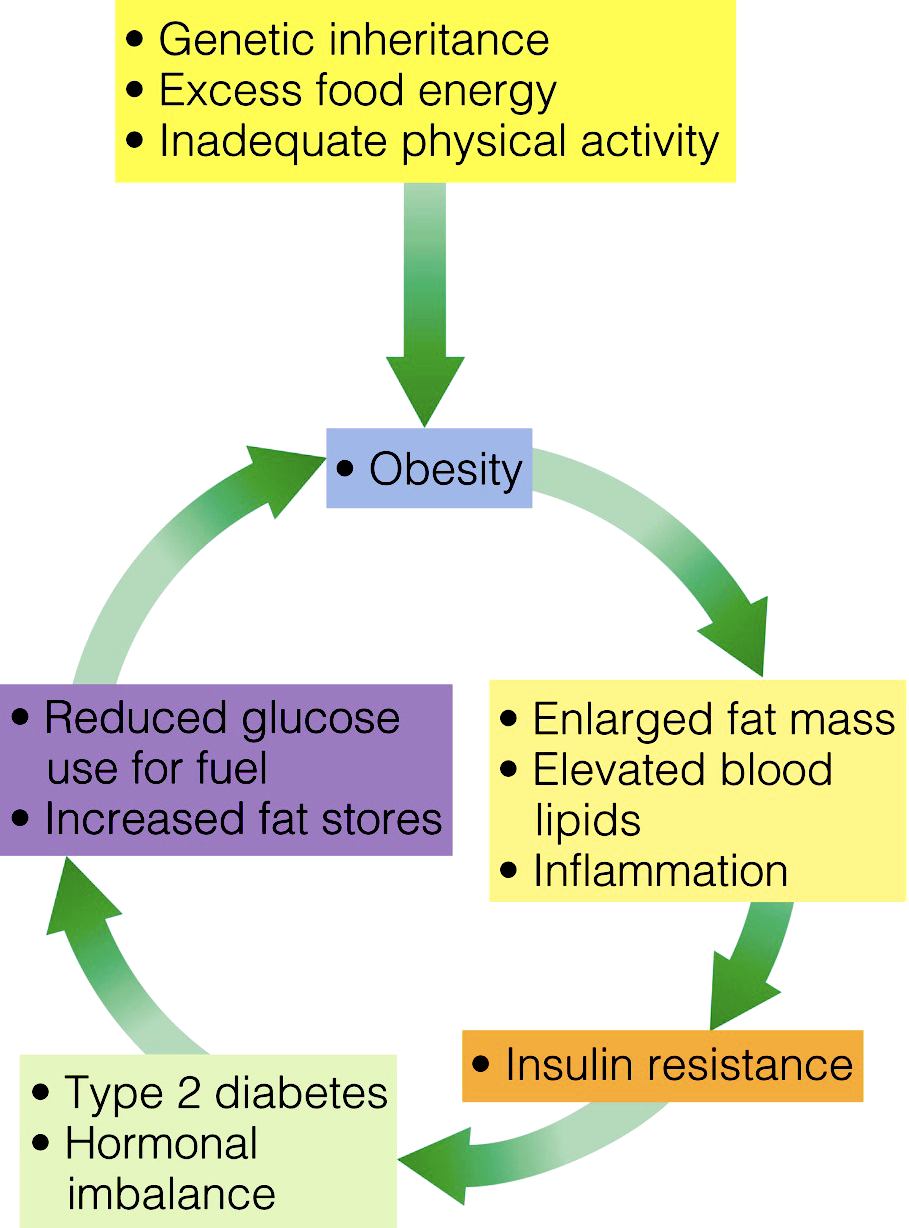
Type 2 diabetes and obesity
Type 2 diabetes- predominant type of diabetes
Lose sensitivity to insulin
Obesity underlies many cases
other factors foreshadowing development
Middle age and physical inactivity
Body fat accumulation
Genetic inheritance
Management of Diabetes
Controlling blood glucose is key
Monitoring blood glucose levels (glucometer)
Taking medications → insulin injections if needed
Type 2: controlling body fatness
Establish good/regular eating patterns
Diet adaptation
Carbohydrates timing
If insulin injection are used, injections and carbs intake must be timed
Artificial sweeteners
Hypoglycemia
Abnormally low blood glucose
Rare, but true disease
Postprandial hypoglycemia
Hypoglycemia following a meal
Requires test to detect
Fasting hypoglycemia
Hypoglycemia when food is not consumed for a while
Methods to reduce symptoms
Eat frequent meals
Avoid “sugars load”
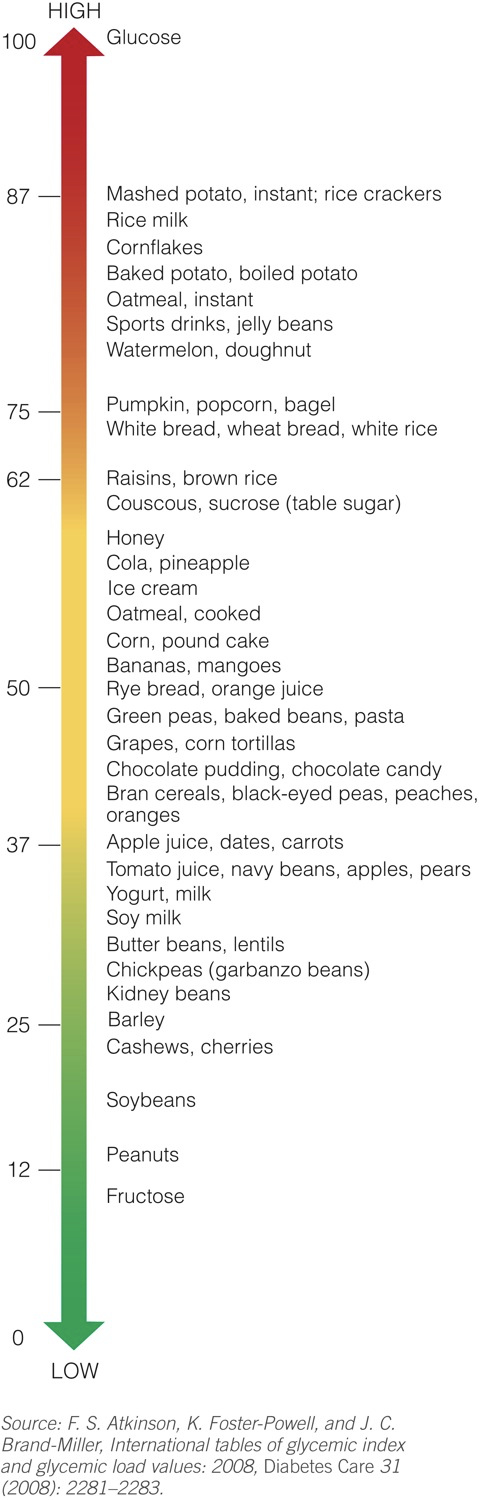
Glycemic Effects of Foods
Glycemic index affected by
Type of carbohydrates (simple sugars increase glycemic index)
Cooking process
Presence of fat or fiber (decrease glycemic index)
Glycemic index of foods not always easy to predict
Ice cream has low index due to fat content
Bread and potatoes have high index because starch is quickly digested
% as compared to glucose (=100%)
Angel food cake: 67
Waffles: 76
White bread: 70
All Bran: 42
Corn Flakes: 84
Instant rice: 91
Ice cream: 61
Skim milk: 32
Pineapple: 66
Black-eyed peas: 42
Spaghetti: 41
Carrots: 71
Baked potatoes: 85
Green peas: 48
Carbohydrates and health
High sugar (mono/disaccharides) intake
Low nutrient contents
Contributes to tooth decay
If excess kcal, contributes to obesity
High fiber intake
Reduce blood cholesterol
Reduced risk of heart disease
Healthier GI functioning
Carbohydrates in your diet
Recommended carbohydrate intae
45-65% of kilocalories
Daily Value (for 2,000 kcal) = 300 grams
Dietary guidelines for carbohydrates
Make half of your grains whole grains
Choose and prepare foods and beverages with little added sugars
Recommended fibers intake (Daily Value 2000 kcal diet)
38 grams for men
25 grams for women
Dietary guidelines for carbohydrates
Make half your grains whole grains
Choose and prepare foods and beverages with little added sugars
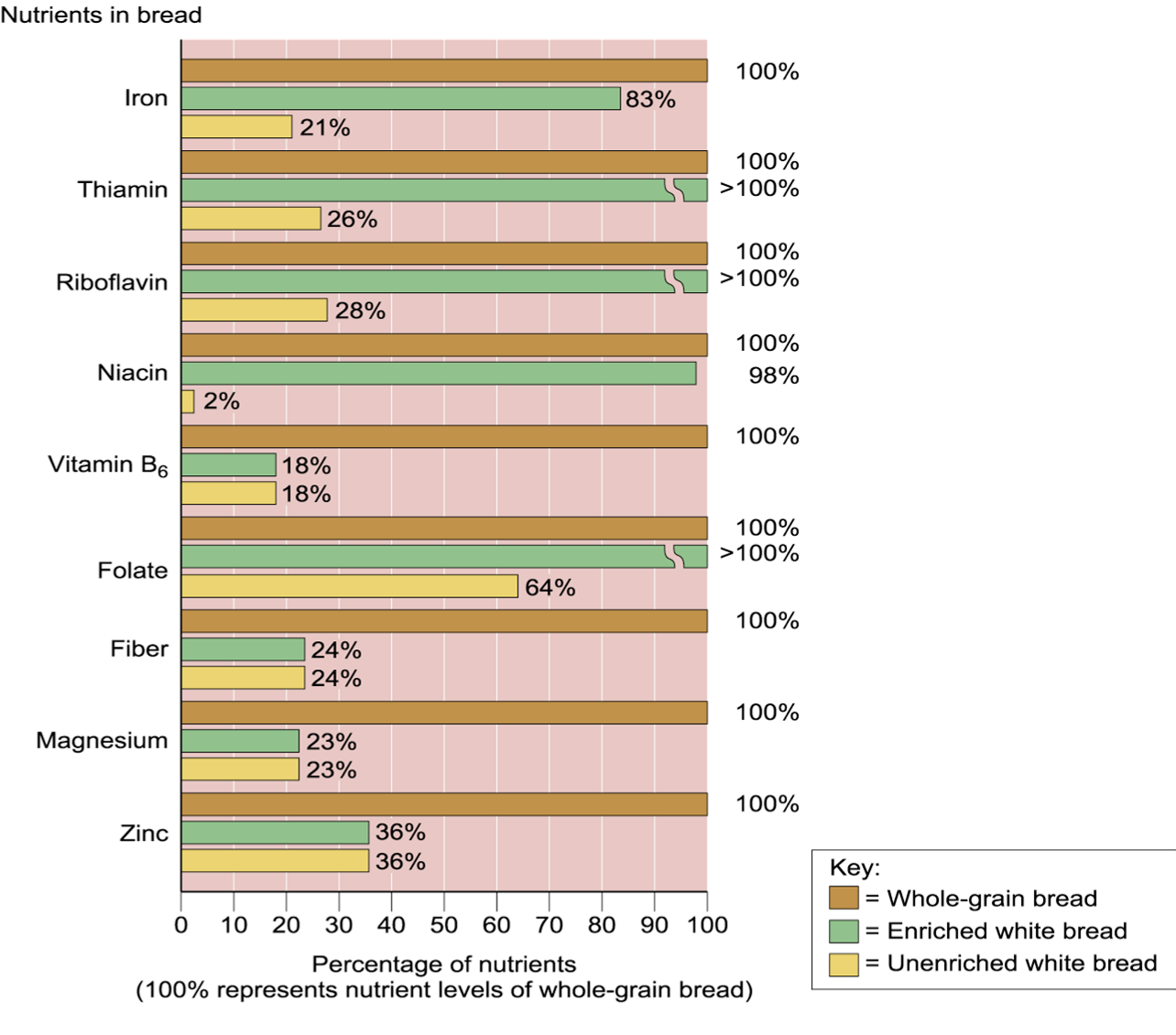
Nutrients in bread
Whole grains contain more nutrients than refined grains
Make half of your grains whole grains
Sugars
Mono and disaccharides
Rapidly absorbed
Raise blood glucose
Can contribute the kcal overload
Sugars are however commonly used as an additive, they can:
Enhance flavor
Provide fuel for fermentation (bread, beer, wine)
Act as a preservative (jams)
Balances acidity of tomato and vinegar-based products
Natural vs added sugars
Natural sugars
Naturally occurring sugars found in fruits and dairy
Usually more nutrient dense
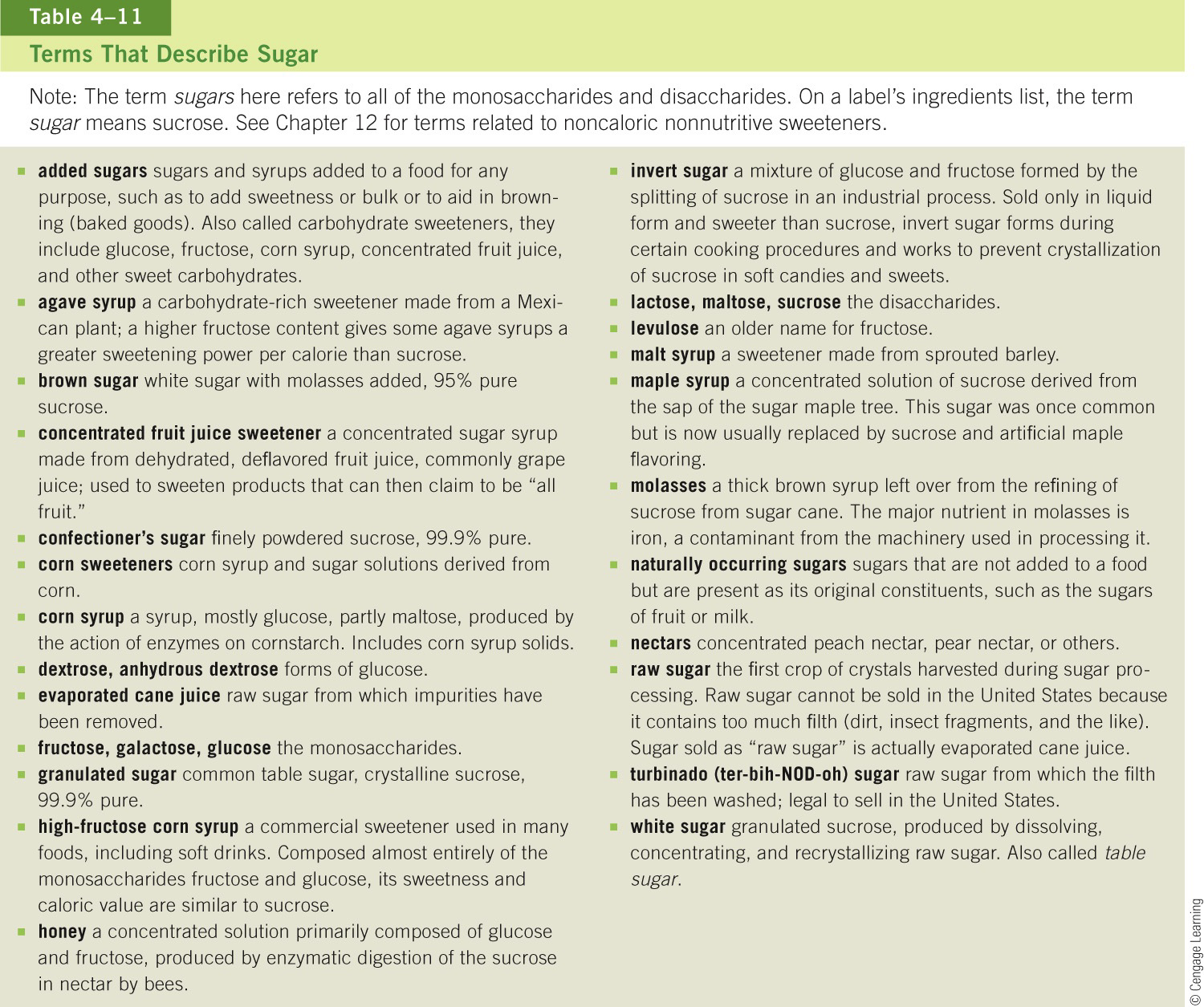
Added sugars
Sugars are added by manufacturers
Often “empty calories” or “discretionary” calories
Ex: soda, candy
Sugars - recommended intake
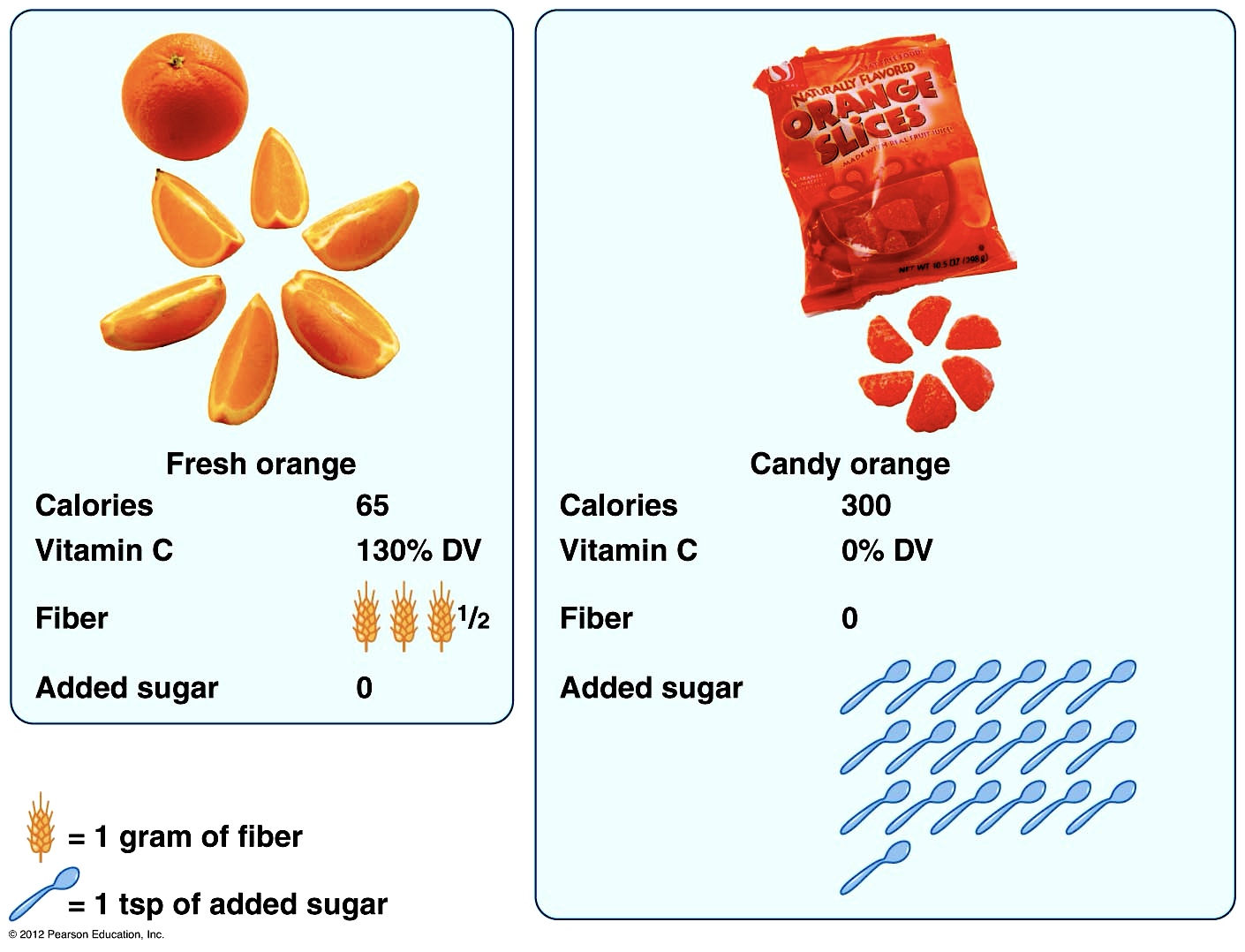
DGA 2026: “… reduce the intake of kcals from added sugars to no more than 10% each day”
The average American adult gets ~300 calories of added sugars each day… 18 tsp of sugar
Added sugars contribute calories, but not essential nutrients
High- Fructose Corn Syrup (HFCS)
HFCS is made through an enzymatic process which converts half of the glucose in corn syrup into fructose to increase the sweetness of the syrup
It is the principal sweetener used in processed foods and beverages - because it is cheaper
The effect on increase in obesity has not been proven
Effects on lipid metabolism
Fructose causes fats to accumulate in blood and liver
Appetite regulation
Fructose does not stimulate insulin release
Alternative Sweeteners
Advantages
Sweetness without the calories
Better for your teeth
Disadvantages
Flavor may not be quite right (bitter, metallic aftertaste)
Does’t act the same in food
Sugar alcohols can cause intestinal distress
$
Sweetener | Chem. Comp. | Body Response | Relative Sweetness | Energy (kcal/g) |
Acesulfame K | Potassium salt | Not digested or absorbed | 200 | 0 |
Aspartame | Amino acids + a methyl group | Digested and absorbed | 200 | 4 |
Saccharin | Benzoic sulfamide | Rapidly absorbed and excreted | 450 | 0 |
Stevia | Glycosides from herb leaves | Digested and absorbed | 300 | 0 |
Sucralose | Sucrose with 3 Cl instead of –OH | Not digested or absorbed | 600 | 0 |
Erythritol | Sugar alcohol | Partly absorbed in SI, metabolized by colon bacteria | 0.7 | 0.2 |
Sorbitol | Sugar Alcohol | Same as erythritol | 0.5 | 2.6 |
Aspartame
Acceptable Daily Intake
Defined as the amount of a food additive that can be safely consumed on a daily basis over a person’s lifetime without any adverse effects
Accepted daily intake: 50 mg/kg/body weight/day
Average consumption in the US is 2-4 mg/kg/day
200 mg aspartame per 12 oz diet soda
Phenylketonuria
Phenylketonuria (PKU) is a metabolic genetic disorder characterized by a mutation in the gene for the hepatic enzyme phenylalanine hydroxylase. This enzyme is necessary to metabolize the amino acid phenylalanine
Untreated PKU can lead to mental retardation, seizures, and other serious medical problems
The mainstream treatment for classic PKU patients is a strict PHE-restricted diet supplemented by a medical formula containing amino acids and other nutrients.
Aspartame contains phenylalanine