Speech Disorders Childhood Disorder Part 1
Speech Sound Impairments
Delayed:
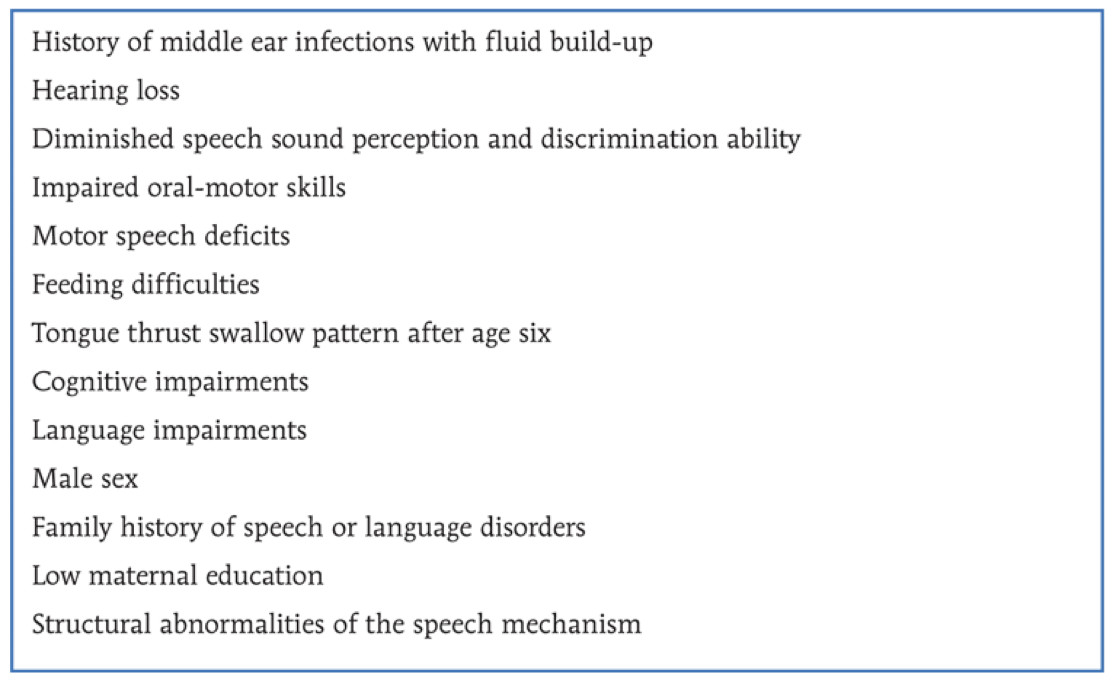
family history (genetic, biological, etc)
early & frequent ear infections (fluid built up, altering the way we hear sounds, vibration will be dampened)
personality factors (shy, easily frustrated, no motivation to meet their needs)
Disordered
childhood apraxia of speech (planning)
dysarthria (disruption in motor neurons to muscle/muscles attract too hard against one another) a.k.a neurological disorder
Premature representations
tried to learn later developing sounds (i.e. /r/) before motor development is complete, resulting in persistent errors (kid tried to learn sounds that are too difficult for their current development / this distortion gets stored & repeated)
Lifespan
75% of preschool children normalize their speech by age 6, with or without treatment
still considered best practice to treat, why? - it might not be a delay but a disorder which is why early intervention is important
some maintain errors, even with intervention
persistent errors, even with intervention
persistent errors usually involve substitutions or distortions of /r/, /s/, /z/, or /l/
can be treated at any time, but harder as we get older
Correlates/ Predictors
Cognitive Function & Speech
Cognitive: attention, memory, & executive function (carry out tasks) (problem-solving abilities, thinking)
weak relationship between speech disorders & IQ (measure of cognitive function), but
populations with impaired intellectual function (e.g. Down syndrome) have a higher prevalence of speech disorders
differences between cognitively impaired & typically developing (TD) apparent at age 3
persistent errors akin to phonological processes may last into adulthood
but no clear relationship between the degree of cognitive impairment & speech sound disorders in IWDS (individuals with Down syndrome), so likely that other factors play a role (anatomical differences)
IQ does not predict speech development
Language Impairments
10-15% of kids age 6 with speech production impairments also exhibit language impairments:
Morphology (internal structure of words & the rules by which words are formed) & Syntax (rules that govern the way words are put together)
Difficult to differentiate speech & language issues
morphological impairment vs persistent deletions
Lifespan issues:
weak phonological awareness ~ difficulties with reading, writing, & spelling
Y-Chromosome
Speech sound delays are more common
up to 3:1 difference (born with y-chromosome is more likely to express speech sound delay or disorder)
Brain development for fine motor areas different among sexes
XX chromosome generally develops speech sounds earlier
differences fade with age
higher risk of impact from extrinsic factors (outside the person)
some of the assessments have different normative data for each sex
Hearing Loss
perception of others (input less rich)
perception of self (monitoring)
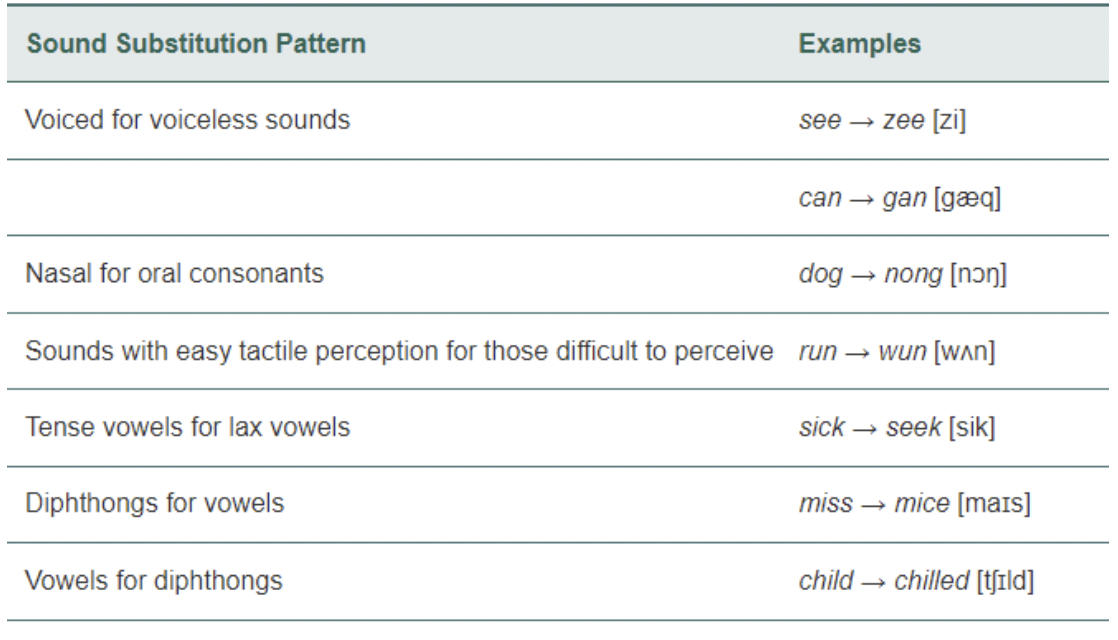
many areas of speech are affected
phonology
voice quality
rate
pitch
(this will vary on the individual)
Structural Abnormalities
coordinating rapid, alternating movements is necessary for speech
craniofacial anomalies
congenital malformations, such as a cleft lip/palate (issues holding pressure in the oral cavity)
affect speech, swallowing, & feeding
stops, fricatives, & affricates are difficult (can’t produce due to pressure)
why?
because it requires pressure build-up
there is continuing air pressure in the nasal cavity