Reproduction
Learning Goal: I can label and describe the function of the key components of the reproductive systems of males and females.
Female Reproductive System:
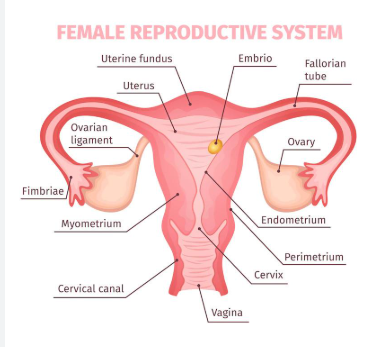
Vagina:
Muscular, hollow, tube-shaped organ
Functions: Sexual intercouse, the pathway that a baby takes out of a womens body during childbirth, the rate for menstrual blood to leave the body from the uterus.
Cervix:
Doorway connects vagina to the uterus
A very small hole that dialates only during childbirth
Above the vagina
Endometrium (More in Menstrual Cycle):
Place to provide nutrietion to allow fertilised egg to grow
Thickened blood sack
Day 4 begins to thicken with blood
If egg is not fertilised endometrium will break down.
Discomfort is caused by hormone imbalance different hormones are present and pain comes from the shedding of endometrium. → Elevated hormones, Genetics, other diseases.
Lining of the uterus
Uterus:
Shaped like an upside - down pear
Thick lining
Muscular Walls
Expands and contracts to accomodate growing fetus
Push baby out
Fallopian Tube:
Connects the uterus to the ovaries
The egg travels through the fallopian tube and is often fertilised in the fallopian tube.
Ovaries:
Two oval shaped organs that lie to the upper right and left of the uterus.
To produce, store, and release eggs into the fallopian tubes (Ovulation)
Male Reproductive System:
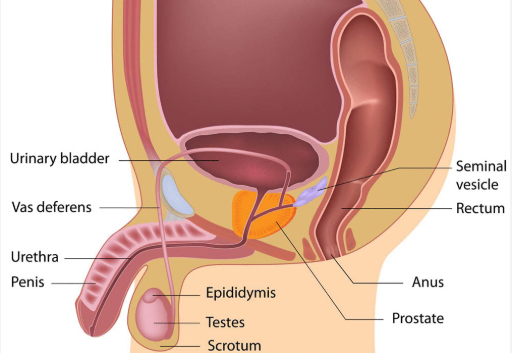
Produces and supplies sperm
How sperm is produced:
Testes → Cells → Hormones (Testosterone + ABP) → Sperm
Order:
Testes → Epididymus → Vas Deferens → Seminal Vesicles → Urethra → Penis
How Sperm Production happens:
Puberty → Pituitary Glands → Release hormones → Allows Sperm Production
Testes:
Produce sperm
Epididymus:
On top of testes
Grows + stores sperm
Set of coiled tubes
Connects to Vas Deferens
Stores, Matures and transports sperm
Seminal Vesicals
Semen (frutcose - Sperm energy)
Mixes with sperm
Sac attached to the Vas Deferens
2/3 fluid that combines with sperm to make semen.
Uretha:
Vas Deferens connects to the Uretha
This connects to penis
Vas Deferens:
Transpot Sperm
Loops around bladder
Transport sperm containing fluid called semen
Upward alongside the testicles
Ejaculatory:
Prostatic Urethra
Penis:
Made up of sponge-like tissue that can expand and contract
Made up of two parts: The shaft (Main part) + The glans (The tip)
At the endo of the glans is a small slit or opening, which is where semen and urine exit the body through the Urethra
Scrotum:
A pouch outside of the body
Helps regulate the temperature of the testicles which need to be kept cooler than body temp to produce sperm (Homeostasis)
Sperm:
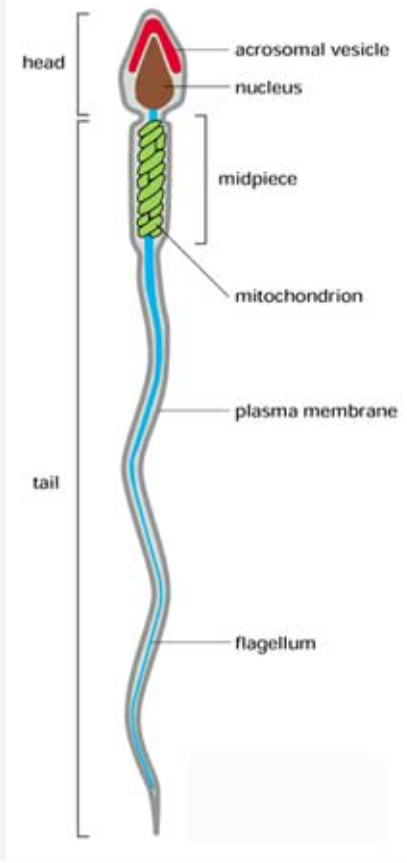
Acrosome (Contains digestive enzymes):
Digestive enzymes break down the outer layer of the egg
Nucleus:
Contains 23 chromosones half of a humans DNA
Collar:
Mitochondria → Energy for movement
Tail:
Movement
Swim