Supply And Demand
Demand is the different quantities of goods that consumers are willing and able
Inverse relationship between price and quantity demanded
[[when price increases, demand decreases[[
[[when price decreases, demand increase[[
Substitution Effect- price goes up for a product, consumer buys less and more of another substitute product (& vice versa)
Income Effect - price goes down for a product, consumers purchases more
Law of diminishing marginal ulitiy- as you consume anything, the additional satisifaction that you will eventually decrease
[[Five determinates Demand curve[[
- taste & preferences (trends/ marketing)
- number of consumers (population/demographic)
- price related goods( substitues & complements)
- income (normal good or inferior good)
- Future expectations (seen the most)
Suppy is the different quantities of a good that sellers are willing and able to sell at different prices
A shift is caused by anything BUT price
[[Determinates of supply curve[[
- Cost of production of inputs (cost goes up supply moves left)
- number of sellers (natural disaster causes decrease)
- technology
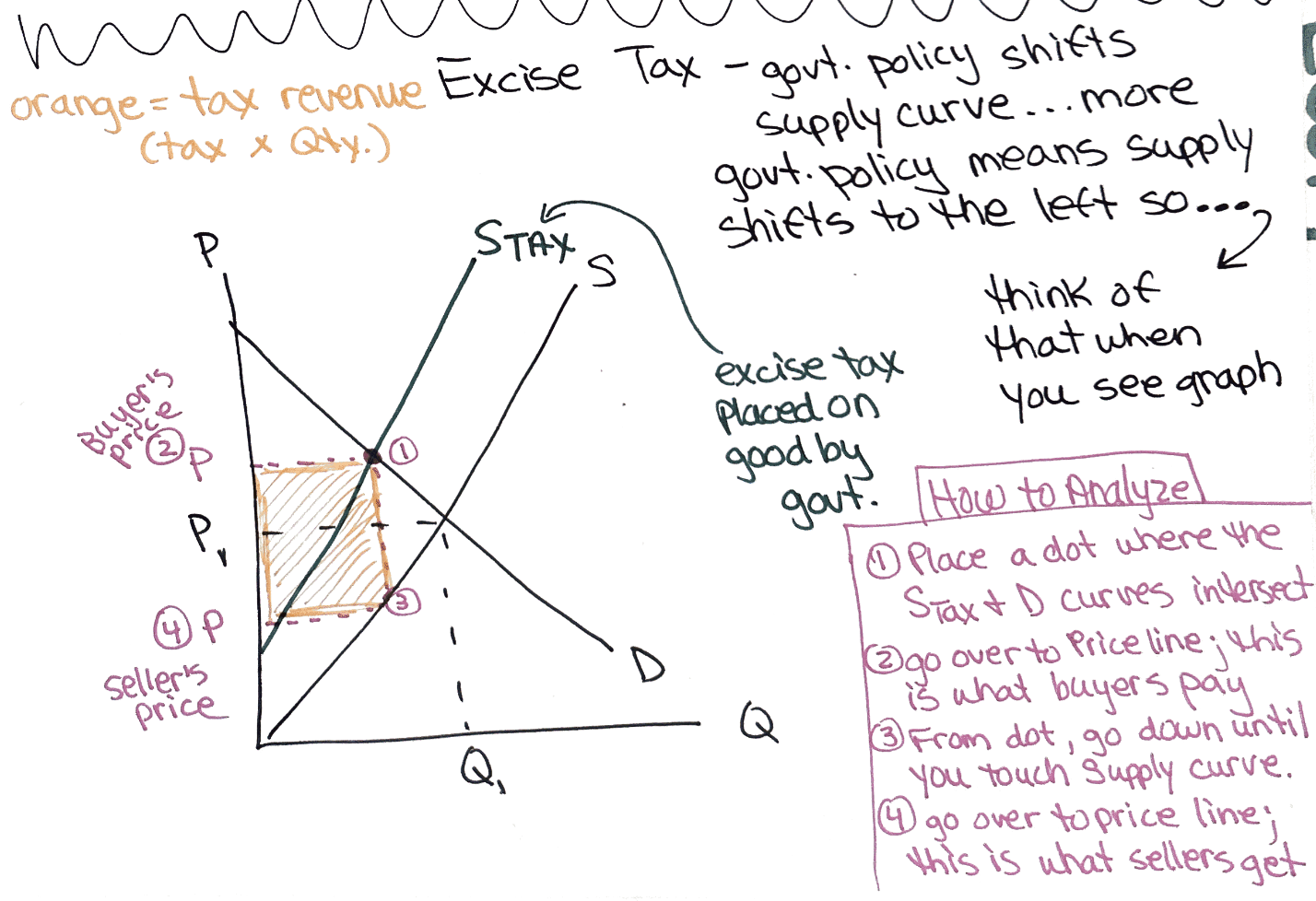
- government action ( taxes/ tarriffs/ excise)
Drawing an Equilibrium graph
- draw graph
- shift curve
- label
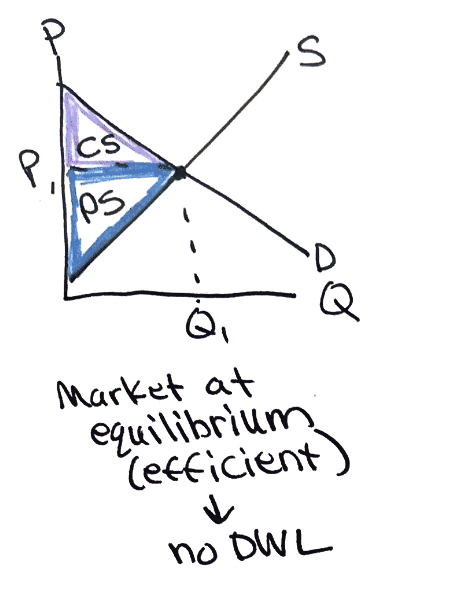
Consumer Surplus: economic benefit or gain that consumers receive when they are able to purchase & willing to pay.
Producer Surplus: the total amount that a producer benefits from producing and selling a quantity of a good at the market price.
Tarrifs - taxes on imported goods
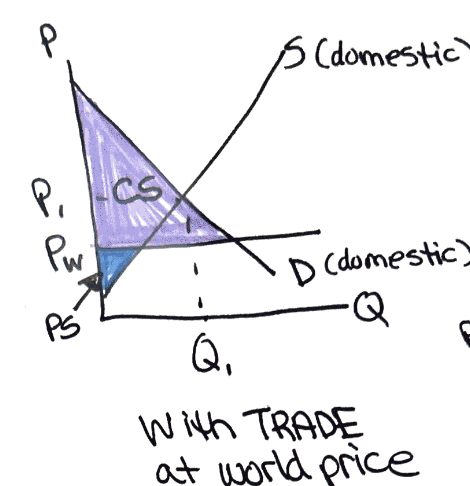
pw - world price
Qs- domestic production
Qd- domestic demand
With trade: consumer goes up producer, goes down
Tarriff
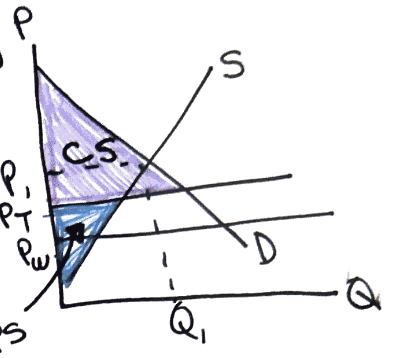
Pt- tax on trade (tarriff)
Tarriff revenue - how much gov made
Dwl- dead weight loss
With Tarriffs: producers surplus goes up
Price control
price ceiling - maximum price legally a seller can charge for a product
- goal is to make affordable by keeping price from reaching equilibrum
Price floor - minimum legal price a seller can sell a product
- goal is to keep price high by keeping it from falling to equilibrum
Excise tax- a per unit tax on producers (for every unit made, the must pay money for unwanted units)
- examples: cigerattes/alchol tax (sin tax)