Metabolism!
Metabolism!
Subtopics are highlighted, terms are bolded, and definitions are underlined :)
ATP:
ATP stands for Adenosine Triphosphate. It is the primary energy carrier needed to conduct cell work and is very good at energy transfer (also meaning that it is not good at energy storage).
Why is ATP used as the main energy transfer molecule and not glucose?
There is too much energy in one glucose molecule. Most cell processes require one ATP molecule at a time. Glucose is also good at storing energy not transferring energy like ATP is.
There are three types of cell work...
Chemical Work - ex. building a large molecule
Mechanical Work - ex. moving a muscle protein
Transport Work - ex. pumping solutes across a membrane from a low to a high concentration
ATP Cycle -
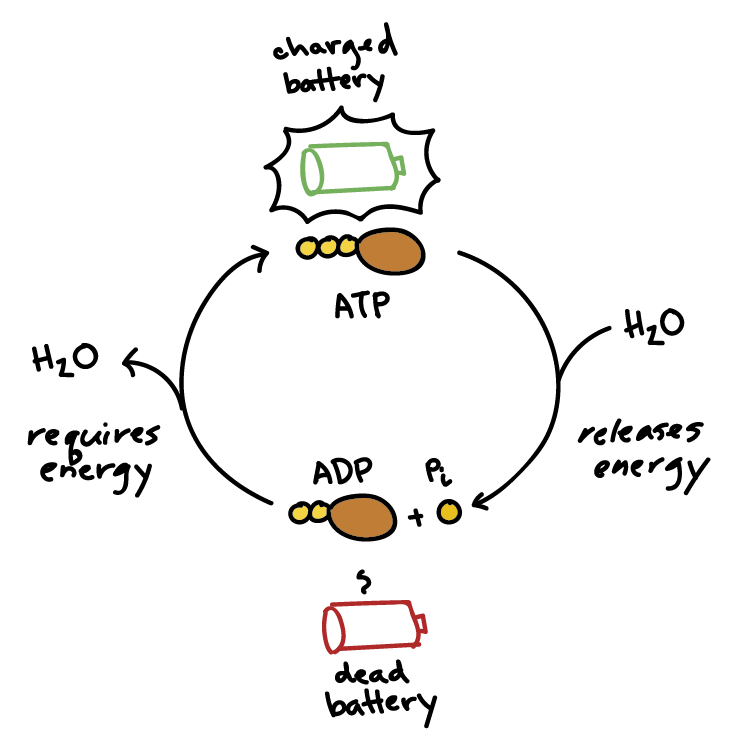
Energy is required to form ATP. Energy is released when ATP is broken down into ADP and P.
Cell Respiration:
Cell Respiration - a chemical process that breaks down organic compounds such as carbohydrates in the presence of oxygen and uses the energy released from this process to form ATP
Cell Respiration is an aerobic process, meaning oxygen is required.
There are three stages in cell respiration...
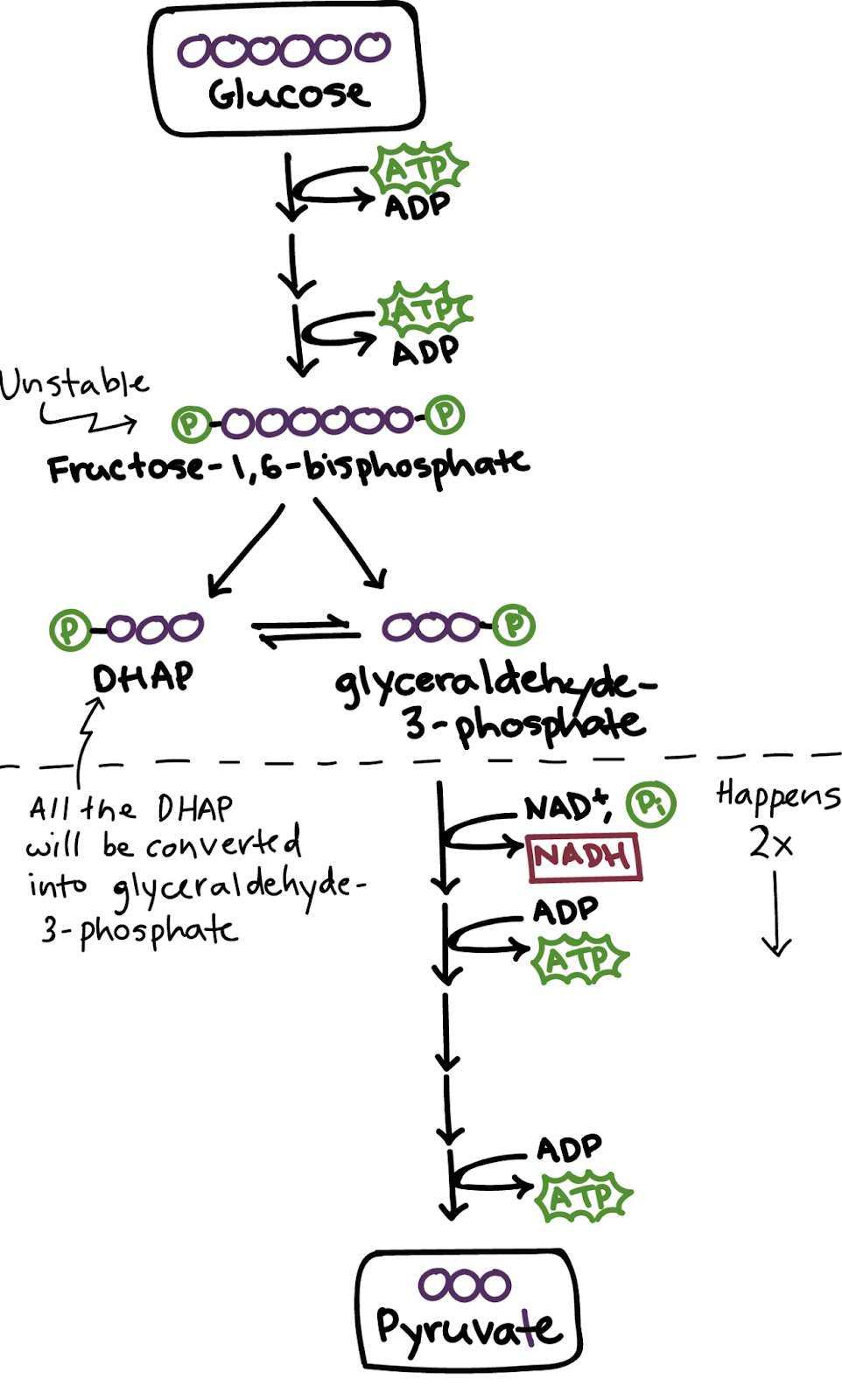
Stage 1: Glycolysis
Breaks down a 6 carbon glucose molecule into two 3 carbon molecules called pyruvates. It forms 2 net ATP molecules and 2 NADH molecules. It occurs in the cytosol.
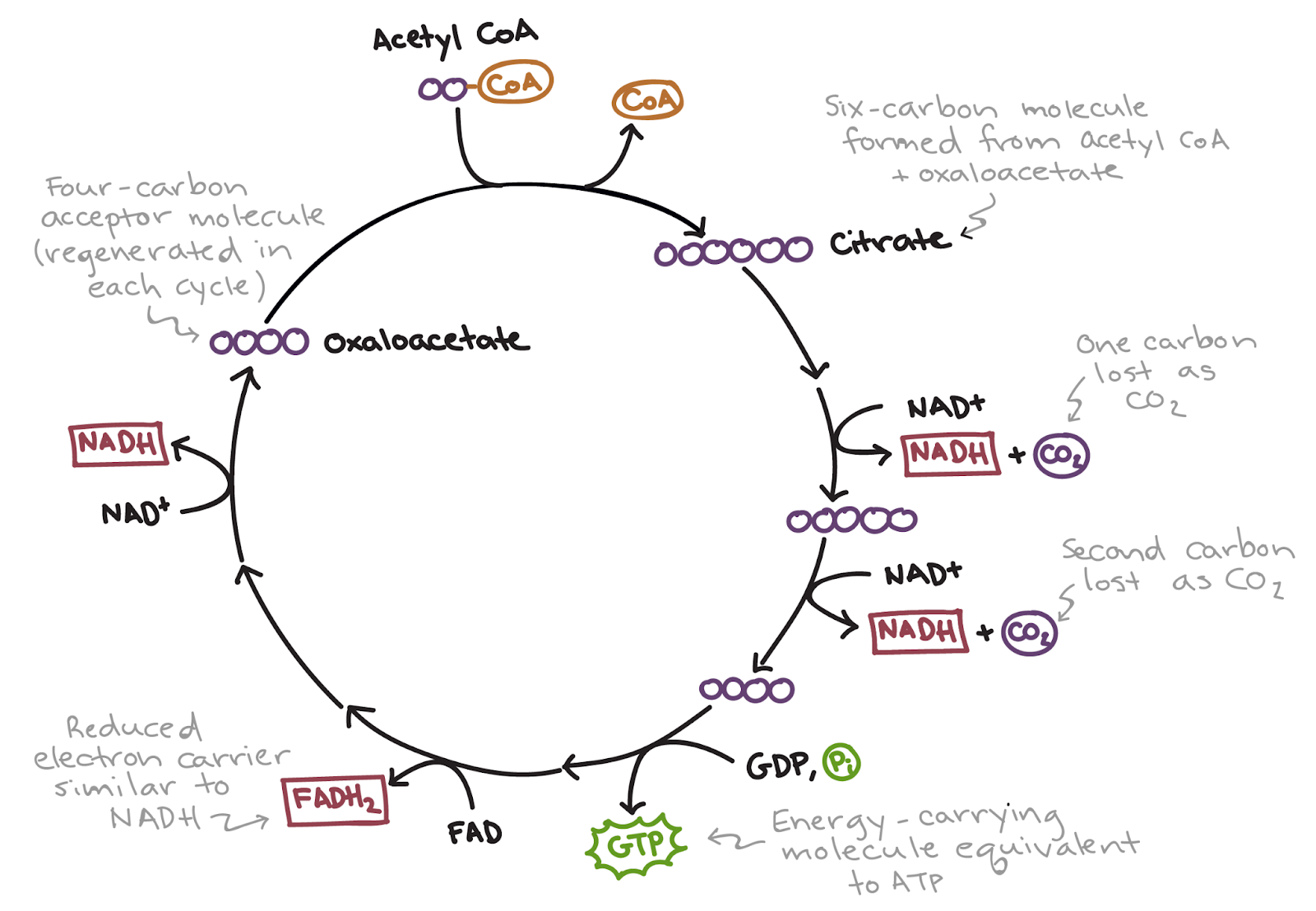
Stage 2: Krebs Cycle
It occurs in the Mitochondrial Matrix. Pyruvic acid gets converted to acetyl CoA which enters the cycle. Two ATP, eight NADH, two RADH2, and one 6CO2 molecules are formed. Carbon Dioxide is released as a waste product, which is the CO2 we breathe out of our lungs.
Stage 3: Electron Transport Chain
Occurs within the inner membrane of the mitochondria. NADH and FADH2 that are formed during glycolysis and the Krebs cycle drop off high-energy electrons. Oxygen is the final electron acceptor in the chain which forms water. Electron movement powers proton pumps so the protons are pumped into the intermembrane space. The protons reenter the matrix through ATP synthase and produce ATP as the protons move through the enzyme. It forms about 26 or 28 ATP molecules.
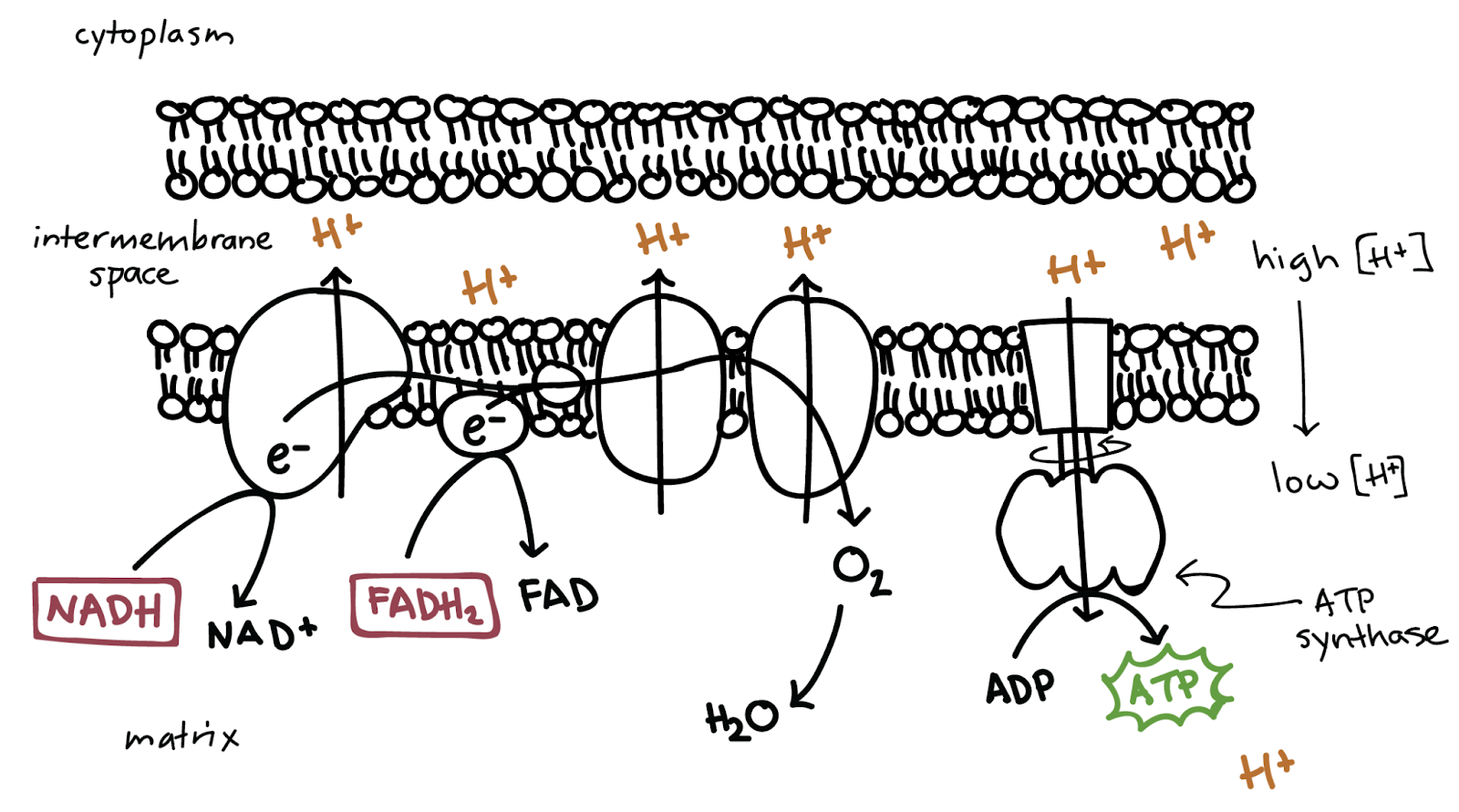
Without oxygen, the ETC shuts down due to the backup of electrons which is why cell respiration is an aerobic process.
Fermentation:
Fermentation - a cellular process of making ATP without oxygen (anaerobic)
Fermentation has two main stages...
Stage 1: Glycolysis
Breaks down a 6 carbon glucose molecule into two 3 carbon molecules called pyruvates. It forms 2 net ATP molecules and 2 NADH molecules. It occurs in the cytosol. (Basically the same stage 1 in cell respiration)
Stage 2: Regeneration of NAD+
Regenerates NAD+ to allow glycolysis to continue in the absence of oxygen. It also occurs in the cytosol.
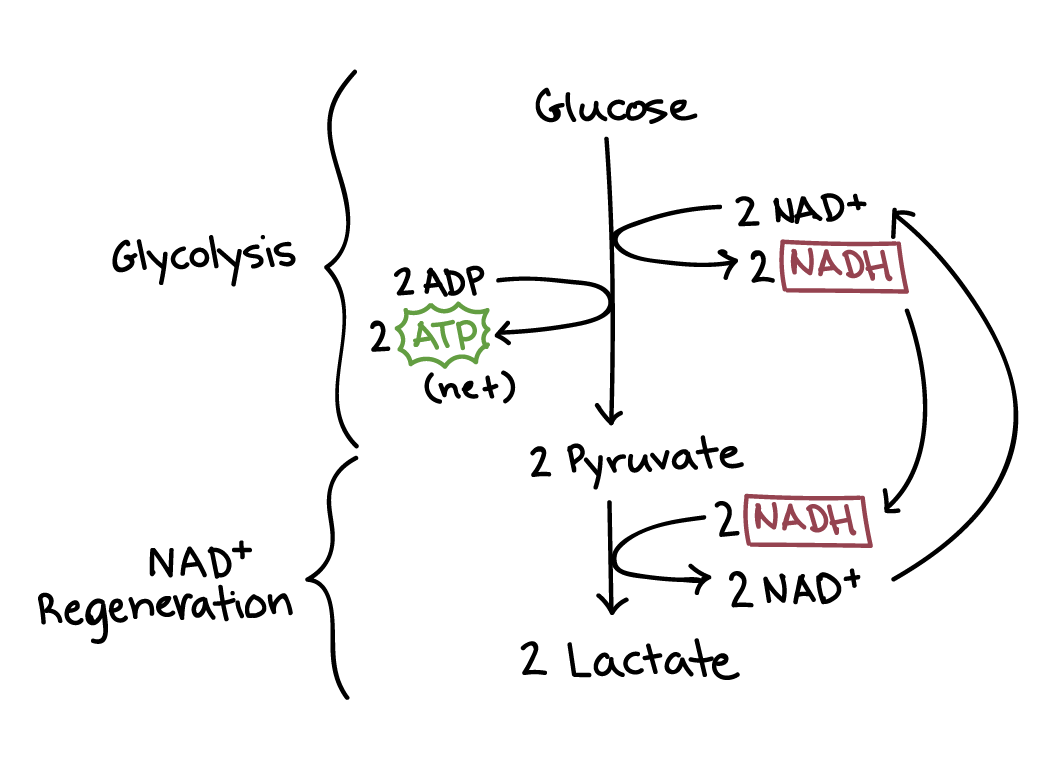
There are two types of fermentation...
Lactic Acid Fermentation - occurs in animals (ex. humans) and bacteria under anaerobic conditions and it produces 2 ATP and lactic acid
Commercial uses - cheese, yogurt, sauerkraut
Alcoholic Fermentation - occurs in yeast and produces 2 ATP, alcohol, and CO2
Commerical uses - bread making, beer/winemaking
Circulatory System:
What does our circulatory system do?
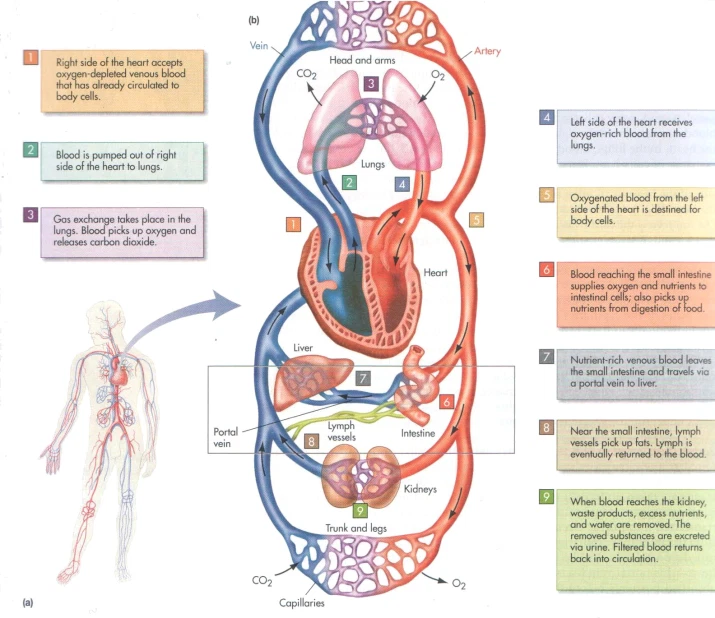
It circulates blood, oxygen, and nutrients around our body.
Heart - multi-chambered muscular organ that pumps blood
Atrium - receives blood from vessels
Ventricle - pumps blood out to blood vessels
Arteries - carries blood away from the heart
Capillaries - exchanges nutrients, gases hormones, waste products with body tissues
Veins - returns blood to the heart
Blood - consists of several kinds of cells suspended in a liquid matrix called plasma
Plasma - 90% water and includes dissolved solutes, bicarbonates, nutrients, hormones, and gases
Erythrocytes - red blood cells
They contain hemoglobin which transports oxygen.
Leukocytes - white blood cells
They fight pathogens, which are an infectious agent that causes a disease.
Platelets - fragments of cells, no nuclei, and involved with blood clotting
Respiratory System:
What does our respiratory system do?
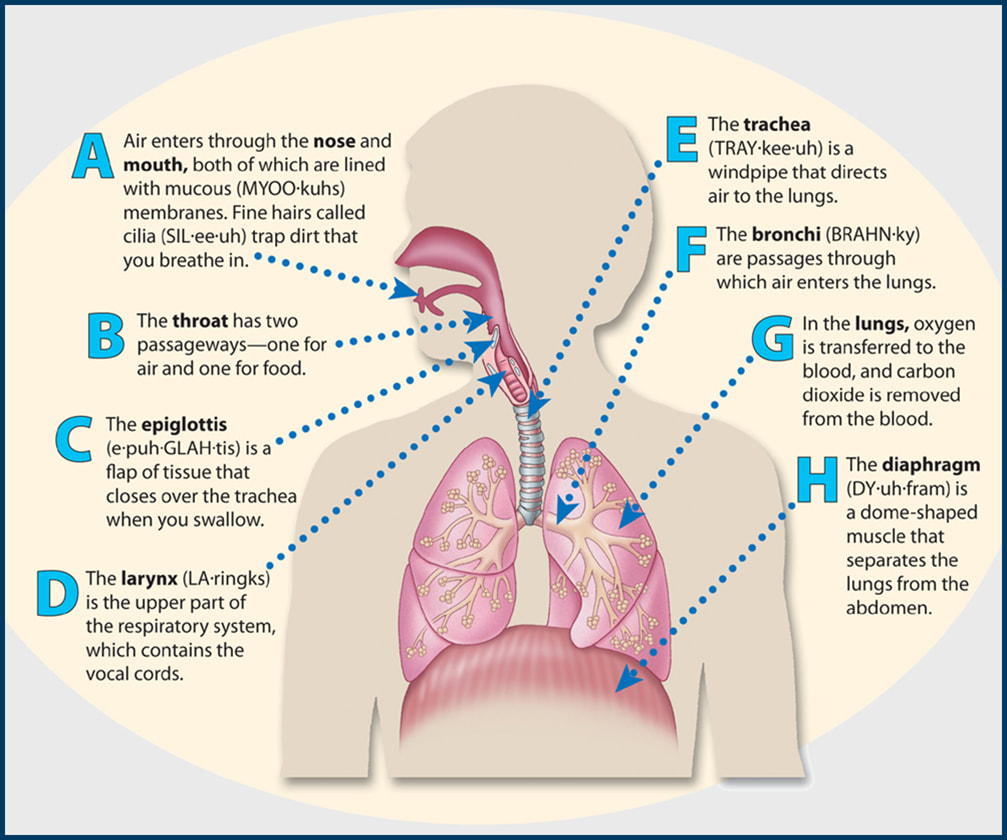
It makes sure oxygen goes in our body and CO2 goes out of our body.