3 - conceptual issues + methodologies
watch video (HM and memory task)
watch video (VR testing)
watch video (EEG)
make flashcards for the tech parts
What’s the difference between attention and memory?
focused attention makes it more likely for memories to be encoded, stored or retrieved.
lapses in attention make it less likely for memories to be encoded, stored or retrieved.
Attention as a spotlight:
amplifies components of your conscious experience/environment
Mindfulness to reduce distractibility
aims of mindfulness: attentional control, emotion regulation, self-awareness (self regulation)
anchor: object to return attention to when mind has drifted (usually breath)
gently returning to anchor is only action taken (aside from observation)
stages of mindfulness:
early: effortful doing
middle: effort to reduce mind wandering
advanced: effortless being
MISC FACTS
cerebellum’s Purkinje neurons have 1 million synapses
average is 1000 synapses per neuron!
number of neurons in brain: 86 billion
number of neurons in cerebral cortex: 20 billion
synapse: fundamental storage unit in the brain
Is LTP memory?
experience inducing LTP caused by high frequency electrical events
done artificially (with electrical signals) instead of sensory inputs in ecological contexts
doesn’t represent behavioural experience
it is the fundamental source of hypotheses about how brain makes memories. NOT whole story about how brain makes memories.
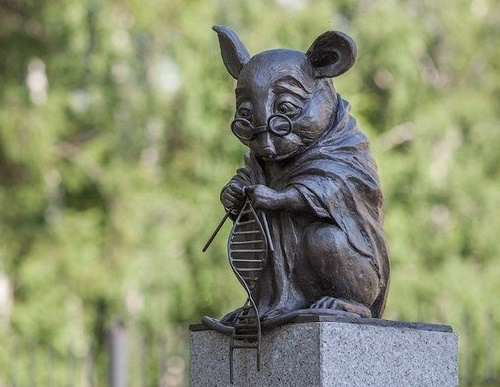 ode to lab rats ❤
Paradigm:
inferred memory trace when training experience influences behaviour.
How can we study memory?
damage brain region
inject drugs into brain to influence aspect of neural function
modify DNA to increase or decrease expression of molecule
** however, hard to isolate Memory as the only affected component. must do other experiments to rule out other component processes.
LTP: first domino is NMDA receptor!
How can we categorize memory traces?
3 dimensions: duration, state, vulnerability to disruption
active: “in mind”
after a memory’s initial formation, additional post-acquisition processes stabilize the trace (memory consolidation)
older memories are more resistant to disruption than new memories
How can we study the phenomenon of time-limited retrograde amnesia?
Electroconvulsive shock therapy (attempted)
Cerletti and Bini
electrical current across brain to treat psychiatric disorders
not super successful at providing more insight experimentally.
How do we test memory in humans?
Wisconsin card sorting task
sorts cards (by color, shape, number) and invigilator tells them correct/incorrect
measures memory and executive function (perseveration- DLPFC)
Neuropsychological testing
various tests for different domains.
What are some ways to measure memory in the brain?
Neuroimaging
structural: static (MRI, CT)
focus on spatial resolution
functional: how is the brain changing over time? (fMRI, PET, EEG)
focus on temporal resolution
CT (Computerized Axial Tomography) scans: useful for diagnosis, stroke/brain tumour…
MRI (Magnetic Resonance Imaging): apply strong uniform magnetic field (aligning protons in atoms) and “let it go” to see contrasting
fMRI (functional magnetic resonance imaging): changes based on blood flow. blood oxygen-level dependent (BOLD) contrast
neuronal activation and cerebral blood flow are coupled (related)
NOT informed about inhibitory or excitatory (or individual neuron activity in general, just about broad locations of activation that blood flows towards)
PET (Positron Emission Tomography) scan: radioactive tracer in bloodstream indirectly measures blood flow
assumption with both fMRI and PET is that higher blood flow indicates higher brain activity
EEG (electroencephalography): can change spatial resolution by changing # of electrodes on scalp. but overall not precise.
MEG (Magnetoencephalography): sensitive device, small local changes in magnetic field orientation or strength
indicate fast temporal current flow changes.
very good functional neuroimaging due to high temporal resolution.
TMS (transcranial magnetic stimulation): current flow around coils generate magnetic field to stimulate certain cortical regions. induce a current.
can be used to treat treatment-resistant depression, can assess normal function
SIDENOTE about exercise 1
developing personal mnemonic procedures (like mind palaces!!!)
think: what modalities to use?
*should have motor component
visual
auditory
somatosensory (tactile)
hippocampal index theory for declarative memories