chapter 6 gen chem
The Periodic Table of Elements 🌌
The periodic table is a concise, information-dense catalogue of all the different sorts of atoms in the universe. It is one of the crowning achievements of human thought.
The Creation of the Periodic Table
The periodic table was created by Dmitri Ivanovich Mendeleev, a Russian scientist who spent a great deal of time in laboratories studying the burgeoning new field of chemistry. Mendeleev's knowledge of the elements and their properties gave him unique insights into their relationships.
Mendeleev's Insights
Mendeleev realized that the most significant relationship between elements seemed to have nothing to do with their atomic weights. Instead, he noticed that certain elements, such as lithium, sodium, potassium, and rubidium, were all extremely prone to reacting with chlorine, fluorine, iodine, and bromine. He also noticed that beryllium, magnesium, calcium, and strontium were all similar but less reactive.
The Periodic Relationship
Mendeleev realized that there was a periodic relationship between the elements, with characteristics repeating every seven elements (later found to be every eight elements). This periodic relationship was not perfect, but it was certainly there.
Mendeleev's Obsession
Mendeleev became obsessed with the perfection of the periodicity. He wrote out the names and weights and properties of elements on cards, laid them across his desk, shuffled them, and tore them to pieces in frustration. Eventually, he realized that he was simply missing cards, and that some elements had not yet been discovered.
The Predictions
Armed with this insight, Mendeleev inserted gaps into the table and predicted the properties of the missing elements. When a French scientist discovered one of these elements, Mendeleev argued with him, saying that he had discovered it first in his mind. Mendeleev was so certain of his predictions that he published a paper saying the French scientist's data was wrong.
The Groups of Elements
Mendeleev identified several groups of elements, including:
Alkali Metals: soft, shiny, extremely reactive metals that are so reactive they have to be stored in inert gases or oil to prevent them from reacting with the atmosphere.
Alkaline Earth Metals: reactive metals that are not as reactive as the alkali metals, forming cations with two positive charges instead of just one.
Transition Metals: metals that are fairly unreactive, good conductors of heat and electricity, and can be bent and formed and hammered into sheets.
Halogens: extremely reactive gases that form negative ions or anions with one negative charge and love to react with the alkali and alkaline earth metals.
Lanthanides and Actinides: metals that were largely undiscovered in Mendeleev's day because they are so similar that it is next to impossible to separate them from each other.
Noble Gases: completely unreactive gases that were also undiscovered in Mendeleev's day.
The Periodic Table as a Representation of Reality
The periodic table is a representation of reality, a way of understanding and sorting the universe as it exists. However, it is not set in stone, and there are many different designs for periodic tables that have various advantages over the one that we are all familiar with.
Alternative Designs for the Periodic Table
Design Description
Cylindrical Periodic Table: A design envisioned by Deshaun Courtois, a geologist, where the elements wrap around from one side to another.
Globe Periodic Table: A design that represents the periodic table as a globe, with the elements arranged in a three-dimensional structure.
Cut and Tape Model: A design that allows users to create their own periodic table using paper and tape.
Mendeleev's Legacy
Mendeleev's creation of the periodic table was a major achievement in the field of chemistry. His obsessive work on the table and his predictions of the properties of missing elements were a testament to his dedication to his craft. Mendeleev's Periodic Table 🗺
Mendeleev's contribution to the field of chemistry was the creation of the Periodic Table, a tabular display of the known chemical elements, organized by their atomic number (number of protons in the nucleus), electron configuration, and recurring chemical properties.
Limitations of the Original Periodic Table
The original periodic table had some limitations, including:
The elements were not arranged in a continuous spiral, but rather in a linear fashion, making it difficult to visualize the relationships between elements.
The table did not account for the existence of subatomic particles, such as electrons.
Mendeleev's Predictions
Despite these limitations, Mendeleev's periodic table was able to predict the existence of undiscovered elements, and even their properties. This was a major breakthrough in the field of chemistry.
The Discovery of the Electron
The discovery of the electron by J.J. Thomson in 1897 provided the answer to the question of why elements behaved in certain ways. The electron is a subatomic particle that orbits the nucleus of an atom.
Relationships on the Periodic Table
The periodic table shows the relationships between elements, including:
Horizontal Relationship: Elements in the same period (horizontal row) have the same number of electron shells.
Vertical Relationship: Elements in the same group (vertical column) have the same number of electrons in their outermost energy level.
Mendeleev's Legacy
Mendeleev's periodic table has had a lasting impact on the field of chemistry. It has been refined and updated over the years, but the basic principles remain the same.
Key Terms
Atomic Number: The number of protons in the nucleus of an atom.
Electron Configuration: The arrangement of electrons in an atom.
Subatomic Particle: A particle that is smaller than an atom, such as an electron or proton.
Periodic Table: A tabular display of the known chemical elements, organized by their atomic number, electron configuration, and recurring chemical properties.
Periodic Table Trends 📈
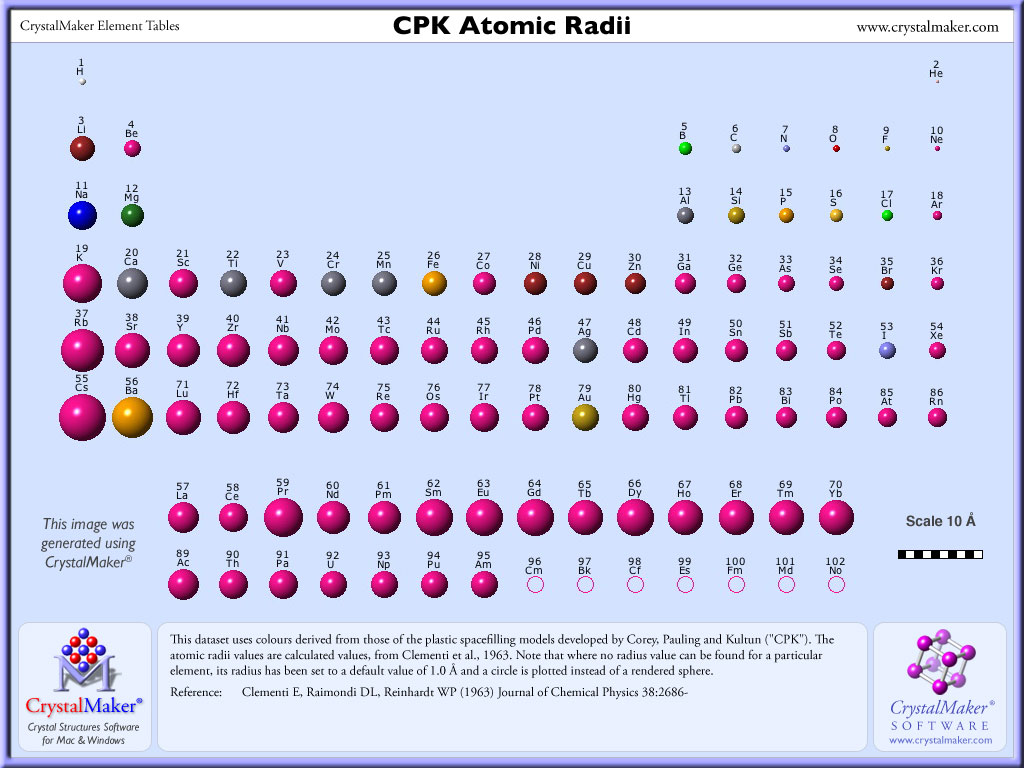
Atomic Radius 🌀
Atomic Radius: Half of the distance between nuclei in a covalently bonded diatomic molecule.
Atomic radius is a measure of the size of an atom.
Trend | Description |
Across a period | Radius decreases due to increasing Effective Nuclear Charge and decreasing Electron Shielding. |
Down a group | Radius increases due to increasing Electron Shielding. |
Effective Nuclear Charge and Electron Shielding 🔋
Effective Nuclear Charge: The net positive charge experienced by an electron in a multi-electron atom.
Electron Shielding: The reduction in the attractive force between the nucleus and an electron due to the presence of inner electrons.
Periodic Trend: Atomic Radius 📊
Period TrendG | Group Trend |
Decreases across a period | Increases down a group |
Ionization Energy ⚡️
Ionization Energy: The energy required to remove an electron from an atom.
Ionization energy is a measure of the energy needed to remove an electron from an atom.
trend | Description |
Across a period | Ionization energy increases as radius decreases, making it harder to remove an electron. |
Down a group | Ionization energy decreases as radius increases, making it easier to remove an electron. |
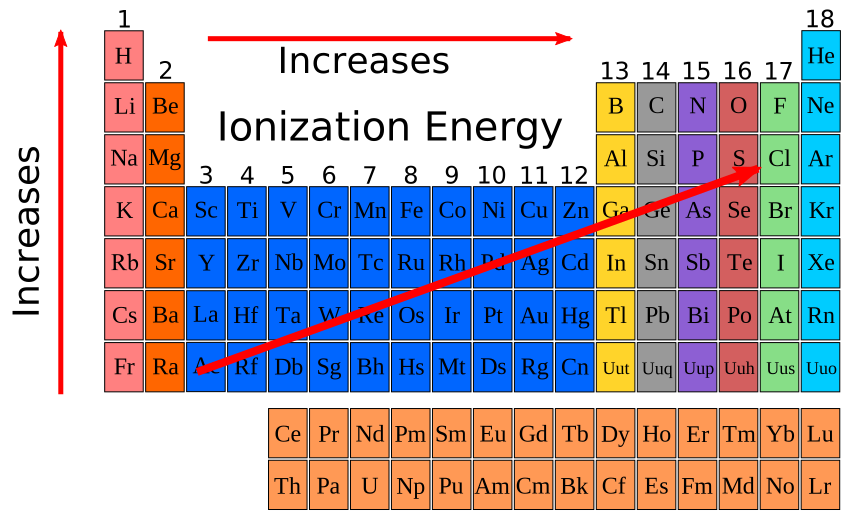
Periodic Trend: Ionization Energy 📊
Period Trend | Group Trend |
Increases across a period | Decreases down a group |
Electronegativity 💡
Electronegativity: A measure of the ability of an atom in a chemical compound to attract electrons.
Electronegativity is a measure of an atom's ability to attract electrons in a chemical bond.
trend | Description |
Across a period | Electronegativity increases as radius decreases, making it easier for an atom to attract electrons. |
Down a group | Electronegativity decreases or remains the same as radius increases, making it harder for an atom to attract electrons. |
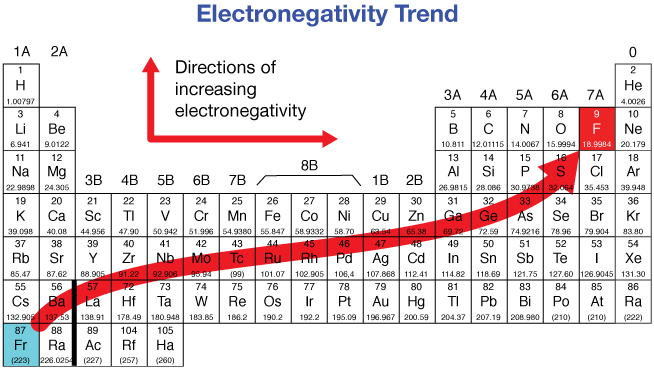
Periodic Trend: Electronegativity 📊
Period Trend | Group Trend |
Increases across a period | Decreases or remains the same down a group |
Summary of Periodic Trends 📝
Atomic radius decreases across a period and increases down a group.
Ionization energy increases across a period and decreases down a group.
Electronegativity increases across a period and decreases or remains the same down a group.