Unit 4 - Imperfect Competition Guide
[[4.1 - Introduction to Imperfectly Competitive Markets[[
- Firms are able to make an increased profit in the long run if there is less competition since firms are considered to be price makers. There are stricter @@barriers to entry@@ in imperfect competition (Governmental, economies of scale, geography, and so on)
- Common barriers to entry: control of scarce resources, legal barriers, high startup costs
| Perfect Competition | Monopolistic Competition | Monopoly | Oligopoly | |
|---|---|---|---|---|
| # of firms | Many | Many | 1 | Few |
| Type of product | Standard | Differentiated | Unique | Standard or different |
| Price control | None | Little | Yes | Some |
| Barriers to entry | None | None (few) | High | High |
[[4.2 - Monopolies[[
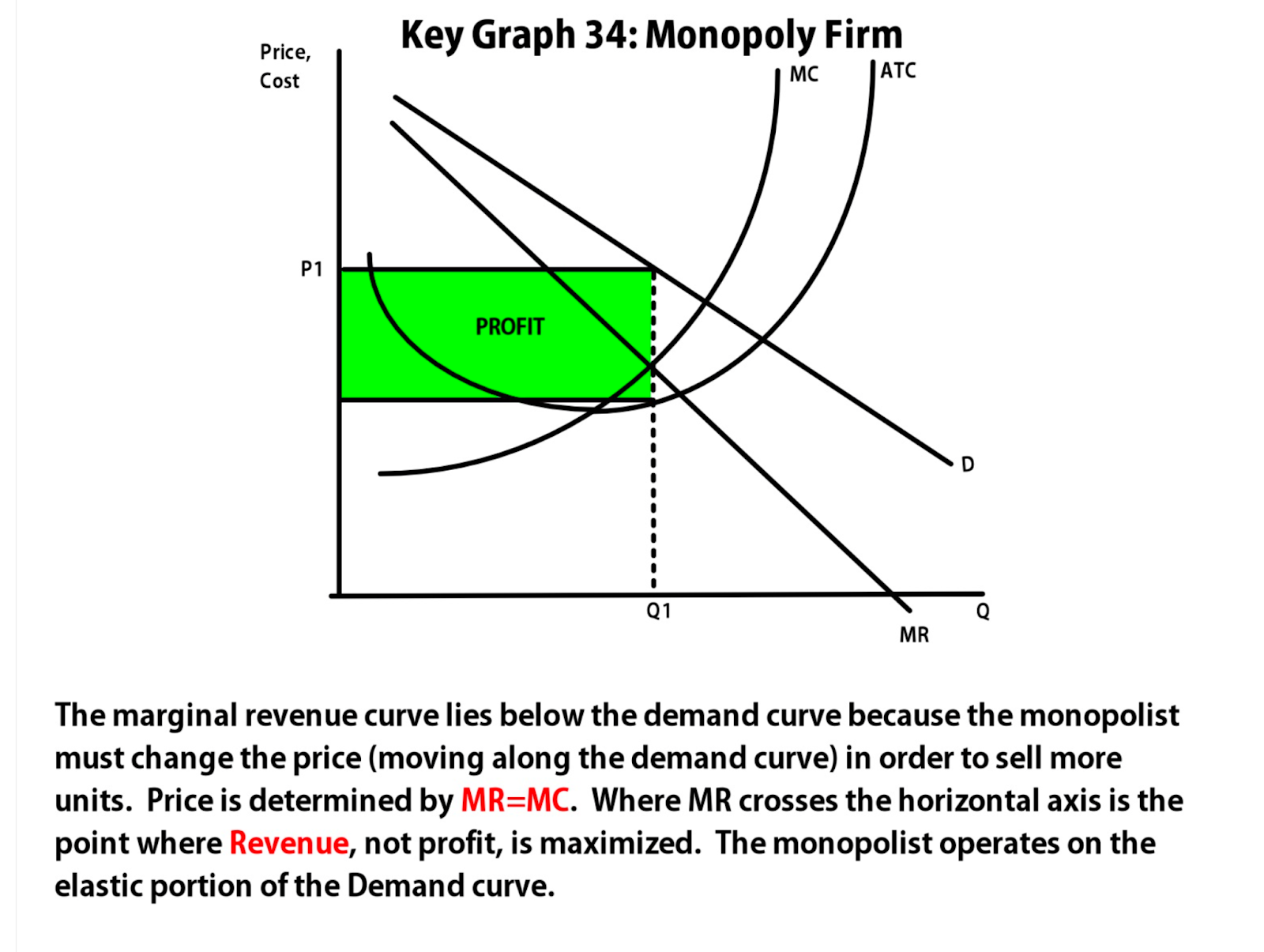
@@Monopoly@@: market structure where there is only one firm producing a product
- Only producer of a good, has no close substitutes
- On the graph, there is a downward sloping demand curve
Quantity is produced : at MR = MC
- Price is : MR=MC, up to demand
Supply curve : where MC > AVC
- Allocatively efficient due to them producing at MR=MC
- Productively inefficient because they don’t produce at the minimum of the ATC
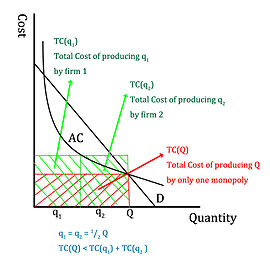
- Natural monopoly: has large fixed costs, and long economies of scale, has downward sloping ATC curve
- Natural monopoly production point : MR=MC
- Government will correct by forcing them to set price : at ATC=D
[[4.3 - Price Discrimination[[
- Price discrimination occurs in specific industries as consumers pay a different price for the same good.
- To be able to price discriminate, you need market power
- Imperfect price discrimination : charging consumers different prices based on the buyer’s willingness to pay
- Perfect price discrimination : charges all consumers the maximum they are willing to pay, no deadweight loss, produce at P=MC
- Example : resellers, coupons, bulk buying (costco), etc.
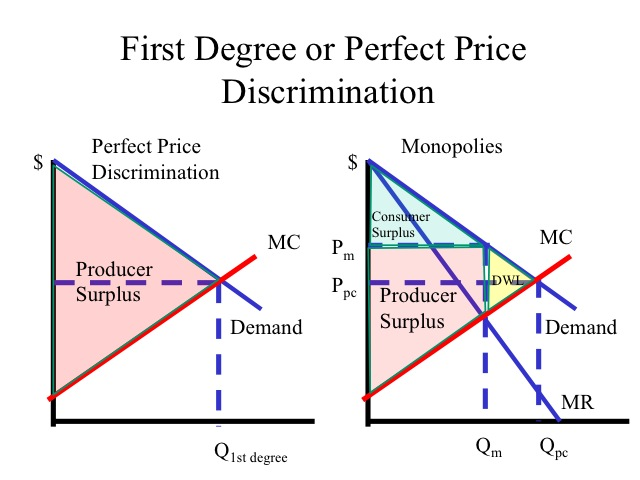
- In price discrimination, there is no deadweight loss and no consumer surplus as well, only producer surplus.
[[4.4 - Monopolistic Competition[[
- @@Monopolistic competition:@@ is another term for imperfect competition, and occurs when many companies offer competing products which are similar but not perfect substitutes.
- Characteristics:
- Combines features of both a monopoly and perfect competition
- Many sellers and differentiated products
- Will use advertising to make demand more inelastic + differentiate product
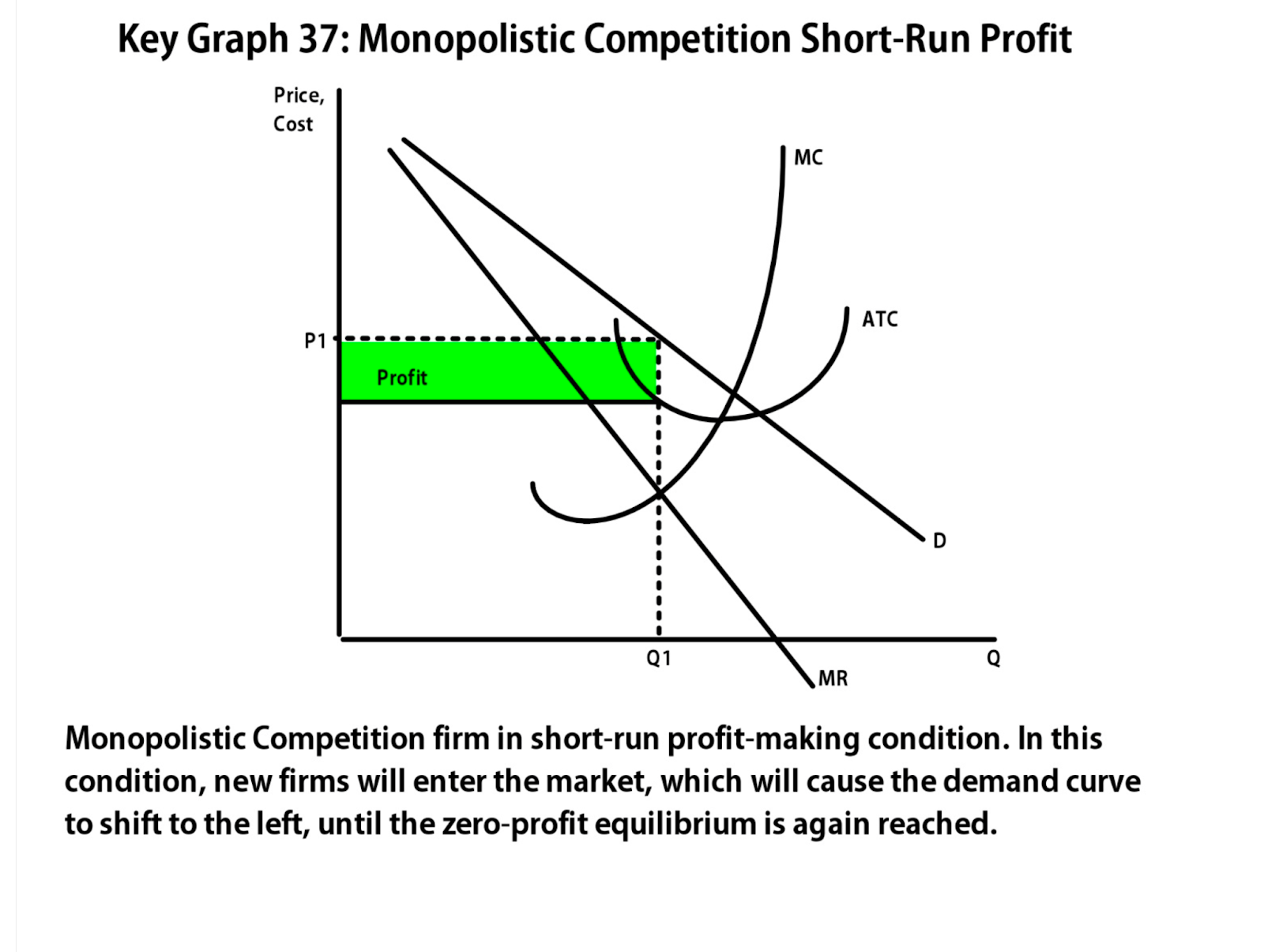
- Makes profit in short run, normal profit in long run
- Allocatively inefficient (P does not equal MC)
- Productively inefficient (does not produce @ minimum of ATC, until long run)
- Downwards sloping demand curve
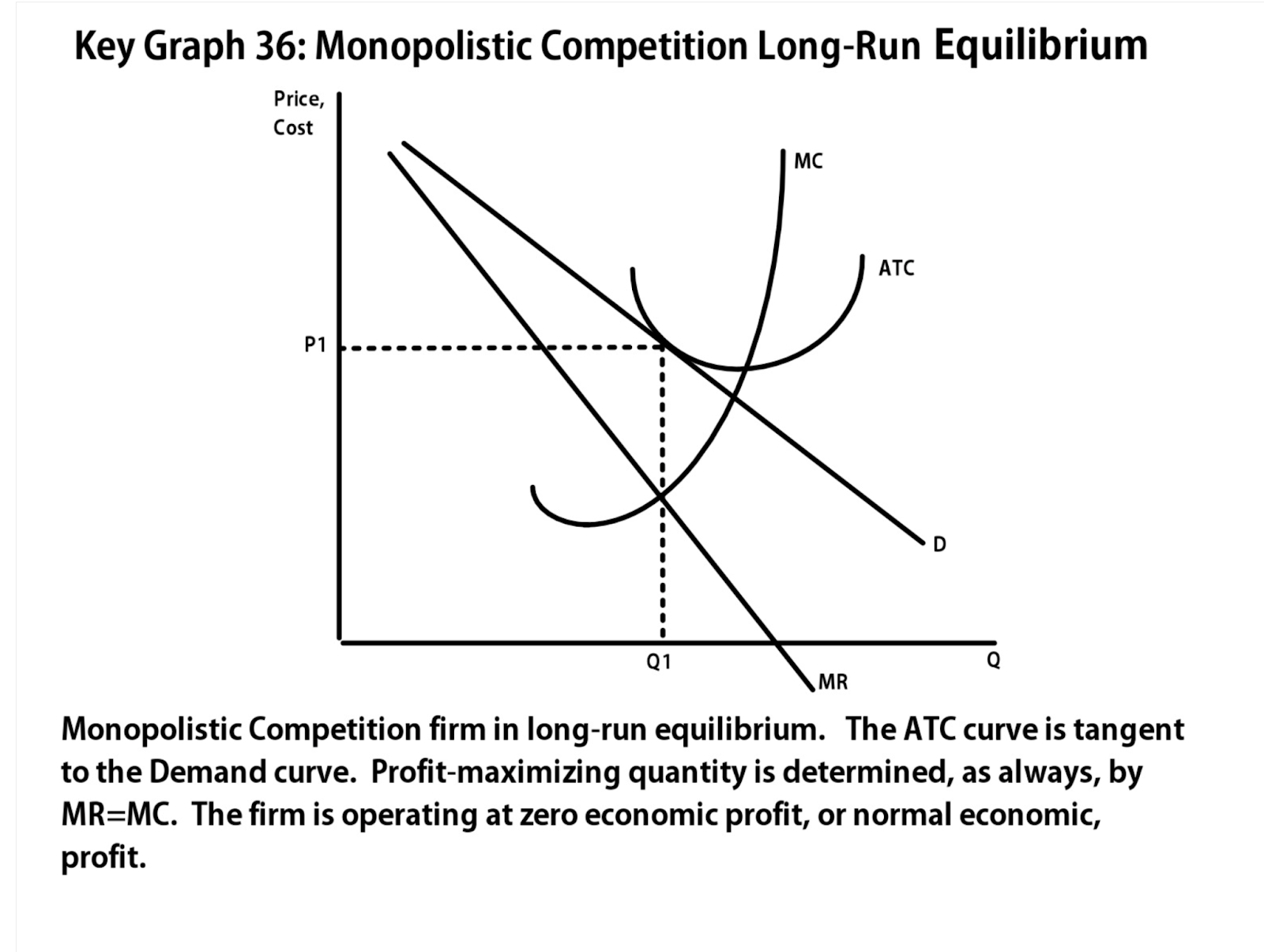
- Produce at MR = MC, price is MR = MC up to demand
- @@Long Run@@
- Normal profit in long run
- Short run profits will attract new firms to join, which decreases the demand until the demand Curve is tangent to ATC, causing normal profits in long run
- In long run, they produce in region where economies of scales exist, because they produce in declining portion of ATC
[[4.5 - Oligopoly and Game theory[[
@@Oligopoly Characteristics@@
- Small number of firms, standard or differentiated product
- Interdependent : all the actions that a firm takes will affect the other firms in the oligopoly (if They ask why the market is an oligopoly, say it’s because they’re interdependent)
- Cartels : a group that agrees to control the price and output of a product (often form in oligopoly)
- Collusion : working together to maximize profit
- Graph is almost identical to monopoly (you will never be asked to draw them)
- Also produce same quantity and price of monopoly
@@Game Theory@@
- Payoff matrix : represents the payoff to each player to show combinations of given strategies
- Dominant strategy : the strategy that has a better payoff regardless of what strategy the opponent chooses
- Nash equilibrium : point where both players can do no better than the other given the choice of their opponent