ACC 255 CHP 1 Review and HW
Important Vocab
Assets: The resources of a company
Cash
Equipment
Liabilities: Amounts owed to creditors
Owing a bank, suppliers, employees, utility companies, and the government (taxes)
Typically include claims that must be paid by a specific date
Stockholders’ Equity: Represents the owners’ claims to resources. These claims arise from two primary sources
1. Contributions by the owners themselves
2. Net resources generated by company operations
Revenues: The amounts recognized when the company sells products or provides services to customers. For example, when you or one of your employees provides services to a customer, the company recognizes revenue
Expenses: The costs of providing products and services and other business activities during the current period. For example to operate the business, you’ll have costs related to salaries, rent, supplies, and utilities
Net Income: The difference between revenues and expenses. All businesses want revenues to be greater than expenses, producing a positive net income and adding to stockholders equity in the business
“Net” is often used to describe the different between two amounts
Dividends: CASH payments to stockholders
DIVIDENDS ARE NOT AN EXPENSE→ they are distributions to the owners of the company-the stockholders
Corporation: A company that is legally separate from its owners
Advantage: Stockholders have limited liability. Limited liability prevents stockholders from being held personally responsible for the financial obligations of the corporation, protecting their personal assets in case of bankruptcy or legal issues facing the company.
Sole proprietorship : A business owned and operated by a single individual, where the owner is personally responsible for all debts and obligations of the business, exposing their personal assets to risk.
Partnership: A business owned by two or more persons who share ownership, profits, and liabilities, allowing for greater resources and expertise but also exposing partners to joint liability for the debts and obligations of the business.
Financial Statements: Periodic reports published by the company for the purpose of providing information to external users → provide key information to make decisions about the company such as, Should I buy the company’s stock? Should I lend money to the company? Is the company profitable?
Common Stock: (External source of equity) Represents amounts invested by stockholders(owners) when they purchase shares of stock
Retained Earning: (Internal source of equity) Represents all net income minus all dividends over the life of the company
Retained earnings will always equal $0 at the beginning of year 1
Equations
The Accounting Equation: Shows the relationship among the three measurement categories. The equation shows that a company’s assets equal its liabilities plus stockholders’ equity. In other words, a company’s resources equal creditors’ and owners’ claims to those resources

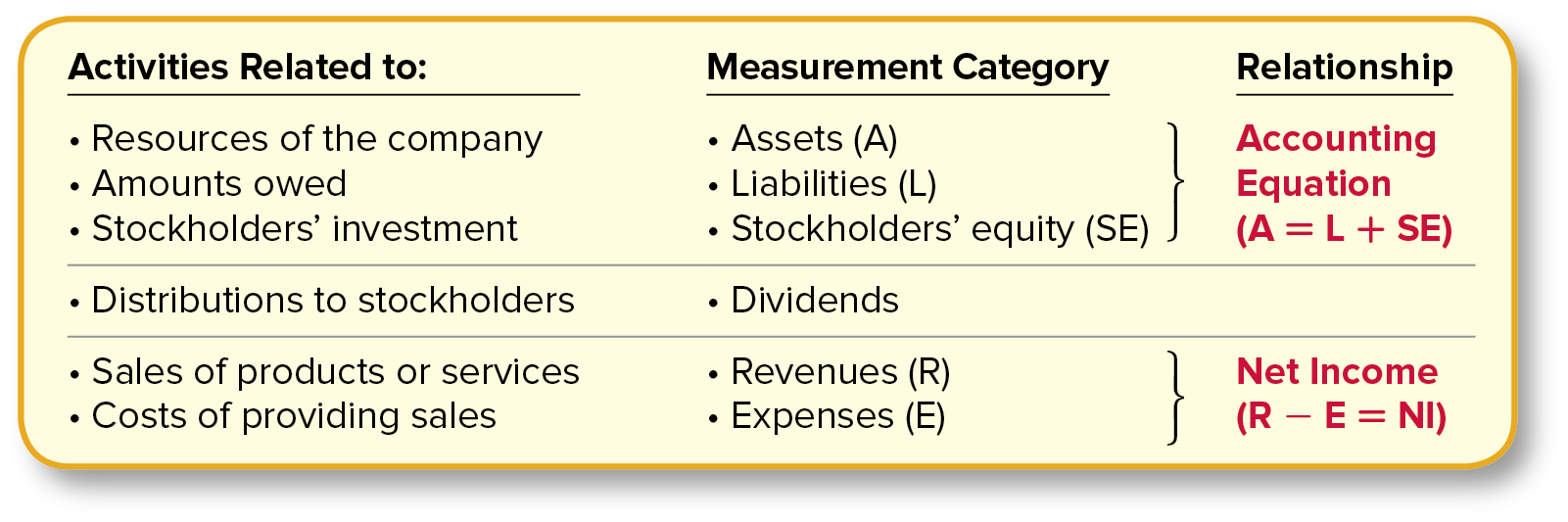
Net Income Equation: Revenues(R) - Expenses(E) = Net Income(NI)
Stockholders Equity
Stockholders’ Equity = Common Stock + Retained Earnings
Common Stock
Beginning Common Stock + New Issuances = Ending Common Stock
Retained Earnings
Beginning Retained Earnings + Net Income - Dividends = Ending Retained Earnings
Change in Cash
Change in cash = Operating cash flows + Investing cash flows + Financing cash flows
The Finiancial Statements
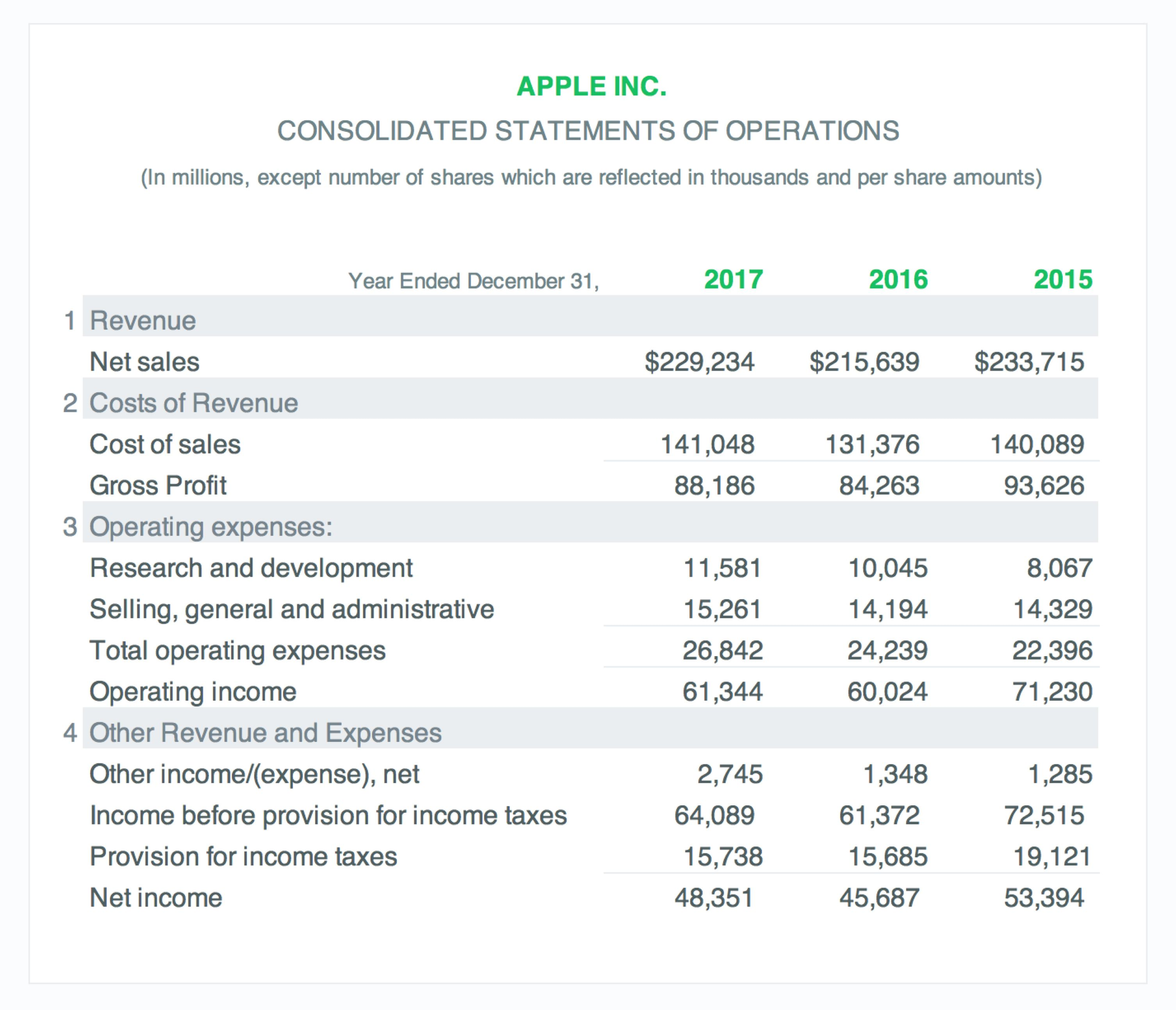
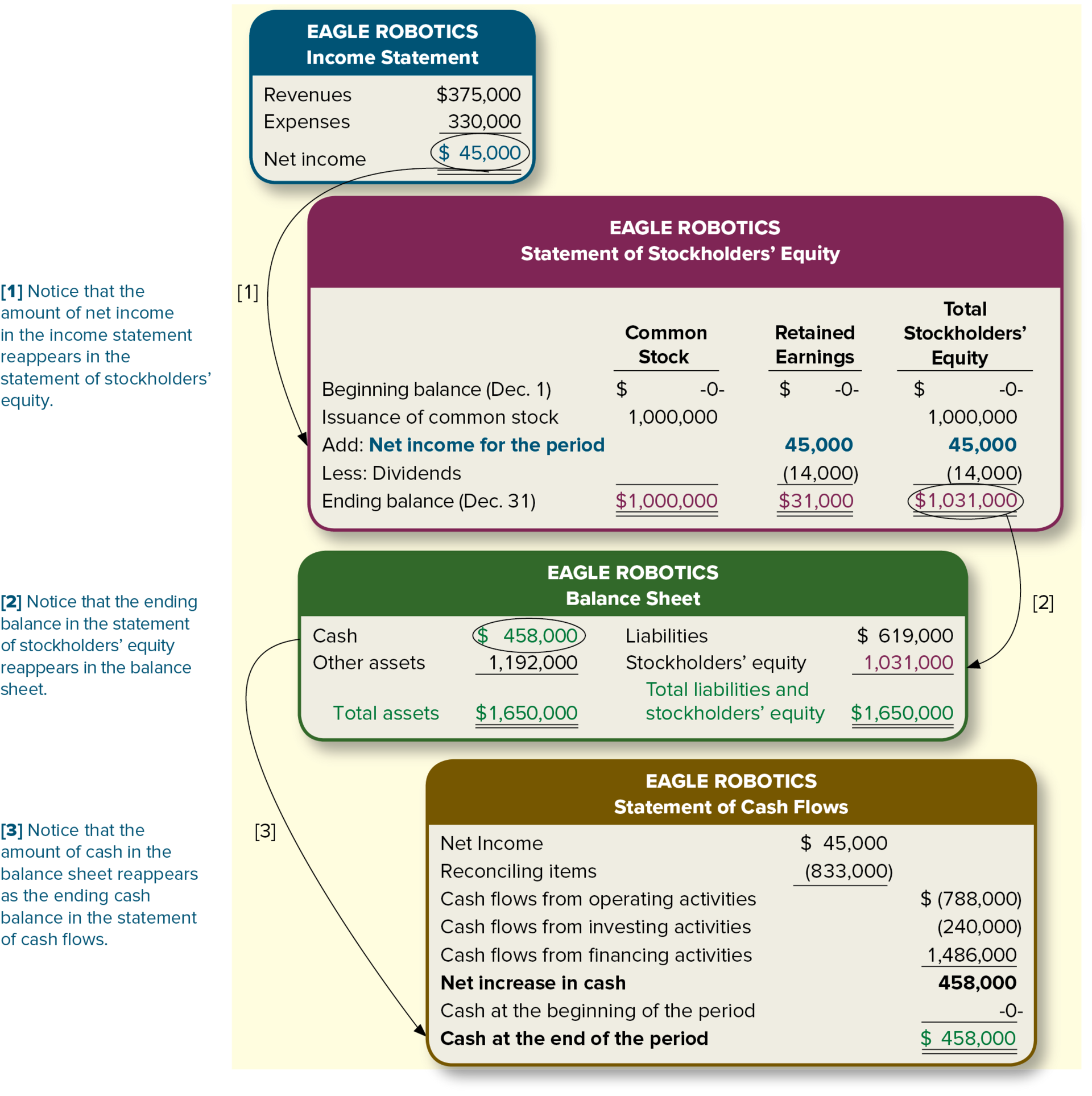
The Income Statement: A financial statement that reports the company’s revenues and expenses over an interval of time. It shows whether the company was able to generate enough revenue during the period to cover the expenses of running the business. → The income statement compares revenues and expenses for the current period to assess the company’s ability to generate a profit from running its operations
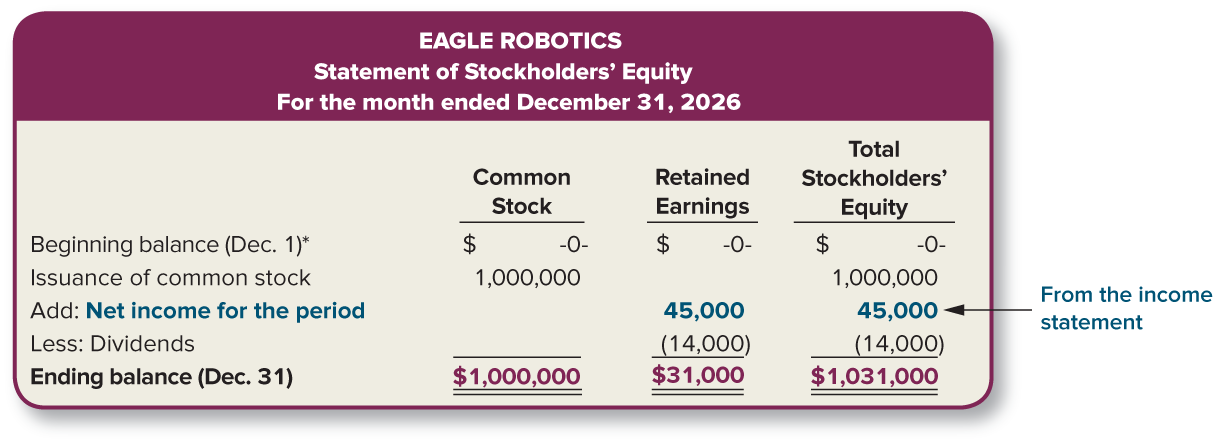
The Statement of Stockholders’ Equity: A financial statement that summarizes the changes in stockholders’ equity over an interval of time. Stockholders’ equity arises from two primary sources→ common stock and retained earnings
Cash is a distribution of net income in the statements of stockholders’ equity
The statement of stockholders equity reports information related to changes in common stock and retained earnings each period. The change in retained earnings equal net income less dividends for the period
Statement of Retained Earnings: The middle column. In practice, companies don’t report retained earnings in a separate statement from common stock, so thats why we demonstrate the statement of stockholders equity. It is useful to see that this column highlights how net income from the income statement links to total stockholders’ equity by adding to the balance of retained earnings
The Balance Sheet: A financial statement that presents the financial position of the company on a particular date. The financial position of a company is summarized by the accounting equation

Statement of Cash Flows: A financial statement that measures activities involving cash receipts and cash payments over an interval of time
Operating Cash Flows: These are cash flows derived from the core business operations, including cash received from customers and cash paid to suppliers, salaries, and other operating expenses. This section is crucial for assessing a company's ability to generate sufficient cash flow to maintain and expand its operations.
Investing Cash Flows: These cash flows represent the cash transactions for the purchase and sale of physical and financial investments, such as property, plant, equipment, and securities. Understanding investing cash flows is essential for assessing how much money the company is allocating to its growth initiatives and capital expenditures.
Financing Cash Flows: Include cash transactions related to debt and equity financing, such as issuing or repaying loans and issuing stock or paying dividends. This section provides insights into the company's financial strategy and its approach to funding operations and growth.
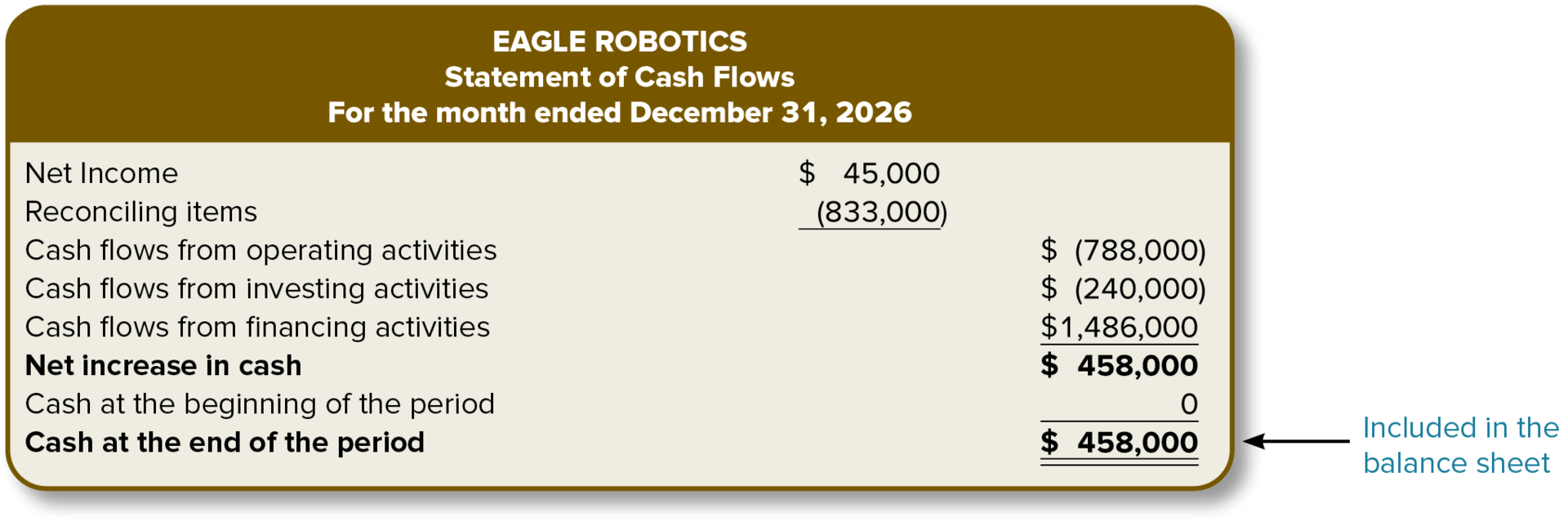
This statement shows the cash flows for each type of activity, with net cash inflows shown as positive amounts and net cash outflows shown in parenthesis to denote negative amounts. Cash flows from operating activities are most often computed as net income adjusted for certain reconciling items. Cash flows from investing and financing activities are computed as all cash inflows minus all cash outflows associated with those activities
Other Important Information
Potential disadvantage of a corporation is double taxation
The company first pays corporate income taxes on income it earns
Stockholders then pay personal income taxes on income distributed to them from the company
Two additional business forms have evolved in response to liability issues and tax treatment
Limited Liability Companies(LLCs): A hybrid business structure that combines the characteristics of corporations and partnerships, providing limited liability protection to its owners while allowing for pass-through taxation.
Limited Liability Partnerships (LLPs): These partnerships provide liability protection to each partner, shielding them from the negligence or misconduct of other partners, while also allowing profits and losses to pass through directly to partners for tax purposes.
Homework Takeways
Description and Account Classification
Sale of products or services → Revenues
Owners claims to resources→ Stockholders' equity
Distribution to stockholders→ Dividends
Costs of selling products or services → Expenses
Resources of a company → Assets
Creditors claims to resources → Liabilities
Transaction Description and Account Title
Cost of rent → Rent Expense
Interest earned on savings account → Interest Revenue
Cash payments to stockholders → Dividends
Land use for operations → Land
Amounts owed to suppliers → Accounts Payable
Amounts owed fro utilities → Utilities Payable
Cash available for use → Cash
Cost of salaries → Salaries expense
Shares of ownership sold to investors → Common Stock
Sale of services to customers → Service revenue
Items and Financial Statements
The change in retained earnings due to net income and dividends → Statement of stockholders equity
Amount of cash received from borrowing money from a local bank → Statement of cash flows
Revenue from sales to customers during the year → Income statement
Total amounts owed to workers at the end of the year → Balance sheet
Example of retained earnings table
Year → Net Income → Dividends → Retained Earnings
1 → $1,700 → $600 → $1,100
2 → $2,200 → $600 → $2,700
3 → $3,100 → $1,500 → $4,300
4 → $4,200 → $1,500 → $7,000
5 → $5,400 → $1,500 → $10,900
Video Review Notes and Information
Accounting can be defined as…
The language of business and a measurement or communication process
Accounting is NOT math
The income statement must be done first because we need to plug in the net income/ net loss into the statement of stockholders equity→ plug total into balance sheet
In the balance sheet the left side are assets (resources the company owns) that has to be equal to the right side (liabilities + stockholdrers' equity), liabilities - are what the company owes to others, stockholders equity - anything leftover that would be distributed to the owners or share holders
Example: If a company were to file bankruptcy, it would sell off all its assests, then it would pay all of its outstanding liabilities → whatever is left over would be distributed to owners or shareholders
The Income Statement
You can identify (most of the time) what goes in the income statement because the accounts/ amounts will say “revenue” or “expense”
Revenues - Expenses = Net income or net loss
First part, we are putting anything that is revenue, so sales or service revenue or interest revenue
In the bottom part we have the expenses
you can mostly identitfy an expense with the term expenses, for examples, salaries expense, rent expense, delivery expense
Statement of stockholders equity - what is called contributed capitol
Common stock is contributed capitol and retained earnings are earned capitol
Contributed capitol is what shareholders purchased in the form of stock → pay cash for it → this is what is happening in the common stock column
Sometimes common stock will be issued through out the year and sometimes it will not
Retained earnings is net income - dividends paid out for the life of the company
if there is no beginning balance in retained earnings that means it is the first year of a companys operations
Blance sheet
Left side→ all of the assets such as cash, supplies, equipment, buildings
The way to identify an asset is to go through the list and think about what resources the company would own that it would use up
The right side top section is liabilities such as accounts payable and salaries payable
Can usually be identified by the word payable (an amount due to others)
Accounts payable -an amount that the company owes to vendors that are outside the company
Salaries payable - amounts that are due to employees that have worked but have not been paid so they are owed money
The right side bottom section is stockholders equity with common stock and retained earnings
The total assets MUST equal total liabilities and stockholders equity
You are taking the total common stock and total retained earnings from the Statement of Stockholders equity