Master Doc
Social Science: Term for academic disciplines that study human societies and social relationships (history, civics)
Behavioural sciences: Includes the study of people
Anthropology, psychology, sociology
Inquiry/observation and experimentation
Needs for Social Science Studies:
Objectivity
Relevance
Validitity
Bias: Type of writing FOR or AGAINST something. Multiple ways an author can reveal their bias.
Slanted language and evidence: Words, images only showing one side (pos or neg). Distorts reality and ignores different points of view.
I.e. Awesome, Horrid
Exaggeration or highly emotional statements: Language that appeals to strong emotions. Tone words determine approval or disapproval
I.e. Saving, Killing, Worse, Best
Name Calling: Use belittleing, degrading, or negative names for disapproval
I.e. Evil, Lousy, Liar, Failure
Linguistic Bias: Using discriminatory language
I.e First Nations described as “roaming” or “wandering”
Stereotyping: Actions of one as everybody in a group
Opinions stated as facts: Proof that is not inherently true
Unreality: Ignoring the existence of racism, sexism, etc…
Inquiry Process
Identify problem or question
Develop hypothesis (A hypothesis with no relation is called a null hypothesis)
Gather data - Use research methods like case studies, surveys, experiments, observations, and interviews
Analyze the data - Qualitative and Quantitative
Separate data into relevant and irrelevant
Organize data into a clear format
Analyze how it supports thesis or not
Draw conclusions
Supports hypothesis
Some evidence to support the hypothesis
Does not support hypothesis
Supports alternate hypothesis
Physical Anthropology
Understand and define the physical and biological nature of human beings (we are primates). Genetic differences between humans and primates are only 1-2%.
Study humans as biological organisms to differentiate them from other species. Some study the origins of humans, some study similarities and differences among humans today.
Work with fossils, artefacts, and lots of physical evidence.
Charles Darwin proposed that no two members of a species are alike due to variations caused by inheritance and the environment.
Raymond Dart found a species of human that lived up to 30 million years ago in Africa, a skull and a fossilized brain. Named the species australopithecus afrensis.
Had an unbalanced head, narrow shoulders, wide chest, wide waist, shorter legs, long toes, and almost no foot arch.
Mary and Louis Leakey found evidence that the oldest human beings lived in Africa, due to findings in Tanzania. Found many more hominid remains.
Donald Johanson found the skeleton of an early human named Lucy.
SIMILARITIES BETWEEN HUMANS AND PRIMATES
Opposable thumbs
Binocular vision
Highly developed brain
Children are dependent on parents for longer
Social creatures
Aggressive and territorial
DIFFERENCES BETWEEN HUMANS AND PRIMATES
Bipedalism
Ability to communicate complex ideas and such through language
How did humans become human?
Possible evolving to use tools and language due to aggressive and war-like traits early on. Can also be due to living in groups of other people, making use of social skills to improve memory, learning, etc.
Humaness: Quality or state to be a human
Forensic Anthropology
Using DNA to help identify culprits. Used for crime and evidence in murder. Mitochondrial DNA is used most often as it stays in condition longer after a person has died to be used for identification.
Cultural Anthropology
Study of how culture shapes human behaviour. Research and knowledge are based on observation.
Ethnocentrism: Tendency to judge other cultures based on one's own values
Cultural Relativism: Attitude of respect and acceptance of other cultures in how they have developed ways to survive, etc.
Five branches of Anthropology
Archaeology: Cultural anthropology of the past
Applied anthropology: Action-oriented cultural anthropology used to solve current-day problems
Anthropological linguistics: Study of language
Ethnology: Study and comparison of past and contemporary cultures
Ethnography: In-depth description of a particular culture
Culture: A system of beliefs, values or assumptions about life shared and taught through a group of people
Subcultures: Shares characteristics of the overall culture, but has individualised ideas and behaviours, some voluntary and some not
there are two components of culture: material and non-material
material: all physical objects that are created by humans and are given meaning
non-material: non-physical things (thoughts, beliefs, language, religion, rules, customs, skills, family patterns, gender roles, political systems, etc.)
While all cultures vary, and in some cases they vary greatly, all cultures share the same eight common elements:
politics
economics
family
communication
recreation and leisure
war
knowledge and beliefs
material culture
Margaret Mead conducted an experiment in various cultures to see if all gender roles were innate or cultural. This supported the idea that culture influences human behaviour more than nature. Two cultures she looked at were: Mudagumor (Boys and girls are hostile), Tchambuli (Women are tough, men are passive (Excluded from training))
Culture types based on the economy
Foraging Cultures: Find and hunt for your own food in small bands
Horticultural Cultures: used tools to grow more abundance of food
Agricultural Cultures: Working the land intensively, using techniques not developed in horticulture (fertilisation, irrigation methods)
Pastoral Cultures: Domesticating animals, groups move with the herd
Industrial Cultures: Lots of technology is used for an immensely growing population, the growth of science, and destroying the environment
Communication-Based cultures: Growth of mass media and computers for reliance on technology
Rite-of-Passage: Turning point or important event in a culture (Marriage, high school graduation, baptism, etc)
Features for a rite of passage: Separation, Transition, Incorporation
Folkways: Everyday manners and etiquette
Norms: Accepted ways of behaving and acting towards others
Franz Boas
Biography: Who are they? (i.e., background information) 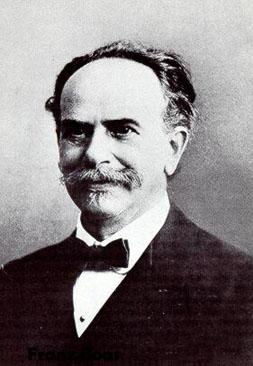
|
|---|
Contributions: What have they contributed to the field of Anthropology?
|
Impact: What is their impact?
|
Key Discoveries: What discoveries have they made and how do their discoveries contribute to the understanding of humans or society?
|
Ruth Benedict
Biography: Who are they? (i.e. background information) 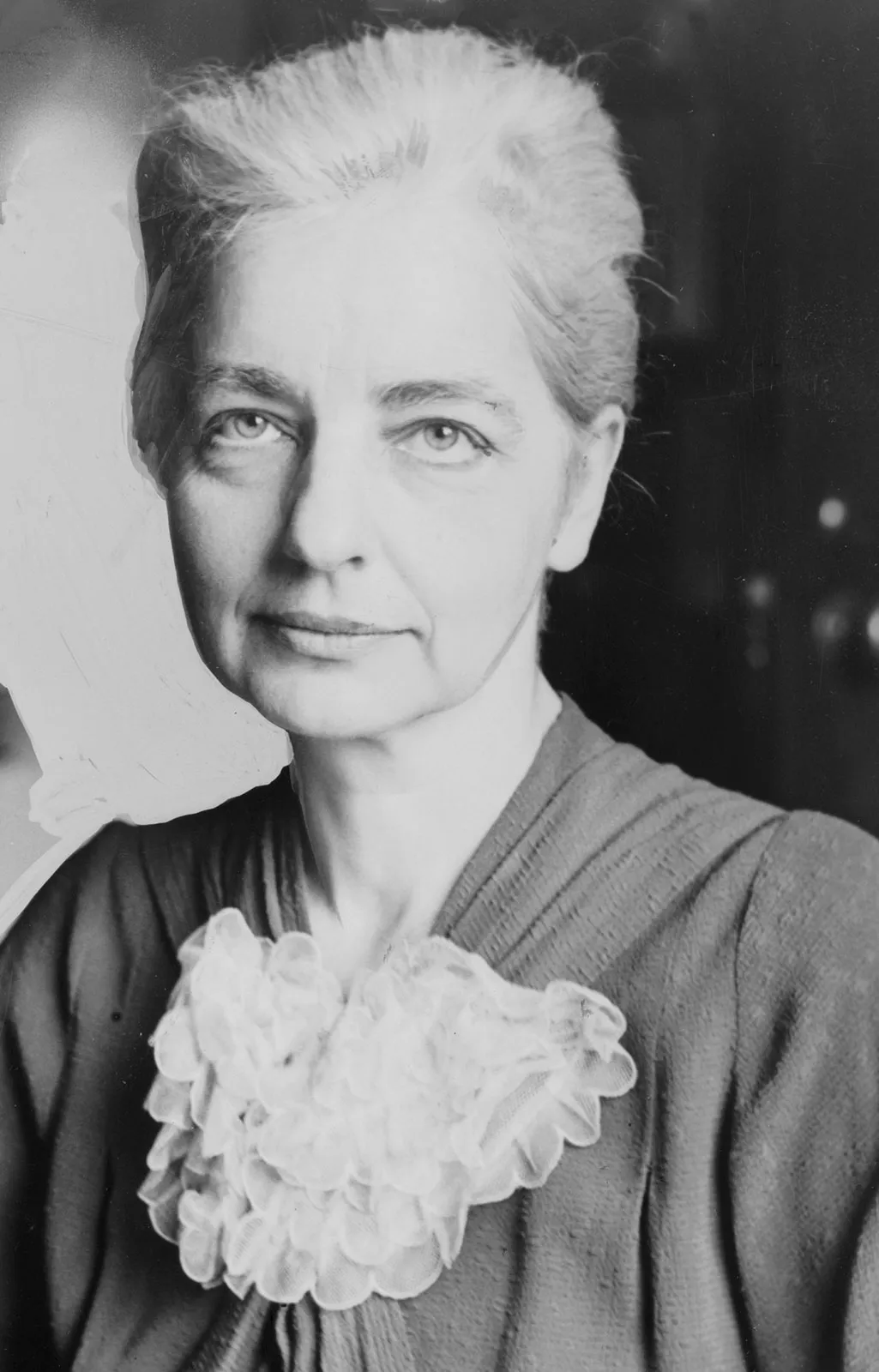
|
|---|
Contributions: What have they contributed to the field of Anthropology?
|
Impact: What is their impact?
|
Key Discoveries: What discoveries have they made and how do their discoveries contribute to the understanding of humans or society?
|
Margaret Mead
Biography: Who are they? (i.e. background information) 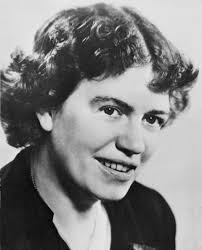
|
|---|
Contributions: What have they contributed to the field of Anthropology?
|
Impact: What is their impact?
|
Key Discoveries: What discoveries have they made and how do their discoveries contribute to the understanding of humans or society?
|
Louis and Mary Leakey
Biography: Who are they? (i.e. background information) 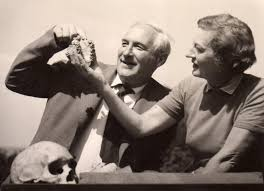
|
|---|
Contributions: What have they contributed to the field of Anthropology?
|
Impact: What is their impact?
|
Key Discoveries: What discoveries have they made and how do their discoveries contribute to the understanding of humans or society?
|
Jane Goodall
Biography: Who are they? (i.e. background information) 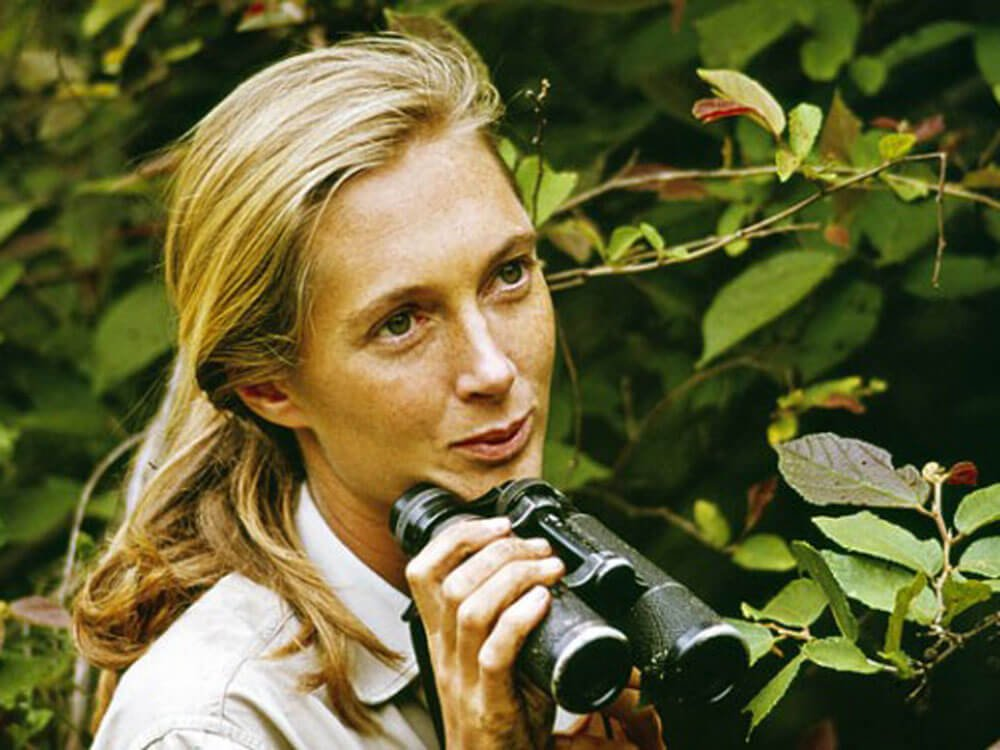
|
|---|
Contributions: What have they contributed to the field of Anthropology?
|
Impact: What is their impact?
|
Key Discoveries: What discoveries have they made and how do their discoveries contribute to the understanding of humans or society?
|
Herbert Spencer
Biography: Who are they? (i.e. background information) 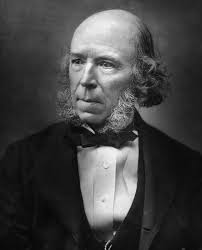
|
|---|
Contributions: What have they contributed to the field of Anthropology?
|
Impact: What is their impact?
|
Key Discoveries: What discoveries have they made and how do their discoveries contribute to the understanding of humans or society?
|
Theoretical Psychology - Understand the rules that truly human thinking/behaviour
Clinical Psychology - Use understanding of mental processes and actions to study emotions to
help those with psychological problems.
Branches of Psychology
Structuralism:
William Wundt, 1800’s
Focused on the inner workings of the mind through reflection and introspection (carefully controlled and detailed observations of the mind)
Experiments of sensation, perception and attention
Functionalism:
William James, mid 1800’s to 1900’s
Determined mental characteristics were like physical characteristics, aka natural selection (survival)
Study development of children, difference between men and women, how learning can improve
Psychoanalysis:
Sigmund Freud, Late 1800’s to 1900’s
Uncover patients unconscious thoughts through discussion with a psychologist
Freud concluded problems with the nervous system stemmed from the unconscious, not physical
Behaviourism:
John Watson, Late 1800’s to mid 1900’s
Same-ish time as Freud's conductions of his own experiments
Determined that only what we observed was truly scientific, such as behaviour
Mind is not considered scientific as we cannot observe what goes on in the mind
Believed all behaviour was response to environmental stimuli
Humanism:
1950s, made to combat popular ideologies like psychoanalysis and behaviourism
Focus on quality of human beings, freedom and potential to grow
Believed human beings were not driven by things like behaviour and such, argued we had control over all of our actions
Cognitive psychology:
Popular 1950s onward
Mental processes such as memory, learning and thinking
Focus on researching the brain, monitors brain waves and signals during certain activities like sleeping, laughing, etc
Types of work by psychologists:
Research psychology
Applied psychology
Clinical psychology
Types of Learning
Conditioned learning: Learning certain behaviours due to the presence of an environmental stimulus (Classical and Operant conditioning)
Classical Conditioning: Learning the association between a stimulus and its response
Operant Conditioning: Learning the association between a behaviour and its consequences
CP: Pavlov’s dog experiment: stimulated the dog with food (unconditioned), created an association between food and the bell to make a conditioned response
OP: Skinner’s box: Put a rat in a cage that would obtain food pellets through pushing a button. Eventually, the rat figured that out and would press the button whenever it wanted a food pellet
Observational learning: Learning certain behaviours through observing and watching other role models
Motivation
Bandura’s theory of motivation:
Attention, retention, reproduction, and motivation
Two kinds of motivation, biological and social
Maslow’s Hierarchy of Needs: Physiological, Safety, Love, Esteem, Cognitive, Aesthetic, Self-Fulfilment, and Transcendence
Found that those from the Siksika nation were already born with self-fulfilment and were already accepted as members of the community
Alfred Adler focused on self-improvement, the need to be productive in society, and thought birth order influenced their motivation.
First Born: High levels of parental attention, expected to be responsible, ambitious and perfect.
Second Born: Expected to compete with other sibling, attempt to surpass them. Sociable, adaptive and rebellious.
Third Born: Pampered by family, outgoing and charming but struggle with independency.
Only Children: Remain center of attention, perfectionists with high self esteem, but struggle to share or cooperate with others
Twins: To avoid competition they attempt to individualize as much as possible, one twin might like athletics and the arts, with the other the sciences and math.
Conscious: What you are aware of
Preconscious: Memories you aren’t actively thinking about but can recall
Unconscious: Repressed instincts that still affect our behaviour
Id: Unconscious, seeks pleasure
Ego: Conscious, Rational
Superego: Unconscious, mediator of the two
Oral stage (0 to 12-18 months): Baby is obsessed with sucking or oral stuff. IF neglected, the baby grows up frustrated, if overindulge baby grows up gullible
Anal stage (12-18 months to 3): The toddler learns to potty train, conflict between when it is appropriate to release feces. Id will encourage releasing feces, ego will tell to hold it until bathroom.
Phallic stage (3 to 6 years): Libidal energy focused on genitals. Emergence of Oedipus and Electra complexes.
Latency stage (6 to puberty): Learns to repress libido.
Genital stage (puberty to adulthood): Libidal energy focused on genitals again, interests in sexual relationships. If the partner is stuck on the last few stages, the relationship will suffer.
Defense mechanisms: Compensation, Daydreaming, Denial, Displacement (focusing frustration on someone less scary than you), Identification (taking the role of others), Minimizing, Projection, Rationalization (justifying bad behaviour), Reaction formation (believing in opposite belief cuz true belief makes u anxious), Regression (becoming immature), Sublimation (doing socially unacceptable things in an accepted way)
Intelligence
Logical-Mathematical: Excels in math, abstract reasoning, and scientific problem-solving.
Verbal-Linguistic: Strong proficiency with words, reading, writing, and storytelling.
Visual-Spatial: Strong visualization skills, spatial awareness, and ability to mentally manipulate objects.
Musical-Rhythmic: Sensitivity to sounds, rhythms, tones, and musical expression.
Bodily-Kinesthetic: High physical coordination, hands-on learning, and body awareness.
Interpersonal: Highly empathetic, excellent at reading nonverbal cues, and skilled at managing social dynamics.
Intrapersonal: Deep self-awareness, introspection, and understanding of personal motivations.
Naturalistic: Deep connection to nature, environmental awareness, and the ability to recognize patterns in the ecosystem.
Existential (Proposed): The capacity to tackle deep philosophical questions regarding human existence, life, and death.
Sensation
Process in which sense receptors are activated; refers to sight, smell, touch, sound, taste. Through your senses in which you receive information.
Tongue map: Sweet in the front, Sour and Salty on the sides, Bitter in the back.
Perception
Process of interpreting information that you receive from sensation.
Your analysis of the world around you, but can sometimes make you think close mindedly and perceive things from only your perspective neglecting the perspective of others.
Can induce selective memory; only remembering what is pleasurable vs those unpleasurable are blocked. Certain objects are also more attractive than others, inducing you to notice and perceive them, for example something loud and cranky.
Memory
Ability to acquire, retain and recall information.
Episodic memory: Recalling events from a specific past experience
Semantic memory: Knowledge of how the world works but you haven’t actually experienced it
Sensory memory: Memory received through the five senses
Short-term memory: Memory stored for 15-20 seconds. If you work more with memory, it will stay in your short-term memory longer or become long-term memory. Can store up to 7 unorganised items plus or minus 2. Can remember more if organised, and we lose memory due to decay.
Long-term memory: Meaningful memory that is longer than 15-20 seconds can be lost until ur entire lifetime. Compared to the workings of a library.
To improve memory: Give it meaning, Organise information, Spread practice over several sessions, learn actively, transfer learning from other areas, recitation, visualisation, and improve recall.
Thinking
4 types of thinking
Developing concepts: creating a category of ideas that share similar characteristics.
Reasoning:
Deductive reasoning - Take a general principle and apply it to a specific situation
Inductive reasoning - Take a specific principle and apply it to a general situation
Dialetical reasoning - Evaluate two or more alternative points of view
Problem solving:
Define the problem
Develop a strategy
Carry out the strategy
Determine if strategy worked or not
Decision making:
Determine the alternatives
Evaluate the alternatives
Make a decision
Act
Reflect
Sleep
⅓ of life is spent sleeping
Teenagers need 9-9.5 hours of sleep
Boys with shorter sleep get more injuries
Girls with shorter sleep get more missed school
Loud snoring sign of sleep apnea
Delay in the internal clock for teenagers sleep cycle
NREM SLEEP: 75 - 80% of sleep, lowers blood pressure, quiet sleep.
Stage one is minutes long and very light sleep
Stage two is 50% of your sleep, deeper sleep
Stage three is a few minutes long, deeper sleep, growth hormone released
Stage four is 40 minutes long, deepest sleep, growth hormone secreted
REM SLEEP: 20-25% of sleep, rapid eye movement, epinephrine (adrenaline), paralyzed limbs, rising blood temperature, vivid dreams, heart rate and respiration faster and more irregular.
Most people sleep about 5 sleep cycles.
Sleep disorders: Obstructive sleep apnea, narcolepsy, Periodic limb movements and Restless leg syndrome
Emotions
Factors that influence our emotions: Heredity, Maturity, Learning
Primary (our pure emotions) Blended (primary emotions can combine to create other emotions)
Acceptance Submission (acceptance + fear)
Fear Awe (fear + surprise)
Surprise Disappointment (surprise + sadness)
Sadness Remorse (sadness + disgust)
Disgust Contempt (disgust + anger)
Anger Aggressiveness (anger + anticipation)
Anticipation Optimism (anticipation + joy)
Joy Love (joy + acceptance)
Stress
Eustress: Healthy/good kind of stress
Adaptation to stress: Alarm stage, Resistance stage, Exhaustion stage
Mental Illness
Just be able to differentiate phobias, mood disorders, personality disorders, schizophrenia etc.
THEORIST | WHY ARE THEY KNOWN IN PSYCHOLOGY? | WHAT IS THE EXPERIMENT/STUDY FOR WHICH THEY ARE FAMOUS? | Sources | |
|---|---|---|---|---|
Albert Bandura |
|
| MacCormick, H. (2021, July 30). Psychology professor Albert Bandura died at 95. News.stanford.edu. | |
Ivan Pavlov |
|
| The one provided | |
BF Skinner |
|
| Harvard University. (2007). B. F. Skinner. Harvard.edu; Department of Psychology. | |
John B Watson |
|
| The one provided | |
William James |
|
| The one provided | |
Wilder Penfield |
|
| The one provided | |
Kenneth Bancroft AND Mamie Phipps Clark |
|
| The one provided | |
Alfred Binet |
|
| Cherry, K. (2023). Alfred Binet and the history of IQ testing. Verywell well. | |
Noam Chompsky |
|
| ||
Erik Erikson |
|
| Cherry, K. (2024). Erikson’s stages of development. Very Well Mindful. | |
Francis Cecil Sumner |
|
| The one provided | |
Howard Gardner |
|
| Cherry, K. (2012, May 17). Howard Gardner Biography. Verywell Mind; Verywell Mind. |
Sociology: The study of people in groups
Social Psychology: Study of individuals within their groups and social settings
Structural Functionalism: Various segments of society serve a purpose for society as a whole.
Family - Raise children, provide emotional bonds
School - Teach children knowledge and skills
Social problems are temporary
Different Approaches to Sociology
Conflict Theory:
Power holds society together. People in society are naturally competitive.
Symbolic Interactionism:
How individuals learn about their culture. People are motivated by what they learn.
Feminist Sociology:
Understanding the social roles of both genders in different cultures. Women and inequalities. Bring change socially and politically.
Socialization
Socialization: The process in which individuals learn the ways of society and their culture etc.
Agents of Socialization: Types of contacts that influence socialization
Five main types of socialization, but can be more
Family (Most significant)
Peers
School
Culture
Media
Personality
Freud believed that the unconscious mind was most significant in developing a personality. However, socialization is what develops the ego and superego in order to counter the id.
Piaget found four stages in the cognitive development of children.
Sensorimotor stage (Birth - Age 2): Babies experience the world through their senses, with no thoughts.
Pre-operational stage (Age 2 - 7): Children experience the world mentally through speech and communication. Cannot see things from other people's point of view, however.
Concrete-operational stage (7 - 11): Children can do complex operations like math and measurements if physical objects are present. Can think from other people’s points of view.
Formal-operational stage (adolescence): Can manipulate ideas without physical objects being present. Can use logic and think abstractly.
Charles Hooten Cooley believed that the sense of self or identity is derived from others.
George Herbert Mead found that the self for children develops through interaction with others. Through the preparatory stage (imitation), the play stage (act roles of adults), and the game stage (discover rules and roles in society).
Erik Erikson believed that identity developed entirely through the whole lifetime.
Infancy and childhood (0-11 yrs): Relationships with friends, family, and to develop emotionally, intellectually, physically, and socially.
Adolescence (11-18 yrs): Young person tries to find personal identity, good self-esteem vs bad self-esteem
Early adulthood (18 - 25 yrs): Forming close, lasting relationships and commitment to a career choice.
Middle adulthood (25-50 yrs): Individuals try to become productive and accomplish something worthwhile.
Late adulthood (50+ yrs): Seniors should try to pursue projects they were unable to do when younger. This is the time for power and prestige, peaking in careers and retiring.
Family
Nuclear family: One or two parents with unmarried children living together
Extended family: Relatives in addition to the nuclear family living together
Blended or Reconstituted family: Parents with children from previous marriages
Childless family: A married couple
Single-Parent family: A parent with one or more children
Common-Law family: Unmarried couple with or without children
Types of Marriages
Free-Choice: Partners have a say in who they wed
Arranged: Partners set up together by another party
Types of Roles in the Family
Conventional roles: A woman works as a housewife with children, a man works outside the home.
Shared roles: Both partners work outside the home and share responsibilities. The woman still takes primary household responsibilities.
Dual-Career roles: Both parents have permanent career roles, and responsibilities are divided more equally.
Deviance
Mores: norms involving ethical or moral judgments i.e. telling lies or cheating
Laws: formal rules enforced by designated individuals within a society i.e. stealing, rape, murder, etc.
Conformity: Following accepted rules and behaviour in society
Deviance: Behaviour that differs from the norm in a society. Changes based on the situation i.e. physical assault is wrong, but if enacted in self-defense, it is excused
Causes of Deviance
Biological theory: Brain functioning or genetics causing deviance
Psychological theory: Deviance is a result of early experiences, psychological problems and personality
Sociological theory: Learned response to the environment
Motivational – believe it is the result of people being encouraged to achieve but not having the tools to succeed
Learning – believe it is a result of observing and learning from others
Control – believe it is a result of the absence of social control and if the rewards for such behaviour are more certain than the punishment
Labeling – believe it is a result of automatically defining or “labeling” people in a particular way
Social Control: Methods used to ensure conformity
Informal control: Occurs in everyday actions with others describing what is wrong or right. Often more effective than other forms of social control.
Formal control: Role in maintaining order is larger and more complex in societies such as the Criminal Justice System
Phil Zimbardo Experiment: Stanley Prison Experiment, putting adolescent males in an environment to simulate the workings of a prison.
Stanley Milgram Experiment: Assigned questions to a person, and if that person got it wrong, the administrator would have to give them an electric shock, increasing in voltage.
Solomon Asch Experiment: A group of people peer pressured another person into picking an answer that was clearly incorrect, but the other person chose it because everyone else did.
Gender
Gender Socialization: The process in which people should act in accordance with their gender, which is assigned in accordance with their biological sex.
Gender roles are sometimes reinforced by almost anything and anyone in society, which is wrong.
Social Class and Poverty
Ascribed status: a status that is assigned to an individual
Four major social classes
Wealthy upper class 3-5%
Middle class 40-50%
Working class 30%
The poor 20%
Absolute poverty: Lack of any essential resources
Relative poverty: Comparison of someone’s standard of living to the national standard of living
The working poor: Low-income families that can not afford any luxuries, minimum wage
The homeless: Young, Unskilled, Alcoholic or Drug dependent, mentally ill…
Who is at risk of poverty?
Young people
Single-Parent Families
Women
Older people/Workers
People with Disabilities
Children
Certain Regions of the Country