Pharmacology-Midterms-Transes
Drugs are chemicals that are introduced into the body to cause some sort of change. (Karch)
Drugs are any substance other than food that could alter a person’s physical or mental state. (Cabelin)
Pharmacology is the study of the biological effects of chemicals.
Pharmacotherapeutics, or clinical pharmacology, the branch of pharmacology that uses drugs to treat, prevent, and diagnose disease.
Clinical pharmacology addresses two key concerns:
- the drug’s effects on the body (pharmacodynamics)
- the body’s response to the drug (pharmacokinetics)
Nursing responsibilities:
- Administering drugs
- Assessing drug effects
- Intervening to make the drug regimen more tolerable
- Providing patient teaching about drugs and the drug regimen
- Monitoring the overall patient care plan to prevent medication errors
To become a drug, a chemical must have a demonstrated therapeutic value or efficacy without severe toxicity or damaging properties.
SOURCES OF DRUGS
- Natural
- plants
- digitalis products- treat cardiac disorders
- opiates- sedation
Synthetic version of the active chemical found in a plant. E.g. dronabinol (Marinol), which contains the active ingredient delta-9-tetrahydrocannabinol found in marijuana. This drug helps to prevent nausea and vomiting in cancer patients
Ingestion of a plant-derived food. For instance, the body converts natural
licorice to a false aldosterone—resulting in fluid retention and hypokalemia or low serum potassium levels if large amounts of licorice are eaten.
- animal products
genetic engineering—the process of altering DNA
- inorganic compounds
- Aluminum
- antacid to decrease gastric acidity
- management of hyperphosphatemia
- prevention of the formation of phosphate urinary stones
- Fluorine (as fluoride)
- Prevention of dental cavities
- Prevention of osteoporosis
- Gold
- Treatment of rheumatoid arthritis
- Iron
- Treatment of iron deficiency anemia
- Synthetic
DRUG EVALUATION
Food and Drug Administration (FDA) regulates the development and sale of drugs.
FDA-regulated tests are designed to ensure the safety and reliability of any drug approved in this country.
Before receiving final FDA approval to be marketed to the public, drugs must pass through several stages of development.
Preclinical Trials
Chemicals that may have therapeutic value are tested on laboratory animals for two main purposes:
- to determine whether they have the presumed effects in living tissue
- to evaluate any adverse effects
At the end of the preclinical trials, some chemicals are discarded for the following reasons:
- The chemical lacks therapeutic activity when used with living animals.
- The chemical is too toxic to living animals to be worth the risk of developing into a drug.
- The chemical is highly teratogenic (causing adverse effects to the fetus).
- The safety margins are so small that the chemical would not be useful in the clinical setting.
Phase I Studies
- uses human volunteers to test the drugs
- performed by specially trained clinical investigators
- Women are not good candidates for phase I studies because the chemicals may exert unknown and harmful effects on a woman’s ova
- Women do not make new ova after birth. Men produce sperm daily, so there is less potential for complete destruction or alteration of the sperm.
At the end of phase I studies, many chemicals are dropped from the process for the following reasons:
- They lack therapeutic effect in humans
- They cause unacceptable adverse effects
- They are highly teratogenic
- They are too toxic
Phase II Studies
- allows clinical investigators to try out the drug in patients who have the disease that the drug is designed to treat
At the end of phase II studies, a drug may be removed from further investigation for the following reasons:
- It is less effective than anticipated.
- It is too toxic when used with patients.
- It produces unacceptable adverse effects.
- It has a low benefit-to-risk ratio
- It is no more effective than other drugs already on the market, making the cost of continued research and production less attractive to the drug company.
Phase III Studies
- Involves use of the drug in a vast clinical market.
- Prescribers are informed of all the known
reactions to the drug and precautions required for its safe use.
- Prescribers observe patients very closely, monitoring them for any adverse effects.
Food and Drug Administration Approval
- Drugs that finish phase III studies are evaluated by the FDA, which relies on committees of experts familiar with the specialty area in which the drugs will be used.
- An approved drug is given a brand name (trade name) by the pharmaceutical company that developed it.
- The generic name of a drug is the original designation that the drug was given when the drug company applied for the approval process.
- Chemical names are names that reflect the chemical structure of a drug.
Phase IV Studies
- continual evaluation
- Prescribers are obligated to report to the FDA any untoward or unexpected adverse effects
Federal Legislation Affecting the Clinical Use of Drugs | ||
Year Enacted | Law | Impact |
1906 | Pure Food and Drug Act | Prevented the marketing of adulterated drugs; required labeling to eliminate false or misleading claims |
1938 | Federal Food, Drug and Cosmetic Act | Mandated tests for drug toxicity and provided means for recall of drugs; established procedures for introducing new drugs; gave Food and Drug Administration (FDA) the power of enforcement |
1951 | Durham- Humphrey Amendment | Tightened control of certain drugs; specified drugs to be labeled “may not be distributed without a prescription” |
1962 | Kefauver- Harris Act | Tightened control over the quality of drugs; gave FDA regulatory power over the procedure of drug investigations; stated that efficacy as well as safety of drugs had to be established |
1970 | Controlled Substances Act | Defined drug abuse and classified drugs as to their potential for abuse; provided strict controls over the distribution, storage, and use of these drugs |
1983 | Orphan Drug Act | Provided incentives for the development of orphan drugs for treatment of rare diseases |
Food and Drug Administration Pregnancy Categories | |
Category A | Adequate studies in pregnant women have not demonstrated a risk to the fetus in the first trimester of pregnancy, and there is no evidence of risk in later trimesters. |
Category B | Animal studies have not demonstrated a risk to the fetus but there are no adequate studies in pregnant women, or animal studies have shown an adverse effect, but adequate studies in pregnant women have not demonstrated a risk to the fetus during the first trimester of pregnancy, and there is no evidence of risk in later trimesters. |
Category C | Animal studies have shown an adverse effect on the fetus but there are no adequate studies in humans; the benefits from the use of the drug in pregnant women may be acceptable despite its potential risks, or there are no animal reproduction studies and no adequate studies in humans. |
Category D | There is evidence of human fetal risk, but the potential benefits from the use of the drug in pregnant women may be acceptable despite its potential risks. |
Category X | Studies in animals or humans demonstrate fetal abnormalities or adverse reaction; reports indicate evidence of fetal risk. The risk of use in a pregnant woman clearly outweighs any possible benefit. |
Regardless of the designated Pregnancy Category or presumed safety, no drug should be administered during pregnancy unless it is clearly needed.
Benefit outweighs the potential risk.
The Controlled Substances Act of 1970 regulates the manufacturing, distribution, and dispensing of drugs that are known to have abuse potential. The Drug Enforcement Agency (DEA) is responsible for the enforcement of these regulations.
Schedule I (C-I): High abuse potential and no accepted medical use (heroin, marijuana, LSD)
Schedule II (C-II): High abuse potential with severe dependence liability (narcotics, amphetamines, and barbiturates)
Schedule III (C-III): Less abuse potential than schedule II drugs and moderate dependence liability (nonbarbiturate sedatives, nonamphetamine stimulants, limited amounts of certain narcotics)
Schedule IV (C-IV): Less abuse potential than schedule III and limited dependence liability (some sedatives, antianxiety agents, and nonnarcotic analgesics)
Schedule V (C-V): Limited abuse potential. Primarily small amounts of narcotics (codeine) used as antitussives or antidiarrheals. Under federal law, limited quantities of certain schedule V drugs may be purchased without a prescription directly from a pharmacist. The purchaser must be at least 18 years of age and must furnish suitable identification. All such transactions must be recorded by the dispensing pharmacist.
Generic drugs are drugs no longer protected by patent and can be produced by companies other than the one that developed it.
OTC drugs are available without a prescription and are deemed safe when used as directed.
Orphan drugs are drugs that have been discovered but that are not financially viable because they have a limited market or a narrow margin of safety. These drugs may have then been adopted for development by a drug company in exchange for tax incentives.
Sources of Drug Information
- Drug Labels
- Package Inserts
- Reference Books
- Journals
- Journals
- Internet Information
PHARMACODYNAMICS
Pharmacodynamics
- Is the study of the interactions between the chemical components of living systems and the foreign chemicals, including drugs, that enter those systems.
- Pharmacodynamics is the process by which a drug works or affects the body.
Receptors
- are protein molecules present on the cell surface in the human body.
- they receive signals (chemical information) from outside the cell
hormones, neurotransmitters, and drugs
- Ligands are molecules inside your body that bind to receptors on a cell
Agonists
- produces a response by binding to a receptor on the cell
Antagonist
- opposes the action by binding to the receptor, i.e., it blocks these receptors and renders them ineffective.
In other words, the agonists turn the receptors on, and the antagonists turn them off.
Agonist drugs are structurally similar to the natural agonists in the human body. They mimic the natural agonists and trigger the receptors, producing the desired response, or in some cases, a much stronger action.
E.g. Endorphin (natural)/ Morphine (artificial) – opioid receptor- these causes pain relief
Three types of agonists:
- Complete Agonists- direct binding agonist drugs; bring about a faster response
- Partial Agonists- indirect binding agonist drugs; produce a delayed response
- Inverse Agonists- produces the opposite effect by binding to a receptor; decreases the receptor’s activity below the baseline
Drugs usually work in one of four ways:
- To replace or act as substitutes for missing chemicals
- To increase or stimulate certain cellular activities
- To depress or slow cellular activities
- To interfere with the functioning of foreign cells, such as invading microorganisms or neoplasms (drugs that act in this way are called chemotherapeutic agents).
Receptor Sites
- React with certain chemicals to cause an effect within the cell
- The activated enzyme systems then produce certain effects, such as increased or decreased cellular activity, changes in cell membrane permeability, or alterations in cellular metabolism
Drug-Enzyme Interactions
Enzyme systems work in a cascade fashion, with one enzyme activating another, and then that enzyme activating another, until a cellular reaction eventually occurs. If a single step in one of the many enzyme systems is blocked, normal cell function is disrupted.
Selective Toxicity
The ability of a drug to attack only those systems found in foreign cells without disrupting normal human cell functioning.
PHARMACOKINETICS
Types of antagonists:
- Competitive antagonists- drugs that bind at the same binding site of the receptor and prevent the natural ligand from binding. The shape of a competitive antagonist mimics the natural ligand.
- Noncompetitive antagonists- binds at an allosteric site (a site other than the true binding site); causes a conformational change (change in shape) of the receptor, which prevents the natural ligand from binding.
- Irreversible antagonists- bind strongly to the receptor through covalent bonds and cannot be displaced or washed out; permanently modify the receptor and prevent the binding of the natural ligand.
Some agonists can act as a partial antagonist, but an antagonist drug cannot act as an agonist drug.
Critical Concentration
- The amount of a drug that is needed to cause a therapeutic effect
Loading Dose
- Higher dose than that usually used for treatment
Dynamic Equilibrium
- The actual concentration that a drug reaches in the body
Absorption from the site of entry.
- Refers to what happens to a drug from the time it is introduced to the body until it reaches the circulating fluids and tissues
Drugs can be absorbed into cells through various processes, which include:
- Passive diffusion
occurs across a concentration gradient; greater concentration of drug will move through the membrane to the area of lower concentration; does not require any cellular energy; occurs more quickly if the drug molecule is small, is soluble in water and in lipids
and has no electrical charge that could repel it from the cell membrane.
- Active transport
uses energy to actively move a molecule across a cell membrane; may be moving against a concentration gradient; not very important in the absorption of most drugs, but it is often a very important process in drug excretion in the kidney.
- Filtration
involves movement through pores in the cell membrane, either down a concentration gradient or as a result of the pull of plasma proteins
Distribution to the active site
- involves the movement of a drug to the body’s tissues
- Protein binding
- Blood brain barrier
is a protective system of cellular activity that keeps many things (e.g., foreign invaders, poisons) away from the CNS. Drugs that are not lipid soluble are not able to pass the blood–brain barrier.
- Placenta and Breast Milk
Biotransformation (metabolism) in the liver
- the process by which drugs are changed into new, less active chemicals.
Excretion from the body
First-pass effect
a phenomenon in which drugs given orally are carried directly to the liver after absorption, where they may be largely inactivated by liver enzymes before they can enter the general circulation; oral drugs frequently are given in higher doses than drugs given by other routes because of this early breakdown
Hepatic microsomal system
liver enzymes tightly packed together in the hepatic intracellular structure, responsible for the biotransformation of chemicals, including drugs
Enzyme induction
process by which the presence of a chemical that is biotransformed by a particular enzyme system in the liver causes increased activity of that enzyme system
Excretion from the body
- is the removal of a drug from the body
kidneys, skin, saliva, lungs, bile, and feces are some of the routes used to excrete drugs
Glomerular filtration
the passage of water and water-soluble components from the plasma into the renal tubule (collects the products that are filtered out of the blood)
These processes are key elements in determining the amount of drug (dose) and the frequency of dose repetition (scheduling) required to achieve the critical concentration for the desired length of time.
Half Life
- the time it takes for the amount of drug in the body to decrease to one half of the peak level it previously achieved
Factors Influencing Drug Effects
- Weight
- Age
- Gender
- Physiological factors
- Pathological factors
- Genetic factors
- Immunological factors
- Psychological factors
- Environmental factors
- Tolerance
- Cumulation
- Interactions
INTRODUCTION TO CELL PHYSIOLOGY
Chemotherapeutic drugs are used to destroy both organisms that invade the body (e.g., bacteria, viruses, parasites, protozoa, fungi) and abnormal cells within the body (e.g., neoplasms, cancers).
These drugs affect cells by altering cellular function or disrupting cellular integrity, causing cell death, or by preventing cellular reproduction, eventually leading to cell death.
THE CELL
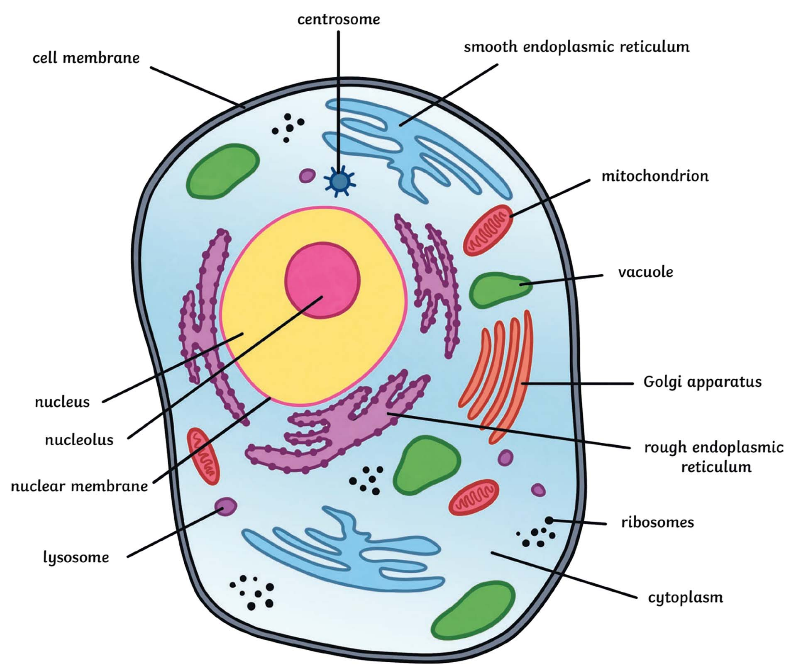
Cell Nucleus
- is the part of a cell that contains all genetic material necessary for cell reproduction and for the regulation of cellular production of proteins.
- A small spherical mass, called the nucleolus, is located within the nucleus
Cell Membrane
- separates intracellular fluid from extracellular fluid
- The cell membrane is a lipoprotein structure, meaning that it is mainly composed of proteins and lipids— phospholipids, glycolipids, and cholesterol; the bipolar arrangement of the lipids monitors substances passing in and out of the cell
- Cholesterol is found in large quantities in the membrane, and it works to keep the phospholipids in place and the cell membrane stable.
- One type of protein located on the cell membrane is known as a receptor site. This protein reacts with specific chemicals outside the cell to stimulate a reaction within the cell.
- Other surface proteins are surface antigens, or genetically determined identifying markers. These proteins are called histocompatibility antigens or human leukocyte antigens, which the body uses to identify a cell as a self-cell (i.e., a cell belonging to that individual).
- Channels or pores within the cell membrane are made by proteins in the cell wall that allow the passage of small substances in or out of the cell.
|
Cytoplasm
- lies within the cell membrane and outside the nucleus and is the site of activities of cellular metabolism and special cellular functions
- contains many organelles
Mitochondria
- are rod-shaped “power plants” within each cell that produce energy in the form of ATP, which allows the cell to function.
Endoplasmic Reticulum
- Much of the cytoplasm of a cell is made up of a fine network of interconnected channels known as cisternae, which form the endoplasmic reticulum.
- Many granules that contain enzymes and ribosomes, which produce protein, are scattered over the surface of the rough endoplasmic reticulum.
- Production of proteins, phospholipids, and cholesterol takes place in the rough endoplasmic reticulum.
- The smooth endoplasmic reticulum is the site of further lipid and cholesterol production and the production of cell products, such as hormones. The breakdown of many toxic substances may also occur here in particular cells.
- Passageway for transport of materials within the cell
- Rough ER, has ribosomes on its surface, giving it a textured appearance
- Smooth ER, no ribosomes on its surface; site for lipid synthesis
Free Ribosomes
- sites of protein synthesis
Golgi Apparatus
- is a series of flattened sacs
- these structures prepare hormones or other substances for secretion by processing them and packaging them in vesicles to be moved to the cell membrane for excretion from the cell
Lysosomes
- are membrane-covered organelles that contain specific digestive enzymes that can break down proteins, nucleic acids, carbohydrates, and lipids and are responsible for digesting worn or damaged sections of a cell when the membrane ruptures and the cell dies.
- Lysosomes form a membrane around any substance that needs to be digested and secrete the digestive enzymes directly into the isolated area, protecting the rest of the
cytoplasm from injury.
- digest phagocytized foreign body & worn-out organelles
|
Cell Properties
- Endocytosis involves incorporation of material into the cell by extending the cell membrane around the substance.
- Pinocytosis, a form of endocytosis, refers to the engulfing of specific substances that have reacted with a receptor site on the cell membrane. “cell- drinking”
- Phagocytosis is a similar process; it allows the cell, usually a neutrophil or macrophage, to engulf a bacterium or a foreign protein and destroy it within the cell by secreting digestive enzymes into the area. “cell- eating”
- functions to engulf & destroy foreign body & reabsorb small molecules
- Exocytosis is the opposite of endocytosis and involves removing substances from a cell by pushing them through the cell membrane.
The main goal of a cell is to maintain homeostasis.
Passive Transport
- Passive transport happens without the expenditure of energy and can occur across any semipermeable membrane.
- There are essentially three types of passive transport: diffusion, osmosis, and facilitated diffusion.
Diffusion
- is the movement of a substance (solutes) from a region of higher concentration to a region of lower concentration
- The difference between the concentrations of the substance in the two regions is called the concentration gradient of the substance;
- usually, the greater the concentration gradient, the faster does the substance move
- When a cell is very active and is using energy and oxygen, the concentration of oxygen within the cell decreases. The concentration of oxygen outside the cell remains relatively high, so oxygen moves across the cell membrane (down the concentration gradient) to supply needed oxygen to the inside of the cell
Osmosis
- is the movement of water across a semipermeable membrane from an area that is low in dissolved solutes to one that is high in dissolved solutes.
- The water is attempting to equalize the dilution of the solutes.
- This diffusion of water across a cell membrane from an area of high concentration (of water) to an area of low concentration creates pressure on the cell membrane called osmotic pressure.
 The greater the concentration of solutes in the solution to which the water is flowing, the higher is the osmotic pressure.
- Fluid that contains the same concentration of solutes as human plasma is called an isotonic solution.
- A fluid that contains a higher concentration of solutes than human plasma is a hypertonic solution, and it draws water from cells.
- A fluid that contains a lower concentration of solutes than human plasma is hypotonic; it loses water to cells.
Facilitated Diffusion
- does not require energy, just the presence of the carrier (hormones, enzymes, or proteins)
- Carrier required for facilitated diffusion is usually present in a finite amount, this type of diffusion is limited.
Active Transport
- movement of molecules from an area of lesser concentration to an area of greater concentration.
- is movement against a concentration gradient
- one of the best-known systems of active transport is the sodium–potassium pump. Cells use active transport to maintain a cytoplasm with a higher level of potassium and a lower level of sodium than the extracellular fluid contains. This allows the cell to maintain an electrical charge on the cell membrane, which gives many cells the electrical properties of excitation (the ability to generate a movement of electrons) and conduction (the ability to send this stimulus to other areas of the membrane).
Cell Cycle
- The genetic makeup of a particular cell determines the rate at which that cell can multiply.
- Regardless of the rate of reproduction, each cell has approximately the same life cycle. The life cycle of a cell, called the cell cycle, consists of four active phases and a resting phase.
G0 Phase (Interphase)
- the cell is stable
- Cancer chemotherapy usually works on active, dividing cells, leaving resting cells fairly untouched. When the resting cells are stimulated to become active and regenerate, the cancer can return.
G1 Phase
- Lasts from the time of stimulation from the resting phase until the formation of DNA
- the cell synthesizes substances needed for DNA formation
- 1st growth phase
- Stage of protein synthesis
S Phase
- involves the actual synthesis of DNA
- The cell remains in this phase until the amount of cellular DNA has doubled.
- Stage of DNA replication
G2 Phase
- The cell produces all of the substances required for the manufacture of the mitotic spindles.
- 2nd Growth phase
- Cell undergoes another round of protein synthesis
M Phase
- The cell splits to form two identical daughter cells
- Prophase
- Chromatin condenses into chromosomes
- nuclear membrane disappears
- centrioles move to opposite ends of the cell & organize the spindle fibers
- Metaphase
- pairs of chromatids line up along equator or center of cell
- centromere of each pair is attached to a spindle fiber
- Anaphase
- Spindle fibers contract and pull the chromosomes
- Chromatids move to opposite ends of spindle
- Each chromatid is now considered a separate chromosome (2 complete & separate sets)
- Cytokinesis or division of the cytoplasm also begins
- Telophase
- chromosomes complete their migration
- chromosomes uncoil & become chromatin
- nuclear membrane reappears
- cytokinesis is completed
Cells replicate at differing rates, depending on the genetic programming of the cell. All cells go through a life cycle consisting of the following phases: G0, the resting phase; G1, which involves the production of proteins for DNA synthesis; S, which involves the synthesis of DNA; G2, which involves manufacture of the materials needed for mitotic spindle production; and M, the mitotic phase, in which the cell splits to form two identical daughter cells |
Anti- Infective Agents
|
Anti Infective Agents
- Are drugs designed to target foreign organisms that have invaded and infected the body of a human host.
- Paul Ehrlich’s research to develop a synthetic chemical that would be effective only against infection-causing cells, not human cells, led the way for the scientific investigation of anti-infective agents.
- Antineoplastics- drugs used for treating diseases caused by abnormal human cells such as cancers.
Therapeutic Actions
The goal is interference with the normal function of the invading organism to prevent it from reproducing and to cause cell death without affecting host cells.
- Interfere with biosynthesis of the pathogens cell wall. E.g, penicillin.
- Prevent the cells of the invading organism from using substances essential to their growth development, leading to an inability to divide and eventually to cell death. E.g. sulfonamides, antimycobacterial, trimethoprim- sulfamethoxazole.
- Interfere with the steps involved in protein synthesis, a function necessary to maintain the cell and allow for cell division. E.g. aminoglycosides, macrolides, and chloramphenicol.
- Interfere with DNA synthesis in the cell, leading to inability to divide and cell death. E.g. fluoroquinolones
- Alter the permeability of the cell membrane to allow essential cellular components to leak out, causing cell death. E.g., antifungals and antiprotozoal
Bactericidal or fungicidal- cause the death of the cells they affect
Bacteriostatic or fungistatic- interfere with the ability of the cells to reproduce.
The goal of anti-infective therapy is the reduction of the population invading the organism to a point at which the human immune response can take care of the infection.
It is difficult to treat any infections in an immunocompromised patient for two reasons:
- Anti-infective drugs cannot totally eliminate the pathogen without causing severe toxicity in the host
- These patients do not have inflammatory or immune response in place to deal with even a few invading organisms.
Resistance- refers to the ability over time to adapt to an anti-infective drug and produce cells that are no longer affected by a particular drug. It can be natural (does not use the process on which the anti-infective used) or acquired (pathogens develop a process to oppose the anti-infective agent)
Microorganisms develop resistance in a number of ways including the following:
- Producing an enzyme that deactivates the antimicrobial drug.
- Changing the cellular permeability to prevent the drug from entering the cell or altering transport systems to exclude the drug from active transport into the cell.
- Altering binding sites on the membranes or ribosomes, which then no longer accept the drug.
- Producing chemical that acts as an antagonist to the drug.
Drug dosing is important in preventing the development of resistance.
Staining technique and microscopic examination are used to identify the offending bacterium.
Sensitivity testing on the cultured microbes to evaluate bacteria and determine which drugs are capable of controlling the particular microorganism.
Prophylaxis—prevent infections before they occur.
Death of microorganisms releases chemicals and toxins in the body, which can stimulate the chemoreceptor trigger zone in the medulla and induce vomiting.
Neurotoxicity
- Aminoglycosides- collect in the eight cranial nerve and cause dizziness, vertigo, and loss of hearing.
- Chloroquine- used to treat malaria and some other rheumatoid disorders, can accumulate in the retina and optic nerve and cause blindness.
Superinfections are infections that occur when opportunistic pathogens that were kept by the normal flora bacteria have the opportunity to invade tissues.
Antibiotics – Chemicals that inhibits specific bacteria
Made in three ways
- Living microorganism
- Synthetic manufacture
- Genetic engineering
Bacteriostatic – preventing the growth of bacteria
Bactericidal – killing bacteria directly
Indication that the body is responding to an invader:
- Fever
- Lethargy
- Slow-wake sleep indications
- Inflammations (Redness, Swelling, Heat, Pain)
The goal of antibiotic therapy is to decrease the population of invading bacteria to a point at which the human immune system can effectively deal with the invader.
Selective Toxicity - dose to determine the antibiotic to which the particular organism is sensitive
Gram positive bacteria |
- cell wall refrains the Gram’s stain/resists decolorization with alcohol during culture and sensitivity testing. - respiratory tract and soft tissues - Streptococcus pneumoniae - pneumonia |
Gram negative bacteria |
- cell walls lose a strain/are decolorized by alcohol - Genitourinary (GU) or Gastrointestinal (GI) - Escherichia coli – cystitis (inflammation of the bladder & most common type of urinary infection) |
Broad-spectrum antibiotics – interfere with a biochemical reaction common to many organisms
Aminoglycosides
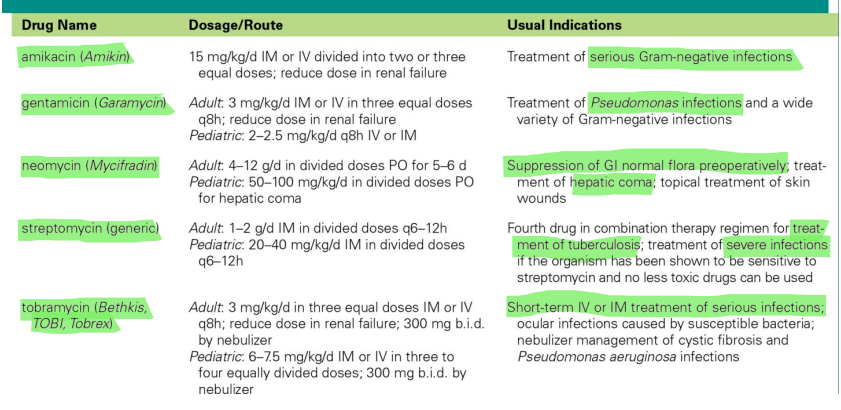
- Treat serious infection caused by gram-negative aerobic bacilli
Therapeutic Actions and Indications
- Bactericidal
- Irreversibly bind to a unit of bacteria ribosomes, leading to misreading of the genetic code and cell death
Pharmacokinetics
- poorly absorbed from the GI tract
- rapidly absorbed after intramuscular (IM) injection
- peak levels within 1 hour
- half-life of 2 to 3 hours
- distributed throughout the body, cross the placenta and enter breast milk, and
- excreted unchanged in the urine
Contraindications and Cautions
- allergy to any of the aminoglycosides
- renal or hepatic disease
- preexisting hearing loss
- active infection with herpes or mycobacterial infections
- myasthenia gravis or parkinsonism
- lactation
- pregnancy
- test urine function frequently
Amikacin is available for short-term IM or intravenous (IV) use.
Gentamicin is available in many forms: Ophthalmic, topical, IV, IM, intrathecal
Neomycin is available in topical and oral forms.
Streptomycin is only available for IM use.
Tobramycin is used for short-term IM or IV treatment and is also available in an ophthalmic form and as a nebulizer solution
Adverse effects
- Renal toxicity, which may progress to renal failure, is caused by direct drug toxicity in the glomerulus
- Bone marrow depression may result from direct drug effects on the rapidly dividing cells in the bone marrow, leading
- GI effects include nausea, vomiting, diarrhea, weight loss, stomatitis, and hepatic toxicity, GI irritation, loss of bacteria of the normal flora with resultant superinfections, and toxic effects in the mucous membranes and liver as the drug is metabolized
- Cardiac effects can include palpitations, hypotension, and hypertension
Clinically Important Drug-Drug Interactions
- synergistic bactericidal effect when given with penicillins or cephalosporins
- Avoid combining aminoglycosides with potent diuretics; this increases the incidence of ototoxicity, nephrotoxicity, and neurotoxicity.
Carbapenems
- new class of broad-spectrum antibiotics
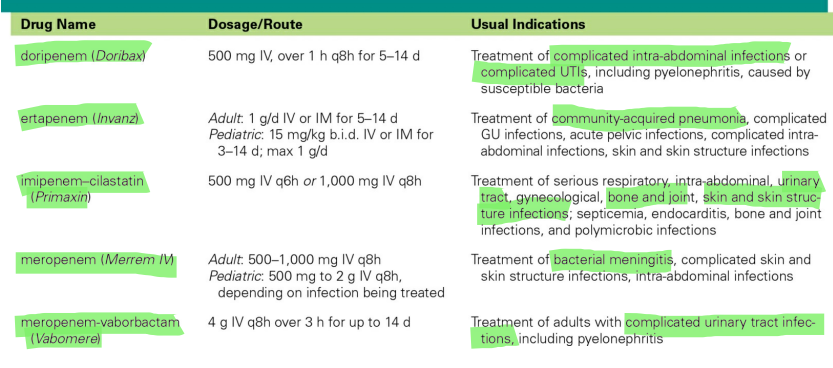 effective against Gram-positive and Gram-negative bacteria
Meropenem
- 1st drug of the class
- Limited use dose to fetal GI toxicities
- is given IV over 1 hour, every 8 hours for 5 to 14 days when combined with vaborbactam, and it is given IV over 3 hours every 8 hours for 14 days
- treatment of bactericidal meningitis complicated skin and skin structure infections, intra-abdominal infections
Therapeutic Actions and Indications
- bactericidal
- inhibits cell membrane synthesis
- treatment for serious intra-abdominal, urinary tract, skin and skin structure, bone and joint, gynecological infection
Pharmacokinetics
- rapidly absorbed if given Intramuscular (IM)
- reach peak levels at the end of injection if given Intravenous (IV)
- excreted unchanged in the urine
- half life of 1-4 hrs
Contraindications
- allergy – carbapenems, beta lactams
- seizure disorders
- meningitis
- lactation
Cautions
- pregnancy
- Test urine function regularly
- Ertapenem and meropenem-vaborbactam not recommended for use in patients <18 years of age
- Meropenem is associated with the development of pseudomembranous colitis (inflammation on the colon Clostridium difficile)
Adverse effects
- Pseudomembranous colitis, Clostridium difficile diarrhea, and nausea and vomiting (dehydration & electrolyte imbalances)
- Superinfections
- CNS effects can include headache, dizziness, and altered mental status
- Seizures have been reported when carbapenems are combined with other drugs
Clinically Important Drug-Drug Interactions
- alternative antibiotic treatment if a patient is on valproic acid
- Avoid concurrent use of imipenem with ganciclovir
- Meropenem should not be combined with probenecid
Cephalosporins
- first introduced in the 1960s
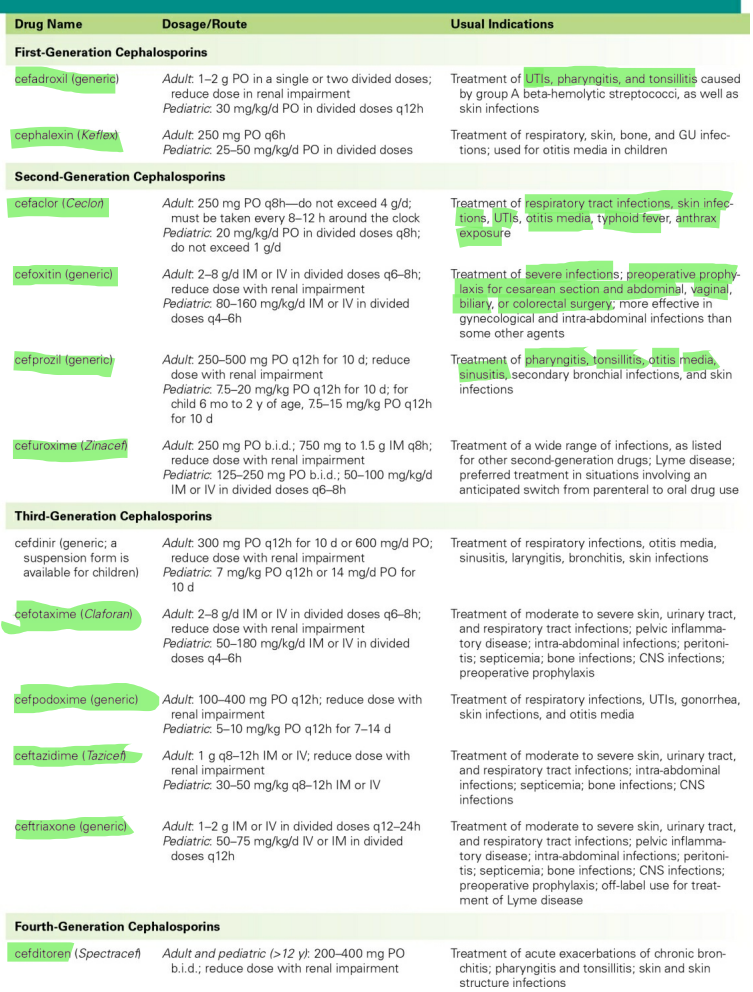
- First-generation cephalosporins
- (largely effective against the same Gram- positive bacteria that are affected by penicillin)
 PEcK (P. mirabilis, E. coli, and K. pneumoniae)
- Second-generation cephalosporins
- less effective against Gram-positive bacteria (H. influenzae, Enterobacter aerogenes, and Neisseria spp.)
- Third-generation cephalosporins
- effective against all of the previously mentioned strains
- relatively weak against Gram-positive bacteria but are more potent against the Gram-negative bacilli
- Fourth-generation cephalosporins
- (Maxipime), is active against Gram-negative and Grampositive organisms, including cephalosporin-resistant staphylococci and P. aeruginosa.
- Ceftolozane-tazobactam (Zerbaxa) is a combined with a beta-lactamase inhibitor
Therapeutic Actions and Indication
- both bactericidal and bacteriostatic
- indicated for the treatment of infections caused by
- susceptible bacteria
- it is important to reserve cephalosporins for appropriate situations because cephalosporin-resistant bacteria are appearing in increasing numbers
Pharmacokinetics
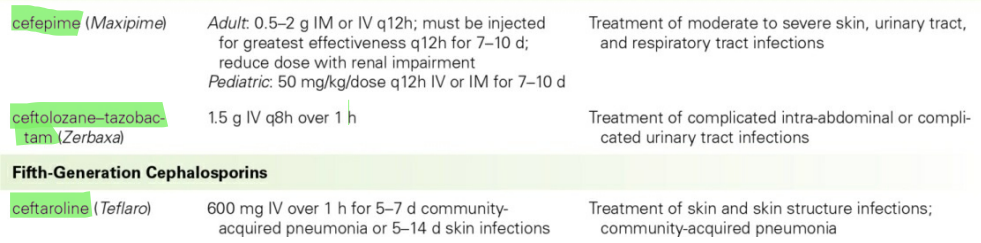 well absorbed from the GI tract
- first-generation drugs (cefadroxil and cephalexin)
- second-generation drugs (cefaclor and cefprozil)
- third-generation drugs (cefdinir, cefpodoxime)
- fourth-generation drug (cefepime)
Contraindications and Cautions
- known allergies to cephalosporins or penicillins
- Use with caution in patients with hepatic or renal impairment
- use with caution in pregnant or lactating patient
Adverse Effects
- GI tract
- Nausea
- Vomiting
- diarrhea
- anorexia
- abdominal pain
- flatulence
- Pseudomembranous colitis—a potentially dangerous disorder— has also been reported with some cephalosporins
- CNS symptoms
- Headache
- Dizziness
- Lethargy
- Paresthesia
- Nephrotoxicity
- superinfections
Clinically Important Drug–Drug Interactions
- aminoglycosides + cephalosporins = risk for nephrotoxicity
- oral anticoagulants + cephalosporins = increased bleeding
- avoid alcohol for up to 72 hours after discontinuation of the drug to prevent a disulfiram-like reaction
Fluroquinolones
- Broad spectrum activity
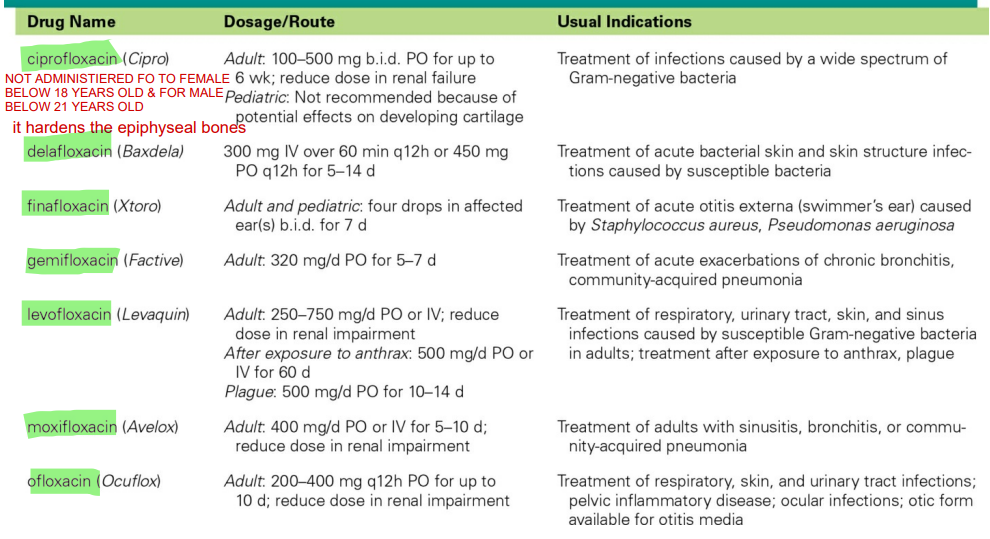
Therapeutic Actions and Indications
- Enter the bacterial cell by passive diffusion, once inside they interfere with the action of DNA enzymes necessary for the growth and reproduction of the bacteria.
- Little cross-resistance with other forms of antibiotics
- Effective against a wide spectrum of gram-negative bacteria
- Approved for prevention of anthrax infection in areas that might be exposed by germ warfare
- Also effective against typhoid fever
Pharmacokinetics
- Absorbed from the GI tract, metabolized in the liver, and excreted in the urine and the feces
Contraindications and Cautions
- Known allergy
- Pregnant and lactating
- Caution in the presence of renal dysfunction
- Associated with lesions in the cartilage thus it is not recommended for use with patients younger than 18 years of age.
Adverse effects
- Headache, dizziness, insomnia, and depression
- Nausea, vomiting, diarrhea, and dry mouth
- Risk of tendinitis and tendon rupture; risk is increase
- patient over the age of 60
- those on concurrent steroids
- renal, heart, or lung transplant
- fever, rash, photosensitivity
Clinically Important Drug-Drug Interactions
- If taken concurrently with iron, salts, sucralfate, mineral supplements, or antacids the therapeutic effect is decrease
- If taken with drugs that increase the QTc interval or cause torsades de pointers, severe to fatal cardiac reactions are possible
- If combined with theophylline, leads to the increased theophylline levels
- If combined with nonsteroidal anti-inflammatory drugs, an increase risk of CNS stimulation is possible
- If combined with corticosteroids, leads to an increased risk of tendonitis pain or weakness.
Penicillins & Penicillinase- Resistant Antibiotics
- Penicillin was the first antibiotic introduced for clinical use
- Alexander Fleming used Penicillium molds
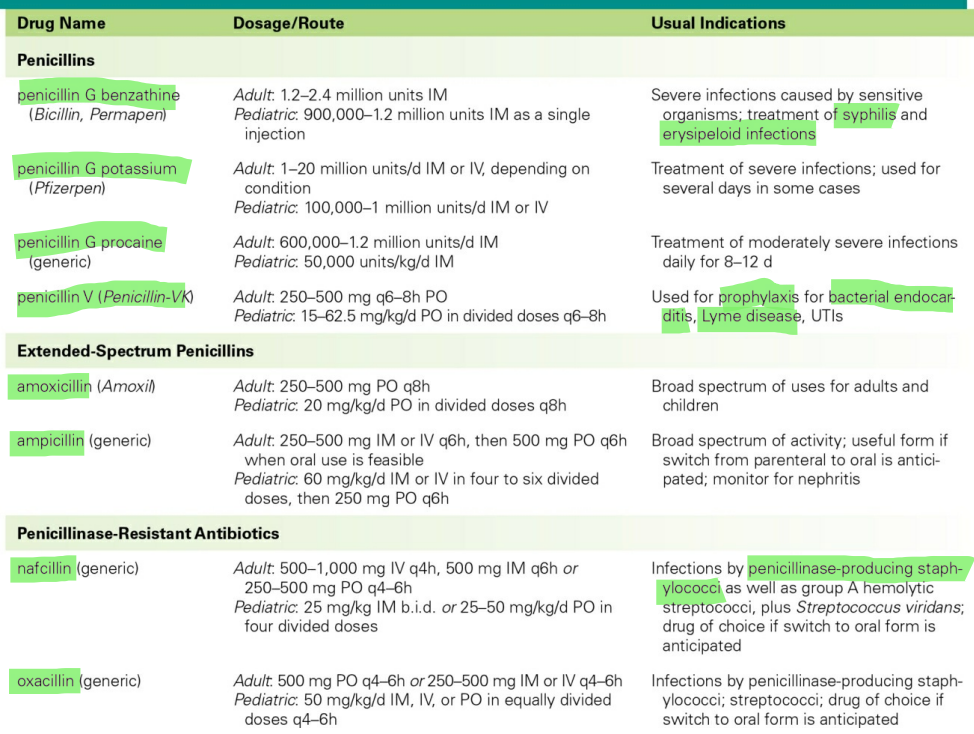
Therapeutic Actions and Indications
- Produce bactericidal effects by interfering with the ability of susceptible bacteria to build their cell walls when they are dividing
Pharmacokinetics
- Most are absorbed rapidly in the GI tract, reaching peak levels in 1hr
- Sensitive to gastric acid levels thus should be taken on an empty stomach
- Excreted unchanged in the urine
Contraindications and Cautions
- Patients that are allergy to penicillin and cephalosporins
- Use with caution in patients with renal disease
- Use in pregnant or lactating women should be limited.
Clinically Important Drug-Drug Interactions
- If taken concurrently with tetracyclines a decrease in the effectiveness of the penicillin will occur
- If parenteral forms of penicillin and penicillinase- resistant drugs are administered in combination with any parenteral aminoglycosides, inactivation of aminoglycosides occurs.
Sulfonamides
- inhibit folic acid synthesis which are necessary for the synthesis of purines and pyrimidines- precursors of RNA and DNA.
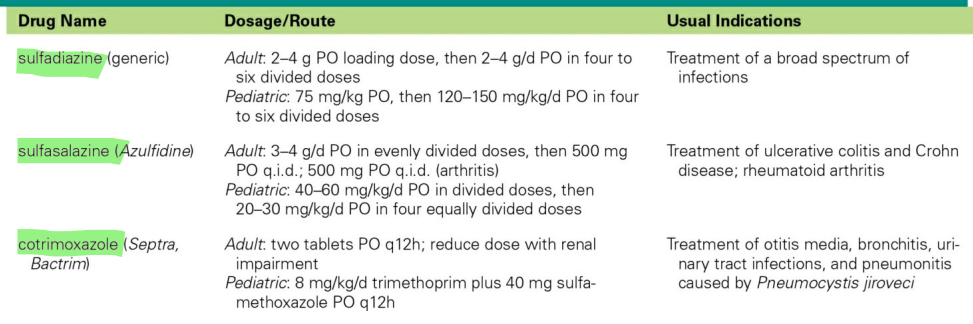
Therapeutic Actions and Indications
- Sulfonamides competitively block para-aminobenzoic acid to prevent synthesis of folic acid of the susceptible bacteria.
- No longer used much but remain inexpensive and effective treatment for UTIs and trachoma (leading cause of blindness), especially in developing countries and when cost is an issue.
- Used to treat nocardiosis (causes pneumonias, as well as brain abscess and inflammation) and sexually transmitted diseases.
Pharmacokinetics
- Teratogenic; distributed into breastmilk
- Given orally, absorbed in the GI track, metabolized in the liver, and excreted in the urine
Contraindications and Caution
- Kernicterus, a type of brain damage that can result from high levels of bilirubin in a baby’s blood.
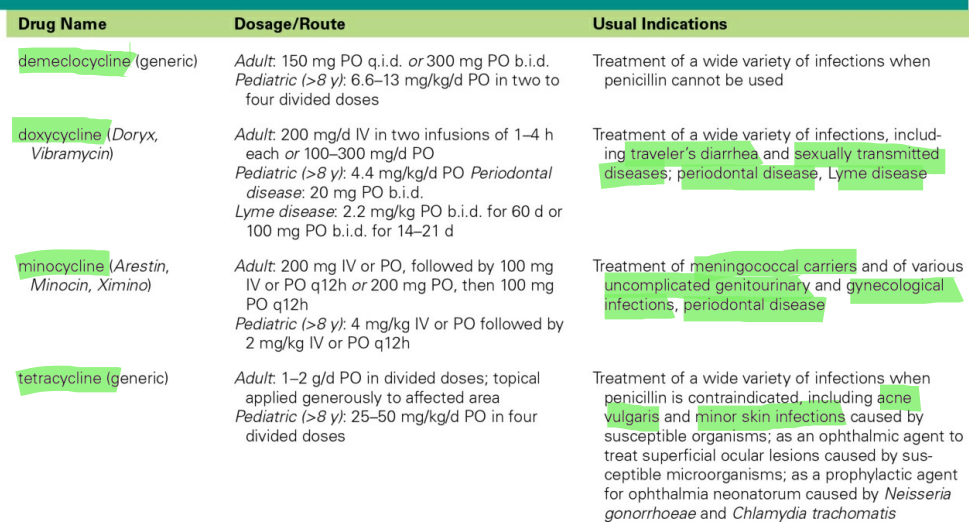
Tetracyclines
- Were developed as semisynthetic antibiotics based on the structure of a common soil mold.
- Composed of four rings
Therapeutic Actions and Indications
- Works by inhibiting protein synthesis in a wide range bacterium, leading to the inability of the bacteria to multiply
- Treatment of a wide variety of infections when penicillin is contraindicated
Pharmacokinetics
- Are absorbed adequately, but not completely in the GI tract.
- Absorption is affected by food, iron, calcium, and other drugs in the stomach.
- Are concentrated in the liver and excreted unchanged in the urine
- Half lives ranging from 12-25 hours.
Contraindication and Caution
- Ophthalmic preparations- fungal, mycobacterial, or viral ocular infections
- used with caution in children younger than 8 years because they can potentially damage developing bones and teeth
Clinically Important Drug-Drug Interactions
- If Penicillin G and tetracyclines are taken concurrently, effectiveness of penicillin G decreases
- Effectiveness of oral contraceptives decreases.
- Digoxin toxicity rises when tetracyclines are taken concurrently.
Antimycobacterial
Mycobacteria-the group of bacteria that contain the pathogens that causes tuberculosis and leprosy – are classified on the basis of their ability to hold stain even in the presence of a “destaining” agent such as acid. Thus, they are called acid fast.
- Mycobacterium tuberculosis- causes tuberculosis
- Mycobacterium leprae- cause leprae also known as Hansen’s disease
- Mycobacterium avium-intra-cellulare- causes mycobacterium avium complex, seen in patients with AIDS or in patients who are severely immunocompromised.
- Rifabutin- most effective against M. avium-intracellular.
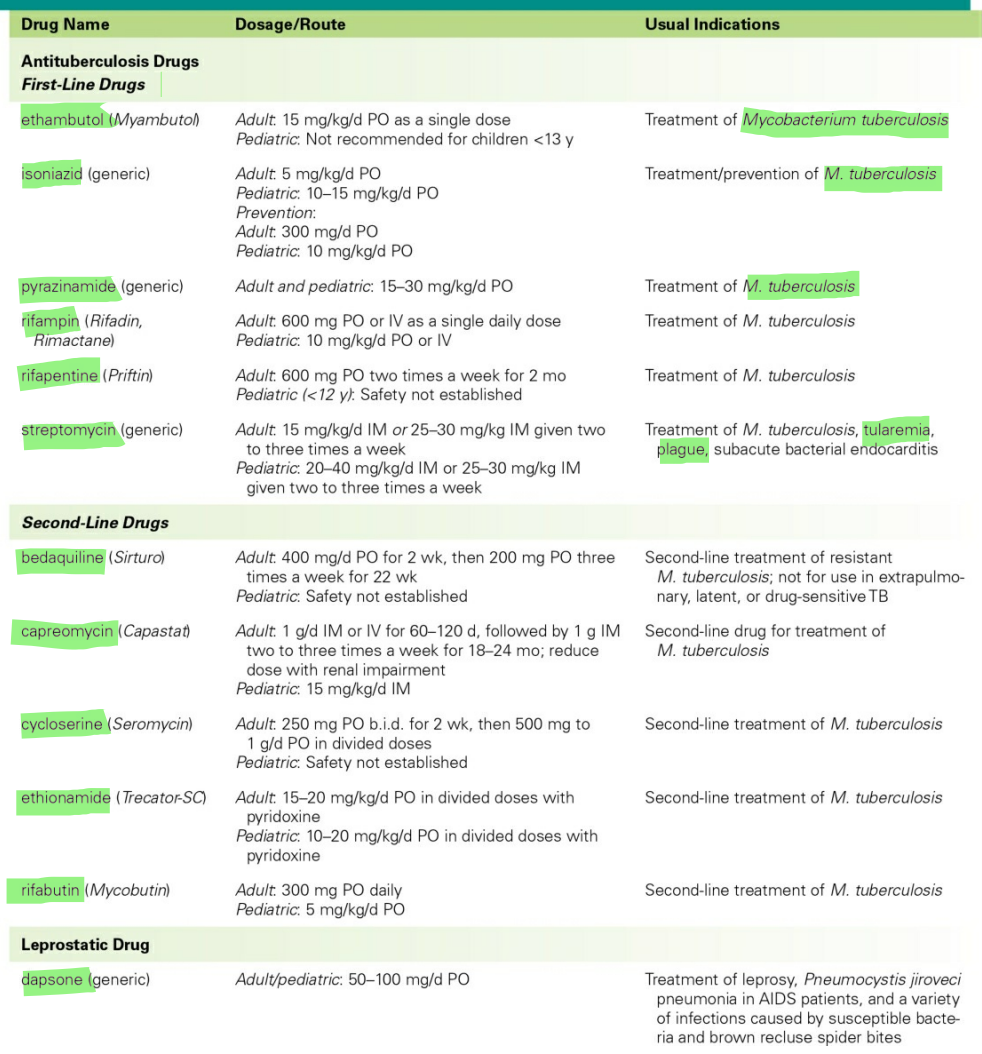
Antituberculosis Drugs
- Mycobacterium tuberculosis is slow growing thus the treatment must be continued for 6 months to 2 years.
First line drugs for treating tuberculosis are used in combinations of two or more agents until bacterial conversion occurs or maximum improvement is seen.
- Second line drugs are used if disease continue to progress.
Leprostatic Drugs
- Dapsone, the antibiotic that is used to treat leprosy.
- Inhibits folate synthesis
- Also used to treat pneumocystic jiroveci pneumonia in AIDS patients , as well as brown recluse spider bites.
- Thalidomide (Thalomid) hypnotic drug for use in condition that occurs after treatment of leprosy.
Therapeutic Actions and Indications
- Isoniazid (INH) specifically affects the mycolic acid coat around the bacterium
Clinically Important Drug-Drug Interactions
- If Rifampin and INH are used in combinations the possibility of toxic liver reactions increases.
OTHER ANTIBIOTICS
Ketolides
- Telithromycin- is the only approved drug in the class now

Therapeutic Actions and Indications
- Blocks protein synthesis within susceptible bacteria, leading to cell death, which make them structurally related to macrolides antibiotics
- Telithromycin – binds to specific ribosome subunit
Pharmacokinetics
- Telithromycin is available as an oral drug only
- Reaching peak levels in 1hr
- Metabolized in the liver with a half-life of 10hrs
Contraindication
- Known allergy to any component or to macrolide antibiotics
- Use with caution in cases of renal or hepatic impairment
- Use with caution with pregnant and lactating patients
Adverse Effects
- The adverse effects associated with telithromycin are largely secondary to toxic effects on the GI tract:
- Nausea,
- vomiting,
- taste alterations,
- the potential for pseudomembranous colitis
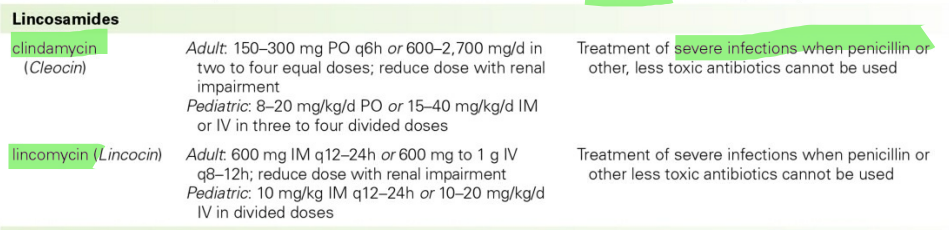
Lincosamides
- Similar to the macrolides but are more toxic
Pharmacokinetics
- Are rapidly absorbed from the GI tract or from IM injections and are metabolized in the liver and are excreted in the urine and feces.
Therapeutic Actions and Indications
- react at almost the same site in bacterial protein synthesis and are effective against the same strains of bacteria
Pharmacokinetics
- are rapidly absorbed from the GI tract or from IM injections
- metabolized in the liver
- excreted in the urine and feces
Contraindications and Cautions
- patients with hepatic or renal impairment
- during pregnancy and lactation only if the benefit clearly outweighs the risk to the fetus or neonate
Adverse Effects
- Severe GI reactions including fatal pseudomembranous colitis
- Pain, skin infections, and bone marrow depressions
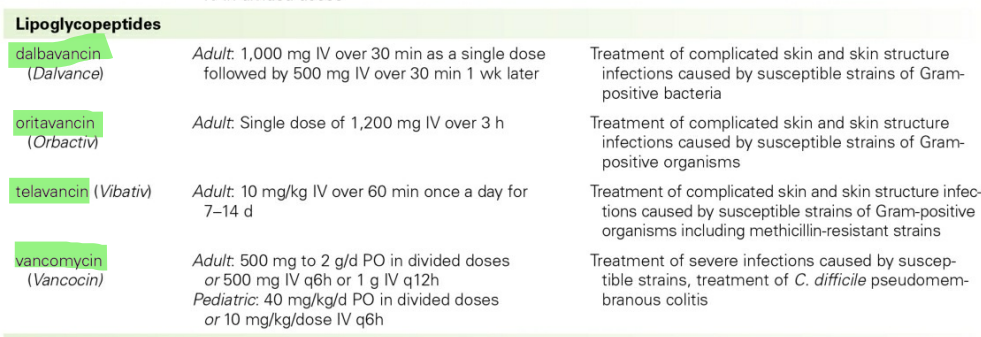
Lipoglycopeptides
Therapeutic Actions and Indications
- Lipoglycopeptides are semisynthetic derivatives of vancomycin
- inhibit bacterial cell wall synthesis by interfering with the polymerization and cross-linking of peptidoglycans
- bind to the bacterial membrane and disrupt the membrane barrier function causing bacterial cell death. The lipoglycopeptides are effective against susceptible strains of the Gram-positive organisms
Pharmacokinetics
- available as IV drugs; only vancomycin has an oral form
Contraindications and Cautions
- known allergy to any component of the drug to avoid hypersensitivity reactions
- with pregnant and lactating patients because of the potential for toxic effects on the fetus or infant
Adverse Effects
- largely secondary to toxic effects on the GI tract:
- Nausea
- vomiting
- taste alterations
- diarrhea
- loss of appetite
- risk of C. difficile diarrhea
- Nephrotoxicity
- red man syndrome
- flushing,
- sweating,
- hypotension
Macrolides
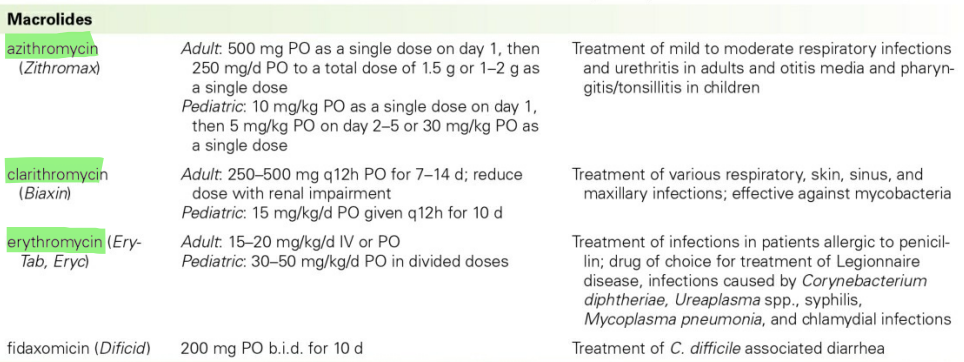 are antibiotics that bind to the subunit of the ribosome within the bacterial cell and interfere with protein synthesis in susceptible bacteria
Therapeutic Actions and Indications
- may be bactericidal or bacteriostatic
- exert their effect by binding to the ribosomes within the cell and changing protein synthesis
- prevent the cell from dividing or cause cell death, depending on the sensitivity of the bacteria and the concentration of the drug
- used as prophylaxis for endocarditis before dental procedures in high-risk patients with valvular heart disease who are allergic to penicillin.
Pharmacokinetics
- they cross the placenta and enter breast milk
- are absorbed in the GI tract.
- Erythromycin is metabolized in the liver, with excretion mainly in the bile to feces
- Azithromycin & clarithromycin are mainly excreted unchanged in the urine, making it necessary to monitor renal function when patients are taking these drugs
- Fidaxomicin is minimally absorbed systemically and acts in the GI tract, being metabolized in the GI tract and excreted in the feces
Contraindications and Cautions
- contraindicated in patients with a known allergy to any macrolide because cross-sensitivity occurs
- Ocular preparations
- use with caution in lactating women
Adverse Effects
- GI tract
- abdominal cramping,
- anorexia,
- diarrhea,
- vomiting,
- pseudomembranous colitis
- neurological symptoms
- confusion,
- abnormal thinking,
- uncontrollable emotions
- superinfections related to the loss of normal flora
Oxazolidinones

Therapeutic Actions and Indications
- interfere with protein synthesis on the bacterial ribosome within the bacterial cell.
- They also act as MAO (monoamine oxidase) inhibitors
- specific for skin and skin structure infections caused by susceptible organisms
- used in pneumonia and skin and skin structure infections caused by susceptible strains
- diabetic foot infections without osteomyelitis
Pharmacokinetics
- Tedizolid is available for oral or IV use. It is rapidly absorbed, has a half-life of 12 hours, is metabolized in the liver, and excreted in urine and feces.
- Linezolid is also available for IV or oral use. It is rapidly absorbed, has a half-life of 5 hours, is metabolized in the liver, and is excreted in the urine.
Contraindications and Cautions
- allergy to the drug or drug components; with phenylketonuria
- patients taking MAO inhibitors
- breastfeeding women
- hepatic impairment,
- pheochromocytoma,
- hypertension,
- hyperthyroidism,
- bone marrow suppression
Adverse Effects
- CNS effects
- headache,
- insomnia,
- dizziness;
- GI effects
- dry mouth,
- nausea,
- vomiting,
- diarrhea
Drug–Drug Interactions
- Oxazolidinones have a risk of hypertension and related adverse effects if combined with other drugs that increase blood pressure
- increased risk of bleeding
- thrombocytopenia
- Potentially serious serotonin syndrome
- Potential for serious to life-threatening hypertension is combined with large amounts of tyramine-containing foods.
Monobactam
 only monobactam antibiotic currently available for use is aztreonam
Therapeutic Actions and Indications
- effective against Gram-negative enterobacteria and has no effect on Gram-positive or anaerobic bacteria
- disrupts bacterial cell wall synthesis, which promotes leakage of cellular contents and cell death in susceptible bacteria
- treatment of urinary tract, skin, intra-abdominal, and gynecological infections,
Pharmacokinetics
- Aztreonam is available for IV and IM use only and reaches peak effect levels in 1 to 1.5 hours.
- Its half-life is 1.5 to 2 hours.
- The drug is excreted unchanged in the urine. It crosses the placenta and enters breast milk
K E Y P O I N T S
-Ketolides block protein synthesis in susceptible bacteria, leading to cell death. Telithromycin is the only ketolide currently available. It is used to treat community-acquired pneumonia. Monitor the patient for nausea, vomiting, diarrhea, and CNS effects, including dizziness and headache.
-Lincosamides are similar to macrolides but are more toxic. They are used to treat severe infections. Monitor the patient for pseudomembranous colitis, bone marrow depression, pain, and CNS effects.
-Lipoglycopeptides are a very new class of antibiotic and are similar to vancomycin. They prevent the synthesis of the bacterial cell wall, which leads to cell death. They are associated with high risk to the fetus. Monitor patients for prolonged QT interval, changes in renal function, GI effects, and foamy urine.
-Macrolides are in a class of older antibiotics that can be bactericidal or bacteriostatic. They are used to treat upper respiratory infections (URIs) and UTIs and are often used when patients are allergic to penicillin. Monitor the patient for nausea, vomiting, diarrhea, dizziness, and other CNS effects.
-Oxazolidinones are newer drugs that are especially effective against various resistant strains. They are used for skin and skin structure infections, pneumonias, or any infection caused by a resistant bacterium that is sensitive to the drug. These drugs are also MAO inhibitors, and caution must be used to prevent serotonin syndrome and hypertension-related effects.
-The monobactam antibiotic aztreonam is effective against only Gram-negative enterobacteria; it is safely used when patients are allergic to penicillin or cephalosporins. Monitor the patient taking aztreonam for GI problems, liver toxicity, and pain at the injection site
Contraindications and Cautions Aztreonam
- is contraindicated with any known allergy to aztreonam
- patients with a history of acute allergic reaction to penicillins or cephalosporins
- renal or hepatic dysfunction that could interfere with the clearance and excretion of the drug,
- in pregnant and lactating women
Adverse Effects
- Local GI effects
- nausea,
- GI upset,
- vomiting,
- diarrhea.
- Hepatic enzyme elevations related to direct drug effects on the liver may also occur.
- inflammation,
- phlebitis,
- discomfort at injection sites,
Clinically Important Drug–Drug Interactions
- Aztreonam is incompatible in solution with nafcillin, cephradine, and metronidazole.